Welcome to our community

Be a part of something great, join today!

  • Hey all, just changed over the backend after 15 years I figured time to give it a bit of an update, its probably gonna be a bit weird for most of you and i am sure there is a few bugs to work out but it should kinda work the same as before... hopefully :)

The Gentleman's Underwater Bubble Blower Thread

Hey underwater friends, I posted a new video on the "Shot on Dragon" thread, as well as having created a new thread entitled "Underwater Dragon & MX Shooting Gallery"

http://www.reduser.net/forum/showthread.php?122077-Underwater-Dragon-amp-MX-Shooting-Gallery

Not that I don't enjoy reading through this thread that has ballooned to 220 pages, and 2200 posts !!! but I though it was time to have a repository of our own to display clips, stills and other image related discussion, leaving the "tech talk" of underwater technique to this existing thread. As with the "Shot on Dragon" thread, images would be posted on the "Shooting Gallery" thread with a link to an applicable, including this one, thread for further discussion.

I'll start...


http://reduser.net/forum/showthread.php?87443-The-Gentleman-s-Underwater-Bubble-Blower-Thread

Deep regards,
Ron
 
looks like the new gopro 4 black plastic housing has been reduced to 131 ft..no reason given yet...any body playing with gh4k camera underwater yet..
 
Thanks CP

Thanks CP

Thanks very much for your support Matt.

What an amazing project, even better that it continues into its next phase. We are off to the Sudanese Red Sea shortly, just the other side of wildest Africa, the mid-continental rift of deep blue and turquoise ocean, sun splashed reefs, wedged between the vast Saharan and Arabian deserts. Fabien Cousteau will be filmed in the environs of his grandfather's original Conshelf II underwater habitat experiment, all set against the backdrop of some of the most incredible underwater vistas and visibilities, the unique marine flora and fauna present nowhere else on this planet of ours.

All captured with Jim's incredible Dragon, may fortune smile on us.

The proof is in the final piece, up on the big screen, for everyone out there to judge.

Based on what we have so far, and what we are about to do, this is going to be Epic my friend

thanks.png
 
I am new to this thread and I am sorry if this question has been asked before. I am currently shooting some 2nd unit in Venezuela around Angel Falls and have a sequence on some rapids with the stunt man being swept away. Doing a POV in the water with the Hydroflex or Gates or Amphibico housings would be dangerous for both the operator and the housing. Is there anything else that exists that is smaller and lighter and just waterproof and tough that I can mount on the front of a Kayak or put in the stuntman's hands?

Thanks,

Peter

Peter:

Welcome to the bubble blowers.

Our (AquaVideo™) PVC housing is quite a bit lighter than the aluminum housings yet still totally waterproof (rated to 175 feet) and is used for surfing, rafting, etc. as well as regular underwater shooting. When used for underwater shooting it uses an 8 pound weight to make it neutral. For surfing and rafting you remove the weight and it is quite positively buoyant (i.e.it floats).

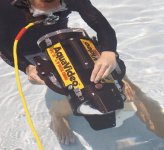
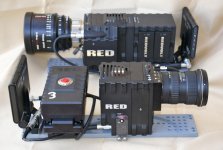
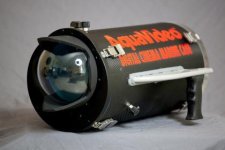
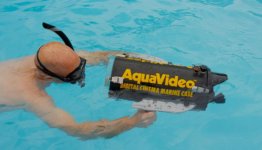
IN the photos below the first is the pvc housing and the second is the PVC housing being used in a pool - you can see how it floats without the weight on the bottom the third pic shows how two of the common configurations on the mount plate inside the housing and the fourth (with the diver with the regulator hose) is one of the aluminum versions. Both PVC and aluminum versions normally are supplied with an aluminum frontplate which aids in heat transfer.

We also make a version that is even a couple inches shorter that works well with some of the shorter canon lenses - that is a little lighter. It would be hard to make a truly waterproof housing for a fully configured epic much lighter than our PVC version.

It has fairly simple controls - Power, trigger, and controls to hit the six programmable buttons on the camera and LCD that can be programmed for whatever functions you want focus, iris, white balance, LCD zoom, etc. and often a couple of simple manual focus and iris controls. We can also supply you with a very tough, reliable waterproof bag so you can use your redmote.

WE manufacture, rent and sell the housings. My contact info is in the signature.

Here's a link to a 1 page .pdf brochure:

http://www.aquavideo.com/press/AquaVideoEpicUnderwaterPrRelease.pdf
 

Attachments

  • epic aluminum housing in pool.jpg
    epic aluminum housing in pool.jpg
    81.7 KB · Views: 0
  • epic housing mountplates.jpg
    epic housing mountplates.jpg
    72.8 KB · Views: 0
  • Epic housing left quarter.jpg
    Epic housing left quarter.jpg
    15.2 KB · Views: 0
  • Epic-housing-pool-bahamas-800pix.jpg
    Epic-housing-pool-bahamas-800pix.jpg
    35.4 KB · Views: 0
I am new to this thread and I am sorry if this question has been asked before. I am currently shooting some 2nd unit in Venezuela around Angel Falls and have a sequence on some rapids with the stunt man being swept away. Doing a POV in the water with the Hydroflex or Gates or Amphibico housings would be dangerous for both the operator and the housing. Is there anything else that exists that is smaller and lighter and just waterproof and tough that I can mount on the front of a Kayak or put in the stuntman's hands?


Thanks,

Peter

Hi Peter,

You may want to look into a splash bag for this type of shot. I have only had experience with the one made by Air Sea Land but it
Served us well. There are limitations with this set up but it's horses for courses.
Good luck with your shoot.

Best,
Jason
 
I have a question for those of you shooting with Dragons in Aluminum housings.

1) what temperature are you black balancing your sensors at?
2) What mode are you putting your fans in to maintain that temperature?

Just got my upgrade and busy setting it all up at the moment.
Thanks
 
Many thanks all...... It shows that this forum really pays off.....

I cannot thank you all enough.... BTW this is for a scene from the new POINT BREAK
 
Mark, I blackshade with camera set to intended frame rate, at operating temp, core 65/sensor 45, and set the fan to 'adaptive' mode. You can store the blackshade values for various frame rates and switch on the fly, if you have a housing that reliably accesses camera menus underwater.

As the interior of the housing begins to heat up, you will see the fan speed gradually increase in order to maintain the target core temp of 65C.

A note of caution, Dragon runs hot, although not an issue topside, it is becoming of increasing concern in u/w housings. Li batteries are limited to 60C (battery core), the temperature protection circuitry will trigger a shut down above that. There is considerable thermal lag between battery core and housing ambient, would nonetheless highly recommend you do bathtub temperature testing with your rig.

There seems to be the notion that an aluminum housing will dissipate heat efficiently, unfortunately, the anodization and paint process renders them very inefficient as a heat transfer medium. So, things to consider, I watch fan speed and core temperature quite carefully, especially on the latter parts of extended dives.
 
I am new to this thread and I am sorry if this question has been asked before. I am currently shooting some 2nd unit in Venezuela around Angel Falls and have a sequence on some rapids with the stunt man being swept away. Doing a POV in the water with the Hydroflex or Gates or Amphibico housings would be dangerous for both the operator and the housing. Is there anything else that exists that is smaller and lighter and just waterproof and tough that I can mount on the front of a Kayak or put in the stuntman's hands?

Thanks,

Peter

Peter,
No doubt you want small as possible and tough....I think i'd just have one made out of PVC that allows for a much smaller setup than the traditional underwater housings. Pretty easy to do and there are a few on this forum that could easily pull it off...basically something durable, small and just a housing that works...no need for a pretty looking paint job or finish to it. I'd suggest going with a compact battery and lens setup that makes it small enough to fit in the hand of your stunt person with a trigger for record only....and just set your focus with tape and jump away.... not much use for a variety of controls when in the rapids i'd imagine. I think all pvc is the way to go and a pvc dome port you can replace after it gets scratched up a few times...and some sort of bracket on it you can attached to a kayak/boat etc....but definitely cut down the size of all the current housings. There is the SPL as mentioned....i used one a few times and can say that it was not something i was happy with at the time i used it for a R1, but maybe there are much improved...
 
A note of caution, Dragon runs hot, although not an issue topside, it is becoming of increasing concern in u/w housings. Li batteries are limited to 60C (battery core), the temperature protection circuitry will trigger a shut down above that. There is considerable thermal lag between battery core and housing ambient, would nonetheless highly recommend you do bathtub temperature testing with your rig.

There seems to be the notion that an aluminum housing will dissipate heat efficiently, unfortunately, the anodization and paint process renders them very inefficient as a heat transfer medium. So, things to consider, I watch fan speed and core temperature quite carefully, especially on the latter parts of extended dives.

Tom, have you experienced this with your camera/housing setup? It is an interesting subject since there are these considerations like batteries with circuitry that should cut off at a certain temp. I am not aware of what that setting is...is this a global (as in all Li-Ion batts cut out at 60c? or only certain batts?).

Fortunately i have never encountered my camera or battery shutting down due to overheating issues in either my Epic or Dragon setup. I do recall diving with R1 in 2007 or 2008 some heating issues, and in 92f water, but after some updates to fans and such i have never had this occur since then. For fun, i made a 3.5 hour dive last week on rebreather and wanted to check how long my Globalmedia 230watt battery would go for and while i did not shoot all of that time...it did last for 3.5 hours while shooting 80% of a 256gb card and a LOT of standby time inside the housing. If i recall, surface temps were about 87-88f range and most of the dive at depth in the low 80's....I never got a warning or at least a shutdown due to temperature. I have to think these are pretty severe conditions and there are more severe in the S. Pacific, but i've yet to experience them here or the Yucatan where it's a bit warmer.

But are you suggesting that there is merely a valid concern for shutoff based on the parameters of the lithium ion batts or that in fact you and others are experiencing an issue with shutoff occurring due to overheating?

I am not only unaware, but 100% unknowledgeable about how much of an effect that anodizing does to the heat dissipation process. It would seem logical that it would inhibit the process, but to what degree? Seems that the bigger issue to me would be heat circulation inside of the housing and having a fan or fans to move that hot air around the housing in order to remove heat from as many places as possible within the housing...This would seem to me the best way to remove that heat. I think this is where also different manufacturers may have different methods for getting rid of heat....Sadly, i know very little about this process inside of even my housing....only that fans were installed long ago to move heat around so that it was not "standing" in one place....

I'd be eager to hear more on this, but to date it has not been an issue for me. However the day i got my dragon and fired it up....i had to call RED since it just did not seem possible that this camera should run at 60c to 65c range....i had troubling thoughts of what that might mean when putting it inside my housing, but to date i feel very confident of the fact it is not an issue.....until it is....
 
Here is what I have so far Johnny;

On Mission 31 I experienced a mystery shutdown of the housing after about 1:20, although it happened only once, it has been bothering me. That particular day, I shot with the Dragon for about 15 minutes initially and then handed off the housing to a safety diver while I went inside the habitat to assist in conducting VIP interviews. (Can't bring the housing inside as it will begin to on-gas in three atmospheres, thereby making it risky to resurface the housing due positive pressure and possible seal compromise). During the time I was in the habitat, the camera was shut down.

After 45 minutes inside, exited the habitat, took the housing from the safety guy, and resumed shooting. The rig shutdown unexpectedly at the above mentioned mark, no corruption of data resulted. Bjorn Benckert reported in another thread a similar event with all data loss, not sure which housing/battery combination he was using.

Admittedly, quite a bit going on in my rig, in addition to the 190Wh battery (Comer - generic Chinese make) I have an Atomos Samurai Blade for top port focus assist/framing and ProRes backup with its own spinning drive generating heat. After resurfacing and opening the housing, I removed the battery and reseated it, everything came back to life without any issues. This is consistent with battery overheat circuitry shutting down the battery, a reset requires removal from the battery plate.

This almost certainly has something to do with the quality of the battery itself, I have now ordered a more expensive unit, one that has all the protections but, one that is likely more effectively thermally insulated and resistant to these kinds of events.

From my brief research on the subject, here are the numbers applicable to Li batts in general;

Min/Max operating temperature range: -20C to +60C
Recommended operating temperature range: 0C - 45C (battery life shortened above and below these temps)
Thermal circuit shutdown temp; 70C (battery core)

Dragon temps (firmware firmware V5.2.X)

Record auto stop: 80C
Camera thermal shutdown: 85C

Normal operating temp for the Dragon is 65 core and 45 sensor, as you can see, at the upper limit of the recommended operating range for Li batts. So while my research is by no means complete, I am beginning to suspect that heat is of increasing concern for us underwater folk.

Anodization does not affect heat transfer, it is the paint applied to the anodized aluminum that limits it. According to the thermal engineering firm I am in discussion with at the moment, paint is considered a thermal insulation layer, and as such, must be removed for effective heat transfer. As that is not an option for us u/w guys, so far as I know, they have proposed a very clever heat sink solution that should take care of the issue neatly, I will keep everyone posted as it progresses.

I am quite certain the new batteries I have ordered will prevent this from happening again, but it has me thinking about cooling. How much life in our very expensive Li batts and Dragon circuitry are we losing by operating at these temps inside the housings?
 
A few unscientific comments re last two posts.

1) remember that the batteries themselves heat up during energy discharge, so could reach the cutoff temperature before the internal housing temperature gets to the cutoff point.

2) I think the camera fans do more than enough circulating within a housing to keep the internal temperature the same throughout.

3) Since there is a bit more concern about heat transfer on the PVC housings (although the aluminum frontplate seems to handle it pretty well) I have thought a fair amount about heat sinking.

I think the simplest but probably pretty effective solution would be an aluminum plate on the inside wall of the housing just over the fan exit of the camera which would be attached to and held on by one or two stainless steel o-ring sealed bolts that come from outside the housing. These type of o-ring sealed bolts are extremely reliable. We have used them many times over the years to seal unused control holes, cable penetrations, etc. and in 30 years I have never seen one fail. I would probably also attach an aluminum plate (on the order of 1.5 by 3 inches or so) to the top of the bolt outside the housing as well for better heat transfer to the water. I haven't found this necessary yet but I'm pretty sure it would be quite effective since it would be taking the heat directly from the fan exit of the camera and going directly to the water. Even in air it would probably work pretty well if we attached a finned heatsink to the top of the bolt instead of just a flat plate.

4) I would also suspect that the larger the battery, the greater the potential for heat buildup simply because there is a greater distance from parts of the cell to the case of the battery.
 
In response to shut downs Tom, i can say that i have had my fair share of them with Dragon...probably about 4 to date and i can only recall one in the past with epic over far more time shooting. But in my case they were shutdowns to to some sort of data integrity error. Not sure what that means, but what it means to me is it requires a shutdown and reboot. But nothing that requires a reseat of the battery. Perhaps better batteries might be the answer, but i'm also using chinese made batts from Globalmediapro. Could also be that no battery is made equal also....
 
I guess Johnny, that all batteries are Chinese made these days, at least the internals; 'made in USA' usually just means 'assembled in USA' , or if one were really cynical, 'briefly looked at in USA'. Depends on the quality control exercised over the production process by the guys who are willing to put their names on the finished product. Does make a huge difference though.

In response to Mike's comments;

1) remember that the batteries themselves heat up during energy discharge, so could reach the cutoff temperature before the internal housing temperature gets to the cutoff point.

The Dragon only draws 6 amps (@24 FPS in film mode), according Paglink engineering gurus, internal heat buildup should be at a minimum as this is comfortably within standard V-lock battery rated capacity, and well below their spec.


2) I think the camera fans do more than enough circulating within a housing to keep the internal temperature the same throughout.

But here is the rub. Underwater housing, closed circuit system, no exchange of air, as very little heat escapes through the housing, only one way for the temp to go. Up. Thermal lag between battery core and housing ambient does work in our favor. Just a matter of time though. Once fan ability to cool becomes saturated by housing ambient, sensor temp will start to climb, there goes the blackshade, and the image.


The system seems to be working as it is, given the proper precautions and the selection of quality components. As Red, however, extracts more and more resolution from the sensor, and more performance from the memory, temps can only increase further.

Please consider my comments as nothing more than a heads-up.
 
Heat Dissipation / Underwater Housings

Heat Dissipation / Underwater Housings

Sharing a few comments about heat dissipation from our experience with R1 and Epic:

Thermal transfer away from heat generators inside a housing is complex. Conduction via aluminum is one part of the process (and a very effective one). Convective transfer is between the camera and housing shell. This is the more difficult part.

Looking at heat sources, power consumption, and shutdown thresholds are all good, and provides general guidance. But in the end, controlled testing is necessary to characterize the system and correlate theory with results.

We learned alot from DEEP RED, which carried over to DEEP EPIC. DE was tested in 95°F/35°C water (worst case scenario) with monitored temperatures over time. The thermal transfer within DEEP EPIC always stabilized with good margin below the camera shutdown point.

Tom -- reading through your experiences, several variables are in play that may or may not be related to heat. This makes it challenging to find the root cause. And you are correct re: a paint layer will act as a thermal insulator -- but experience tells me it's not the sole contributor nor a major factor, especially on the outside of your housing.
 
Back
Top