Welcome to our community

Be a part of something great, join today!

  • Hey all, just changed over the backend after 15 years I figured time to give it a bit of an update, its probably gonna be a bit weird for most of you and i am sure there is a few bugs to work out but it should kinda work the same as before... hopefully :)

Strange problem with RedSpace

Joined
May 2, 2007
Messages
1,288
Reaction score
0
Points
0
Age
42
Location
Tbilisi , Georgia
Website
sarke.ge
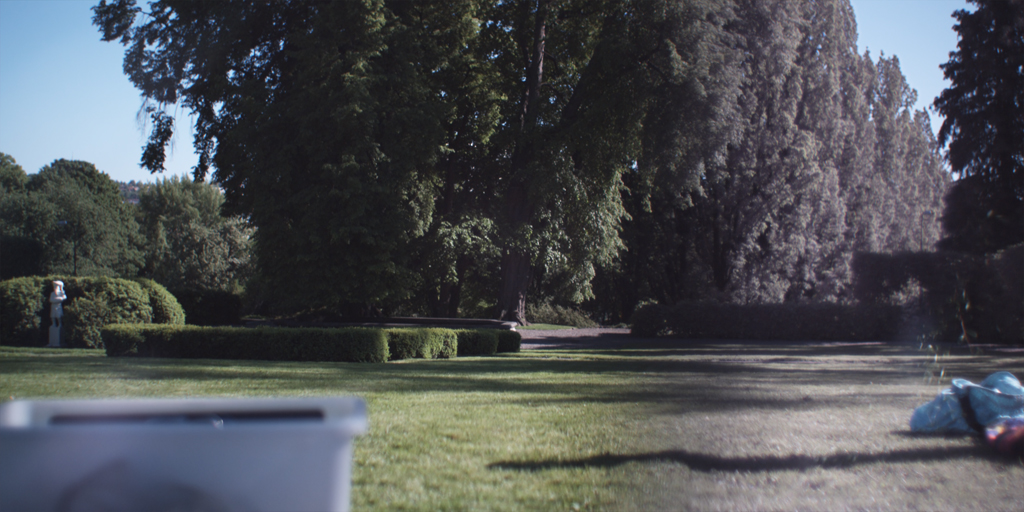
Good day .Please help me to understand one problem . Yesterday we where shooting , 90 % green grass , landscapes and etc . (Sunny day )
We use ND0.9 +ND0.6+Pola .Picture on monitor was very soft and saturated , but next in post (color RC , RA) pictures becomes very desaturate in RedSpace Gamma , green becomes very very low saturate. Other colors like RED was ok . Also blue lose some information.
Can not understand why its appends , may be because of IR ?

Only one way to balance my footage was saturated it to 1.5 , and work with green lift. In all other interior shoot color was same as it must be .

Never have problem like this . May be some body can share some experience.
Thanks.
 
If you want to send me an R3D I'll take a look.

Graeme
 
With over 6 stops of ND plus pola with no Hot Mirror IR, I bet your images were soft due to IR focal point, and colors off due to IR contamination. At least than is what I have read about.
 
Yes, with that much ND, you've basically made a very strong IR Pass filter. That could really throw off the colorimetry.

Graeme
 
It's been discussed in many threads to use a hot mirror or IR filter with 4 stops (1.2) ND or above.
 
Then a IR filter can desaturate as much as Vigen said?
 
Chlorophyll

Chlorophyll

Plants reflect quite a bit of IR, thats why they look white in IR monochrome photos and the sky looks black, gray rocks may look about the same.

But Blue should show the sky light (not dark), and Grass should show as light in the green sensor only (and dark on the blue and red), IR exposes the color sensors in ways other than just all three at the same time, if it was equal you could matrix it out, but since it is not equal for different subjects, you need to filter it out before it gets to the sensor's Bayer filter.

IR makes plants could look faded because both the red and blue sensors are also exposed to some level by the IR, and the sky can look washed out since the IR exposes the green and red where they should be dark to get the blue highest.
 
Last edited:
I think that RedSpace colorspace was changed in B20 and has less saturated colors.
I like Rec.709 more. It is more realistic to my eyes now.

I see same think but the cuestion is what space is wider??

anyone know if the 2D RGB triangle are published for Redspace??
 
Vigen, what you are describing is absolutely Infrared (IR) contamination. Here's an example shot someone posted before the forum crash, holding an IR filter half over the front to show the difference:

IR_Contamination_000130.jpg


Your best bet for future shooting is to get an IR filter and put it at the front of the matte box. Use only one IR filter or you will get reflection issues.

We use Formatt IRND filters but there are other brands as well.

HTH

Paul
 
Great example!

Great example!

Here's an example shot someone posted before the forum crash, holding an IR filter half over the front to show the difference

That's a great example Paul. You can stack a "heat absorbing" glass type IR filter (which as a slight green tint) and a IR reflective filter (interference heat mirror) to get more cut and less off axis pass. Because of the extra Red loss, you might want to include a "sky light" filter which is a little pink and cuts UV as well. Normal "heat absorbing" glass is not good enough for the sensor, you need the special kind that cuts into Red a little, like above 660nm or so. The reflective side of the IR heat mirror would go to the subject, the IR absorbing filter would be closer to the lens.
 
Last edited:
I'm working on a shoot right now where we are using the Rosco IR filter, and the DP swears that it doesn't matter which side of the filter is facing out, or even if it is the filter farthest from the camera. Does anyone know if that is true?
 
Coated filters

Coated filters

I'm working on a shoot right now where we are using the Rosco IR filter, and the DP swears that it doesn't matter which side of the filter is facing out, or even if it is the filter farthest from the camera. Does anyone know if that is true?

One factor would be if the other filters used are coated, and if the "back" surface of the hot mirror is coated.

Uncoated surfaces can reflect 5%, since the hot mirror is dichroic if a un-coated filter or surface is in front of the mirrored surface it can reflect some visable light (and near-IR plus IR) back, which would be attenuated by the dichroic surface but not 100%.

It also depends on if the cutoff of the dichroic filter is out of the visable range (of the sensor) or not, since there is an IR filter in the camera.

You can tilt the flter in front of the mirrored surface with a point light in the distance and see if you can see a reflection move around. Then try the filters the other way around and see what order makes the reflections less noticeable.

This link says this Rosco filter has cut off points,

http://www.filmtools.com/rosco-tru-color-ir-filter-4x565-panavision.html

That are more or less outside what you can see, so the sensor may not pick up the reflection of the IR much since it would be 5% (and within the internal IR cut off), where as if the cut off points were more within the sensor range the reflection might get picked up more. What the sensor sees is not quite the same as what you see looking through a stack of filters with your eye, you need to boost the contrast on the monitor and use a point light source that is moved around while the filters are tilted a little to check the reflections that might get recorded. What matters is how does the sensor see the re-reflected light.

With a mirror ND filter or mirror ND+IR the reflection is on all visable and IR nm, so the 5% reflection back could show up more. It also depends on the subject matter, do you have car head lights on a dark frame, or the sun in the shot, the higher the contrast the more a reflection can be visable. If you cannot see yourself in the IR filter like a pink reflection, then it is more or less like the reflection from other filters of the same reflectivity, so the order would matter less. In other words if a filter reflects a white light image of less than 5% because it is coated, the effect can be different than a dichroic filter that reflects a colored image that may be more than 5% for some colors.

For the dichroic IR filter to work to cut the far red so that you do not get red+IR into the blue sensor, the filter should low cut enough to look a little greenish by transmitted light and redish or pink by reflected light, with the cut off higher then how much IR you can stand coming through the ND may be less.

One way to tell if the IR block filter is working is to put an IR transmit filter over the camera, then put the IR block in and out, and see if the image goes away. A IR pass filter is black to look through, but the camera will give an image of a light bulb if you open the lens up to some point. I tried this with the filters I have and only got about maybe a two stop drop in the IR exposure, so the filters are not an absolute solution to IR getting through to the sensor. You can also point the remote control for a TV/VCR into the camera (in a darkend room with the lens wide open), without the IR filter the LED will flicker and you can see it like a dim light, but with the IR filter in place you should not be able to see the IR LED in the remote control at all when you press the buttons (just like you cannot see any light from the IR LED in the remote with your eyes, if you see it a little then the Digital camera will not render colors like your eye because some IR will be mixed in).

You could make a portable IR filter checker by making a LED flashlight with high brightness IR LEDs or a bright light bulb and IR only pass filter. If it was bright enough you could point it into the camera with ND filters on or whenever, if the IR to set lighting ratio is good you would not see the light from the IR flashlight, if you can see the light from the IR flashlight (i.e. you can see it is on rather than looking like it is off) then you need MORE IR cutoff filters. You can flip the IR cut filter in and out to see the IR flashlight become bright and dim, to check how well it is working.
 
Last edited:
Looks like my problem , but in my situation picture without IR looks better that this one.
Also i have no IR filter , sow i can not check it . Now i will buy it and will do some test . Yes ND>9 is not good idea without IR .
Vigen, what you are describing is absolutely Infrared (IR) contamination. Here's an example shot someone posted before the forum crash, holding an IR filter half over the front to show the difference:

IR_Contamination_000130.jpg


Your best bet for future shooting is to get an IR filter and put it at the front of the matte box. Use only one IR filter or you will get reflection issues.

We use Formatt IRND filters but there are other brands as well.

HTH

Paul
 
Back
Top