Welcome to our community

Be a part of something great, join today!

  • Hey all, just changed over the backend after 15 years I figured time to give it a bit of an update, its probably gonna be a bit weird for most of you and i am sure there is a few bugs to work out but it should kinda work the same as before... hopefully :)

Steve Yedlin, ASC on Resolution

Arri didn't dominate because of politics they dominated because
1) Their cameras were easy for ACs to adopt and they didn't crash as much.
2) Their color was phenomenal and their defaults were spot on almost on day one.
I think this is basically the truth.

I have had arguments with producers where they start to bad-mouth Red, I politely ask them why, and they say, "well, I had a problem on a shoot a couple of years ago where we almost lost a card and it was Red footage." It generally turns out to bad media or some other issue that's not exactly a Red problem.

And when I say that (as tactfully as I can), they generally shrug and say, "all I know is, these problems never happen with Alexa." It's very hard to overcome even the slightest hint of a problem. Producers in my experience are very superstitious and prone to make the most conservative technical choice they possibly can, one that won't rock the boat and is guaranteed not to cause any problems. I think it's sometimes unfair and not a very informed opinion, but it kinda is the way it is.

Note that, for the record, I never get asked what camera to use, I'm just handed projects after they're shot and told to finish them in post. I try to be as camera-agnostic as I can: as long as it's well-exposed, at least 10-bit material, can record decent log images, and is at or above a minimum level of quality, there's not a problem. Push come to shove, I would prefer 4K Raw when I can get it, but it's not always possible for a given budget and schedule.
 
Arri didn't dominate because of politics they dominated because
1) Their cameras were easy for ACs to adopt and they didn't crash as much.

2) Their color was phenomenal and their defaults were spot on almost on day one.

and if I might add:

3) No fan noise. Put an Alexa in a warm room and do a long take and the Alexa is silent. Period. Put a RED in the same room and it sounds like a hairdryer after a few minutes. And yes, I know how to use Adaptive mode (and Adaptive preview silent record). The RED stays quiet for a little bit, but then the fans start creeping up and up and the sound person starts glaring at me and the director starts shooting looks over at the camera and the talent's eyes start glancing at the camera because it's making a lot of noise and eventually we have to cut because of the stupid fans, interrupting the long take (or interview). Then I have to apologize "Sorry, it was a long take and the room is hot...blah blah blah...just give it a couple minutes for the fans to cool it down so we can resume." I never have to make those sorts of excuses for my camera when I'm shooting Alexa.
 
Even on DSMC-2 you have problems with loudness of the camera?

I find it difficult to know if mine is on when I don't have monitor hooked up, have to put my ear to it :)
 
Even on DSMC-2 you have problems with loudness of the camera?

I find it difficult to know if mine is on when I don't have monitor hooked up, have to put my ear to it :)

It's weird. Sometimes I'm amazed how quiet the cameras are. And sometimes I'm amazed at how much air they think they need to push through the core to maintain temp. Same camera models running the same firmware, same power input, same monitor configuration, side by side in a conditioned room. It's a mystery.
 
Historically RED (Red digital cinema) was the first company that ambitionned the digital replacement of film. They where also named scammer for that.
Digital cameras, at that time (2006), where more studio cameras for greenscreen or FX work not as the main camera for narrative work.
Just for the record,
"The Dalsa Origin was the first camera designed and built by Dalsa Corporation to be used specifically for digital cinematography."
"The Dalsa Origin was the first commercially available digital cinema camera to capture at 4K resolution, the emerging quality standard for feature film content.
The camera was originally shown at the NAB Show 2003 in Las Vegas, where Dalsa received four industry awards for innovation. The camera initially became available for testing in 2006, and was available for rental for $3000 per day, including storage, from the company's camera rental facility in Woodland Hills.
The camera was successfully used in a number of projects including "Postcards from the Future", directed by Alan Chan and shot by Eric Adkins; a Snickers commercial, directed by Jesse Dylan and shot by Rolf Kestermann; a beer commercial by Curtis Clark, ASC; a Greenpeace commercial, shot by Florian Stadler; a Motorola commercial, shot by Byron Werner; a short entitled "The Trident", directed by Anurag Mehta and shot by David Stump, ASC; "She Called Up", a music video for the band Crowded House shot by Damian Acevedo; a promo for ABC 7 Eyewitness News, shot by Mark Zavad; "Reach for Me" a feature film directed by LeVar Burton and shot by Kris Kosskove; and most recently a British short, "Drop", directed by Gavin Toomey and shot by Tom Debenham, starring Russell Tovey"
So, all this was done well before Red was even a company. I believe number of present Red employees came from Dalsa...
 
No. Because by that standard an iPhone video is as good as a RED.

Strawman based on flawed analogy.
Comparing a high end cinema camera to a phone makes exactly zero sense.

I suggested a couple of factors in that post to achieve objectivity in comparative tests.
The rest depends mostly on bias and will.
 
Just for the record,
"The Dalsa Origin was the first camera designed and built by Dalsa Corporation to be used specifically for digital cinematography."
"The Dalsa Origin was the first commercially available digital cinema camera to capture at 4K resolution, the emerging quality standard for feature film content.
The camera was originally shown at the NAB Show 2003 in Las Vegas, where Dalsa received four industry awards for innovation. The camera initially became available for testing in 2006, and was available for rental for $3000 per day, including storage, from the company's camera rental facility in Woodland Hills.
The camera was successfully used in a number of projects including "Postcards from the Future", directed by Alan Chan and shot by Eric Adkins; a Snickers commercial, directed by Jesse Dylan and shot by Rolf Kestermann; a beer commercial by Curtis Clark, ASC; a Greenpeace commercial, shot by Florian Stadler; a Motorola commercial, shot by Byron Werner; a short entitled "The Trident", directed by Anurag Mehta and shot by David Stump, ASC; "She Called Up", a music video for the band Crowded House shot by Damian Acevedo; a promo for ABC 7 Eyewitness News, shot by Mark Zavad; "Reach for Me" a feature film directed by LeVar Burton and shot by Kris Kosskove; and most recently a British short, "Drop", directed by Gavin Toomey and shot by Tom Debenham, starring Russell Tovey"
So, all this was done well before Red was even a company. I believe number of present Red employees came from Dalsa...

Yes Dalsa...
There is also Genesis, D20, Viper or even the Sony HDW-F900 with their CineAlta line from 2001.
 
It must be something wrong with my eyes then cause I big difference at close distance=)
But than again I like to cheat shutter abit to drawback the motionblur if the shoot lets me (no fast panning movements in the shot). Also Im looking forward to 48, 50, 60p would be more common to gain further crisp.

But, in best of worlds I wish I was an algoritm or something that sensed how much movement it was in shot and played just the right amount a frame needed for filmmakers vision. For slow shots I still like the cinematic 24/25p but for most camera movements and fast moving obejects in film I dearly wish 50-60fps to fight the motion blur alittle.
 
But, in best of worlds I wish I was an algoritm or something that sensed how much movement it was in shot and played just the right amount a frame needed for filmmakers vision. For slow shots I still like the cinematic 24/25p but for most camera movements and fast moving obejects in film I dearly wish 50-60fps to fight the motion blur alittle.

You'd notice the motion discrepancy and it would be distracting.
Also, shutter differences would affect exposure.
 
The solution there might be to shoot at high fps and then re-construct the appropriate motion cadence in post from all that data. The other solution could be like the Motion Mount with its temporal anti-aliasing.

Graeme
 
I must have a different kind of eyes or something because if I watch 50 or 60 or anything even higher than 25fps I really dislike it. I like 24-25p I watch a lot of stuff rendered out in multiple of speeds and done comparisons even on film positive in a cinema. And no there is nothing in the world that would make me change my mind of that point. And it´s strange if it goes down to 20fps then it simply doesn't not work and if you bring it up to 30fps it looks terrible in my eyes.

Also I find film projektors to look the best I assume that is the 180 deg shutter on the actual porjector a full black between each frame.

Also consider when they invented film they did not have any direct limitations to frame rate. They had a huge problem keeping it constant, cameras where hand driven in the beginning and I think the reason they landed on 24fps has a lot to do with the fact that it simply looks better than the other frame rates.

But again I might be different because people seam to like automatic smooting and all kinds of weird hertz and frame rates. But usually people that I talk to have not really gone in depth in their comparisons.

And reading movement, those momvements that 25p can not handle. Show me one of such camera move that looks good on cinema. As to me 110 times out of 100, such move does not look good no matter frame rate. It might not be strobbing but still it does not look good when paling or moving the camera on such speed. And I dont mean swish pans looks ugly, I mean that middle speed between slow and fast which you can not use on a constant speed move... if you do such and up the frame rate it will still look really crappy to my eyes.


I think not. I don't know how it's said in English but tromost oka is the main reason, which in turn has much to do with flicker fusion threshold.


And ther's this:

322-11291%202%20Blade%20Shutter.jpg


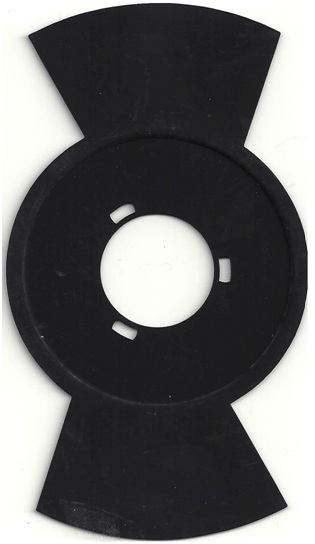
a 2 bladed projector shuter, for 48 flikers per second, out of 24 fps, and this:


three-blade-shutter-1.jpg


a 3 bladed one, for 72 flikers/s.
 
Šabović Adis;1761093 said:
I think not. I don't know how it's said in English but tromost oka is the main reason, which in turn has much to do with flicker fusion threshold.


And ther's this:

322-11291%202%20Blade%20Shutter.jpg


a 2 bladed projector shuter, for 48 flikers per second, out of 24 fps, and this:


three-blade-shutter-1.jpg


a 3 bladed one, for 72 flikers/s.

Well that is if you set the projector to 24p...here in europé the projectors are set to 25p or any frame rate you want really. So butterfly shutter just means the shutter makes a lap every second frame it has nothing to do with how fast you run your projector that is to taste, or to standard or what ever you want to call it. And a lot of projectors are not calibrated I know for a fact a large cinema in stockroom went 245P no matter what if the film was 24p or not. For quite some years. They did not feel like fiddling with the frame rate...
 
Well that is if you set the projector to 24p

How do you "set" the projector to 24? It's factory set like so.


...here in europé the projectors are set to 25p or any frame rate you want really.

I'm talking film projectors, not video.

So butterfly shutter just means the shutter makes a lap every second frame it has nothing to do with how fast you run your projector that is to taste, or to standard or what ever you want to call it. And a lot of projectors are not calibrated I know for a fact a large cinema in stockroom went 245P no matter what if the film was 24p or not. For quite some years. They did not feel like fiddling with the frame rate...

I don't understand this.
When I say "standard 24 fps", I mean standard, like in "standard 230V" (+- 10%), you don't change that like it's nothing, right?
 
Šabović Adis;1761108 said:
How do you "set" the projector to 24? It's factory set like so.


I'm talking film projectors, not video.


I don't understand this.
When I say "standard 24 fps", I mean standard, like in "standard 230V" (+- 10%), you don't change that like it's nothing, right?

I try to explain,

The projectors have crystal sync just like the cameras. And you can change it. In sweden/stockholm the 35mm Film projectors where set to the standard of 24 fps but a lot of films where actually shot and edited and shown in 25fps in the theaters. And the theaters did not care much and let the setting sit on one of the two no matter frame rate of the film was supposed to be shown in, and you can over / under crank certain projectors quite a bit especially those they use at labs.

But What Joel says about variable motion blur will be, or is allready possible to certain extent as Graeme explains.
The day we have "infinite frame rates" we can shoot 360 shutter and in post decide what frames out the frame lengths should be mixed into the frame and also with what weight, that way you have the possibility not only to decide if you want a lot or a little motion blur / shutter speed in post. You can aslo decide if you want it sinus wave or sqare etc. And cameras like phantom etc have well enough frame rate to do this allready today, even though it for sure increase the amount of light neeeded.
 
FYI, it was sound that forced the industry to adopt 24fps. Before the optical sound track most films we shot in the 18-20fps range which is the lowest frame rate that preserves human persistance of vision. However experiments with sound on film optical stripe determined there wasn't enough resolution for clear audio until 24FPS.
 
Back
Top