Welcome to our community

Be a part of something great, join today!

  • Hey all, just changed over the backend after 15 years I figured time to give it a bit of an update, its probably gonna be a bit weird for most of you and i am sure there is a few bugs to work out but it should kinda work the same as before... hopefully :)

RED review by wildlife cameraman

Interesting take. Maybe he should have bought the 101 DVD from Jay Kelley.
 
Interesting take. Maybe he should have bought the 101 DVD from Jay Kelley.

How would that have made any difference?

The RED is not the ideal camera for run and gun wildlife/natural history work, thats just life, some people can make it work (See Steve Gibby) but for most cameramen its not a useful tool to have in wildlife situations. Thats no reflection on RED, its just a vastly different market to Digital Cinema.

Different cameras for different jobs sometimes! There is no perfect camera, yet... Epic/Scarlet could make big inroads in this market as they are much much more suitable to lightweight quick action work than the One.
Your first statement covers my point. Steve Gibby helped Jay on parts of the DVD, and I bet this fellow could have learned a lot from someone who HIKES miles into the bush alone with his RED 1 wildlife setup. He would have certainly learned not to block the ventilation holes in the camera. I just think he may have laid a lot off onto the camera that should have been attributed to pilot error.
 
I too just see the obvious stated here...

He could have chosen a batterybeltclip and 16 GB CFs + LCD to get the weight further down + a clipon matte or screw-in ND's.

And then: So what?

It is still heavy and clumsy for some applications.

Curious how he'll find the Alexa better though. ALl this wuld be valid problems with an Alexa as well. The simplisity of prores is not to be denied for some applications, though.
 
Your first statement covers my point. Steve Gibby helped Jay on parts of the DVD, and I bet this fellow could have learned a lot from someone who HIKES miles into the bush alone with his RED 1 wildlife setup. He would have certainly learned not to block the ventilation holes in the camera. I just think he may have laid a lot off onto the camera that should have been attributed to pilot error.

Yes but you cant get around the cumbersome nature of the body, you cant get around the 2 min startup, the power hungry nature of it. All things that count against it.

When you have sea spray coming in you have to cover the camera, its either that or it fries.

When your trying to attempt world first imagery you have to have something that is tailored to that niche genre, the RED is not in most cases. Its not practical to shoulder mount for extended periods, cutting down on record times is a no no for wildlife, so drives are necessary.

Clip-On Mattes are a contentious issue as they have a tendency to not stand up to a lot of abuse in harsh conditions. He could have tried but most wildlife is not done with them in what I have experienced.

Gibby is the exception to the rule along with some others. But as fantastic as the RED is its not a slight against it to say its not a great remote wildlife camera.

Also I seriously doubt he will find the Alexa much better.
 
I think it s an honest critique based on limited experience. But I can say from long experience that videotape, especially HD, is not necessarily a reliable medium under high humidity or extreme weather conditions. Solid state media are much better.
For some conditions film is still a better choice.
 
As mentioned, some of the limitations he mentioned can be gotten around -- like having hot-swap battery plate. Some things have been fixed. But many of his other critiques are true.

To me, one of the biggest issues for nature/wildlife is the lack of ability to delete shots in camera. One way to help with this is to pre-roll for 10 seconds, but that takes some configuring, and doesn't really excuse the lack of ability to delete clips, which I hope Epic will have.
 
I don't think Gibby is an exception who proves the rule - that is just wrong. There are lots of folks using this camera in challenging environments who are very pleased with the performance - Anson Fogel (talk about your extreme environments!), Kennan Ward, I shot ice climbers and mountain bikers for a national TV commercial...I know there's lots of others.

great recent interview with Anson:

http://www.simonwyndham.co.uk/anson-fogel-wildwater-interview.html

and here is what I think is one of the most nuanced discussions about this application on the web...Lauri is an amazing artist and a reduser and this blog covers the entire evolutionary process of RED ONE - if I'm not mistaken, (correct me if I'm wrong, Lauri) he shoots for the Beeb's NHU but modestly doesn't talk about it:

http://www.dvinfo.net/forum/under-w...st-impressions-red-one-wildlife-shooting.html

the article fails to mention that the RED ONE he used is also eligible for a full-price EPIC-X upgrade - and that will definitely be an ultimate wildlife cinematography machine...

I have closets full of non-repeatable moments on standard definition tapes - wish I had those same shots in 4K - future-proofing the non-repeatable moment is a huge reason for shooting RED ONE - it is not always the easiest choice for all applications, but EPIC and SCARLET will come darn close.
 
We can have differing opinions then, there are reasons that the Red is not approved for in house NHU work all of which are touched on in Mark Gills article. Thats not an attack on the RED its just a realization of using a digital cinema camera in a rough environment.

It is a camera that is much more suited to a 2 person crew which is impossible to do when sitting in a hide or tramping though a jungle after gorillas. ENG cameras have had a ling time to develop into quite an excellent format for shooting what they shoot best. The RED is evolved into a camera that is very well suited to what it does best.

I don't know why people seem to have a problem with someone pointing out the inconvenience of using a full build camera in EFP situations, it wasn't designed for it. It seems to come up when anyone talks about the RED not being the perfect camera for their style of filming.

And yes Epic and Scarlet will be much more suitable, but their not here now, and neither was the article written about them.... I can't shoot with one now so its irrelevant to the conversation in every way.
 
the reality is that most wildlife cinematographers use a variety of camera systems for a variety of applications. I don't think anyone is saying that the RED is the only camera worth using...I was only offering solid evidence that this can be a great wildlife cinematography and that people are using it very successfully for that application.

Mark Payne Gill is obviously a talented shooter and entitled to his opinion, I just don't think this review paints a very complete picture of how this camera is being used and by whom.

here's another link to an NHU shooter who, I've been told by my friend who is a Panda finalist, uses RED cameras frequently (I have no idea if this footage is shot on RED, just that this shooter uses it and has expressed a liking for it, too)

http://www.youtube.com/watch?v=2m_Cww9f2MA&feature=related
 
Epic/Scarlet will be more friendly for remote shooting, hard to argue with that.

Ultimately I think power will be the toughest issue. For myself I have already started scribbling notes and drawings for a custom backpack solution that would include a section for a fuel cell or bricks with an umbilical to camera. Other features would be a combination cover and inner sling that would allow me to keep the camera built, etc.

Its also worth noting that in some cases a rugged vehicle could be used to get a heavier set up to where you need it. For example, in my van I have 4 deep cycle marine batteries and an 1800watt inverter that can run the RedOne all day.

Cheers - #19
 
I seem to be coming across wrong. I am not saying that the RED is not an option, it most certainly is, what I am saying is that within Natural History filmmaking it is not the go-to camera for many valid reasons. You can point me towards many experienced cameramen who I will have great respect for, but I would doubt that the RED is the primary camera for many if not all of them. I am talking about the RED in the frame of being the primary industry standard flexible camera platform for NatHist documentary filmmaking, it is not held to the same regard as say the Varicam was for many years.
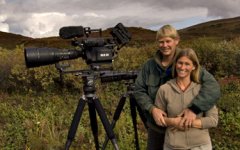
The RED One has a number limitations for remote fieldwork, and that is fact. It can be done, but many will feel more comfortable as a production using more field proven systems that suit the genre better (Long record time, Long Lenses, 1 man operation, as lightweight as possible, viewfinder as opposed to LCD)
 
Wildlife and Red!

Wildlife and Red!

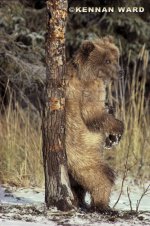
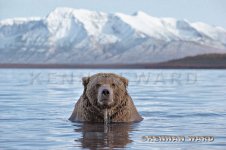
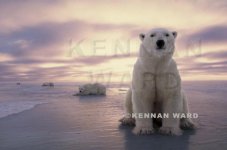
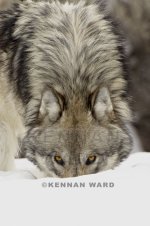
As a wildlife photographer and filmmaker, I feel I can speak for world wide extreme use of the red in the field!

The Red one works for me EXTREAMLY well!

See for yourself!

http://www.kennanward.com/shows/Alyeska.html

Peace,

Kennan Ward
 

Attachments

  • 133.jpg
    133.jpg
    90.6 KB · Views: 0
  • 393.jpg
    393.jpg
    85.3 KB · Views: 0
  • 3515.jpg
    3515.jpg
    23.9 KB · Views: 0
  • 3946.jpg
    3946.jpg
    68.5 KB · Views: 0
  • wherekk_20090103132916.jpg
    wherekk_20090103132916.jpg
    71.7 KB · Views: 0
I tend to find it a bit funny about complaining about a heavy camera when the glass attached in the last photo weighs at least (or close to) what the Red weighs:)

In the end, as has been said, no one camera is perfect for every job, or every shooter.

And I doubt the Alexa is any more weather proofed than the red, nor does it appear to be any lighter.

(Note: I have not held, nor do I expect to hold an Alexa, just based on visual cues, such as it being huge:) )
 
We can have differing opinions then, there are reasons that the Red is not approved for in house NHU work

I think the main reason for that is post production and to some extent archiving - the Sony XDCam cameras like the PDW700 are not on their list either.
The cameraman in the youtube link is Robin Cox, and I know that the producer of that film had to fight hard to get the Beeb to use the Red as I talked to him about it a few years back when I put in my order.
I've worked with both Robin and Mark and they're both talented guys with a lot of experience of a lot of cameras, so I think their opinions are very worth listening to.
I would say that in Mark's situation the main thing to point to is the wisdom of going on a difficult shoot with a once in a lifetime, fleeting situation that you can't afford to miss, with a camera which you've barely ever used! In his defense though, I would guess this was not his decision!
Oh, and Kennan, I've seen your results - wow, they're amazing, surely a terrific advert for Red working for wildlife!
Steve
 
I seem to be coming across wrong.

Hi Jay - I was only taking issue with your now-edited comment that Gibby was an exception that proved the rule. Sorry if I came across as adversarial, I was just trying to show otherwise, with real links to real work, that this camera is used in a lot of fine fieldwork. I respect your opinions. Cox's work is stunning, glad you are enjoying it. It's great stuff!
 
Kennan that is an impressive rig! Are you using Feisol legs? Please can you tell me what you are using to attach the head? Do you still maintain ball leveling ability? Thanks!
 
Back
Top