Welcome to our community

Be a part of something great, join today!

  • Hey all, just changed over the backend after 15 years I figured time to give it a bit of an update, its probably gonna be a bit weird for most of you and i am sure there is a few bugs to work out but it should kinda work the same as before... hopefully :)

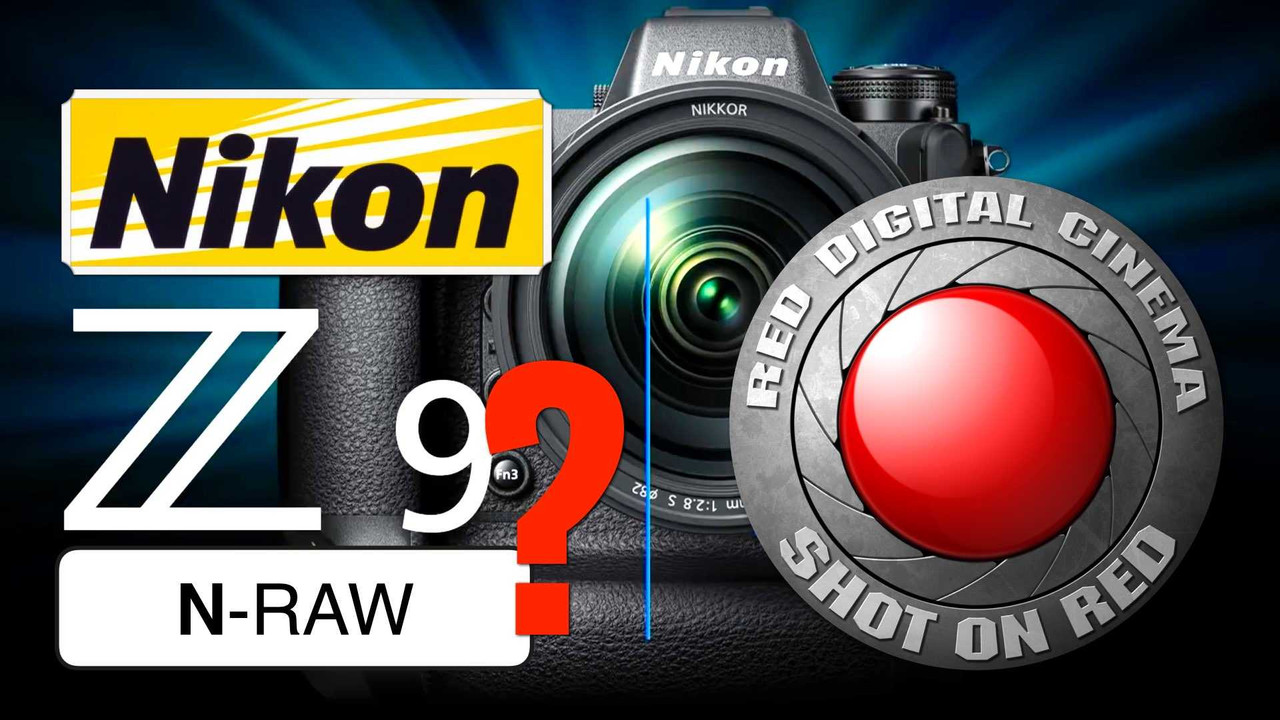
Red is Suing Nikon for infringing on video compression patents

as a former VP of marketing and product development at ARRI pleaded guilty to corporate espionage.

I've worked with this person on set many times and he has a different story. I won't dwell on this but he's very well respected in the industry and Canon thinks so too.

Nothing about RED screams little guy to me. They came out swinging and disrupted the industry but now I think they are the one being disrupted.
 
snip:

$4.4b, but who's counting. I don't exactly think Jim sunk every dime and liquidated all his assets to start the company either.

..

I would be surprised if Jim had to spend more than 10-15 million of his own money to develop the REDONE. IIRC he had over 1000 deposits before shipping ($1,000,000) and except for the sensor which I think was an existing off the shelf or a customized off the shelf sensor - so maybe a million or two to place the bulk order for sensors, there wasn't much else in terms of circuits or physical body that required particularly sophisticated design (certainly not at the level of most of the existing Varicams and such or even consumer camcorders and DSLRs. (Imagine the physical complexity of a typical DSLR vs the REDONE.) Again IIRC the main circuit used a commercial FPGA. As far as the body, several companies make equivalent sized underwater housings that are more complex and waterproof - in much smaller quantities - that sell retail for $2000-3000.

And there weren't a lot of complicated buttons, no filter wheel, no autofocus, lens control etc. Also limited technical support - particularly no repair parts or repair manuals available. (Back in the day with Betacams and such you got a repair manual with a list of every component and even layouts that could be used to make your own circuit board if necessary.)

I suspect the hard cost of a REDONE was around $4000.

As far as development costs - in the early 2000s I went to a development company to quote on developing the hardware/firmware for a portable disk recorder to record high def from the box cameras made by Sony, Panasonic, Hitachi (Fast forward or one of those companies had a little box for standard def but there wasn't a high def version at the time.) They quoted me $150K-$250K all in - circuit, firmware, and box. I highly doubt that developing all that was needed for the REDONE would be more than ten times that - i.e. $2.5 million (five years later with all of the OTS components that were developed in the meantime)

Remember that at the time when the Redone was announced, Canon and Nikon had ~$2500 DSLRs with similar megapixels, that could do 8 frames per second or so and they may have been limited more by the speed of the mirror than actual sensor limitations, plus maybe the ability of those ASICs that had to fit very tight thermal and physical form factors to handle greater frame rates. That was the reason I was confident that RED could achieve it at that price point - it wasn't actually a huge technological feat. The main reason it was so disruptive is there wasn't any good reason for Sony, Panasonic, Arri, et al to cut their margins to develop such a camera when they had a viable roadmap for the future with their existing style of camcorders.


RAW (not compressed RAW) was the genius of the original REDONE. Basically it was just a container with a sensor and a pipeline to feed the linear sensor data to a compact flash card. They gave an internal debayer and a small program to debayer on a computer - but the user ultimately could do what they wanted with it. Neither the internal firmware or the REDCINE program should have been a major software engineering feat. (Later on color science improvements may have been much larger efforts - but it seems that, particularly at the beginning, most or all was done by one guy so not a huge expense even if really well paid.)

Compression, which seems like it would be similar to off the shelf data compression schemes with some selectivity toward areas most discernible to the human eye, was basically necessary to fit the bandwidth limitations of compact flash cards at the time.

The true story of REDONE development would make an interesting documentary.
 
surprised

They did share a lot of stuff about the RED One's development during that era and even afterwards. Likely ironically for people who only know me from this site, I was much closer to ARRI back in the 2000s as my life revolved around Kodak, Panavision, and ARRI before RED existed. D20 and D21 were $$$,$$$ to buy, but BOM was significantly lower. My old studio built a dozen custom cameras at that time. Components weren't exactly the main issue, but labor, R&D, man hours. This was for a camera not for resale either and we were utilizing a laptop to control it, the dangerous time when tethered was the only way before building stuff inside a system. Wireless wasn't even there yet. We only ended up using it for a few years before I revised the workflow with superior technology which became available.

Really fun back then when the cameras and digital workflows were all real firsts. That slope from film to digital ramped up aggressively on productions once the RED One and then the Alexa "OG" came to the stage a couple years later. There were several systems before, but the acceleration only happened from 2007/2008 onward.

A RED One and a set of Super Speeds back then would have set you back about $30K for a shooting package with batteries. Super Speeds go now between $50-$75K regularly now.
 
Again, concerning the supposed obviousness of RED’s patent, Dalsa, a Canadian digital imaging and semiconductor business with an annual revenue of $3-$4bn, introduced a 4K camera years before RED, but it recorded uncompressed raw, file sizes were ginormous, rental was a whopping $3,000/day and their cameras never gained widespread popularity.

DALSA fabricated the CCD chips that were used in the two Mars Rovers, based on a NASA design, As of Nov, 2004, they were still photographing the surface of Mars. If a compressed RAW solution like REDCODE was obvious, it would certainly have occurred to a team of engineers as brilliant as those working at Dalsa.
 
Last edited:
snip: rental was a whopping $3,000/day and their cameras never gained widespread popularity.

DALSA fabricated the CCD chips that were used in the two Mars Rovers, based on a NASA design, As of Nov, 2004, they were still photographing the surface of Mars. If a compressed RAW solution like REDCODE was obvious, it would certainly have occurred to a team of engineers as brilliant as those working at Dalsa.

$3000/day ($4500 in 2022 $) might be why it "never gained widespread popularity" and maybe for that much per day that felt they should give you all the data - "visually lossless" is a bit subjective.
 
$3000/day ($4500 in 2022 $) might be why it "never gained widespread popularity" and maybe for that much per day that felt they should give you all the data - "visually lossless" is a bit subjective.
There exist metrics for assessing the quality of visually lossless image compression based on extensive studies of the HVS, but sure, you could argue that any study involving human perception, even one involving hundreds of participants, is subjective I suppose. Would you be so kind as to provide a link to a statement by any of the engineers who worked on the Dalsa or any of their marketing and product development representatives that they’d even considered compressed raw, because affordable 4K RAW was nothing more than science fiction before RED came along. You could own a RED for less than it cost to rent a Dalsa Origin for one week. Productions often use more than one camera on set. Meanwhile, a new 35mm film camera system cost anywhere from $150 -$300 thousand and, depending on the camera, renting one could run around $25,000/month.
 
Last edited:
The point is that compressing the image data was absolutely necessary to be recorded on the compact flash of the day - other established companies that were not trying to break into the industry with a much cheaper camera may have thought that they should give the end user ALL of the data.

Do you honestly believe that Sony (or others) with massive experience with video compression and literally hundreds of all types of electronic cameras, could not/would not be able to do visually lossless compression of bayer data very easily?

IIRC Cineform and jpeg2000 wavelet compression were around for several years prior to REDONE.

Although I think compressing the raw was an obvious next step, certainly give credit to RED - they did it and it ended up forcing all the other companies to up their game and accelerate their timelines to 4K and relatively inexpensive cinema cameras - and it's something to be proud of - just maybe not IMHO should have been patented or patentable.

As I said before, through a weird confluence of several things going on in my life, I was the first to make/market a totally self contained underwater video system. It was obvious, but I did it first and is something to be proud of too.

Sony did it not long after, but when NASA was looking for a better way to analyze what was going on with the space shuttle reusable solid rockets after landing in the ocean (they floated vertically so the nozzle end was 100 feet down and had wires and possibly hazardous exposed parts that the recovery divers had to deal with to fit the pumping hoses and tow cables) they chose mine over the Sony - it was more compact, cheaper and in some ways more flexible.
 
It's worth noting that the F23 with HDCAM back was a quarter million dollars in 2007. Even if the RedOne sold for 4x what it cost to make (including NRE), calling it overpriced ignores the state of the market at the time. It also offered a direct path to post as binary data - no $125K SR deck eating expensive tape stock. I could go on, but at the end of the day the RedOne was easily worth $17,500 when it came out. Just sayin'

Cheers - #19
 
Nikon Refuses to Comment on RED’s Lawsuit, and That’s Not Good


By YOSSY MENDELOVICH


Article
https://ymcinema.com/2022/06/03/nikon-refuses-to-comment-on-reds-lawsuit-and-thats-not-good/


1654527655650.jpg
 
. Even if the RedOne sold for 4x what it cost to make (including NRE), calling it overpriced ignores the state of the market at the time. It also offered a direct path to post as binary data - no $125K SR deck eating expensive tape stock. I could go on, but at the end of the day the RedOne was easily worth $17,500 when it came out. Just sayin'

Cheers - #19

I didn't mean that REDONE wasn't worth $17,500 - retail price being 4x+ direct cost is pretty normal for manufactured product, and given the competition it was definitely worth it. I just meant I didn't think Jim had to spend any significant percentage of his net worth to get RED started.
 
It turns out their fears weren’t unwarranted said:
I remember that guy, didn't he start selling $20 android phones for $1,200 with auto stereo screens and call them holographic displays?
 
A few things.

First. Be polite.
Second. Remember what site you are on.

We've been very, very relaxed over the last few years, but people used to be banned for a lot, lot less.
 
Nikon is fighting back. https://ymcinema.com/2022/09/11/niko...-reds-lawsuit/

Summary of article: "Nikon denies the claimed infringements and fights back. What does this mean to Z9 shooters? Well, the Z9 will still be able to shoot compressed raw internally. This legal process can take some time. Till then, most likely firmware 2.0 stays with all its features. Second, other camera manufacturers might get some balls and implement compressed raw capabilities as well. Let’s see how it goes. We’ll do our best to keep you posted."

Summary of important point is that because Red showed the camera more than a year before they applied for the patent (and didn't disclose that to the patent office as required) that the patent would not have been granted, and it is suggested that that is the defense Jinnitech used and RED capitulated. Thus a difference argument than Apple used.

Essentially it is saying that if you don't file the patent within a year of reducing it to a functioning unit - even if theoretically patentable - if becomes public domain.
 
Back
Top