Welcome to our community

Be a part of something great, join today!

  • Hey all, just changed over the backend after 15 years I figured time to give it a bit of an update, its probably gonna be a bit weird for most of you and i am sure there is a few bugs to work out but it should kinda work the same as before... hopefully :)

RED 8K S35

Helium 6K is a possibility, but IMO, it's manifest destiny is S35-ish coverage 8K. It's the sweet spot.

While it's conjecture at this point as to whether there will be significant diffraction issues with a 3.65 micron pixel pitch, I'd wager that a purpose built OLPF will mitigate all but the most extreme instances. Obviously diffraction in the lens is still part of the equation, but that's true with 5 micron photo sites, film, ...

IMO, the more interesting issue is whether in camera downscaling from 8K to 4K will be too computationally expensive. Getting the image characteristics of an S35 format, with the Bayer penalty already accounted for, written to a media type that can be decoded in real time by modern CPUs and Pascal GPUs might really open up more use cases for the RED capture system. Interesting times.

Cheers - #19


RAW is still RAW, if the sensor size of Helium is s35mm or close to what the Dragon 6K sensor is today, but instead being 8K, then you will not have a Helium s35mm 6K sensor, because that would be another sensor entirely. The 8K and 6K Dragon sensor is the same sensor, only different sized cuts. If you want a 6K Helium that might be smaller than Raven in sensor size, so no, I don't see how Helium 6K would be a possibility other than shrinking the sensor size.
 
Helium 6K is a possibility, but IMO, it's manifest destiny is S35-ish coverage 8K. It's the sweet spot.

While it's conjecture at this point as to whether there will be significant diffraction issues with a 3.65 micron pixel pitch, I'd wager that a purpose built OLPF will mitigate all but the most extreme instances. Obviously diffraction in the lens is still part of the equation, but that's true with 5 micron photo sites, film, ...

IMO, the more interesting issue is whether in camera downscaling from 8K to 4K will be too computationally expensive. Getting the image characteristics of an S35 format, with the Bayer penalty already accounted for, written to a media type that can be decoded in real time by modern CPUs and Pascal GPUs might really open up more use cases for the RED capture system. Interesting times.

Cheers - #19

What you say makes a lot of sense. That is make the Helium 8k only and do any down-scaling in NLEs. Makes for a simpler firmware and probably fewer problems. A specific purpose camera, if you will.
 
Helium 6K is a possibility, but IMO, it's manifest destiny is S35-ish coverage 8K. It's the sweet spot.
Agree, it would make less sense to upgrade a EPIC/WEAPON to helium if the sensor stays at 6k and gets smaller. Isn't that the main-reason to go for a smaller pixel-pitch, increasing resolution on the same sensor-size? ;)

Makes me wonder how a future Scarlet with Helium will look, Scarlet-W is S35, Scarlet-Dragon does motion at S35. Ehm, wouldn't that mean that... no i don't speak it out yet. ;)

While it's conjecture at this point as to whether there will be significant diffraction issues with a 3.65 micron pixel pitch, I'd wager that a purpose built OLPF will mitigate all but the most extreme instances. Obviously diffraction in the lens is still part of the equation, but that's true with 5 micron photo sites, film, ...
When Canon announced the 5Ds/R, the keyword diffraction made a big wave through sites, lots of math and theory why this is a "huge" problem... And in real world? It's not a big deal.
There are cameras with much smaller pixels that get good reviews and nobody really brings up diffraction and such stuff.

If sony can do some cool stuff with 2.41-pixels, then i know RED can do magic with 3.65. ;)

IMO, the more interesting issue is whether in camera downscaling from 8K to 4K will be too computationally expensive. Getting the image characteristics of an S35 format, with the Bayer penalty already accounted for, written to a media type that can be decoded in real time by modern CPUs and Pascal GPUs might really open up more use cases for the RED capture system. Interesting times.
Until Helium hits the market the GPU's will be ready and probably more performant with 8k (or 12k)-footage than today with 6k. ;)
 
Woke up with a crazy thought...

what if the actual pixel resolution of the sensor is much higher than we are thinking, (think 64-100 megapixels) but because of the way the read out is handled, it actually results in a less dense (helium) effective pixel pitch - light is more efficiently captured at the sensor + readout (not using traditional Bayer method) so for instance - a 96mp (arbitrary) actual sensor would yield a low density 24mp (again arbitrary, but 1/4 multiplexed) readout/capture that is super clean and robust ?

if I'm somewhat right I'd like to get a jump in line to pay to swap my Scarlet w up to Epic W hahaha ;)
 
Someone said they had s sneak peek and it's very cool, to me that means more than just resolution
 
Dazed and confused

Dazed and confused

I am just a little confused about the Heluim announcement. Is this the next generation sensor and the 'tock' in the tick tock body and sensor upgrade process that Red has set up? If so why is Heluim being announced with a quick delivery only months after people have taken delivery of their Weapons in the yet to finish upgrade programme? Or is Heluim just a parallel and equivalent sensor to Dragon to help with the bottleneck in Dragon chip production? While specs are not known if the Heluim proves to be the superior performer in terms of sensitivity, colour and DR where does this leave Dragon? I have just invested heavily in the Carbon Fibre Weapon and the 8K chip upgrade. I was willing to spend large chunks of money as I thought I was buying the best camera available and I would have at least two or three years to get a return on the investment. If the Heluim is a better performer then that makes for a dilemma.


My personal approach to Red is that I am mostly attracted to the physically larger sensor sizes. At S35 I am just as happy with Alexa or even a Varicam performance but these cameras do not go past S35 giving the 6K and 8K Dragon a real and unique advantage.


When I supply clients with 6K files I have never had a request for more resolution. I know Red clearly saw the future when they pushed 4K into a disbelieving HD world but the reality in my market is that SD delivery is still a large chunk and HD is the highest resolution anybody sees the work. 4K is coming but is not 6K sufficient? I worry most of my clients would see 8K workflow as a burden? 8K I hope will be seen as worth the workflow pain for a Vistavision image but for the normal S35 image?


I realise the Heluim sensor is only being teased at the moment and more information will come our way soon and we will all get a better understanding of how Heluim will fit into the Red world.
 
Diffraction is real, easily demonstrable (and from my limited scientific understanding) completely immutable!

...it is not present for a lot of working stops even with 3.65 micron photo sites. But if you shot the Revanant with those photo sites you would easily see it.

If you like shooting wide daylight ext between T4-T5.6 then fine you'll not suffer but T16 on Masterprimes will show up with diffraction limited effects .. Obvosuly if there is a aggressive OLPF this does hide things a bit

1000% dead on.

diffraction in the red channel starts at T5.8 for a 3.65 micron pixel pitch... we'll have to see whether a custom OLPF can clean that a little bit up...
 
I am just a little confused about the Heluim announcement. Is this the next generation sensor and the 'tock' in the tick tock body and sensor upgrade process that Red has set up? If so why is Heluim being announced with a quick delivery only months after people have taken delivery of their Weapons in the yet to finish upgrade programme? Or is Heluim just a parallel and equivalent sensor to Dragon to help with the bottleneck in Dragon chip production? While specs are not known if the Heluim proves to be the superior performer in terms of sensitivity, colour and DR where does this leave Dragon? I have just invested heavily in the Carbon Fibre Weapon and the 8K chip upgrade. I was willing to spend large chunks of money as I thought I was buying the best camera available and I would have at least two or three years to get a return on the investment. If the Heluim is a better performer then that makes for a dilemma. My personal approach to Red is that I am mostly attracted to the physically larger sensor sizes. At S35 I am just as happy with Alexa or even a Varicam performance but these cameras do not go past S35 giving the 6K and 8K Dragon a real and unique advantage. When I supply clients with 6K files I have never had a request for more resolution. I know Red clearly saw the future when they pushed 4K into a disbelieving HD world but the reality in my market is that SD delivery is still a large chunk and HD is the highest resolution anybody sees the work. 4K is coming but is not 6K sufficient? I worry most of my clients would see 8K workflow as a burden? 8K I hope will be seen as worth the workflow pain for a Vistavision image but for the normal S35 image? I realise the Heluim sensor is only being teased at the moment and more information will come our way soon and we will all get a better understanding of how Heluim will fit into the Red world.

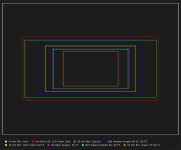
Tom, here's the pecking order... how big is yours ? ;-)))


attachment.php
 

Attachments

  • Untitled-1.jpg
    Untitled-1.jpg
    40.2 KB · Views: 0
Last edited:
1000% dead on.

diffraction in the red channel starts at T5.8 for a 3.65 micron pixel pitch... we'll have to see whether a custom OLPF can clean that a little bit up...

How would an OLPF improve diffraction limiting - other than limiting resolution (at all stops) below the level of resolution that would occur with the diffraction limiting?
 
How would an OLPF improve diffraction limiting - other than limiting resolution (at all stops) below the level of resolution that would occur with the diffraction limiting?

I don't know that and I (currently) doubt it will, but hopefully RED has something in the works as diffraction is absolutely real. Once it kicks u're basically carrying a lot of useless pixels that have to be offloaded, copied and then processed later in post with zero benefits. Waste of time.

TV shoots often mainly between 2.8-5.6... but that goes out of the window for indie shooter very, very fast that often does not shoot in controlled environments...

we'll see. I'm sure RED is aware and on top of all of that.

Also, why I'm excited to see the color performance of the next sensor - which this one seems to be - I see this as RED simply introducing another great option in their cam line-up. Dragon 6K is pretty much exactly the same image plane with larger pixel pitch, so one can always shoot on that cam.
 
An interesting aspect I don't see mentioned with respect to diffraction and pixel size:

Reducing pixel pitch means diffraction becomes detectable sooner, not that the optics behave any differently. Conversely, at all f-stops prior to the diffraction limit, larger pixels are giving away detail.

The potential lost detail in the range up to f8 seems well worth chasing given conventions on DOF, versus the unavailability of extra detail beyond f8 and the likelihood of wanting to shoot those stops.

3.6 micron isn't that much of a scary change- at most a one stop shift in diffraction becoming detectable. Remember, it'll be no less sharp at any given aperture, but sharper at most common stops.

I agree on the potentially more beneficial trade-off of higher pixel raster vs larger pixels (w/ later diffraction kick-in)... that is, if we are interested in comparing the same image plane and FOV.

for direct comparison (independent of FOV, DOF and image plane characteristics), I'd argue that larger pixels often win out... larger DR, cleaner image...

shoot Alexa @ 2.8K and shoot Dragon @ 2.8K (--> sensor crop @ 2.8K) and compare... will be ugly ;-)


also, Dragon w/ 5 micron pixel pitch has diffraction kick-in @ T7.9 in the red channel, so that's a 2.1 stop difference to Helium... and numbers I post here are not the 2px limit when diffraction actually may become visible... those numbers are even lower

ultimately it's about image detail (given ur lens can resolve the sensor) and sharpness is just one factor, diffraction is another one... higher sharpness means little if u're capturing diffraction mud - and vice versa.

we'll see, so far RED has always improved upon the prior sensor tech
 
Remember, it'll be no less sharp at any given aperture, but sharper at most common stops.
Can you explain?
How "any given aperture" and "most common stops" are not the same thing?
I'm sure that was just a semantic error...:-)
 
Can you explain?
How "any given aperture" and "most common stops" are not the same thing?
I'm sure that was just a semantic error...:-)

I thought that statement was pretty self explanatory, perhaps just how you're reading it...?

Having a higher pixel density reveals the limit of the optics at a larger aperture. It doesn't ever make the final image less sharp relative to the overall image dimensions than a sensor with a lower pixel density, or affect the image that the lens itself produces. Conversely it does create additional sharpness at any aperture larger than the diffraction limit, which a lower res sensor couldn't resolve.

Convention suggests that most commonly, cinematographers prefer to shoot at apertures larger than either of the diffraction limits at play here.

Put another way, regardless of f-stop, a higher res sensor is never softer mm for mm, only pixel for pixel. Common behaviours tend away from those limits anyway, so in typical usage the higher resolution sensor will capture more detail, and in atypical usage there's still no optical detriment.
 
Conversely it does create additional sharpness at any aperture larger than the diffraction limit, which a lower res sensor couldn't resolve.

sharpness is a lens attribute, the lens is as sharp as it is. Larger pixel density does not create additional sharpness. It merely adds resolution (if the lens can resolve the additional pixels).

The image can look like a cleaner sharper image after downscaling, ergo monitoring in lower than native res. That is because of the additional res and the downscaling algorithm.

Example:

Shoot 2 images with the same sensor and same lens. Focus dead on in both images. Shoot one @ 6K and then one @ 8K. Then look at the image in full native resolution, so look at one in 6K and at one in 8K - zoom in to pixel level. They will both have the exact same sharpness. One image just has less image detail than the other.
 
Back
Top