Welcome to our community

Be a part of something great, join today!

  • Hey all, just changed over the backend after 15 years I figured time to give it a bit of an update, its probably gonna be a bit weird for most of you and i am sure there is a few bugs to work out but it should kinda work the same as before... hopefully :)

Randi Altman's PostPerspective on "Gone Girl" by Daniel Restuccio

Jarred Land

Fire Chief
Staff member
Joined
Dec 27, 2006
Messages
10,644
Reaction score
33
Points
10
Great article by Daniel Restuccio over on postperspective that goes over the 6K Dragon post process of Gone Girl:

http://postperspective.com/gone-girl-light-iron-david-finchers-path-6k/

“Jeff Cronenweth (ASC) and David shoot a lot of moody scenes and superior Dragon shadow rendering is evident in Jeff’s photography,” he explains. “But Gone Girl also has a number of daytime exterior shots (unlike Social Network and Dragon Tattoo), which also were benefited by use of the new Dragon sensor.”

http://postperspective.com/gone-girl-light-iron-david-finchers-path-6k/
 
Thanks, Jarred Land, for pointing this out.

I would love to see an interview with Cronenweth or Peter Rosenfeld on RED.com about this project. ;o)
 
Last edited:
So just so I understand the workflow correctly:

1) Shoot 6k.
2) Transcode R3Ds to ProRes LT and edit offline. Store RDM settings in database.
2b) Edit
3) Generate XML
4) <Magic Script to Generate REDLine batch operations using Database Metadata>
5) Generate 6k DPXes of shot in REDLine GPU on 'farm'.
6) <Magic Script to Generate Premiere Timeline with 6k DPXes and rescale transforms>
7) Composite in linked AE comp with 6k DPXes
8) Ouptut 6k Online DPXes from Premiere -> Lightiron
8b) Grade at Lightiron
9) 6k DPXes in Pablo Rio -> 5k DPXes for DSM
10) 5k DSM -> 2k/4k DCI

EDIT: More answered here:
http://provideocoalition.com/pvcexc...low-and-post-production-process-of-gone-girl/

Something they still don't cover though is how they merge the offline editors' work and how they online from the ProRes -> 6k render.
 
That is a wacky workflow

Shoot 6k, center extract 5k, scale to 4k. I guess they had to frame for 5k since the summilux-c's are vignetting at 6k, so you really have only 5.5k usable to re-position from anyway.
Why shoot 6k 2:1, Why not shoot 6k FF so you have more vertical re-position and stabilization room?

I understand wanting to edit with proxies for fluidity, and sure if you have vfx shots they need to go to dpx or exr.
Most of what they are describing are just re-positions,sizing and composites, all of which can be done during color. Don't see why they needed to render everything to dpx.

I don't understand why they couldn't stay with the r3ds.
Couldn't get XML from Adobe to Pablo to talk properly to preserve the layers and re-positions?
Too many r3d layers choke pablo? Low bandwith/high cpu r3d vs Extremely high bandwidth/low cpu 6k dpx.
or maybe dragon support was not implemented in Pablo in time?


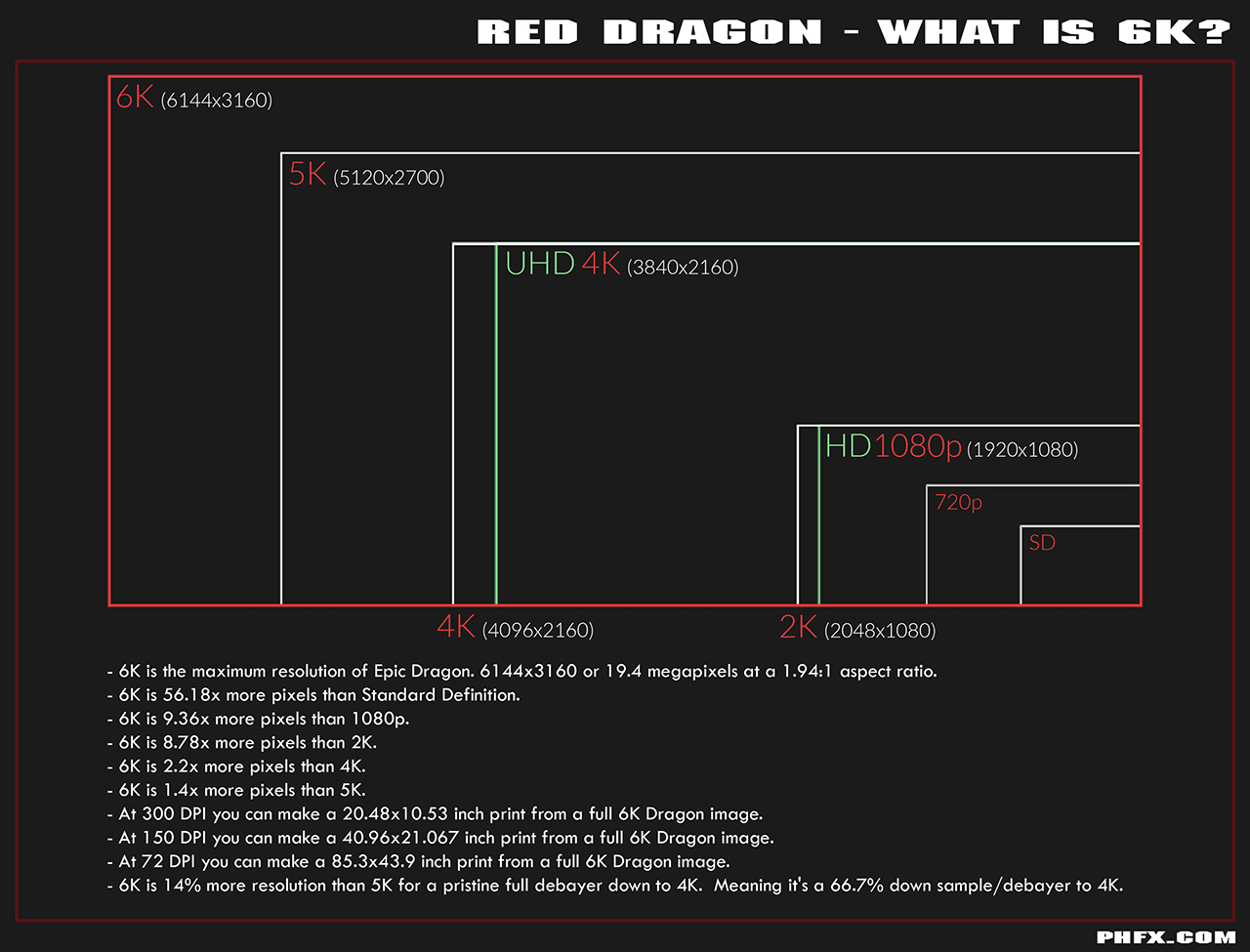
and some wacky math too: "Cioni emphasizes, 6K is nine times 2K and 2.5 times bigger than 4K."
?

There is another article which expands on the tech details a little bit more
here.

I would love to hear how they handled sound, since Premiere does not handle BWF metadata at all.
Scene, Take, Circle?
Maybe just throw money at it, a bunch of assistant editors to manually re-organize, label, and sync everything.


"nearly everything had an effect on it. It was either stabilized, zoomed, composited or had visual effects applied"

I really love the flexibility to re-frame in post, but I have to wonder how the DP feels about this, specially on the a-list level.
Jeff, just frame for 5k, when I don't like what you've done I can always move it around in post...
 
I don't understand why they couldn't stay with the r3ds.
Couldn't get XML from Adobe to Pablo to talk properly to preserve the layers and re-positions?

You can't translate roto shapes through XML with feathering. You can't transfer warp stabilization grids. You can't easily transfer keys or secondaries. You can't transfer softening or blurs or really any real VFX work. And with 2200 VFX shots that's a shot every 4 seconds.
 
That is a wacky workflow

Shoot 6k, center extract 5k, scale to 4k. I guess they had to frame for 5k since the summilux-c's are vignetting at 6k, so you really have only 5.5k usable to re-position from anyway.
Why shoot 6k 2:1, Why not shoot 6k FF so you have more vertical re-position and stabilization room?

I understand wanting to edit with proxies for fluidity, and sure if you have vfx shots they need to go to dpx or exr.
Most of what they are describing are just re-positions,sizing and composites, all of which can be done during color. Don't see why they needed to render everything to dpx.

I don't understand why they couldn't stay with the r3ds.
Couldn't get XML from Adobe to Pablo to talk properly to preserve the layers and re-positions?
Too many r3d layers choke pablo? Low bandwith/high cpu r3d vs Extremely high bandwidth/low cpu 6k dpx.
or maybe dragon support was not implemented in Pablo in time?


and some wacky math too: "Cioni emphasizes, 6K is nine times 2K and 2.5 times bigger than 4K."
?

There is another article which expands on the tech details a little bit more
here.

I would love to hear how they handled sound, since Premiere does not handle BWF metadata at all.
Scene, Take, Circle?
Maybe just throw money at it, a bunch of assistant editors to manually re-organize, label, and sync everything.


"nearly everything had an effect on it. It was either stabilized, zoomed, composited or had visual effects applied"

I really love the flexibility to re-frame in post, but I have to wonder how the DP feels about this, specially on the a-list level.
Jeff, just frame for 5k, when I don't like what you've done I can always move it around in post...


Jeff spoke rather fondly of the 6K 2:1 to 5K 2.40:1 extraction. It's really about "story first". It was used mostly for stabilization (which results in a re-framing) from what I can tell and saw at the panel a few weeks ago. Interestingly in a couple examples it was about smoothing the motion on a camera move to help guide the viewer. They had a frame guide for the 5K 2.40:1 and that's exactly what he framed for. The "in take and out of take" composites were more for tuning the performance a bit. They shot 6K 2:1 because it was plenty of headroom for both the 5K 2.40:1 extraction and also the upcoming 1.78:1 "more TV friendly" extraction, which is currently being worked on now.

They didn't edit natively with .R3Ds because of the shear volume of data, longer loading times for sequences and projects in the NLE, and Kirk and David really work fast in the cuts. Editing is native REDCODE RAW works fine, but on larger projects like this 2 hour and 25 minute film it makes a lot of sense to run with the quickly made 1080p ProRes 422LT proxies. Which is actually a fairly common workflow in reality. Kirk laughed a bit about "taking homework home" to work on. It's easier to move around smaller files when cutting really.

Also, just to note since they were using PIX System for dailies it's pretty damn fast to make a tweak, export out, and send David a quick look for him to make notes on with the ProRes workflow. Like really, really quick.

One thing that is sort of new was the resolution of the ProRes files so that the 5K 2.40:1 extraction fit in a 1080p window will editing, the extra space outside of that was a larger Quicktime resolution.

Not much talk about sound, but there's a few ways to deal with it.

Michael Cioni referenced this image at the panel and that's where his rough numbers are from:

phfx_redDragon_whatIs6K.jpg
 
Jeff spoke rather fondly of the 6K 2:1 to 5K 2.40:1 extraction. It's really about "story first".

Sure, if your framing for 5k 2.4 and treating everything outside of that as bonus wiggle room, seems like 6k FF gives you extra wiggle for free and no penalty. Maybe the extra vertical pixels FF vs 2:1 are just vignetted out with the summilux-c, so not really usable anyway. Or maybe they are just mixing up terminology, they are saying 6k 2:1 and then they are saying 6k 6144x3160 which is FF


They didn't edit natively with .R3Ds because of the shear volume of data, longer loading times for sequences and projects in the NLE,

For long form editing, proxy is still the way to go to avoid frustration. What they are describing is then rendering everything to dpx through redline and replacing the quicktimes with dpx in adobe. Even if they could not use the r3ds in pablo, they could have replaced the proxies with the r3ds in adobe, and avoided the extra initial dpx conversion step. Much easier to deal with moving around 6k r3d file sizes than uncompressed 6k dpx sequences, and maybe a little easier to work interactively with r3ds in AE by setting lower debayer setting while working and higher when rendering. the all DPX route is strange.


Not much talk about sound, but there's a few ways to deal with it.

Besides throwing manual labor at it?
On set your sound recordist is annotating the bwf sound files with scene and take info, and the director's preferred circle take.
In avid, auto sync and your done - your proxy clips are organized how they are in the script, and you know the preferred take.
In adobe, that information is lost, everything must be manually entered.
I dislike avid, but telling a producer they need to spend significantly more time and money on offline prep just to use adobe they start saying things like "why can't it just happen in the cloud?"
 
From the article, it seems like they went to DPX with all the frame corrections in place...hence not going back to R3Ds for the final online. I suppose those corrections could be made further down the pipeline, but part of Fincher's style is a precision in framing and movement, so it's not much of a surprise to me that he would rather work with those corrections upfront. It's not as though he's making people correct every take of a shot...they're working with the circled take, the 59th or whatever take, the defining one that he wants to work with, no? I like that he's this specific in how he wants the camera to move, and I very much doubt that Jeff Cronenweth takes much issue with Fincher using that wiggle room to get something that is already 98% perfect in terms of what the director wants, and making it something that he is 100% satisfied with.
 
Back
Top