Welcome to our community

Be a part of something great, join today!

  • Hey all, just changed over the backend after 15 years I figured time to give it a bit of an update, its probably gonna be a bit weird for most of you and i am sure there is a few bugs to work out but it should kinda work the same as before... hopefully :)

Noise on the low end but even worse scary megenta lines

Status
Not open for further replies.
Just on the whole ansel adams thing.

A master made those images, with good tools, but i am certain, nothing was "out of the box", not the camera, not the lens, not the aperture, not the filtration, not the post processing and most certainly, not the light.

A very talented photographer I know believes that there is only a certain day of the year that an object can be photographed in its very best light ( ia have come to agree with him). Part of Adams work was figuring out the day and time when his composition would be receiving the best light to create a photograph. Light affects DR more than anything else.

And lets not put this down to camera's, there is far too much to consider in making those VERY considered images. To want that from a camera anytime you point it at something is to sort of negate the "wholeness" in the craft of photography and cinematography.

Battistella
 
And his printing was fickin awesome.


Yup. Just a total artist with a scientific understanding of his tools (like the past masters form the city I live in) and an understanding that there is a a time and process involved in the creation of anything.

He could lecture on any phase of his process because he was intimate with it and understood it's absolute strengths and weaknesses. (that's how i feel it)

Imagine the tests he threw away that we would proudly hang on our wall.

Battistella
 
Thanks for all the feedback guys I really appreciate it. The magenta lines I'm referring to can really be seen if you download the quick motion file I posted originally. You really cant see it very well in a still frame but when you see the camera move around its very very noticeable. I suppose I have reasonable explanation now for why that happened with how the light is hitting the sensor just right but it is a little disconcerting and something I never saw with my MX Epic. This won't be the last time I shoot next to a window. Btw I was using the older version of the Canon 24-70 2.8 lens for this shot. This shot was never shared with the intention of discussing noise in the shadows honestly. I simply threw up the camera and was shocked by the magenta lines appearing and decided to capture that phenomenon to share with you all. I would have exposed this differently and not worried about clipping the window.
My feelings so far is that the Dragon holds highlights much much better than the MX did and that range of the image seems so much more pleasing now. But i have been pretty disappointed with the noise I've seen towards the dark side. My understanding in the months leading up to receiving my dragon is that the native ISO was 2000 and that just doesn't seem correct to me. Everything I've shot at that ISO has not looked very pleasing to me and has been too noisy for my tastes. With all this being said I know I have a lot to learn and I also trust in RED and their ability and desire to continue to improve their product.
 
Just on the whole ansel adams thing.

A master made those images, with good tools, but i am certain, nothing was "out of the box", not the camera, not the lens, not the aperture, not the filtration, not the post processing and most certainly, not the light.

A very talented photographer I know believes that there is only a certain day of the year that an object can be photographed in its very best light ( ia have come to agree with him). Part of Adams work was figuring out the day and time when his composition would be receiving the best light to create a photograph. Light affects DR more than anything else.

And lets not put this down to camera's, there is far too much to consider in making those VERY considered images. To want that from a camera anytime you point it at something is to sort of negate the "wholeness" in the craft of photography and cinematography.

Battistella

Agreed that no camera will make us an Adams or Kubrick out of the box. The Adams comment was in response to the emerging concept of: you must choose either the cloud detail or shadow detail - with Dragon you can't have both. I disagree and know we will have someday soon 16+ Stops of the Cleanest DR ever made. That is the Dragon promise and that will be the eventual result. RED will come through I am confident of that
 
Thanks ZEB,

I get what you are saying. It wasn't a personal shot, just a general observation.

I am confident in RED as well. I still think it will be people that make the images great, they might just give us the competitive advantage out of the box.

Battistella
 
This is an ancient defect in RED cameras. The only difference is that it's precisely backwards in Dragon from MX (and definitely better).

What used to happen in MX is if you overloaded a pixel in a row it would gain suck all the other pixels in the row making a dark streak. This was really really bad with horizontal floros. Point your MX at a flourescent light that's horizontal in frame. You'll get a really ugly black streak. With Dragon the exact opposite happens if one pixel in a row of pixels is overloaded the entire row gets brighter with leakage down the entire row. So what you're seeing is the blinds are clipping and leaking into the entire row of pixels.

Theoretically it's fixable by RED but it would require a bit of image processing smarts to identify clipping pixels and apply a negative gain to the entire pixel row. Maybe I'll write a nuke gizmo this weekend to minimize the effect.

You can also see this effect in Stacey and I's dynamic range test: http://www.reduser.net/forum/showthread.php?117540-Dragon-Dynamic-Range-Test-21-stop-chart Note the MX has a black horizontal band from the clipped chart and Dragon a white flare. Although looking at this test it looks like MX flares black to the left and white to the right. And Dragon flares white to the right and black to the left. I know I've seen MX black flare to the right though so I think that might be a fluke in our DnR test.

I'm not really picking up what you're putting down here, Gavin. You're saying the sensor actually doesn't read the photosytes correctly?

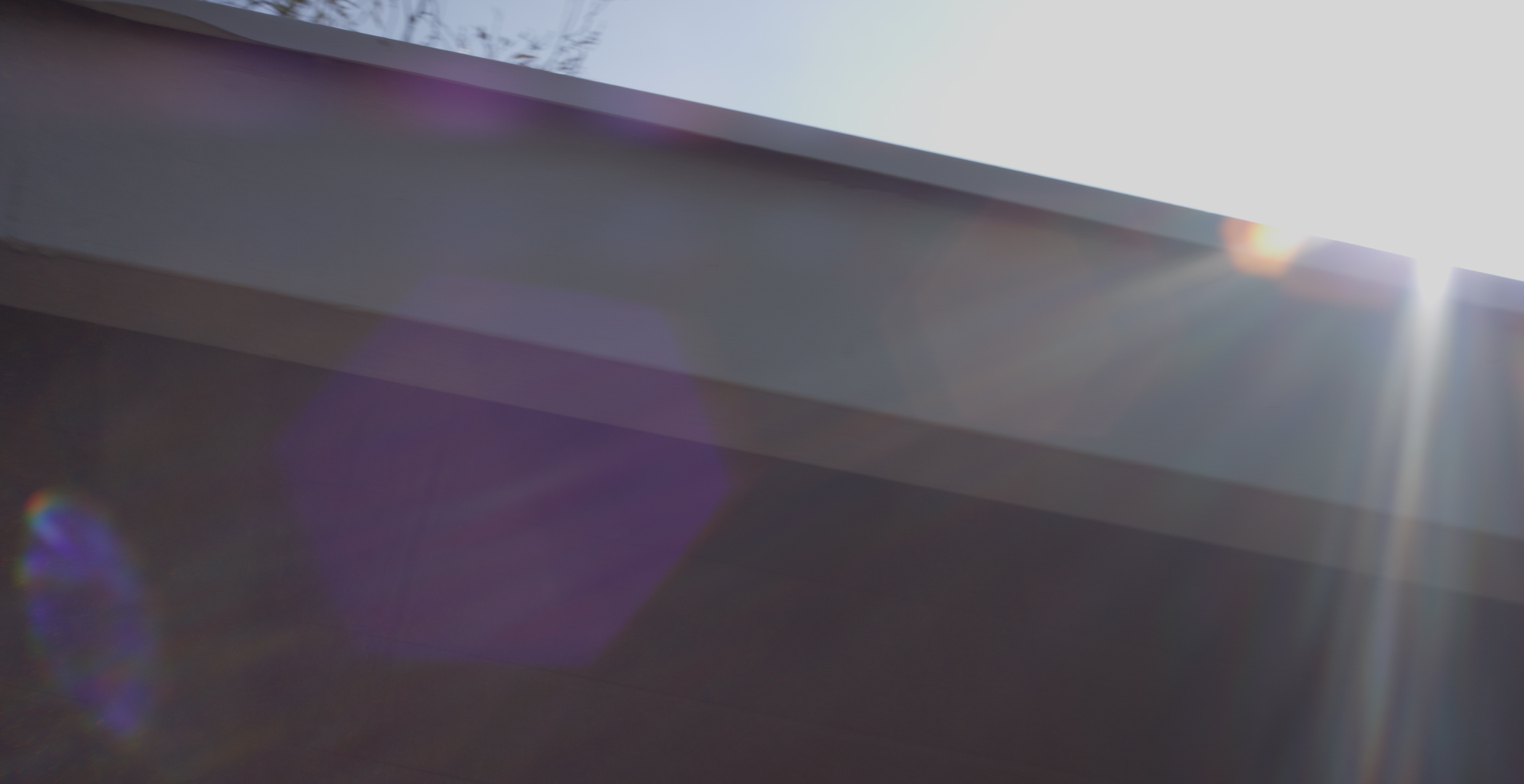
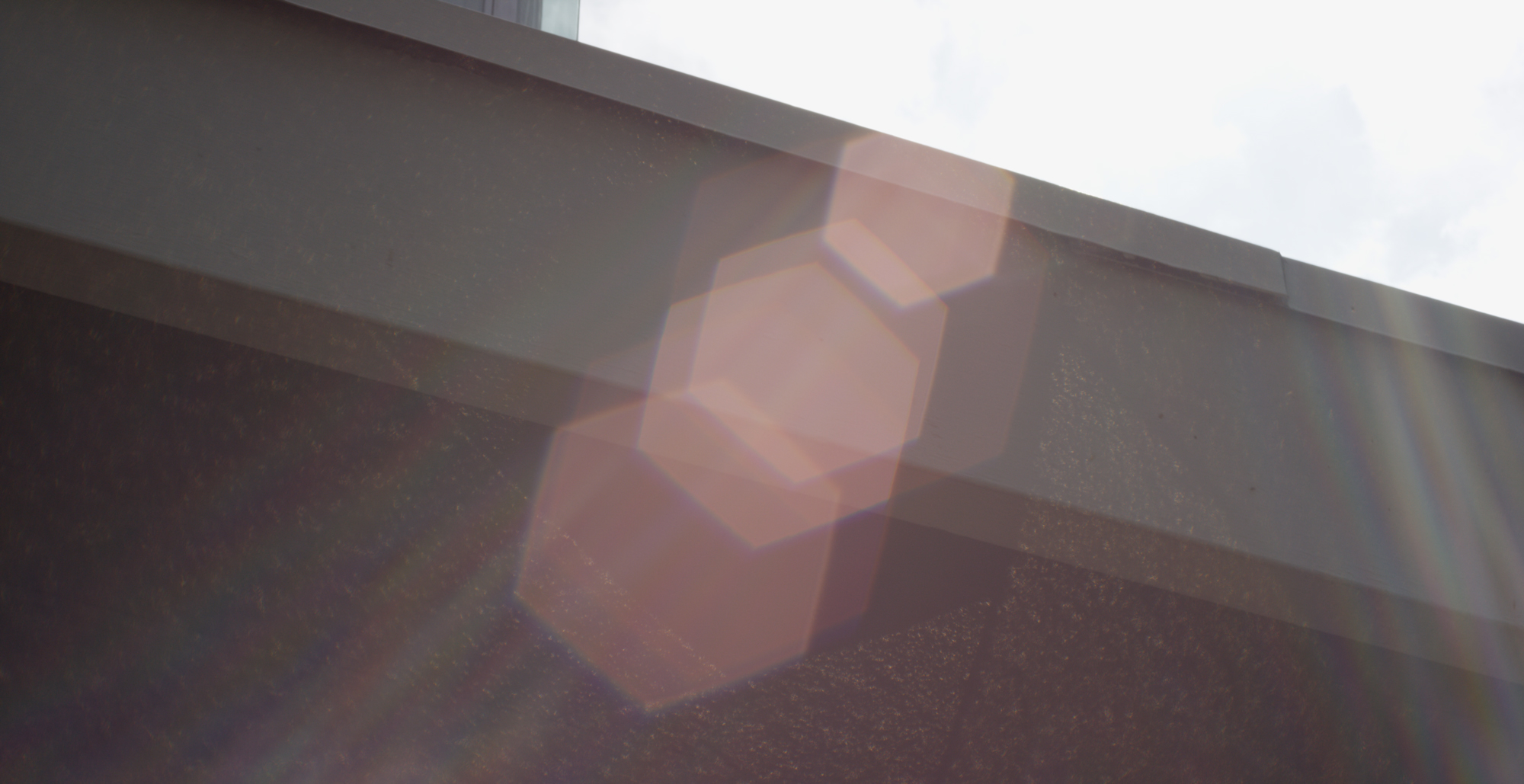
That looks like a simple OLPF flare to me - that's a lot of light bouncing around straight into the lens. Just like a matte box flare, sometimes, the light kicks back onto the sensor.

I am curious what lens it was - older coatings would make this effect more prominent. I saw it particularly on an old Nikon prime on a bright, hazy day.
 
Someone should shoot a point light source or similar on the Dragon and see if the shadow area has
a smear in it echoing the point source. Best to test with no filter in front of lens etc.
 
Warming up my camera now...

I couldn't recreate the exact effect, but I sure got some cray-cray shit bouncing around my Leicas:

50: (Looks like some old skool OLPF bubbles in there)

A001_C002_06177U.0000247.jpg


60: (WTF iris bounce-back off the OLPF?)

A001_C001_0617YQ.0000195.jpg


So, I don't see any photosyte signal issues - just old-fashioned (albeit baroque) flaring.
 
Last edited:
Warming up my camera now...

I couldn't recreate the exact effect, but I sure got some cray-cray shit bouncing around my Leicas:

50: (Looks like some old skool OLPF bubbles in there)

A001_C002_06177U.0000247.jpg


60: (WTF iris bounce-back?)

A001_C001_0617YQ.0000195.jpg

WTF it is, is the back side of your iris. And it just so happens that with your 60mm lens, the iris itself is perfectly focused by the remaining lens elements between it and the sensor.
 
It is a macro 60, though what difference that would make I have no idea. The iris is farther back in the lens than the 50, but the 28 which is similar to the 60 in iris placement doesn't create the same effect.

Interestingly enough, it looks a lot like the patterning on the bokeh you see from a filter on a long lens.

Wacky.
 
Last edited:
It's is a macro 60, though what difference that would make I have no idea. The iris is farther back in the lens than the 50, but the 28 which is similar to the 60 in iris placement doesn't create the same effect.

Wacky.

Doesn't matter whether its macro or not, nor whether it's 60, 50, or 28mm. All that matters is whether the elements behind the iris are, in fact, capable of focusing the iris on the sensor. If so, and if you illuminate the back of the iris, you will see its pattern. Try racking the focus of your other lenses with the sun close enough to the center to create a good scattering, but not so close that the sensor reflection goes right back out the hole it came in through. You might find that other lenses can also focus the iris, and if so, they will be trouble whenever your subject is at the focus point you discover and your sun is somewhere within the Cone Of Death.
 
Doesn't matter whether its macro or not, nor whether it's 60, 50, or 28mm. All that matters is whether the elements behind the iris are, in fact, capable of focusing the iris on the sensor. If so, and if you illuminate the back of the iris, you will see its pattern. Try racking the focus of your other lenses with the sun close enough to the center to create a good scattering, but not so close that the sensor reflection goes right back out the hole it came in through. You might find that other lenses can also focus the iris, and if so, they will be trouble whenever your subject is at the focus point you discover and your sun is somewhere within the Cone Of Death.

Fascinating. Thanks for the explanation.

This would also be very different behavior than you would see in a film camera, I think - film stock is matte finish, OLPF filter not so much.

BTW, the falloff was quite organic looking straight at the sun. Nicely done Team Red.
 
Fascinating. Thanks for the explanation.

This would also be very different behavior than you would see in a film camera, I think - film stock is matte finish, OLPF filter not so much.

BTW, the falloff was quite organic looking straight at the sun. Nicely done Team Red.

Mark, you make a great point, which digital lens designers should pay attention to. In addition to all the other constraints they have to worry about, they should take pains to ensure that the iris cannot be focused by the elements behind the iris. Many have done a great job creating tele-centric formulations (that steer the light more favorably for filtered digital sensor arrays). Let's see if they can design this into their next bag of tricks.
 
Best to test with the lens wide open for a variety of reasons.
 
Best to test with the lens wide open for a variety of reasons.

That is essentially impossible to do with the sun as a source and no filter.

Jared mentioned in another post:

"On the flip side as some people already pointed out it is also not fair to the MX sensor to compare it to the Dragon at lower ISO's, because the Dragon at lower than "native" ISO is not at a disadvantage like the M and the MX sensor was , so the Dragon becomes exponentially better the lower in ISO you go."

This is, unfortunately, not true below a certain point as it relates to exposure. Kodak 5203 remains the champion of daylight exterior. All hail.

This is shot at ISO 250 t22 (tabletop retains detail with no clipping):

A001_C017_0616C0.0000219.jpg


This is t8.5 at 50 ISO (via RedCine-X):

A001_C017_0616C0.0000428.jpg
 
Last edited:
I should have said to shoot a light bulb in a dark room. Shooting sun not needed.

If I had my Dragon I would do this myself.
 
That is essentially impossible to do with the sun as a source and no filter.

Jared mentioned in another post that the Dragon could be shot at virtually any ISO below 250 to improve grain with no significant penalty.

Jared: "On the flip side as some people already pointed out it is also not fair to the MX sensor to compare it to the Dragon at lower ISO's, because the Dragon at lower than "native" ISO is not at a disadvantage like the M and the MX sensor was , so the Dragon becomes exponentially better the lower in ISO you go."

This is, unfortunately, not the case as it relates to exposure. Kodak 5203 remains the champion of daylight exterior. All hail.


I don't recall Jarred saying anything about below ISO 250. The camera locks you out from shooting below that for a reason. You can certainly grade it down in Redcine-X Pro or if you are living extremely dangerously apply the appropriate FLUT adjustment in camera (don't do this ever as it's better served as a post adjustment and shouldn't tamper with exposure logic).

Don't meter and expose that way though because you would be only tapping into a sliver of the available dynamic range and potential to clip above what middle gray would be, which is seen in your example. Lots and lots of shadow detail though.

ISO 250 is the floor and ISO 2000 is considered the ceiling per Red's recommended ISO range. I think honestly if you can handle the texture a bit you can go further for a particular aesthetic. ISO 250 is very, very clean. Some might say too clean even :)

In terms of this particular test there's nothing stating you need to use the sun as a source, you can shoot wide open and experiment with a flashlight even.
 
So I guess Jared was saying the Dragon is native 800 and there is no disadvantage to shooting at 250. Ok, that's fair.

I'm curious to see if the magenta smear appears with something as dim as a household bulb.
 
Status
Not open for further replies.
Back
Top