Welcome to our community

Be a part of something great, join today!

  • Hey all, just changed over the backend after 15 years I figured time to give it a bit of an update, its probably gonna be a bit weird for most of you and i am sure there is a few bugs to work out but it should kinda work the same as before... hopefully :)

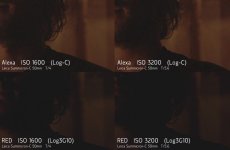
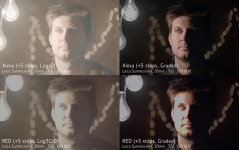
New Epic-W vs. Alexa Mini test

Lol.

When is anyone going to understand that if they have different sensitivities, but you shoot them at the same ISO, then one camera is going to be exposed perfectly and the other will be underexposed/overexposed and push/pull processed (in camera)?

Would you compare ASA 100 film and ASA 500 film the same way? Meter and light both for 500 and complain that the 100 speed film lost all it's shadow detail by being underexposed 2 1/3 stops and pushed back to normal?

Someone could come out with an ISO 50 native cinema camera and shoot it along side Alexa, both at 800, for a "true comparison" and claim it has many more stops of "highlight retention." Yeah, there might be no shadow information left, but check out that highlight retention!

Ugh. Frustrating. And for what it's worth, I still love the images coming from ARRI.
RED is a different tool for a different job.

Agreed on the different tool for a different job but i thought this was an interesting test. There seems to be more detail in the highlights and shadows--something i have definitely seen myself when shooting Alexa and Red back to back or on the same project. The extra shadow detail is always a big takeaway. It makes two low light images that share the same middle grey look very different.
 

Attachments

  • alexavred6.jpg
    alexavred6.jpg
    64.7 KB · Views: 0
  • alexavred8.jpg
    alexavred8.jpg
    48.6 KB · Views: 0
I'm always using the low light OLPF, since in my opinion it gives me the most "organic" results, and expose for 2500iso.

One feature that is in my opinion amazing (but difficult to use on projects where I'm not responsible for the post production) is HDR-X. Would be interesting to do a direct comparison between the Helium sensor with HDR-x 2 at 2500iso and the Alev III sensor.

Anyway, I don't think that the test is so bad. It shows that both cameras perform stellar and make great images and that the differences aren't that big.
 
http://nofilmschool.com/2017/02/shootout-arri-alexa-mini-vs-red-epic-w-helium


A few people I know conducted this shootout, having shot it almost two months ago. They just finished post on it this week, with the final published results appearing on NFS today.


It's one of the better tests I've yet seen, and all those involved are incredibly talented commercial/narrative DP's, along with a top-notch colorist.


I have to say the results have me a bit disappointed, as the 6-year old sensor in the Mini outperforms the Helium in many of the of categories tested. Including most notably, a stop and a half difference in highlight retention. There are absolutely some caveats, which they note in the write-up, including:

- Both cameras are rated at 800 ISO, though they found the Helium should be rated more accurately around 1280 (which to me should be the biggest variable to consider)
- They performed this test prior to the newest version of IPP2, while obviously the Alexa's pipeline has had years to mature.
- They conduced the entire test with the Standard OLPF
- They shot the Helium at 6:1 Compression in 8KHD, though Resolution was not part of the test.


However with that all being said, and as a VV depositor who just sent in their CF Weapon for upgrade to Helium I really hope there's more to be pulled out of the new sensor. The DxO test, which I believe tests the raw sensor prior to most processing (please correct me if this is wrong) definitely shows the Helium to be a clear upgrade to Dragon, while I'm not sure this text exactly confirms that.


Cool test.


There is one fundamental flaw though.

Tests like these test camera + LUT performance.


Having thoroughly tested both of these I can say without a shred of doubt that both of these can achieve better results.


...


In addition, they tested at same ISO because objective tests are done in same conditions.
 
Goes to show what an amazing sensor Alev 3 really is. It's nearly 10 years old and Red still hasn't catched up to them.
 
Phil you are saying if they shot at 1600/3200 ISO Helium would perform better than Alexa?

The base for Helium is right around 1600. If you look at the chip charts in Phils 8K video, you'll see the massive shift into the shadows that Helium has over Dragon. That being said, it would have been more wise to match the chip charts of both cameras to a comparable middle gray and then did work from there.

Of course there's no highlight retention - because the sensor isn't made to retain those highlights pushed at 800 ISO with the base shift. It's also very hard to test a camera that is about choice. For highlight retention, most of us would put in the Highlight OLPF. For low light, the LL. While a test like this is appreciated, we're only seeing soft serve vanilla from a machine that also does multiple flavors of strawberry, chocolate, orange sherbet, and that weird kind that you're not sure if you should try but is probably really good.
 
1600 base ISO for Helium with skintone highlight olpf IMO.

That said, I shoot night interior work like this at 250 or 500 and just distribute the image where I want it.

If something is close to looking clippy it's going to look clippy. You can only sort of use a lightmeter and just set the aperture where you set it, but I find using the exposure tools available to us along with a lightmeter for ratio setting (key to fill, key to backlight - to yield the right kind of results.

If these were originally exposed with redgamma 4, dragon color 2, no amount of ipp2 post is going to change how they were exposed.

Anyway, I'm not a red Apologist, you either like the cameras and use them, or you don't, but a test like this makes resultant expectations for newcomers very poor around the ecosystem.

Meh. Whatever.

I'm fine.

I absolutely hated Helium when it arrived because of no calibration for the sensor... I knew it would get better , but I'll be honest, I've come to expect more preparation before a release to the public.

There was a decent amount of time between Helium storm trooper exclusive and when I finally got my hands on it.

Happy to have the tools, and will continue to be a reduser, but hey, it is what it is.

I'd also like to add I missed out on a multi tens of thousands dollar rental of my weapon 6K carbon fiber body to a project because I got submarined by Red offering the client a White 8K Helium.

That left a real bitter taste in my mouth.
 
Last edited:
Both a Ferrari and a Honda have wheels, drive, and are cars.

Lets test them.
 
Testing is an interesting combination of science and aesthetics. This test is somewhat misleading in that they setup the shot for the Alexa Mini and then ran the Helium sensor through the same settings to compare. It's only a "sorta / pseudo " real-world-test in that in the real world you would treat each camera differently.

What I mean is the end graded look that they achieved with the Alexa Mini could have also been achieved / matched with the Helium sensor as well - but that is the aesthetic side of testing.

However, in this test they somehow managed to achieve some of the muddiest looking RED Helium footage I've seen online to date. And then they're presenting these results as "science" for why one sensor is more advantageous.

Interesting.
 
Steve comment... Funny bro...

Phil, thanks for the info sharing.... Very useful for RED users
 
The color science in this test is already obsolete, soon to be obsolete twice over. I would love to see it revisited once IPP2 is finalized.

LogC + arriLUT and helium with LOG3G10 + ipp2LUT is a confounding factor as far as contrast etc. Why not put both into linear?

Alexa has a stop and a third more highlight retention at 800 than helium, which means they'd match with helium at 2000iso. I anticipate noise levels are probably comparable here as well, but I think helium's best color performance is at lower ISOs than 2000.

I understand using absolute factory standard settings and workflow, so aren't both cameras 5600k balanced 800iso with STD OLPF in the helium? And why was a light grade applied?

Still a great test. I also think STH OLPF is superior to STD and wonder if using that around 1000ISO isn't going to show more of what the helium can do, even if it's not the factory standard helium build.

We've seen several other comparisons between alexa and helium that showed them being more comparable than what this test found. Here, Helium, I think, had advantages in the vapor lamp light, colorful LEDs and lowlight. Alexa probably won in the other areas for now.
 
I'm wondering why people can't understand that the colour science isn't in so you can't just drop in the same baked in processing. If you're doing a test, why not nudge the magenta/green balance and fix the green cast? Why not match saturation and brightness as well? Red's iso is simply where you place middle-grey to begin colour correcting, noise changes based on the sensor/rating. Essentially, this test looked as if they had an colour correction suite and yet they didn't care to use it to match the footage. This test is treating RAW cameras as if the data and iso were baked in. They even admit not really understanding what Heliums's ISO1280 actually is because the sensor simply needs less light so they were overexposing the image ... they should have done comparable lighting/noise levels. Alexa has always needed fewer colour correction steps so it feels as if their test was designed for people who had no post-production experience or any knowledge of RED footage and how to match it. A few seconds would be all that's needed to push/pull the image while retaining less noise and more closely matching colour.
 
RE: ISO - If the Helium sensor was seriously underexposed or overexposed... it would CRUSH the Alexa in either way, right? But instead, Alexa seemed to do great vs Helium in both highlights and shadows. Very impressive for such an old sensor technology!

RE: IMAGE PIPELINE - REDUSER has used the "but the software's beta / not final / there's something better coming so this test is invalid" excuse every 6 months since 2007. I'm sure ARRI has something better in the works too! But we don't hear as many complaints... because their current, proven pipeline is a winner.

Everyone has different tolerances for noise. I guess what RED thinks is 16.5 stops is what ARRI thinks is 14 stops. Since I use Neat Video a lot, which cleans up noise in the shadows, I'd err on rating both the RED and the Alexa at around 15.

Of course this only makes me MORE interested in whatever everyone is cooking down the road. ARRI's Alexa sensor is ancient - they have to be close to a true successor to that. And Sony and RED and Canon must know it and be hard at work if they don't want a repeat of the last Alexa-dominated era!

Popcorn indeed! And just to be clear, I'm rooting for RED.

Bruce Allen
www.bruceallen.tv
 
It is not a camera matching test to determine optimal conditions and setup for each camera but a camera test showing how both cameras behave in same conditions and setup.
 
I still don't think a lot of people are ready for a RED camera, where the fit is particularly bad is for the tech chalanged crowd:
1) people that totally get analog workflows but when digital came along were to high level to do all the grunt jobs so never actually did the detail work(i.e. old days before touching the camera the camera assistent might have handled the reels and film process for a few years, some older guys have never been a DIT).
2) people that don't get digital, like they couldn't do a node workflow to save thier mother. Another one is people that basically can't handle a file over 2 gig.
3) people that are doing 5 different jobs on the set. Old days things were segmented, today a cinematogrpaher might do the lighting and even the sound - it can be just crazy so any techie complexity could end in a disaster.
4) Cinematographers that are really supervising and not actually touching the camera even if they are a total digital expert. Some setups are so complex that I'd say the person is mainly supervising a large crew even if they are total experts, and worry about the camera operator and related crew just messing up.
5) cinematographer is mainly a business guy, he's really not interested in cinematography but more fascinated by the "business" side - which for low budget he thinks on how to shoot to keep scene cost low/fast.
6) a person that just wants to learn a tool every 10 years as a emotional burden, and not really want to keep up and/or enjoy the yearly technology upgrades.
 
To me calling it a shootout is asking for trouble because immediately there's a winner and loser.

The fundamental error of rating the Helium wrong smacks of a lack of understanding.

Then the post pipeline is a bit dubious as well.

If they wanted to do a shootout - both cameras at native ISO. If one camera is more sensitive naturally than the other then stop it down or increase shutter speed but don't mess with ISO.

Then ALL tests should be done in linear space, with no faffing with LUTs and god knows what. Because those LUTs can affect the results hugely.

A shoot out should be quantative and this isn't.

But if you want to test them side by side like this, then it isn't a shootout because you're comparing peoples approaches, techniques, knowledge of their cameras and pipelines of which enormous numbers of mistakes can be made.

I've been through plenty of RAW Alexa footage, i'd still take my Helium over that IMHO

cheers
Paul
 
Back
Top