Chris Hendrick
New member
- Joined
- Mar 14, 2009
- Messages
- 4
- Reaction score
- 0
- Points
- 0
And here it is tested - https://ymcinema.com/2020/10/28/can...e-red-komodo-into-a-full-frame-cinema-camera/

Follow along with the video below to see how to install our site as a web app on your home screen.

Note: this_feature_currently_requires_accessing_site_using_safari
Different in that Canon's is tested against their glass and has much better optical quality than the metabones. That's been a main issue for many who decided not to buy the metabones one. As for protruding into the body, yes, a little.
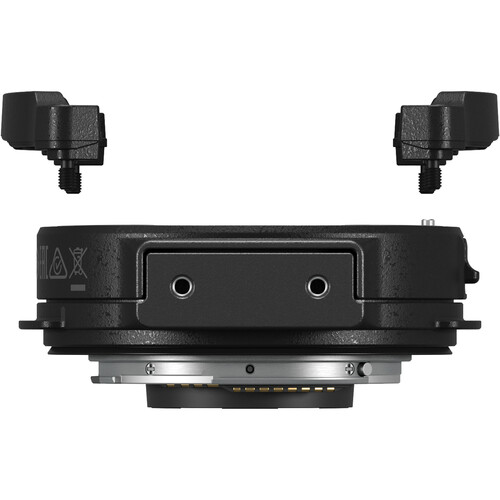

Wondering though, since it has a screw set to lock it into place, if it's possible to lock a mount to the Komodo in a similar way? If it has play while focusing, that's gonna be pretty bad. This is a worry for the normal adapter as well.

Ok, so are we to believe it works or is this still a "maybe" due to unconfirmed play while focusing ?
Different in that Canon's is tested against their glass and has much better optical quality than the metabones. That's been a main issue for many who decided not to buy the metabones one. As for protruding into the body, yes, a little.
Do you have a link to an actual optical comparison? The examples in the Canon patent aren't impressive.

I've tested many speedboosters for various projects. Metabones is the best quality out there. Most of the issues with metabones in the field were user error IMO. Canon certainly has vast talent and resources. They don't have the experience in designing speed boosters. Don't under estimate Brian's years of track record with focal reducers. He is the brain behind this whole "movement"
Of course, until we can get our hands on it we won't know for sure, but the rational argument is in favor of the Canon having better quality for this purpose of shooting.

Try both first, and state your opinion later. All speedboosters degrade the image does not matter who makes them, can be more or less ofcourse but you put thick optics behind your lens that is not optimized for all focal lengths so results may vary between one reduducer to another differently between focal lengths for example. All boosters come with some quirks so nomatter how big of a lens manufacturer canon is does not matter much they still need to make compromises when making it. And yes canon do make really good lenses and a lot of them, but they also make a lot of plasticy low quality stuff. So I dont see their name as a stamp for quality. Metabones on the other hand I only had good experience with. Thier boosters hit way above thier price and the build quality is not canon plastic. And the pass trough electronics bettween the different mounts, metabones has done such for basically every mount out there without issues.
All speedboosters degrade the image does not matter who makes them,
The good news is that things aren't quite that simple. In the whitepaper linked below I show measured MTF data demonstrating that a speedboosted Zeiss Otus at f/1.0 actually outperforms a plain Otus at f/1.4. Of course, proper speedbooster design is essential for this to happen. In the same paper I also demonstrate how a "real world" focal reducer can actually be better than "perfect". The key here is to understand that a large majority of photographic lenses have a similar aberration balance - especially near the optical axis - and its possible to be "better than perfect" by compensating for those aberrations.
https://www.metabones.com/assets/a/...Speed Booster ULTRA for M43) - Whitepaper.pdf
When was this paper written/published? I remember Roger Cicala first being sceptical about the "speedbooster" but pleasently surprised after testing.
And an other question: is this https://petapixel.com/2019/07/05/goodbye-aberration-physicist-solves-2000-year-old-optical-problem/ already a thing in optical design, with a fixed optical design like the speedbooster?
Yes its natural that the image improve the MTF and quality of the image in such sense that the projection get more concentrated. But you also introduce more corner softness and other oddities as you use more of the rim of tge projection.
Will be interesting to see the canon booster side to side with metabones. My guess is they both have their quirks.