Welcome to our community

Be a part of something great, join today!

  • Hey all, just changed over the backend after 15 years I figured time to give it a bit of an update, its probably gonna be a bit weird for most of you and i am sure there is a few bugs to work out but it should kinda work the same as before... hopefully :)

Matte Box Woes

The new Red Standard

The new Red Standard

Great thread - I just found it today and has taken me 20+ min to read through!

Re filter sizes: Although currently uncommon the 5.65x5.65 seem like a great balance between size and flexability and if red changes the volume equation on cinema gear the way it seems poised to, it also has the potential to change what what constitutes standard filter sizes. If panavision inovated to create the 4x5.6, then it seems plausable that 5.65x 5.65 can be adopted as the red size (and in the mean time could house 4x5.6 filters).

Count me in by the way on the matt box Curt. My vote is probably for something more compact then a 6x6 to own (and rent a 6x6 when needed)

Vince
 
Well, I suppose the advantage of 5.6x5.6 mattebox is that you can use 4x5.6 filter trays when you can only find 4x5.6 filters to rent in an emergency, let's say. Of course, you can do that with a 6x6 mattebox too, just that now you're talking about a bigger mattebox.

So maybe a 5.6x5.6 mattebox does make sense, using 4x5.6 filters in it when they don't need to move (like a diffusion filter) and 5.6x5.6 filters for grads. That's assuming that it can be built to be not much bigger than a 4x5.6 mattebox.
 
I totally agree that if I am renting a big lens, I can rent a 6.6x6.6 matte box. Kurt, why don't you support 5.6x5.6'es and 138mm rounds like the MB-20?

They we could use:
- 5.6x5.6 filters for grads
- 138mm for pola
- 4x5.6 for everythine else

www.boacinema.com

After thinking about this for a while this would probably be the best overall comprimise to get a good working MB at a decent size.
 
Wow, people I respect as way above me in the field actually like something I said! This made me really happy. So basically, Curt just needs to do everything the MB-20 does (light but sturdy, 4x5.6, 5.6x5.6, 138mm rounds, swing-away, 15mm & 19mm rod support), but a little bit cheaper and better? Could he cut 5x6 filter size support (the MB-20 allows for them but I don't know if it's needed)?

I agree, of course if he could somehow slip in 6.6x6.6 and still keep it small and light, that would be the best.

Bruce Allen
www.boacinema.com
 
Thanks you two.. I was starting to think the same. You know how the old saying goes... a camel is a horse designed by committee. I'm trying my best to meet the majority of the requests but there are a few that don't work well together. Regardless the first priority is to work with the red primes/zoom/300mm.

Now I have another question.. Does anyone every use two grads at a time? If not then technically only one of the trays needs to have up and down travel correct? I'm just trying to get all the facts straight before I finish off some of the bigger details.

Sorry for the late post, but I often end up in situations with 2 grads and a pola. Being able to rotate all independently and rise and fall the grads a decent amount is important. When I've been in the situation of using 2 grads it's usually a combination of hard edged and soft so the edges are a t quite different points.
 
...oh yeah I vote for 4x5.65 also. We try to avoid the 6x6 matteboxes when possible just because we don't really want the camera to be a beast all the time, expecially on ads where the poor focus puller is loading also.

We use 6x6 for zooms and wide angles (and when we don't have enough filter stages on the smaller matteboxes.

Reducing the size of the kit is always good.

For me, if Curt can keep the price where he's thinking, I'll buy a 6x6 and 4x5.65 separately.

...but the David has got me thinking about the grads again, it's a hassle to tweak the things constantly to avoid the edges.

I wonder how small a package the 6x6 could be?
 
I wonder how small a package the 6x6 could be?


I would think you could build the tray system large enough to accept 6x6 filters but have the box shade in 4x5.6 without too large of a weight gain. You would not be able to run big zooms with the smaller box shade but maybe it could just be a 6x6 tray system that can accept a larger 6x6 box shade or a 4x5.6 shade. That way you would just change out the front box shade depending on what lens you are going to use. This just may be the best answer. Have the tray swing out system the larger 6x6 system (I cant see this adding too much weight and it could allow you to use step down trays for any size of filters). From there you just buy the size of front box shade you want or both large and small and have it be a modular quick swap system. I really think I may be on to something with this. It's late though so if anyone see's big flaws in this please comment.
 
I think Chevys decline started while I was still in high school. Some actors do some good things (like lampoons vacation series) and can ride it for 25+ years.

But I hope some more people comment on this MB idea because I think it may work really well. I had never thought before about having the box shade be a swap-able modular part but I could see this being a very valuable feature and like I mention I cant see a 5x5 tray system being that much lighter then a 6x6 one.
 
I feel that someone is going to want the smallest mattebox they can get away with and will be willing to live with some inability to move grads around...

It's hard to see one mattebox satisfying everyone's needs.

I generally rent two, a 4x5.6 and a 6x6, and only trot out the 6x6 when I absolutely need to. I just can't imagine building a 6x6 mattebox with rotatable trays with up & down gears too and keeping the whole thing small.

Which brings up another point altogether -- my favorite aspect about the old 4x5.6 Panavision mattebox is the large slot that can hold two filter trays in it sandwiched together, with no spacer, unlike the Arri matteboxes. This not only allows you to stack glass together without a gap that might increase the chance of double reflections, but Panavision has a larger filter tray with a small metal wedge in it (ARF - Anti-Reflection Filter) that allows the filter to sit in the mattebox at a tilted angle, to get rid of double reflections. I use the tilted filter all the time when I'm shooting. It drives me nuts when I use a modern Arri mattebox and they have that air gap between each filter tray, with no easy way to tilt the filter, unless you use the large tiltable 6x6 mattebox. The Panavision basic 4x5.6 mattebox is much cruder in design, but more flexible, I think. I like to use intense backlighting at times, and I always get a double reflection of the halo when I use diffusion filters and can't tilt them.
 
I I just can't imagine building a 6x6 mattebox with rotatable trays with up & down gears too and keeping the whole thing small.

Which brings up another point altogether -- my favorite aspect about the old 4x5.6 Panavision mattebox is the large slot that can hold two filter trays in it sandwiched together, with no spacer, unlike the Arri matteboxes.

I find the up/down gears to be a waste as it is ussually much easier to set the filter by just raising or lowering it with the tray from the top or the bottom so that feature could easily go. Also the 6x6 filters are not much bigger then the 5x5 so I can not see it being that big of a jump making the system a 6x6 one.

The ability to sandwich the filters together is nice but filters tend to scratch fairly easy and I have found sandwiching them together highly raises the chance scratches.
 
the gears on the raise was so that assists could adjust grads during a shot, but I don't know of many people who still do this, they tend to not grad at all if it's an issue to pan.

David I've worked with DPs who got boned by the double image as you say, that feature of the Panavision trays is good, but otherwise they always looked kinda antique to me. Taking the feature you mentioned from them and losing the rest would be cool ;)

A thought... How many people here use the LMB-5 when on light set-ups?
I was wondering if something similar gives enough functionality for most small set-ups and maybe a 6x6 for bigger... but I do like Finner's idea.
 
I just thought I would bump this as I would really like to hear more peoples thoughts on if they feel a 6x6 base matte box with 1 small box shade and one large box shade like I mentioned above would be a good answer for them or not?
 
I hate to say it guys but as a director/editor I haven't used a grad on the lens in the last two years. Not even and ND grad. I much prefer to play with it (color and intensity) in telecine or later in the computer. Select the sky but not the clouds, or throw the whole sky soft above the skyline. That's the beauty of the digital realm. I'm expecting 4K raw to increase these capabilities. True creative freedom up to the last edit. I mostly use ND's to reach a desired depth of field, pola, pro mist and a few others. The matte box I want is for the red which is a digital camera. If it was for a film camera and your going to cut the neg than yeah I want as many effects in camera as possible but sadly I dont plan on ever doing that again. The future is red with unlimited posibilities in post. For me, lighter and smaller please.
 
I feel that someone is going to want the smallest mattebox they can get away with and will be willing to live with some inability to move grads around...

It's hard to see one mattebox satisfying everyone's needs.

I generally rent two, a 4x5.6 and a 6x6, and only trot out the 6x6 when I absolutely need to. I just can't imagine building a 6x6 mattebox with rotatable trays with up & down gears too and keeping the whole thing small.

Which brings up another point altogether -- my favorite aspect about the old 4x5.6 Panavision mattebox is the large slot that can hold two filter trays in it sandwiched together, with no spacer, unlike the Arri matteboxes. This not only allows you to stack glass together without a gap that might increase the chance of double reflections, but Panavision has a larger filter tray with a small metal wedge in it (ARF - Anti-Reflection Filter) that allows the filter to sit in the mattebox at a tilted angle, to get rid of double reflections. I use the tilted filter all the time when I'm shooting. It drives me nuts when I use a modern Arri mattebox and they have that air gap between each filter tray, with no easy way to tilt the filter, unless you use the large tiltable 6x6 mattebox. The Panavision basic 4x5.6 mattebox is much cruder in design, but more flexible, I think. I like to use intense backlighting at times, and I always get a double reflection of the halo when I use diffusion filters and can't tilt them.

David,

The idea of two filters stacked in contact with each other makes me wonder if you ever had problems with newton rings forming from the galss surfaces touching each other.

Chuck
 
But one thing that an ND grad can do for you is reduce the brightness in a select area to a point that the digital camera can record more information, like in a bright sky -- which will give you greater flexibility in post. It's not always about using a grad for a grad effect. You can't manipulate detail in post if it wasn't recorded to begin with.

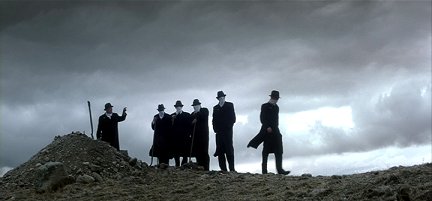
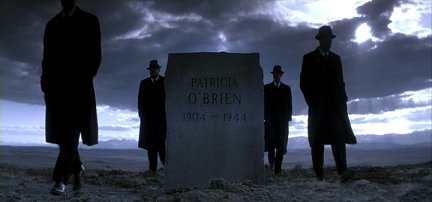
I did a 35mm film in Montana ("Northfork") under these amazing skies and the ND.6 grad was on the camera constantly - and I found when I did the final color-correction for home video that there was detail buried in the highlights that I could pull out of the skies because I had exposed more information there... because of the grads:

northfork10.jpg


northfork11.jpg
 
David,
The idea of two filters stacked in contact with each other makes me wonder if you ever had problems with newton rings forming from the galss surfaces touching each other.
Chuck

No, haven't run into the problem, though I normally try to not stack filters. I'm happiest when there isn't more than one piece of glass in front of a lens, which is one advantage to the behind-the-lens filter slot in a Panaflex, since the ND's and/or 85 can go there, leaving the front for diffusion or a Pola, etc. The more glass you put in front of a lens, the more problems you can create for yourself, so the filter has to be there for a good reason.

That said, when I shoot outdoors, the Pola is pretty common, and ND grads when dealing with bright skies (or sometimes, bright ground.) On my last show using diffusion, I switched to nets when I wanted to combine diffusion with the Pola because I didn't want two glass filters in front with that much of a gap between them (the Pola being in the rear rotating ring) and I was shooting a shiny car and didn't want double-reflections off of the chrome (and we weren't carrying the tiltable ARF filter tray that day.) I'm sure I could have made it work but I just get nervous the more layers of glass I put in front of the lens. I once did some second unit work for a DP who shot everything outdoors through: 85/Pola, Color Enhancer, Coral, ProMist, and grads -- five pieces of glass stacked together.
 
Back
Top