- Thread starter
- #141

David Mullen ASC
Moderator
Week Four
We’ve been hopping around more and more, getting pieces of different scenes on different sets, including a lot of bluescreen work to deal with story locations that are too large and expensive to build.
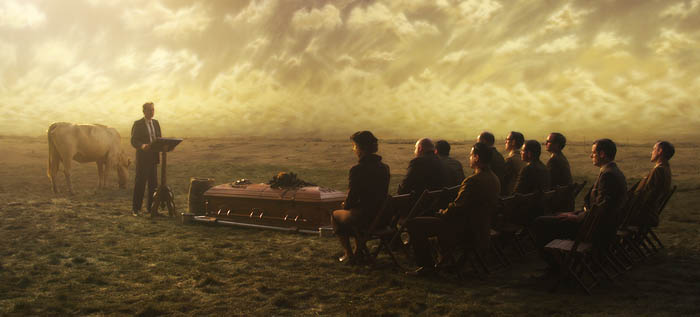
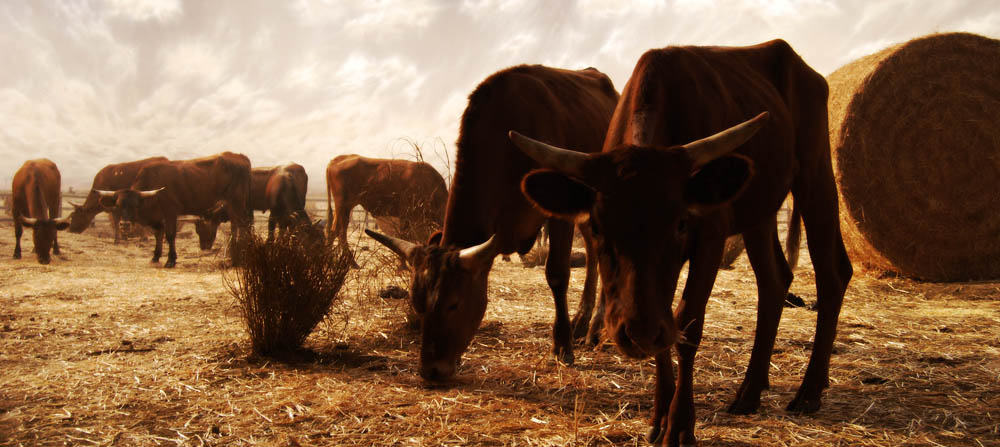
Monday and Tuesday involved bring live cattle on the landscape set on Stage C. We had a grassy plain on Monday which infortunately, though the grass was spray-painted brown, seemed to drive most of the cows nuts, running around the perimeter (which is a plywood ramp leading up to the backing, not designed for the weight of multiple cows, though it held up) and eating the brown grass and brown leaves on the set. We ended up taking most of the cattle off of the set and just using a very calm milk cow in two scenes.
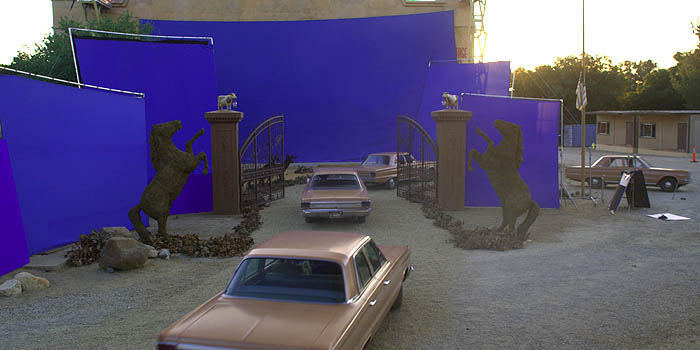
We then ran outside to our big 30’x60’ bluescreen, which is tied to a soundstage wall. We use it for any large shots of action against locations that will have to be created in post. In this case, the scenes took place at the big gates leading to the Roses Manure factory. We try to shoot these outdoor bluescreen scenes in late afternoon when the side of the building and the ground in front are shadowed by the soundstage. I often have to add additional 20’x20’ and 12’x20’ bluescreens on the sides to cover all the action. Usually we just use available skylight.
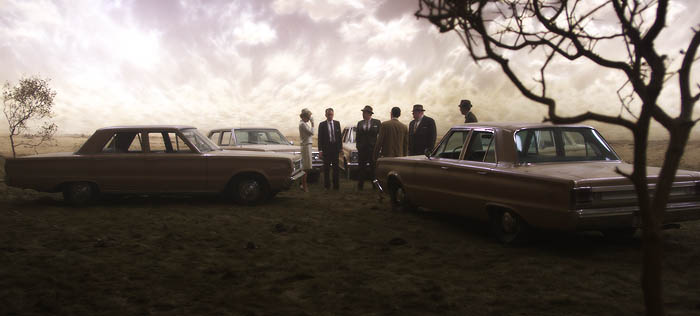
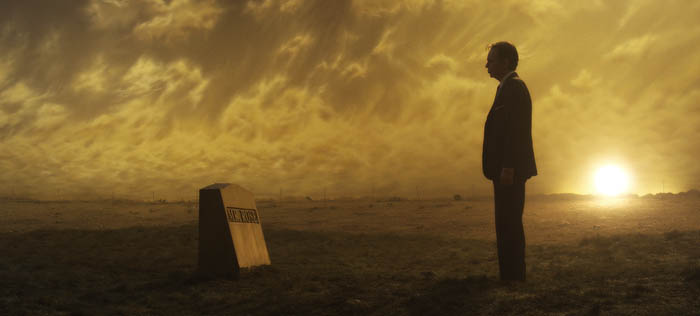
We ended the day with a funeral scene back on the prairie set on Stage C, lit for late afternoon, followed by a gravestone scene that takes place months later. I tried to make it a sunrise scene by laying a 10K on the ground at the top of the ramp, pointed into the lens. I was a bit rushed, being the end of a 14-hour day, so I didn’t quite get the balance right to make it more realistic, but it looked interesting at least.
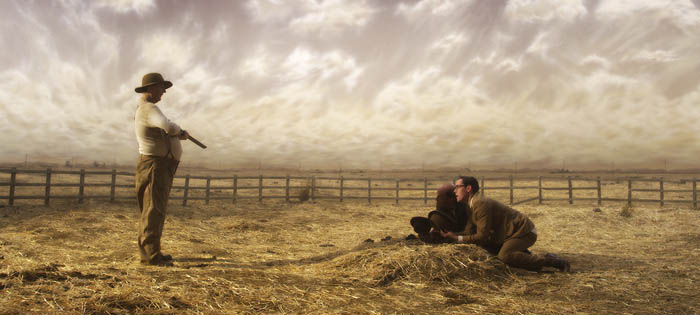
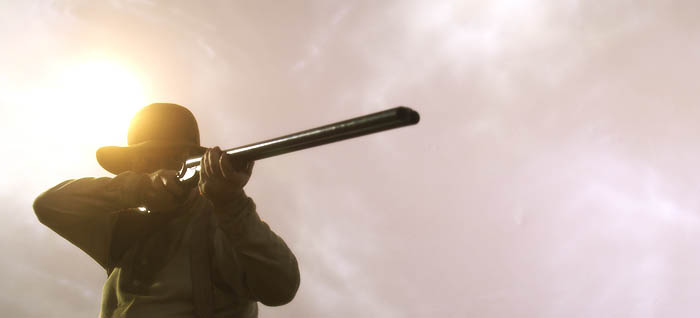
The prairie set was turned into a cow pasture on Tueday, with a dirt floor covered with bits of straw and surrounded by fencing. This was a lot better for the cattle we brought in, compared to the open prairie space. The set was full of cattle, which was interesting to say the least. Later we shot a scene in an empty pasture where a farmer stops our main characters, crawling on the ground, from stealing his cow pies, firing a shotgun in their direction. I lit the two manure salesmen in frontal hard light so I could have the farmer throw a shadow over them. Their POV of the farmer was therefore a low-angle with the sky and sun behind the farmer. To get the shot, I put a 12’x12’ painting of the sky above the farmer’s head, tilted down, and cut a hole in it so I could stick a 1K Parcan through it for the effect of the sun hitting the lens.
The day ended after 11.5 hours because all the power went out in all the stages. We thought was a brown-out maybe at the city substation, but later I found out it was due to an air conditioning unit on Stage C shooting out a six foot flame and tripping all the breakers. Either way, an act of God sent us home early for once.
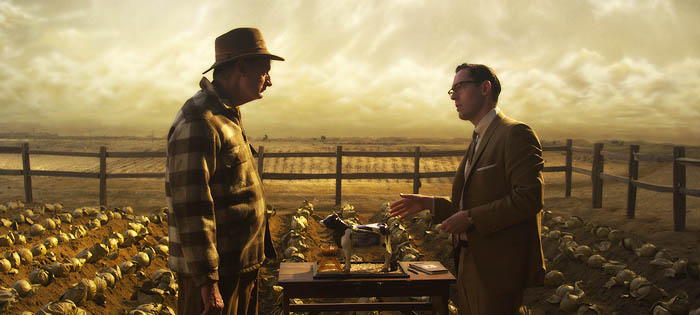
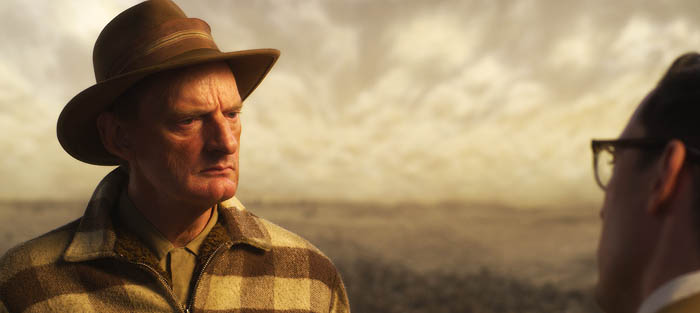
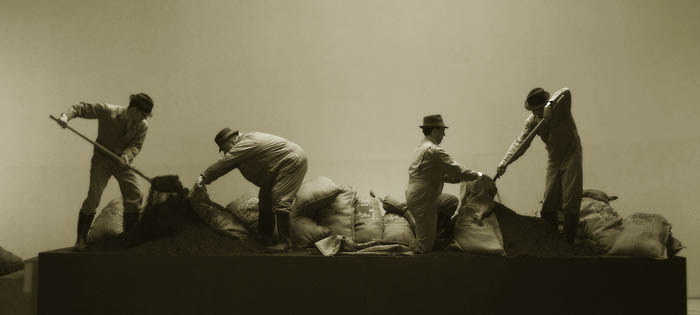
On Wednesday we shot on a cabbage farm set as Mark Polish attempts to sell to a farmer. Then we attempted to shoot some more scenes where stunt men parachute into a field, but the parachutes tended to catch on the corners of the Kino blanket lights, so it took a number of takes to get it right. We ran outside at sunset to shoot against the shaded bluescreen stage wall, for a scene in a train yard – the set consisted of a sliding traincar door and a platform. Then we did a scene where our main characters work inside the Roses Manure factory (to be created in post), filling up bags of manure. It was night by then, so I brought out one of our portable HMI balloons to light to scene from overhead, as if the factory had a soft overhead source.
We’ve been hopping around more and more, getting pieces of different scenes on different sets, including a lot of bluescreen work to deal with story locations that are too large and expensive to build.
Monday and Tuesday involved bring live cattle on the landscape set on Stage C. We had a grassy plain on Monday which infortunately, though the grass was spray-painted brown, seemed to drive most of the cows nuts, running around the perimeter (which is a plywood ramp leading up to the backing, not designed for the weight of multiple cows, though it held up) and eating the brown grass and brown leaves on the set. We ended up taking most of the cattle off of the set and just using a very calm milk cow in two scenes.
We then ran outside to our big 30’x60’ bluescreen, which is tied to a soundstage wall. We use it for any large shots of action against locations that will have to be created in post. In this case, the scenes took place at the big gates leading to the Roses Manure factory. We try to shoot these outdoor bluescreen scenes in late afternoon when the side of the building and the ground in front are shadowed by the soundstage. I often have to add additional 20’x20’ and 12’x20’ bluescreens on the sides to cover all the action. Usually we just use available skylight.
We ended the day with a funeral scene back on the prairie set on Stage C, lit for late afternoon, followed by a gravestone scene that takes place months later. I tried to make it a sunrise scene by laying a 10K on the ground at the top of the ramp, pointed into the lens. I was a bit rushed, being the end of a 14-hour day, so I didn’t quite get the balance right to make it more realistic, but it looked interesting at least.
The prairie set was turned into a cow pasture on Tueday, with a dirt floor covered with bits of straw and surrounded by fencing. This was a lot better for the cattle we brought in, compared to the open prairie space. The set was full of cattle, which was interesting to say the least. Later we shot a scene in an empty pasture where a farmer stops our main characters, crawling on the ground, from stealing his cow pies, firing a shotgun in their direction. I lit the two manure salesmen in frontal hard light so I could have the farmer throw a shadow over them. Their POV of the farmer was therefore a low-angle with the sky and sun behind the farmer. To get the shot, I put a 12’x12’ painting of the sky above the farmer’s head, tilted down, and cut a hole in it so I could stick a 1K Parcan through it for the effect of the sun hitting the lens.
The day ended after 11.5 hours because all the power went out in all the stages. We thought was a brown-out maybe at the city substation, but later I found out it was due to an air conditioning unit on Stage C shooting out a six foot flame and tripping all the breakers. Either way, an act of God sent us home early for once.
On Wednesday we shot on a cabbage farm set as Mark Polish attempts to sell to a farmer. Then we attempted to shoot some more scenes where stunt men parachute into a field, but the parachutes tended to catch on the corners of the Kino blanket lights, so it took a number of takes to get it right. We ran outside at sunset to shoot against the shaded bluescreen stage wall, for a scene in a train yard – the set consisted of a sliding traincar door and a platform. Then we did a scene where our main characters work inside the Roses Manure factory (to be created in post), filling up bags of manure. It was night by then, so I brought out one of our portable HMI balloons to light to scene from overhead, as if the factory had a soft overhead source.