
Navigation
Install the app
How to install the app on iOS
Follow along with the video below to see how to install our site as a web app on your home screen.

Note: this_feature_currently_requires_accessing_site_using_safari
More options
Welcome to our community
Be a part of something great, join today!
You are using an out of date browser. It may not display this or other websites correctly.
You should upgrade or use an alternative browser.
You should upgrade or use an alternative browser.
Letus Gimbal
- Thread starter Sabyasachi Patra
- Start date
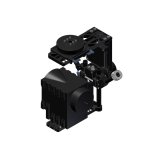

Zeb B
Well-known member
Reminds me of that scene from Prometheus: "Movi / DJI . . . are you seeing this?"
Nice work! Game on Gimbal Guys!
Nice work! Game on Gimbal Guys!
Elizabeth Lowrey
Well-known member
I'm almost more interested in this as a remote head on a crane/jib. Well, at least AS interested. But i'm still wondering how exactly it would attach to the arm and what kind of movement it would allow.
Ditto. That's a HUGE part of my intended use for the product. . . . what I imagine trying first is removing the third axis on the Helix (which includes the handles), mounting the camera "sideways" on the Helix platform to give you tilt instead of roll, and then going with a 2-axis pan/tilt head that can rotate 360 degrees on pan and probably something close to 360 on tilt (the limitation being that you can't point the camera (guessing here) within 20 degrees of straight down.). However even that wouldn't be a true limitation since you could manually tilt the Kessler Crane platform to allow the camera to point straight down.
Guys, if you dont put a motor on the 4th axis , you cannot use this on a jib and have freedom of motion in certain angles, . . .
please explain to me how you can mount this on a jib, and not pan at a limited angle?
thats not enough, they will need to re position the pan motor to the 4th axis for it to work. If not then its limited and its a very big limitation for jibs because you wont be able to pan more than 80-90 degrees,
I'm in full agreement with Constantine here. I posted all of the same thoughts back on page 8 of this thread.
Everyone look at this http://www.powerpod.co.uk/default.aspx?prod=PP500. Why not just buy that? It's somewhere in the range of $50,000 is why...
I think a big opportunity would be missed if either the accessory arm doesn't have a 4th motor for 360 panning. Or if there's not a way to reconfigure to hang from the side arm/tilt motor, using that motor for panning, the base motor for tilting and the roll motor for rolling. Because as was mentioned, the stabilizing is less needed for crane work. Just the remote pan/tilt/roll ability.
Make sense?
Because as is, while this looks great in so many ways for handheld shooting. Without full movement on a crane, it's less versatile than the Ronin and others. And I'd personally rather buy something that can be used in a few different configurations.
Paris and constantine, see first my quote above from much earlier in the thread. I'm speaking specifically in the context of my Kessler crane, which, because it has a mounting platform that can be manually tilted, may not be applicable to what others are using, and my comment was issued in the context of the Helix being only a three axis stabilizer in any case. But the helix's unique modularity would seem to make removal of the tilt axis and operation as a TWO axis pan/tilt head for a crane very possible (and two axis pan/tiltare really enough for the vast majority of shots you'd ever use a crane for). The negative would be that it would require sideways mounting of the camera on the 2nd axis platform, requiring rebalancing of the rig, but I don't see any reason that, given such reconfiguration, it couldn't pan 360 degrees while still being able to tilt a wide range of motion, including straight down.
More importantly, however, with the addition of the second U bracket with a centered bearing, I don't see why you couldn't simply lock the stage under the camera platform (roll axis) perpendicular to the original (3rd axis) U bracket with some simple mechanical locking device. Then the torque supplied by the 3rd axis pan motor gets translated to the 4th axis rotational bearing on the second U bracket and, voila, the entire unit pans 360 degrees about that center bearing. Am I wrong about that? Missing something?
Paris Remillard
Well-known member
- Joined
- Dec 30, 2006
- Messages
- 690
- Reaction score
- 1
- Points
- 18
Hien,
In the 3rd picture of the second set that you posted above, can the base motor (now side/tilt motor in this config) handle the torque that would be placed on it if the side (now top/pan motor) handle were attached to a crane? If so, this is all that we are asking for. If you remove the left(bottom in this config) handle, you get full movement in all axes other than straight up. Which is fine.
My suggestion of the two additional L brackets/arms was just to take the stress off of that motor when in that configuration.
Hien,
In the 3rd picture of the second set that you posted above, can the base motor (now side/tilt motor in this config) handle the torque that would be placed on it if the side (now top/pan motor) handle were attached to a crane? If so, this is all that we are asking for. If you remove the left(bottom in this config) handle, you get full movement in all axes other than straight up. Which is fine.
My suggestion of the two L brackets was just to take the stress off of that motor.
I believe I posted this configuration before, in words, not pictures, so it's not understood. Yes, you can do that. We use the same motor on all 3 axis, and all the system is balanced on it's axis, so the motor doesn't work that hard. As far as the L brackets, I don't see it yet, can you elaborate?
So far so good Zeb, only reconfiguring. Read my lips, no new pieces. LOLDon't do it Hienie . . . that's what Microsoft did with Word!! Went from fitting on 3 floppy discs to 500GB of shit ;-)
Paris Remillard
Well-known member
- Joined
- Dec 30, 2006
- Messages
- 690
- Reaction score
- 1
- Points
- 18
Maybe my horrible photoshop sketch will make sense
 https://www.flickr.com/photos/parisrem/13962396901/
By L brackets I just mean the types of support arms as already exist. Just more of them extended over the top and around from the back to evenly distribute the weight of the camera. And a pivot point as on the left hand grip to allow the tilt axis to move. Maybe the left handle could even be moved over to this position for this purpose somehow.
But again, this is only if the weight needs to be redistributed to relieve stress on that motor. If it's sturdy enough without the extra support, then that's good enough.
Did you cut yourself Paris? LOLMaybe my horrible photoshop sketch will make sensehttps://www.flickr.com/photos/parisrem/13962396901/
By L brackets I just mean the types of support arms as already exist. Just more of them extended over the top and around from the back to evenly distribute the weight of the camera. And a pivot point as on the left hand grip to allow the tilt axis to move. Maybe the left handle could even be moved over to this position for this purpose somehow.
But again, this is only if the weight needs to be redistributed to relieve stress on that motor. If it's sturdy enough without the extra support, then that's good enough.
No need to do that. The beauty of Helix is once balanced, always balanced.
Paris Remillard
Well-known member
- Joined
- Dec 30, 2006
- Messages
- 690
- Reaction score
- 1
- Points
- 18
I'm a cinematographer...not an engineer...haha
Great. I won't speak for Constantine, but I know that that has been all that I, and I think he, was looking for to make this as versatile as possible. Very cool.
Great. I won't speak for Constantine, but I know that that has been all that I, and I think he, was looking for to make this as versatile as possible. Very cool.
Zeb B
Well-known member
To assist with the understanding of the Helix design picture a large suspended 400lb truck wheel with an axle through the exact center bearing. How much effort would it take to spin that wheel with your hand. Not much. Now move that axle 12" off center (thereby making a cam) then try to spin it with your hand when it's at BDC (bottom dead center). You can't.
Conclusion: you don't need much torque in a motor if the load is balanced
Conclusion: you don't need much torque in a motor if the load is balanced
Thanks Zeb, I couldn't say it better. That's the advantage of the Helix.To assist with the understanding of the Helix design picture a large suspended 400lb truck wheel with an axle through the exact center bearing. How much effort would it take to spin that wheel with your hand. Not much. Now move that axle 12" off center (thereby making a cam) then try to spin it with your hand when it's at BDC (bottom dead center). You can't.
Conclusion: you don't need much torque in a motor if the load is balanced
Elizabeth Lowrey
Well-known member
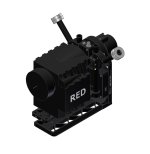
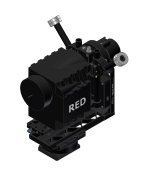
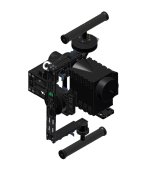
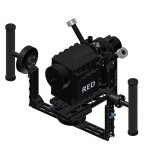
Let's see if there's a config that fit your need.
And these
If a picture is worth a thousand words, that's about 10 thousand right there.
 I'm sure I will have questions in the next few days as I absorb more of what I'm seeing, but it all looks incredibly versatile and so very elegant. Can't wait to use this thing.
First of all, once the Helix is balance, it always balanced. because we balance it one axis at a time. First, the Roll, it will be also optical centered. Then, once we get the roll axis spot on, meaning the camera can stop at whatever position you left it, it's balanced. Then, we move on to tilt/pitch axis, at this point, it's just sliding the camera back and forth to get the nodal point balanced. Then, raise/lower the handle to get it balanced on the pan/yaw axis. the COG is now at the junction of the 3 axis. Once you achieve this, you can switch to whatever configuration and would still be balanced. In the picture, I just set optical center, not putting the counterbalance weights yet.Hey if you can tilt your camera and also keep it stabilised in image 5 ,on the first raw of pictures, it can kind of work as long as you dont need to tilt up,and need to pan at the same time. and your lens is short.
This looks as a very bottom heavy set up, and Iam not sure how you can balance a 5 - 9lbs camera on the tilt axis, like this showing here, but hey if you can do it great.
nice images and design
best regards
- Thread starter
- #235

Sabyasachi Patra
Well-known member
- Joined
- Jun 14, 2011
- Messages
- 561
- Reaction score
- 0
- Points
- 16
- Location
- New Delhi, Bangalore, India
- Website
- www.indiawilds.com
First of all, once the Helix is balance, it always balanced. because we balance it one axis at a time. First, the Roll, it will be also optical centered. Then, once we get the roll axis spot on, meaning the camera can stop at whatever position you left it, it's balanced. Then, we move on to tilt/pitch axis, at this point, it's just sliding the camera back and forth to get the nodal point balanced. Then, raise/lower the handle to get it balanced on the pan/yaw axis. the COG is now at the junction of the 3 axis. Once you achieve this, you can switch to whatever configuration and would still be balanced. In the picture, I just set optical center, not putting the counterbalance weights yet.
Too often we look for complex solutions. You are attacking the basics and solving the issues neatly. I like your approach. More than twenty years back my engineering prof. used to say the same things to us. I am sure the Helix would turn out to be a great product.

constantine Tirintzis
Well-known member
- Joined
- Feb 12, 2009
- Messages
- 1,248
- Reaction score
- 0
- Points
- 0
- Age
- 60
- Location
- Athens , Syros,Greece
- Website
- www.the-running-rig.com
this looks to be the best made gimbal of all gimbal solutions for Epic and lightweight cams so far , and with a different approach, for hand held work.
Best regards
Best regards

Terry VerHaar
Well-known member
I assume those pictures on the web site are renders and not photos. Would love to know from hienle when he will have a fully operational unit with which he can do a video. Gotta see this bad boy in action!
Maz Mawlawi
Well-known member
- Joined
- Jan 18, 2008
- Messages
- 1,035
- Reaction score
- 0
- Points
- 36
When can we pre order or buy teh helix Hienle? (and it was nice meeting you in person at NAB!)
scott devitte
Well-known member
- Joined
- Oct 5, 2013
- Messages
- 839
- Reaction score
- 0
- Points
- 0
I wanted to add that another great thing about the Letus is that you can keep the battery on your body. If indeed it is 3 lbs., it will write a new chapter in eye level handheld shooting.
I wanted to add that another great thing about the Letus is that you can keep the battery on your body. If indeed it is 3 lbs., it will write a new chapter in eye level handheld shooting.
No no Scott, it's not 3 lbs. It's around 5 lbs. I stated with Terry earlier. I saw your post and checked the site and indeed Aaron had it at 3lbs. I am very sorry about this. It should be fixed by now. It would not only write the history of eye level shooting, it would also write the history of inventing a new material that is 3/5th the weight of Aluminum. Lol