Welcome to our community

Be a part of something great, join today!

  • Hey all, just changed over the backend after 15 years I figured time to give it a bit of an update, its probably gonna be a bit weird for most of you and i am sure there is a few bugs to work out but it should kinda work the same as before... hopefully :)

Leica Summicron-C - Feedback from users please!

Mark Pedersen

Well-known member
Joined
Aug 15, 2007
Messages
1,246
Reaction score
0
Points
0
Would love to hear from anyone who's rented or owns the new Summicron-C cinema lenses on Epic, and especially Dragon.

Are you happy with the look? Bokeh? Sharpness? Field of illumination? Build? Mechanics?

Anyone with any direct experience with these AND the Summilux-C's? How do they compare?

Appreciate any feedback.

Thanks!

Mark
 

Attachments

  • Summicron-C-FDTimes-1.jpg
    Summicron-C-FDTimes-1.jpg
    84.9 KB · Views: 0
Summilux-C's are sharper, virtually no CA, far superior. Summicron-C's are slightly softer, have quite a bit of CA, but are lighter and smaller. The Summicrons are also slower though but they cover Dragon at 6KFF whereas Summilux-C's do not. Build is better on the Summilux's at least to me. Smoother action on the gears. The summilux's are a bit long so more difficult to balance on gimbals. Summicrons are more compact like the Ultra Primes. Summicrons get an octagonal bokeh at around t5.6 and down. Slight bit of breathing on the Summicrons but none on the Summilux's.

Leica-size-compare-616x368.jpg


If budget isn't an issue, Summilux C's get my vote any day...

Here's some CA examples from other Redusers who own the Summicrons:

Screen-Shot-2014-03-12-at-12.06.39-PM.png

Screen-Shot-2014-03-12-at-12.08.52-PM.png


In saying that, both are incredible sets and I'd shoot with both any day...
 
This was as Summilux-C comparison to Cooke S4s. Not sure I agree with his assessment that Cookes separated the subject from the background more - especially in the 100mm.

I find the "slimming" and "separation" effect of the 21mm to be really nothing but distortion.

Personally, I don't like the Bokeh on the Cooke at all. That's something I find really important in rendering an image. A softer, background rendering always helps separate the subject from the background. The sharp hot center of the light in the Cooke draws my eye away from the subject. And in general, obvious geometric bokeh takes me out of the image and scene because I notice the geometry in what should be an organic experience.

M
 
Summilux-C's are sharper, virtually no CA, far superior. Summicron-C's are slightly softer, have quite a bit of CA, but are lighter and smaller. The Summicrons are also slower though but they cover Dragon at 6KFF whereas Summilux-C's do not. Build is better on the Summilux's at least to me. Smoother action on the gears. The summilux's are a bit long so more difficult to balance on gimbals. Summicrons are more compact like the Ultra Primes. Summicrons get an octagonal bokeh at around t5.6 and down. Slight bit of breathing on the Summicrons but none on the Summilux's.

Leica-size-compare-616x368.jpg


If budget isn't an issue, Summilux C's get my vote any day...

Here's some CA examples from other Redusers who own the Summicrons:

Screen-Shot-2014-03-12-at-12.06.39-PM.png

Screen-Shot-2014-03-12-at-12.08.52-PM.png


In saying that, both are incredible sets and I'd shoot with both any day...

Matt, I'm surprised to see that much CA in those images - particularly the window shot. However, that image is WAY over exposed in the backlight. I doubt you would see than in a correctly exposed shot.

Those are from the Summicron-C's? Or Summicron R still lenses?
 
The window shot was 1/2 of a HDRX frame if I remember correctly
 
Matt, I'm surprised to see that much CA in those images - particularly the window shot. However, that image is WAY over exposed in the backlight. I doubt you would see than in a correctly exposed shot.

Those are from the Summicron-C's? Or Summicron R still lenses?

Summicron C's. It's from Zeb's HDRX tests.
 
I've shot with the Leica Summilux-Cs a bit over a dozen times and the Summicron-Cs about 1/2 a dozen times.

The biggest differences between the Summilux-C and Summicron-C primes comes down to:

- Flatness of Field (lux's are generally flatter)
- Resolving Power (lux's resolve a bit more)
- Aspherical (lux) versus Spherical (cron) Designs
- T1.4 versus T2.
- Iris design and OOF image at verious apertures.
- Wrangling of aberrations. The Summilux-Cs have the best coatings and corrections (due to aspherical elements and a sudo-telecentric design) in motion picture primes.
- Breathing is more apparent in the Summicron-Cs, Summilux-Cs are extremely minimal.

Both are fairly compact with good markings. Both are nice and contrasty. Illumination across S35 field is good on both as well. Matt's mentioned the converage.

The Summicron-C Primes are closer to the type of image you get from the Cooke S4s, though they are both their own unique thing for sure. Both are different that the Zeiss Ultra Primes in terms of their overall look, though in a similar class.

The choice between a flat lens and a lens that has more curvature of field is a conversation that can be had forever. Both looks are different flavors.


A note on HDRx while I'm typing. At wider apertures on lenses that exhibit CA it is best to stop down to minimize that effect. When blending HDRx Tracks there's nothing taking into account for CA and it requires CA removal to get a "flawless" blend in post.


As of July 2014 the Leica Summilux-C Primes are still my favorite cinema primes on the market. Zeiss Master Primes are a short distance from them, but the Leica SL-Cs are just that little bit different and better overall.
 
Summicron C's. It's from Zeb's HDRX tests.

Probably shot wide open as well. The C's have CA for sure but are amazing for commercial work that has basic post processing done. Tonaci used my C's on a designer wedding dress shoot not long ago. I posted a couple Mono Dragon shots from that project shot on Canon lenses. Get him on the phone for a independent voice on their performance. He seemed very happy with the results last time we chatted.

Oh and . . . Dr. Philly H loves them ;-)
 
This was as Summilux-C comparison to Cooke S4s. Not sure I agree with his assessment that Cookes separated the subject from the background more - especially in the 100mm.

I find the "slimming" and "separation" effect of the 21mm to be really nothing but distortion.

Personally, I don't like the Bokeh on the Cooke at all. That's something I find really important in rendering an image. A softer, background rendering always helps separate the subject from the background. The sharp hot center of the light in the Cooke draws my eye away from the subject. And in general, obvious geometric bokeh takes me out of the image and scene because I notice the geometry in what should be an organic experience.

M

Agree with you 100% I actually think the Summilux-c look much better in all respects.
 
Hey guys, thanks for the feedback.

I currently own a set of Ultra Primes that I'm thinking about selling. I'm looking for a more modern design that has more character and better coverage for Dragon, with more consistent illumination across the field. I originally had a set of Summilux on order, but when the Summicrons came out, they seemed like a good alternative.

I'm familiar with the differences between the Lux's and the 'crons based on the specs and design. But curious about how they compared optically. I would expect the Lux's to perform better, but it was my understanding that both were designed to have the same overall look (like Ultras and Master Primes). Of course, there's also a huge difference in price.

Phil, I'm curious how you would characterize the look of the Summicron C's compared to the Ultras. My experience with the Ultras, is that while very good and consistent, from what I've seen, they don't have a lot of character, nor the same "luminosity" that I see in the Leicas. Although I have not tested them side by side. If the Summicrons have a lot of CA, that would cause me to pause. If it's only under extreme conditions, then I'm less concerned. Zeb do you own a set of Summicrons?

I have a full set of Leica R glass as well, and would love to have a set of cinema primes that would have their same character with better, more modern coatings, etc. But I understand they don't really "match" due to the fact that the R's are still lenses, and older designs.

I'm open to Cooke's as well, but that test I saw actually turned me off more than on.

Appreciate any thoughts. Thanks!
 
Zeiss Ultra Primes, and pretty much all Zeiss lenses after the Super Speeds, are more or less designed to be "pristine". Lens and camera peeps tend to use the word clinical.

The Leica Summicron-C Primes are technically pretty nice. Good resolving power with a bit of flavor. They don't have "a lot" of CA, but like all lenses in extreme contrast situations you'll see it.

I came dangerously close to holding onto my piggy bank and waiting for the Summicron-C Primes to be released. I needed glass about 6 months earlier and picked up the Schneider Cine-Xenar III Primes. That was a hard decision.

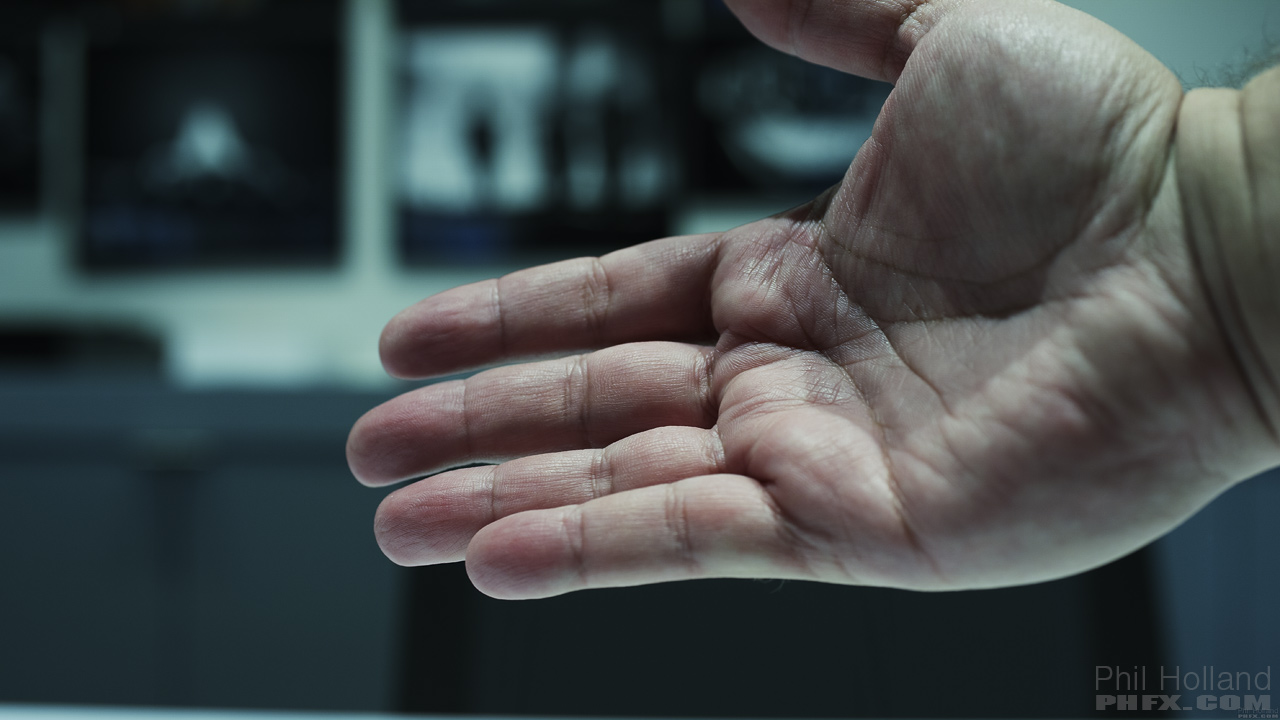
When i first got a look at the Summicron-Cs I did and still do enjoy the out of focus rendering:

phfx_dragonHandLeicaCron35.jpg


I dig the modern smooth way they render detail. Color is pure. Contrast is good too.

So if I had to define it I'd say the Summicron-C Primes have more character than the more clinical Ultra Primes. However, the Ultra Primes are damn good. Summicron-Cs are certainly more like a Leica-esque Cooke S4s to me. A hair more modern, still spherical, good coverage. Perhaps a hair more contrasty than the Cookes.
 
Perfect description Phil. Exactly my thoughts as well.

Do you think the Summicrons exhibit more CA than the Ultras? Cause honestly I don't ever recall seeing CA on my Ultras.

I've seen veiling flare on some of my leica R's but no CA that I've noticed.

M
 
Perfect description Phil. Exactly my thoughts as well.

Do you think the Summicrons exhibit more CA than the Ultras? Cause honestly I don't ever recall seeing CA on my Ultras.

I've seen veiling flare on some of my leica R's but no CA that I've noticed.


I would need to a true side by side to say anything for definitive. I haven't exactly done that yet. However, what I can provide you is this old 100% crop from the Leica Summicron-C 35mm at T2 on Epic Dragon:

phfx_redDragon_LeicaSummicronC35mmT2.jpg


This particular image was shot on the very first set of Summicron-C Primes and represents sort of a common situation where some lenses would produce a healthy amount of CA.


As for Ultra Primes, I can certainly make a few of those pop out some lateral and axial CA, it's hard to do in many common shooting scenarios.
 
Don't forget, the Cooke S4s have better mechanics than the 'Cron-Cs due to their cam focus design and windowed focus scales. The 'Crons have helicoids like the old style non-LDS Ultras. In practice, that means the focus rings can be a bit stiff and uneven lens to lens, depending on various factors. I found the 'Crons to be surprisingly heavy and to have an odd square aperture shape starting around T11.

Mark, Chater has a set of Summicron-Cs if you want to check them out in person. Too bad you're selling the LDS Ultras, they are sweet.
 
Hi!
We purchased these ones and made a little test - Leica Summicron-C VS Ultra Prime.
As soon as we bring them they were in a great demand for rent, so we haven't much time for planning our test.
We invite our russian DPs they were welcome to be involved in the process during the test.
You can see what we've got!

 
Last edited:
Back
Top