Welcome to our community

Be a part of something great, join today!

  • Hey all, just changed over the backend after 15 years I figured time to give it a bit of an update, its probably gonna be a bit weird for most of you and i am sure there is a few bugs to work out but it should kinda work the same as before... hopefully :)

Komodo Compared to Helium - Dynamic Range (and more)

Phil Holland

Administrator
Staff member
Joined
Apr 19, 2007
Messages
13,392
Reaction score
796
Points
113
Location
Los Angeles
Website
www.phfx.com
Jarred just posted this on Facebook and it deserves it's own thread IMO.

Here's what he wrote along with it:
Jarred Land said:
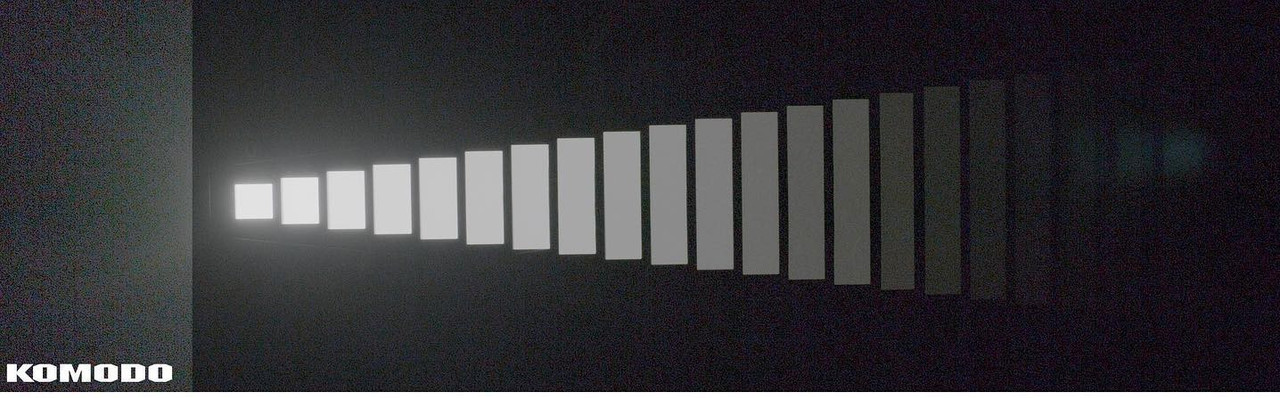
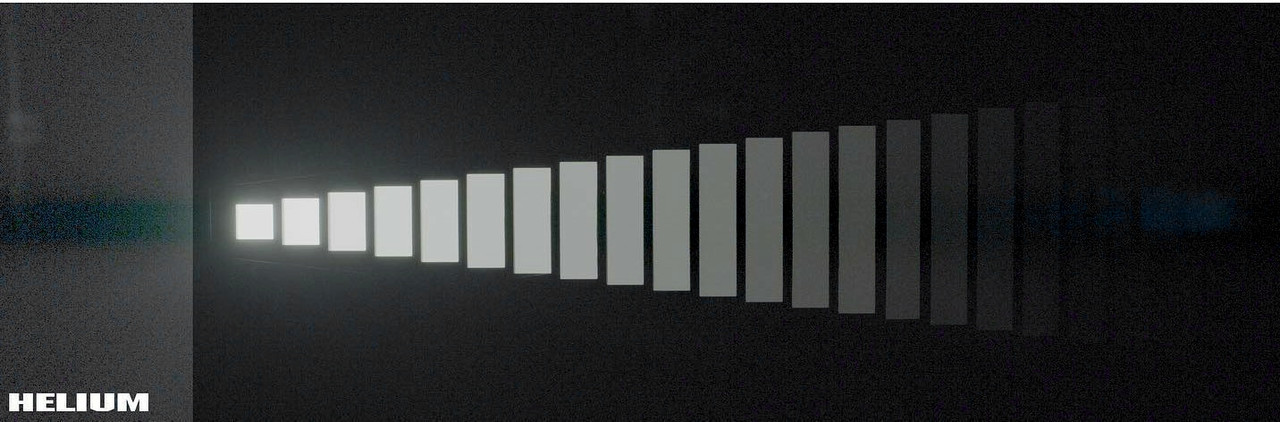
So as customers start to get Komodos this weekend I’m sure you all will start to see pretty charts and footage galore but thought I’d share some of the not so pretty stuff. Loren and I have been doing some deep deep deep diving the last few days and this chart between Komodo and Helium was a throw away as we had a bit of lens flare from a bad angle of the setup... but that mistake reveals a lot. We have talked about the dreaded sensor smear over the years and it’s a really hard one to solve... almost all CMOS cameras experience it. The super bright spilling over into adjacent columns of super black. This fugly chart really shows this anomaly off on the Helium, and shows how the new design of the Komodo all but eliminates it. Also you can see the benefits of the Helium and its resolution advantage... the Helium noise grain is smaller and less perceptible. Remarkably, even without the resolution advantage, the global shutter Komodo keeps right up to the Helium in terms of dynamic range... which is dare I say a bit revolutionary as far as global shutter sensors go. You can also see Graeme’s work really evolving here as the black levels in this 12800/6400iso split show how well behaved the blacks on the Komodo stay black when pushed all the way to the moon. Anyways... just thought I’d share . We still have a few gremlins to still work out deep in the gutters that 99.9% of people will probably never see but we are still attacking them regardless. The RED sensor team really deserves to take a bow on this one... and Graeme still finds ways to surprise me after all these years.

phfx_RED_KomodoHeliumXyla_JarredLoren.jpg


So yeah. Personal take here. We'll all have to uncover how to get the best images off of Komodo, but this shear amount of DR is impressive for a camera that's sub-$10K. And super impressive for anything with a Global Shutter. Whatever solution they have for the CMOS Smear on the sensor tech level is amazing and I hope something that can be further dived into on future sensor developments. That's been thing across a lot of cameras over the last decade, and not just RED cameras mind you.

That's a nice deep black and it mostly looks clean in terms of influence of the Color Science Filter.

The Pros are still there for Helium obviously in terms of resolution and that can equate to per pixel color. Don't throw away your cameras people. But this shows some of the mega advancements RED's sensor team has been able to crack on and into.

So far, so good IMO.
 
Very impressive. It's amazing having global shutter with this kind of range. You know what lenses you're gonna try out first?
 
Yeah, I was not expecting this. It totally stands up to the Helium. And the blacks are fantastic! I'm so glad I never got one of those other small cameras (S1H, etc.). This looks totally worth the wait.

Is there a reason I should care about sensor smear? I feel like anecdotally, with my Dragon, any time there's a bright white next to a dark shadow, there's no smear at all and I need to throw some diff on to soften the edge a little.

What does "12800/6400iso split" mean? Like halfway between the two? Or overlaid on top of each other?
 
Resolution matters very little when you get the cleaner balance of the Komodo one. Supersampled and noise reducted at UHD it's probably gonna look better in many cases. Sets things into perspective.

As a side-note, does anyone know anything about a preliminary timeframe for the release? First batch out now, but the Hydrogen discount ones will start when? The original Komodo-thread is so highly saturated that getting any up to date information right now feels like an academic research project.
 
Yeah, I was not expecting this. It totally stands up to the Helium. And the blacks are fantastic! I'm so glad I never got one of those other small cameras (S1H, etc.). This looks totally worth the wait.

Is there a reason I should care about sensor smear? I feel like anecdotally, with my Dragon, any time there's a bright white next to a dark shadow, there's no smear at all and I need to throw some diff on to soften the edge a little.

What does "12800/6400iso split" mean? Like halfway between the two? Or overlaid on top of each other?

sorry yeah the split thing was a bit confusing... the 12800 is the left most ( brighter ) split where the streak is on the chart on both cameras, it highlights the smear , and lack of smear.
 
sorry yeah the split thing was a bit confusing... the 12800 is the left most ( brighter ) split where the streak is on the chart on both cameras, it highlights the smear , and lack of smear.

Oh the smear is the dark bar! I thought that was part of the flare you were referring to. Yes, I feel like I've noticed that once or twice in exceptional circumstances. That's freaking amazing that you got rid of it.
 
Oh the smear is the dark bar! I thought that was part of the flare you were referring to. Yes, I feel like I've noticed that once or twice in exceptional circumstances. That's freaking amazing that you got rid of it.

Yeah smear is like a stripe that almost changes the nature of the noise floor.

Here's one time I got hit with it. Notice the greenish stripe through the middle of the man's jacket:

49947809781_d4f38f000c_o.png


Luckily for the actual film and actual take, I was able to window that area and remove the green stripe out of the jacket. It took a little work as the shot was handheld and the smear would move around relative to the jacket.

Really good news for Komodo to have entirely eliminated this phenomenon.
 
Last edited:
I have to say this DR is really impressive. Especially for controlled studio work. It suggests the blacks hold well. Curious how well color holds up across the range too.
 
I have to say this DR is really impressive. Especially for controlled studio work. It suggests the blacks hold well. Curious how well color holds up across the range too.

Could not agree more.

Are there any cameras this small with this kind of DR? This is going to be game changing.
 
Hey Graeme, any chance that the High-ISO magenta cast can be removed from the other sensors too (IPP2.5 mayhap)? Really like the more neutral grain of 6400 Komodo, and when pushing things that far every little bit helps (especially in those deep stops).
 
cute.
These blacks give hope well.
If so, even for the color out of the box it will be very promising.
We await the first R3d.
 
Yeah smear is like a stripe that almost changes the nature of the noise floor.

Here's one time I got hit with it. Notice the greenish stripe through the middle of the man's jacket:

Thanks for that example! It's definitely a rare occurrence in my shooting, but I've probably just brushed it off as a flare.
 
Hey Graeme, any chance that the High-ISO magenta cast can be removed from the other sensors too (IPP2.5 mayhap)? Really like the more neutral grain of 6400 Komodo, and when pushing things that far every little bit helps (especially in those deep stops).


Mike,

Magenta is just a combination of Red and Blue. Once you figure out what hue it is you can almost completely remove it like in the jpegs of the chart. And before anyone says anything, I know this is chart, I was just demonstrating. However, that Smear in the helium is another matter altogether.


phfx-RED-Komodo-Helium-Xyla-Jarred-Loren-3.jpg


phfx-RED-Komodo-Helium-Xyla-Jarred-Loren-2-redo.jpg
 
What could one expect shooting this chart test at a more optimum ISO, say 800? I suspect the sensor is not close to saturation at 6400. What is optimum ISO for Helium?
 
What could one expect shooting this chart test at a more optimum ISO, say 800? I suspect the sensor is not close to saturation at 6400. What is optimum ISO for Helium?

As of ISO calibration 2, I don't really stray anywhere outside of 500-1280 on Helium, personally, depending on what OLPF is in there.
 
As of ISO calibration 2, I don't really stray anywhere outside of 500-1280 on Helium, personally, depending on what OLPF is in there.

Seems like many of the current gen cameras are best in a similar range. My Bolex is best at 200-400 with very saturated Bayer filters and a very wide color gamut. I guess it comes down to the native sensitivity of silicon as a material minus whatever you stick in front of it.
 
Seems like many of the current gen cameras are best in a similar range. My Bolex is best at 200-400 with very saturated Bayer filters and a very wide color gamut. I guess it comes down to the native sensitivity of silicon as a material minus whatever you stick in front of it.

You mean Digital Bolex? Pretty sure it was CCD, which tend to be better than CMOS in colour/saturation because they were equal RGB, though way more expensive (exponentially so when you increase both size and resolution, hence why everyone went with CMOS/Bayer instead).

As for balancing out the magenta of Helium, Dragon, et al when ISO is pushed; sure you can do that, but it seems to reduce the low-end DR and (for obvious reasons) it'd always be better to have it that balanced/neutral out of camera/pre-compression. Just figured whatever tricks Graeme implemented in Komodo could be translated to Dragon/Helium/Gemini/Monstro in the next RCXp/SDK.

Yes. The Bolex uses a scientific grade Kodak/Truesense/ONsemi 1" format CCD. Same model series used in the Mars Rovers, but full 2k DCI resolution instead of HD 1080p. Kodak patented color filter array, very saturated, only 43% efficient in the red and blue channels. About 12 stops DR at optimum exposure. Shoots very much like Ektachrome 200 film stock, though it is higher DR than any 16mm film I shot in the 70's and 80's. Still use some lenses from my Bolex film cameras.

Sample frame shot with Angie 12-120 HEC.

16636390280_f624ba55b0_k.jpg
 
'So as customers start to get Komodos this weekend I’m sure you all will start to see pretty charts and footage galore but thought I’d share some of the not so pretty stuff. Loren and I have been doing some deep deep deep diving the last few days and this chart between Komodo and Helium was a throw away as we had a bit of lens flare from a bad angle of the setup... but that mistake reveals a lot. We have talked about the dreaded sensor smear over the years and it’s a really hard one to solve... almost all CMOS cameras experience it. The super bright spilling over into adjacent columns of super black. This fugly chart really shows this anomaly off on the Helium, and shows how the new design of the Komodo all but eliminates it. Also you can see the benefits of the Helium and its resolution advantage... the Helium noise grain is smaller and less perceptible. Remarkably, even without the resolution advantage, the global shutter Komodo keeps right up to the Helium in terms of dynamic range... which is dare I say a bit revolutionary as far as global shutter sensors go. You can also see Graeme’s work really evolving here as the black levels in this 12800/6400iso split show how well behaved the blacks on the Komodo stay black when pushed all the way to the moon. Anyways... just thought I’d share . We still have a few gremlins to still work out deep in the gutters that 99.9% of people will probably never see but we are still attacking them regardless. The RED sensor team really deserves to take a bow on this one... and Graeme still finds ways to surprise me after all these years.'

Thank you for sharing, it's useful information.
 
Last edited by a moderator:
Back
Top