Welcome to our community

Be a part of something great, join today!

  • Hey all, just changed over the backend after 15 years I figured time to give it a bit of an update, its probably gonna be a bit weird for most of you and i am sure there is a few bugs to work out but it should kinda work the same as before... hopefully :)

ISO of Red

In the past one needed an external light meter because there was no other way to know what the "film is seeing" grainwise. But, in case of Red One that's what the camera meters basically tell precisely; The camera can tell what "the sensor is seeing" pixelwise, and so in this sense there is no need/use for external light meter.

For setting the final exposure on the lens, sure I agree. The on camera tools give you a reliable way to tell what the camera is actually seeing / recording.

But, I do not agree that a meter is no longer needed. As I've mentioned previously, and others have commented they are still needed for setting ratios, keeping things consistent, prelighting, location scouting, etc.
 
If there were a way of having a bit more control over custom curves in the camera to get the image to look like the intended result after post it would be ideal. I would like to see a few more points on the curve as well, instead of just the 5. The interface for setting the curve in camera should be intuitive and fast to use. Currently it is cumbersome to dial a curve in with the LOOK settings. Maybe utilizing a GUI curve with the new touchscreens would work? There could also be some presets that boost a certain IRE range by a preset amount. We can also currently dial in settings in Rocketcine or RedAlert and program those numbers directly in to the camera but this is too time consuming for practical purposes most of the time. Having those settings updated in realtime wirelessly from the computer to the camera would be ideal. Imagine sitting at the DIT station with a live image coming HD SDI from the camera, tweaking settings in REDALERT/ROCKETCINE and having those update realtime wirelessly in the camera and monitor feed? You could dial in your custom curve very quickly.

Now that would be brilliant! I agree that the custom looks as implemented now are too cumbersome to deal with unless a look has been created prior to a shoot. Additionally, even if you do have a created look, the camera does not always correctly load it- sometime I have to go through and load / clear the look 3 - 4 times before all of the settings take hold.
 
That is my understanding of the system. And as I have understood it, as with DSLR's it is best to shoot for the RAW, and then develop for the JPG. Or in RED's case- shoot for the RAW and then develop for Rec709, film, etc.

Definitely dont want to develop for REC709 ... CameraRGB and REDLOG baby
then "output" to REC709, film, etc. its all about REDLOG in the "processing" of the RED RAW file, if you want the MOST latitude in post for CC and deliverables. imho

EDIT: Eric, I believe what you are asking for is being addressed with FLUT Color Science, but its just guess/hope.
 
Definitely dont want to develop for REC709 ... CameraRGB and REDLOG baby
then "output" to REC709, film, etc. its all about REDLOG in the "processing" of the RED RAW file, if you want the MOST latitude in post for CC and deliverables. imho

EDIT: Eric, I believe what you are asking for is being addressed with FLUT Color Science, but its just guess/hope.

My point wasn't about the specifics, but more about the process. Shoot for the RAW and then develop for the output / intended target. That way you can get the most out of the image.
 
Frequently I will have a rigging crew working a set or two ahead and have to give instruction on light levels and ratios. It's impractical to have the rigging crew include a camera department for the sole purpose of lugging a Red around to use as a light meter. So for me, it's important to be able to know what I will be getting out of the camera at certain predetermined light levels. It's always been disconcerting that rating the camera at 320 on my meter and setting the metadata to 320 does not give the expected results in false color. This is the issue David Mullen was talking about.

My own questions on this issue, whether or not the REDs end up with options/settings to a more standardize match of a current light-meter's ISO ratings:

1. On the Scarlets/Epics will the REDMOTE be able to act as a remote metering readout if a camera is on set?

2. Would it be possible to develop a "REDMETER" of sorts for the situation Eric Haase describes above where the light sensitivity is directly matched to that of the RED's?

It would seem that as Graeme pointed out:
The whole ISO scheme needs completely revising with respect to how cameras now work. The ISO320 of the RED is to achieve a reasonable exposure on a scene with a reasonable dynamic range so that it looks reasonable after reasonable grading. And I find that reasonable.

Then if you simply accepted you were leaving film based expectations behind when it came to exposing on the RED for controlled situations, it would seem the only thing missing on set is a tool that does correspond directly to the RED for that purpose in order to bypass film based exposing hiccups using film based tools.
 
So all this mess could be avoided in the R1 by just having a quick "preview raised midtones" checkbox?

Not trying to oversimplify, but what else would still remain to add confusion with this simple fix added?

So... We're more or less back to "baked-in gamma curves" except we're not throwing information away, just previewing how it should be graded properly for a default look.
 
So all this mess could be avoided in the R1 by just having a quick "preview raised midtones" checkbox?

Not trying to oversimplify, but what else would still remain to add confusion with this simple fix added?

So... We're more or less back to "baked-in gamma curves" except we're not throwing information away, just previewing how it should be graded properly for a default look.

Thinking more about this, it wouldn't even be midtones, as middle grey rated at 320 would get you about 27-30 IRE in REC709. So, you'd probably want this somewhere in the 43-46 IRE range. You're boosting the low mids, if not the lows quite a bit.

I think that above all things, there needs to be education and information. (The purpose of this thread). It took me several projects shooting on RED to figure out what was really going on with REDSPACE, REC709, noise, exposure, and ISO. I also had to shoot the charts I posted in this thread to really understand it. Coming from both a film and HD background I thought in terms of middle grey exposure and my light meter and where tones fall in relation to this. I know what I think 2 stops over key should look like, and what 3 under should look like But RED is entirely different in approach as far as understanding exposure. No one tells you this when you start shooting RED. And it takes trial and error or very specific testing to learn. Using "ISO" as terminology of the metadata setting has likely been the number one problem in causing confusion. I would strongly suggest that if this setting is used in the future it corresponds to more traditionally expected results when used in conjunction with a light meter.

Hopefully the technical solution arrives with the new color science. The first thing I am going to do when I get my Epic is throw up a grey scale and plot out the curves so my first shoot can be perfectly exposed for the new capabilities and workflow.
 
Jim,

it's a very nice credo...

But in between I would like also to suggest that finally shot on RED web page "http://www.red.com/shot_on_red/"

put on there Lars von Trier's movie "Antichrist" (the movie that like it or not doesn't matter in this case) shot mostly on RED1 by

Anthony Dod Mantle, BSC, DFF,

Cinematographer, the ASC and Academy Award® Winner,...

A lot of people think that this is one of the best movies shot on RED1 till today.

Also I think that Anthony Dod Mantle, BSC, DFF, just "nailed" the best points shooting with RED1 and that should also somehow respected by RED comapany.

BTW, also further Anthony Dod Mantle, BSC, DFF, as a great cinematographer, the ASC and Academy Award® Winner should be ALSO consulted in

any future RED camera development like an Epic, Scarlet,... because he is really the best experienced and knowledgeable guy for that job.

Jim, again it's just all about for your consideration...

Thanks Jim,

this is one more proof that RED is listening its customers...

Lars von Trier's movie "Antichrist" shot mostly on RED1 by

Anthony Dod Mantle, BSC, DFF,

Cinematographer, the ASC and Academy Award® Winner,...

is @ SHOT ON RED page from now

LINK>>>


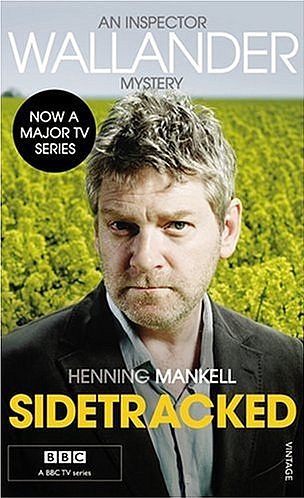
BTW, Anthony Dod Mantle, BSC, DFF shot one of BBC's Wallander [episode #1 'Sidetracked' & #3 'One Step Behind' dir by Philip Martin] TV episodes also on RED1'

The following month, Martin began discussions with cinematographer Anthony Dod Mantle about what visual style the films would have.
They agreed to use the Red One digital camera to shoot on,[Broadcastshow,co.uk:On location: Wallander] which has a near-35 mm resolution and is not as expensive as 35 mm;

LINK>>>


wallander_cover1.jpg

Sidetracked

wallander_cover2.jpg

One Step Behind

British actor/director Kenneth Branagh in Wallander and that those two of the serial's episiodes were shot by Anthony Dod Mantle, BSC, DFF on RED ONE.

And for that job he has got BAFTA British Academy Television Craft Award in category of "Photography & Lighting Fiction/Entertainment".


bafta-tv-craft-plain-391.jpg


LINK>>>
 
Sanjin,

I'd appreciate it if we could keep on topic here. Posting quote, links, and quoting yourself with links to productions shot on Red is not very helpful. We can all visit the Shot on Red Forum, Search on IMDB, or just Google if we need to find out if something was shot on Red.

If you have something useful to contribute to the thoughts on this thread, great. :) Otherwise we are trying to sort out the best practices for working on set with the Red. We know that the camera can produce great images- so you shouldn't feel threatened. We all just want to get the best, and the most out of this camera.
 
Ryan,

sorry to disturb you with my digression of the tread topic (ISO of RED),

but it was not about "googling" shot on RED,

it was more about how one of the famous cinematographers like

Anthony Dod Mantle "nailed(!!!)" or find out how to exposure with RED (topic: ISO of RED)

using one of early RED firmware builds (that were described as a problematic!!!)

and even though he has got awarded for that job in Wallander

(BAFTA TV Award Best Photography & Lighting Fiction/Entertainment for: "Wallander" (2008)).

In that case I would recommend sometimes to read my signature again.

And now RED team is working hard "to easy" exposure workflow for some of RED users who experienced troubles with that before.


Btw, after that sort of disgression we got finally a place for Lars von Trier movie at the official Shot on RED page.
 
Unless the links are to articles, forums, or other documents pertaining to what we are talking about here they do not apply and are off topic. The point of this thread is not "can a correct exposure be obtained" - we know that it can. Rather we are discussing the working practices and the "how to" of the process. So please keep the posts and links focus around that topic. Otherwise it just ends up generating a lot of noise people have to wade through. Thanks. :)
 
Yes REDSPACE really lifts things way up. Check it out:

http://dl.dropbox.com/u/904379/Build 20 Tests Round 2.pdf

You can see the relationship between REDSPACE, REC709, and RAW. Your meter will more closely match if you use REDSPACE.

this might have gotten lost in the bit depth side debate.

Redspace and 250-400 ASA (meter and camera) will yield an excellent picture quality if exposed correctly. Everybody here that insists on a 160 ASA rating uses REC709, an old antequated video display color space. RAW is 120~160 if you are going to expose for that. Rec 709 is very close to RAW exposure wise. Rec 709 yielded terrible skin tones and skewed up until build 20. Using Rec709 means NOT taking advantage of the RAW idea: the idea that you create a "digital negative".
You have to expose a negative to print a solid positive. Our "digital negative" manifests itself as a positive image. A traditional negative would traditionally be slightly overexposed. A positive "digital negative" slightly underexposed.
I've never used false color so I can't comment on that but I use raw toggle and the histogram and my meter.
The only time I rate my meter at 160 and the camera at 320 rec709 (200asa redspace before build20) is when I shoot greenscreen and am trying to yield the most noisefree image possible with the imaging system.
 
Redspace and 250-400 ASA (meter and camera) will yield an excellent picture quality if exposed correctly. Everybody here that insists on a 160 ASA rating uses REC709, an old antequated video display color space. RAW is 120~160 if you are going to expose for that. Rec 709 is very close to RAW exposure wise. Rec 709 yielded terrible skin tones and skewed up until build 20. Using Rec709 means NOT taking advantage of the RAW idea: the idea that you create a "digital negative".
You have to expose a negative to print a solid positive. Our "digital negative" manifests itself as a positive image. A traditional negative would traditionally be slightly overexposed. A positive "digital negative" slightly underexposed.
I've never used false color so I can't comment on that but I use raw toggle and the histogram and my meter.
The only time I rate my meter at 160 and the camera at 320 rec709 (200asa redspace before build20) is when I shoot greenscreen and am trying to yield the most noisefree image possible with the imaging system.

I have preferred working with Red Log and Camera RGB as the tones have been much more pleasing then Rec709 on the Red. But regardless of the final output / delivery isn't it best to expose for the RAW, and not for either Redspace or Rec709? It was my understanding that you want to expose for the RAW and then that allows the greatest flexibility in processing in post- it gives you the best "digital negative". And if this is the case, then wouldn't rating it around ISO 160 on the meter yield the best results?
 
We know it "lies". But we know its off by a certain amount.

When i shoot with this camera, i know it needs to be rated lower with a meter. And i know False color is off a bit. So i just compensate. on checkout day, just see where it falls and make an index for yourself to get balanced exposure.
 
But regardless of the final output / delivery isn't it best to expose for the RAW, and not for either Redspace or Rec709? It was my understanding that you want to expose for the RAW and then that allows the greatest flexibility in processing in post- it gives you the best "digital negative". And if this is the case, then wouldn't rating it around ISO 160 on the meter yield the best results?

If your scene has very little dynamic range and you have enough light, then yes, rating at 160 is great because it produces the least noise.

HOWEVER - I've worked with some great DPs like Matt Garrett where we have rated the camera much higher - over 500. Usually:
1. the scenes are high contrast (and despite use of grads, fill etc we can't lower the contrast enough because we're on location)
2. we're okay with some noise in the final image
3. I'm reducing the noise anyway via good noise reduction in post

...and sometimes we just don't have enough light! But the essential idea is that some noise in the image is better than harsh clipping.

Bruce Allen
www.boacinema.com
 
Unless the links are to articles, forums, or other documents pertaining to what we are talking about here they do not apply and are off topic. The point of this thread is not "can a correct exposure be obtained" - we know that it can. Rather we are discussing the working practices and the "how to" of the process. So please keep the posts and links focus around that topic. Otherwise it just ends up generating a lot of noise people have to wade through. Thanks. :)

Ryan,

I would say it's opposite,

from the generator of this tread Shawn Nelson and you personally JUST BECAUSE that you didn't "nailed" to work with RED exposure in a right way !!!???.

I didn't have any bigger problem with RED exposure.

It's about you get it or you don't get it!!!

No big help in the forum or tread like this at all...!!!

And nobody has to play here a big cinematographer or emerging sort of it just to get recognition here...

I did a lot of local jokes here about certain guys who pretended to "behave" like this.

And after some years spent here I'm pretty bored and fed up of guys like this...

It's not a DoP sort of (psycho)clinic, it's just a forum where you are able or not to exchange some experiences of using RED1!!!

My sort of "exposure/ISO on RED guidance" was not to show how you could do it by yourself but more is to show how other people were did it and that it was done in a right way a long ago.

As I said here and also that's somewhere else placed at the forum about to exposure

with RED is not "rolling all the time on the same issues"

with "discussing the working practices and the "how to" of the process".


........................


At the end it's just because the RED team is right now doing for you who would like to have that pretty straight forward and simplified approach :biggrin:.

One more thing I would like to say is that the topic of this tread pretty soon is going to be an OBSOLETE.

So why somebody would waste time in the engagement when you are not able even to make any valuable point to the topic that's actually AGAIN very soon obsolete?

I'm bored about it and going to leave it now.

All the best.

BTW, did you try out the newest firmware beta build [Release Build 20 (v20.1.6)] ?

The things are getting better almost on a daily basis with RED1.
 
If your scene has very little dynamic range and you have enough light, then yes, rating at 160 is great because it produces the least noise.

HOWEVER - I've worked with some great DPs like Matt Garrett where we have rated the camera much higher - over 500. Usually:
1. the scenes are high contrast (and despite use of grads, fill etc we can't lower the contrast enough because we're on location)
2. we're okay with some noise in the final image
3. I'm reducing the noise anyway via good noise reduction in post

...and sometimes we just don't have enough light! But the essential idea is that some noise in the image is better than harsh clipping.

Bruce Allen
www.boacinema.com

That make a lot of sense. Noise is definitely preferable over clipping, as harsh clipping is the dead give away of a digital image.
 
Ryan,

Ive been shooting with the Red for 2 years almost exclusively, and if you rate for 320, you will underexpose. Every single DP I've ever spoken to, including some very notable ones, and gaffer agrees, and rates their meters at 160-250. This ISO conversation is always a hot topic on a Red set. And as David Mullen has correctly pointed out, false color, which Red has said many times is the best way to properly expose Red, is 1 stop off from 320, and is therefore 160. This makes so little sense that it is definitely more than a little oversight that they're trying to fix. I expose for false color and use a meter just for ratios. Exposure is spot on every time.

So far here, not a single person has said they rate their meters at 320, including David Mullen who has proven himself to expose quite well :) Only Red has supported 320 and it's to protect highlights. So protecting highlights is more important than properly exposing skin tone? Is there really that little latitude in the highlights that Red recommends underexposing the whole image to save them? As has been brought up before, this was a decision from the marketing department.

However when you do expose for the Red properly, it makes some damn good images. Just finished looking at some footage from a recent shoot, very happy.
 
Back
Top