Welcome to our community

Be a part of something great, join today!

  • Hey all, just changed over the backend after 15 years I figured time to give it a bit of an update, its probably gonna be a bit weird for most of you and i am sure there is a few bugs to work out but it should kinda work the same as before... hopefully :)

Hasselblad vs RED Epic for stills.

Heh... I shot a 5 frame bracket.

What?? Bracketed with how much total stop latitude? The shadows are starved for light and therefore noisy indicating under exposure so the bracketing was not deep enough.

I'm no film school grad . . . but simple me would have exposed for the highlights on one frame, then shoot a frame 3-6 stops brighter for the shadows and chairs and a third frame for perfect midtones. With the Phase preview check the histograms to confirm exposure coverage then mash together in post. Or, if you want to do all in single frame like a rockstar, get a ladder and ND film to cut the ceiling lights to have the entire scene meter within the known DR of the camera.

That all being said . . . no way this scene as originally shot exceeded 18 stops of total DR. Did it??

Edit: I understand now from rereading your #113 post that the image I corrected in post #136 is a single frame from your 5 frame bracket - not a HDR composite of those 5 frames. I'll bet with the top and bottom frames from that bracket set could be made awesome in LR4 as a composite. Point is - software is outpacing hardware at this point for creating amazing images. If you haven't upgraded to LR4 yet - do so soon. Amazing
 
Last edited:
So no comments on the global color adjustment I did to get close to the final ?
Of course this is not the Epic vs phase one test , but anyways ....


Here is my coloring of the phase one original:full size jpeg here ( 32 meg ) : http://dl.dropbox.com/u/61349012/les_cc0000.jpg

NOTES: I noticed different luminous lighting on chairs / back of chair.I did not do any ceiling retouch to remove fire sprinklers or smooth and desat. the tones in ceiling.I did no localized color correction at all.
small version :
les_cc_small0000.jpg


The original from Christopher:
120405_131.jpg
 
Looks great Les. Lightroom? Nobody commented on mine either. You get that...:001_smile:
 
Here is my coloring of the phase one original:full size jpeg here ( 32 meg ) : http://dl.dropbox.com/u/61349012/les_cc0000.jpg

NOTES: I noticed different luminous lighting on chairs / back of chair.I did not do any ceiling retouch to remove fire sprinklers or smooth and desat. the tones in ceiling.I did no localized color correction at all.
small version :
les_cc_small0000.jpg


The original from Christopher:
120405_131.jpg

I opened the RAW IIQ file on Capture One and couldnt get a decent gradient between the clipped are near the red element on the ceiling. That impressed me as Capture One software used to have the best options for developing. Adobe camera RAW would open the files differently. The blue channel is totally clipped, impressed with your results.
 
While I am actually amazed at all the information that LR could pull from the raws, the files really fall apart. Even at low res, the gradient in the ceiling starts to band. When you zoom in to the full size jpegs, the slanted wood wall shows a lot of weird tonal breakdowns and the shadows under the coffee table are full of noise. They look decent here on the forum, but the quality just isn't acceptable for my work. I'll be sticking to wide brackets with the still camera. The workflow I use is just as fast as the LR correction. I create an HDR image using the bracket in Photomatix and output a 16 bit tiff. Then I drop that on top of my Middle exposure that has a nice level of contrast through the majority of the scene. Use that layer to create a luminance mask for the HDR layer so that only the trouble spots (hilights) come through. This all takes about 2 minutes and provides a broad, contrast taming tonal range with excellent mid tone contrast and smooth transitions.

While the P65+ files have a whole lo of information in them, I've found in the past that you can only push them about 1 1/2 stops before they degrade. I know, I'm a total freak when it comes to image fidelity, and many of my clients would never see the shortcomings I've found in the single image approach, but knowing that the files have that much noise and banding in them (even if it's only apparent at 100%) would keep me up at night.

I've got some more files to show you guys as soon as I dig myself out from under the pile of work I've got in house right now.

CB
 
So no comments on the global color adjustment I did to get close to the final ?
Of course this is not the Epic vs phase one test , but anyways ....

I thought your version looked fabulous - and would certainly like to know the steps you took!
 
While I am actually amazed at all the information that LR could pull from the raws, the files really fall apart. Even at low res, the gradient in the ceiling starts to band. When you zoom in to the full size jpegs, the slanted wood wall shows a lot of weird tonal breakdowns and the shadows under the coffee table are full of noise. They look decent here on the forum, but the quality just isn't acceptable for my work. I'll be sticking to wide brackets with the still camera. The workflow I use is just as fast as the LR correction. I create an HDR image using the bracket in Photomatix and output a 16 bit tiff. Then I drop that on top of my Middle exposure that has a nice level of contrast through the majority of the scene. Use that layer to create a luminance mask for the HDR layer so that only the trouble spots (hilights) come through. This all takes about 2 minutes and provides a broad, contrast taming tonal range with excellent mid tone contrast and smooth transitions.

While the P65+ files have a whole lo of information in them, I've found in the past that you can only push them about 1 1/2 stops before they degrade. I know, I'm a total freak when it comes to image fidelity, and many of my clients would never see the shortcomings I've found in the single image approach, but knowing that the files have that much noise and banding in them (even if it's only apparent at 100%) would keep me up at night.

I've got some more files to show you guys as soon as I dig myself out from under the pile of work I've got in house right now.

CB

I totally agree with your approach to extreme DR images. You still can't beat Photomatix and PS for creating nuanced HDR images. I use LR to RAW process then do the fine detail work in PS. Would love to attend a workshop you are instructing in the future that covers fine art architectural capture to print technique and workflow.
 
I agree, multi exposure help the dark noise a bunch. In my still photography I do a lot of street photography of people, and I use Photomatix to get more punch out of the scene.
Obviously I can't use bracketed exposures on people ;)

In my color processing, I did no touchup, I could have flattened and smoothed the ceiling obviously.
I used ACR and fusion.

If that shot was from a Red camera, we would be seeing less detail in the darks. Way less. Red tends to smash out the dark detail, I believe as an effective measure to reduce 'unneeded' detail that most users won't miss much.
I invite readers to shoot the same image with the Red and a modern DSLR, process both from raw to a gamma boosted ( brightened ) image and look at what's happening in the dark regions. These are the regions that an HDR tone mapping would often bring up into more visible tones.
Hey, it's a movie camera, I'm OK with it. I do use HDR toning on Red footage in a mild way, and it works well. I could never have done any of that with an 8 bit camera !

Still from RED footage I shot below:
benz1-X2.jpg
 
Great job, Red Team! I love Hassy but also love my Scarley...don't have an Eppie yet. Use the Canny most of the time.
 
Snapshots

Snapshots

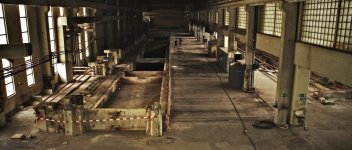
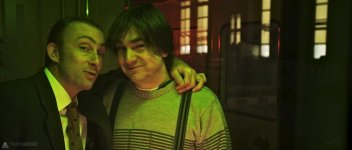
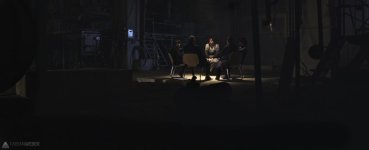
Stills from my latest short with the Epic:
 

Attachments

  • Lungenliga_Fabian_Weber_8.jpg
    Lungenliga_Fabian_Weber_8.jpg
    26.1 KB · Views: 0
  • Lungenliga_Fabian_Weber_6.jpg
    Lungenliga_Fabian_Weber_6.jpg
    81.6 KB · Views: 0
  • Lungenliga_Fabian_Weber_7.jpg
    Lungenliga_Fabian_Weber_7.jpg
    40.9 KB · Views: 0
  • Lungenliga_Fabian_Weber_9.jpg
    Lungenliga_Fabian_Weber_9.jpg
    19.2 KB · Views: 0
The biggest problem medium format has is crap sensors. With significantly larger pixels you should at least be able to MATCH 35mm DSLRs.

Go to DXOMark, look at the dynamic range chart comparing the $10k Pentax 645D and $3k Nikon D800, then come back here and convince me to buy the Pentax. At least it keeps pace in SNR unlike much more expensive MF from Hasselblad and Phase One.
 
There's a debate on this over at Reddit: http://www.reddit.com/r/photography/comments/u7s6g/hasselblad_vs_red_epic/If anyone wants to be the voice of reason over there, please do ;)
cool martin, anyone see these comments over there at Reddit?
Here's an official challenge at a major sporting event. The 9shooter Canon Nikon system vs. The Red Epic or Scarlet:http://blog.9shooter.com/2012/05/9shooter-vs-red-epic-red-scarlet.html"The 9SHOOTER vs RED EPIC / RED SCARLET photographic stills & video showdown challenge!"The 9SHOOTERTM hereby challenges the RED EPIC / SCARLET community to see who can capture the best video and stills at a pro surfing event in Southern California. We can meet up at either the 2012 Hurley Pro in San Clemente in September or the 2012 Nike US Open in Huntington Beach in July. Hopefully EPIC will do better than last year, when they didn't even show.The basic rules will be as follows:1) One-on-one. The 9shooter operator and RED operator (preferably Jim Jannard) must carry all their equipment onto the beach by themselves and operate it by themselves. 2) All photographs and video must be finished by the operator. 3) Points will be given for stills, video, and overall cost of equipment including batteries/memory cards/lenses/etc. (the exact breakdown & criterion/weighting will be discussed--feel free to comment with suggestions!)
http://www.reddit.com/r/photography/comments/u7s6g/hasselblad_vs_red_epic/ red would kick a!
 
Or get the upcoming Canon Eos 1dc that would not have raw video but it seems that the canon log+ 4k motion jpeg are nice through.
For the money of a Scarlet you would have a lightweight cinema camera with just 1.3x crop mode(aps-h) at 4k.
It records in a bigger area than Epic.
And also features the 1dx low-light capability and stuff.
 
Couple of interesting points he made:

Longer workflow: I'd never really considered this for post time but I guess it makes sense in his setting. For me, scrubbing through the timeline is quite a fast process and finding the right still only takes a really short amount of time. I actually love the flexibility. It means you find moments that you didn't even know occurred while shooting, and it ensures that you don't miss that actual moment you were planning on capturing.

Cost: Peter mentioned that the EPIC kit he was using was worth about 80k. What I found interesting is that for Peter's purposes, a scarlet shooting at 12fps in 5k would fill his needs just as much as an EPIC would. Being that he's not looking for slow-mo and is only looking to pull stills and not motion from the footage he shoots, there is already a lower priced entry point as an option :)

Hello Brad,

If you weren't interested in video, would you not be better off spending $3,000 on Nikon D800 or $5,000 on a Nikon D4? Both produce superior images at 5 FPS - 12 FPS over the Scarlet, while weighing less and costing less. What would the advantage of the Scarlet be in this case?

Don't get me wrong, I see the advantage of shooting 5K video with the RED for the big screen, but what is the advantage of shooting 12 fps with the Scarlet, which i too few for even 1080p video?

Thanks!
 
This is an interesting behind the scenes and for me highlights the positives and negatives of using EPIC for stills.

While its a fantastic highlight of the resolution of EPIC over say the Alexa I still feel using a motion camera for stills goes against what still photographers have crafted for years... and thats the trigger moment.

The moment you capture whilst looking through the viewfinder, you've composed the shot (portrait or landscape) and fire that trigger and hear confirmation as the shutter opens and closes. That Click sound is so important and part of the photographers genes. Without it (as mentioned on this video) you feel awaked and like something is missing.
Not only do you have the "click" sound the shutter opening and closing makes but you can also feel it in your hand, a feeling and sound that is part of being a photographer.
Something that doesn't apply to motion photography.

RED need bring out a "Shutter Click" which tags the still in the motion stream and REDCine could load a timeline with just those "tagged" shots.
 
Yes that would be interesting. A "shutter click" when a button is pressed on the RED, and then the exact frame is tagged, perhaps with a red demarcation, while the surrounding ten frames on each side are marked with a blue demarcation, and the next ten on each side with green.

Then, in post, it would be easy to go to all the exact spots immediately, while also having the immediate frames around it to play with, and, of course, all the frames if one wanted to.

One could select "look at all red frames," or "look at all red and green frames."

This would cut down on the rub-a-dub-scrubbing!

Should be simple to do! I'll file a patent on this today!

:)
 
Last edited:
Hello Brad,

If you weren't interested in video, would you not be better off spending $3,000 on Nikon D800 or $5,000 on a Nikon D4? Both produce superior images at 5 FPS - 12 FPS over the Scarlet, while weighing less and costing less. What would the advantage of the Scarlet be in this case?

Don't get me wrong, I see the advantage of shooting 5K video with the RED for the big screen, but what is the advantage of shooting 12 fps with the Scarlet, which i too few for even 1080p video?

Thanks!

If I wasn't interested in video then perhaps you would be right - but I am interested in video and shoot far more video than stills with the camera personally. What's the Dynamic Range on the D800 and D4? You might be able to make the case that the scarlet and it's HDRx mode provide a unique selling point for stills - but even then I don't think I would be trying to sell the scarlet as the best stills camera in the world - it's a stills and motion camera afterall :)
 
If I wasn't interested in video then perhaps you would be right - but I am interested in video and shoot far more video than stills with the camera personally. What's the Dynamic Range on the D800 and D4? You might be able to make the case that the scarlet and it's HDRx mode provide a unique selling point for stills - but even then I don't think I would be trying to sell the scarlet as the best stills camera in the world - it's a stills and motion camera afterall :)

You write, "You might be able to make the case that the scarlet and it's HDRx mode provide a unique selling point for stills." How/why might one be able to do this? The new Nikons and Canons and Sony all have HDR mode too, as well as better autofocus I believe?
 
Back
Top