Welcome to our community

Be a part of something great, join today!

  • Hey all, just changed over the backend after 15 years I figured time to give it a bit of an update, its probably gonna be a bit weird for most of you and i am sure there is a few bugs to work out but it should kinda work the same as before... hopefully :)

Filters in Front of a Long Lens

Does this problem concern shorter telephoto's lenses also (i.e. 200-400)?

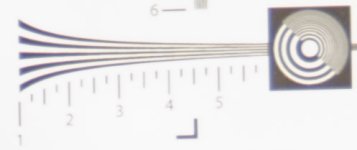
Yes, the extent depends on the physical aperture, so the longer or/and the faster the lens the worse effect will be.
 
Thanks Pawel! The results from your test are a lot worse than I thought! Really not worth using a front filter at wide apertures on a long lens at all then. In the past I have tried to keep the image as clean as possible on long canon lenses and have avoided filters. However for some shots, especially in a nature/scenic shot you can really benefit from a polar and/or an ND grad. But I guess in those cases a smaller aperture is more useful anyway so the distortion is less pronounced.

So the real difficulty comes when you want that shallow DOF and you need to control the light with an ND. So either a high strength rear ND or compromise with a single high strength front ND then.
 
The longest lens I usually use is a 300, and I do see affects from having a filter on it. However not as pronounced as that from Pawel's test, probably due to the shorter focal length and that generally I use the lens at smaller apertures.
 
Stepping down helps, but not enough to make it usable

Stepping down helps, but not enough to make it usable

OK, I have been in touch with optical engineers at Schneider Optics and they asked me to repeat the tests by refocusing each time a filter is added. It didn't make a damn difference. With a filter in front, I do not get sharp image at any focus position. :confused:

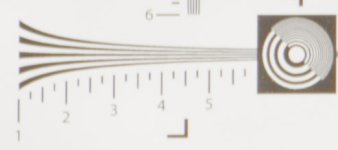
I did some more testing with stepping down to f/8 - f/9: slight improvement, but nowhere near enough to be usable.

There ya go: Long lenses can only use drop in filter - that's it!

Now, can I have a request to Jim: Can you make the new sensor LESS sensitive, say 50 ISO, would be fine? :emote_couch:
 

Attachments

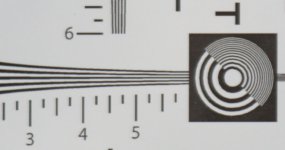
  • 1. Leica 580mm no filter, 0.2s f2.8.crop.jpg
    1. Leica 580mm no filter, 0.2s f2.8.crop.jpg
    35.8 KB · Views: 0
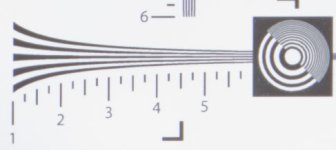
  • 2. Leica 580mm 85+PL filter, 1s f2.8.crop.jpg
    2. Leica 580mm 85+PL filter, 1s f2.8.crop.jpg
    27.7 KB · Views: 0
  • 3. Leica 580mm 85+PL filter, 5s f8.0.crop.jpg
    3. Leica 580mm 85+PL filter, 5s f8.0.crop.jpg
    28.2 KB · Views: 0
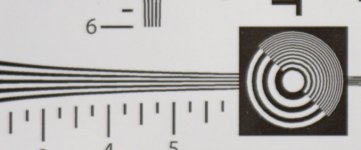
  • 4. Leica 580mm Grad filter, 0.2s f2.8.crop.jpg
    4. Leica 580mm Grad filter, 0.2s f2.8.crop.jpg
    30.6 KB · Views: 0
two more crops at f/8
 

Attachments

  • 7. Leica 580mm no filter, 0.5s f8.crop.jpg
    7. Leica 580mm no filter, 0.5s f8.crop.jpg
    35.5 KB · Views: 0
  • 9. Leica 580mm Grad filter, 0.4s f8.crop.jpg
    9. Leica 580mm Grad filter, 0.4s f8.crop.jpg
    30.8 KB · Views: 0
It's funny how in the consumer slr world the first thing many people do is put a UV filter on their lens just to protect it.
 
I use 35mm still lenses exclusively on my Red One cameras - a huge collection of Nikon lenses, and two long Canon lenses - zooms and primes ranging in focal length from 10mm to 800mm. All my filters are screw-on. I do very mobile work, so I don't use a matte box or follow focus. Unless I can help it, I don't use front filters on any of my lenses over 200mm. Almost all my lenses over 200mm are filtered by either back of lens drop-in filter trays, or in the case of my two long Canon lenses (800, 150-600), which have Century PL mount conversions, the filters screw onto the very back of lens itself.

My longest lens that I use front screw-on filters with is a Nikon 50-300 f4.5 AIS. On that lens the only option for filtering is screw-on filters is on the end of the lens barrel. I'm usually using that lens between f8 and f11, so I've seen no significant degradation of image at those apertures.

I use both Tiffen and Hoya filters, their top-quality multi-coated filters. My footage results have been excellent with both those brands.

The point that article makes is that filters on the front of long lenses at wide open apertures can degrade the image. That's no secret to anyone who has been shooting long lenses for a while. If available light is low enough to need to shoot wide open with a long lens on Red, then there usually isn't a need for ND filters on the lens anyway.
 
Thanks Steve. Having spent most of my life underwater, I haven't had much need for long lenses until recently.

What misled me were commets made by Schneider Optics:

http://www.schneideroptics.com/pdfs/whitepapers/graduated_color_filters.pdf

http://www.schneideroptics.com/pdfs/whitepapers/true-pol.pdf

The Challenge of Long Lenses

It is ironic that many filter makers make hard line grad filters (for use with long lenses) but these filters are made of such low quality glass, and possess such poor glass flatness, that they can't be used in front of long lenses without affecting image quality.
A high-quality filter made of optical glass and ground to high-precision standards of flatness can be used either singly, or in combination, in front of the longest lenses without any effect on image quality. This ability to work with long lenses, either singly or in multiple filter combinations, applies to any filter made by Schneider, including Color and ND grad filters.
 
Yup, no need for long lenses in water housings.

I have a lot of respect for Schneider - I've used many of their products over the years. They're pitching their filters as being perfectly flat, but apparently making no claims that their competitor's filters aren't flat also. I haven't seen any definitive tests on filter flatness, but I would guess most, if not all the top of the line filters from the various manufacturers are optically flat.

Just to be safe though, I think its a good idea to use back of lens drop-in trays for filtering most lenses over 200mm - especially if apertures will be wide open or close to it.

Long lenses are a pain to haul around - but man, are they fun to shoot with :)
 
I've film tested a 400mm f5.6 Nikkor with and without a Nikon made filter and found no measurable difference in resolution using Air Force charts (as used by "Modern Photography" magazine for its lens tests) and focusing with extreme magnification to get repeatable results at a level of care next to impossible in real world shooting. The only filter I tested was a UV. And there certainly could have been a slight contrast reduction but I was not testing for that.

I briefly had a Nikkor 400/3.5 with a front UV that was bonded in place and that lens was as sharp as other f3.5's w/o front filters.

Also in the past I owned a Century Tele Athenar 650mm f6.3 (later models were f6.8) and found no sharpness difference using a Hoya UV compared to the unfiltered lens, testing with the above charts. But when I tried a (non Nikon) yellow filter (for B&W use) the image went to "mush" so much so that the image was unfocusable. It was a very sensitive lens to filter issues. Current (sharper) Canons and Nikkors would likely be more so.

These were tests of the optics alone, so I used electronic flash as my light source in a dark room (or in the case of the 650mm outside at night). That eliminated mirror or shutter bounce issues in the results.

But the issue HERE for use with Red and Scarlet is not really UV filters but ND's (and others) and I have no experience with them in terms of image degradation at extreme tele magnifications yet.
 
I don't use UV filters on my lenses when I shoot with Red - or my DSLRs either. ND filters are the only kind I usually use with RED, except for an occasional polarizer.

I've been using long lenses on my Red cameras quite a bit for the 2.5 years I've owned them. My long lenses are a Nikon 50-300 f4.5 AIS, Red 300 f2.8, Nikon 400 f3.5 AIS, Canon FD 150-600 f5.6L with Century PL mount conversion, and Canon 800 FD f5.6L with Century PL mount conversion. I filter the Nikon 50-300 on the front, the Red 300 and Nikon 400 via drop-in filter trays, and the Canon 150-600 and Canon 800 via end of PL mount screw-on filters.

I've had no problems whatsoever with image degradation from using ND filters as described.
 
I don't use UV filters on my lenses when I shoot with Red - or my DSLRs either. ND filters are the only kind I usually use with RED, except for an occasional polarizer.

I've been using long lenses on my Red cameras quite a bit for the 2.5 years I've owned them. My long lenses are a Nikon 50-300 f4.5 AIS, Red 300 f2.8, Nikon 400 f3.5 AIS, Canon FD 150-600 f5.6L with Century PL mount conversion, and Canon 800 FD f5.6L with Century PL mount conversion. I filter the Nikon 50-300 on the front, the Red 300 and Nikon 400 via drop-in filter trays, and the Canon 150-600 and Canon 800 via end of PL mount screw-on filters.

I've had no problems whatsoever with image degradation from using ND filters as described.
Thanks for posting this, Steve. That is really good to know that quality ND's do not create optical issues for these extreme lenses when used as you indicate.
 
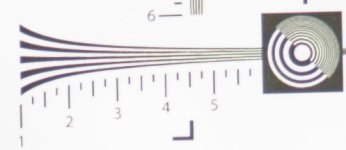
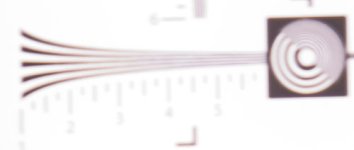
I did some more testing on shorter focal length: Leica Apo Telyt 400mm f/4.0. The degradation due to front mounted filter (in this case 6.6"x6.6" Schneider Enhancing Filter) is much smaller and tollerable. 1:1 crops attached. There is slight loss of contrast, but the front filter is usable.

In regard to using filters in front of the much larger Leica Apo Telyt R 580mm f/4.0, I confirm again that the effect is like smearing Vaseline on the front element...

I have contacted several people at Schneider-Optics in respect to their (somewhat misleading) white papers claiming suitability (high flatness and accuracy) of their filters to be used in front of long lenses with wide apertures, but deaf silence, head in the sand reaction...it seams.

It makes me cranky when companies publish "white papers" for their marketing reasons, which are essentially false.

Oh, well, now I have to manufacture my own Series 6 drop in filters...:smash:
 

Attachments

  • 1. Clear Drop-in Filter.jpg
    1. Clear Drop-in Filter.jpg
    54.1 KB · Views: 0
  • 4. Enhancing Filter colour adjustment.jpg
    4. Enhancing Filter colour adjustment.jpg
    55.9 KB · Views: 0
Though we have only used UV filters on all our lenses 120-300, 50-500,200-400 All Sigma Lenses with RED ONE and Epic,
I have never felt that the UV filters affected Quality.

Rechecked with and without UV filters after reading this and shot multiple charts, did not find any loss in Quality using only
UV front threaded filters.

All the filters are also made by Sigma.

Yusuf Thakur
VFX,Dubai
www.vfxme.com
 
I don't use UV filters on my lenses when I shoot with Red - or my DSLRs either. ND filters are the only kind I usually use with RED, except for an occasional polarizer.

I've been using long lenses on my Red cameras quite a bit for the 2.5 years I've owned them. My long lenses are a Nikon 50-300 f4.5 AIS, Red 300 f2.8, Nikon 400 f3.5 AIS, Canon FD 150-600 f5.6L with Century PL mount conversion, and Canon 800 FD f5.6L with Century PL mount conversion. I filter the Nikon 50-300 on the front, the Red 300 and Nikon 400 via drop-in filter trays, and the Canon 150-600 and Canon 800 via end of PL mount screw-on filters.

I've had no problems whatsoever with image degradation from using ND filters as described.
Hey Steve,
thanks for the info, i have both the 300mm and 800mm century pl converted and use a cir-pol screw in rear, have not messed with nd yet
Slightly on this topic with out nd what shutterspeeds are you running on the long glass for normal speed 24p, you stick to 1/50th for 180deg or do you have a higher shutter because of the long glass?
Same question for highspeed shooting you running 180deg shutter or faster? i have always run 1/500th so i can shoot stills and motion but i wonder if im sacrificing the moving image?
been asking all around and no one seems to know,
Greg huglin runs super fast 1/1000-1/2000th
Dana Brown wasn't even sure what his camera guys run.
any advice is much appreciated
patrick
 

Attachments

  • G0012076.jpg
    G0012076.jpg
    91.4 KB · Views: 0
Back
Top