Welcome to our community

Be a part of something great, join today!

  • Hey all, just changed over the backend after 15 years I figured time to give it a bit of an update, its probably gonna be a bit weird for most of you and i am sure there is a few bugs to work out but it should kinda work the same as before... hopefully :)

Epic vs F65

Status
Not open for further replies.
Because of the 45 degree rotation of the Bayer grid pattern, the Sony sensor does have 8K pixels counted horizontally but in total pixels, it's more like a 6K sensor (20MP). Either way, it down samples very nicely to 4K. Sony doesn't call the recording "8K Raw" though, they call it "16-bit Raw" for a final 4K image. Once the 6K Dragon sensor comes out, I suspect the quality and resolution will be very similar to the Sony image if both are finished to 4K. But even now, the 5.1K Epic image is pretty close for all practical purposes, and also makes an excellent 4K image. The F65 may look bulky but weight-wise it's about the same as an Alexa.
 
@ Les

Thanx for the link , great article, gave me a headache with all the math ...but I now know how cmos works...sort off !

P.S. having worked decades with Sony gear (broadcast) I'm sort a cheering for this camera. Shows Sony can still innovate & are still in the game. Yes it's a beast, who cares as long as it delivers a quality image. Even at the modest price ( I can remember mid range digi betacams costing more ) this camera is it is still a niche product. So just how many will Sony sell and can this help save them from more billion dollar loses?
 
Last edited:
Because of the 45 degree rotation of the Bayer grid pattern, the Sony sensor does have 8K pixels counted horizontally but in total pixels, it's more like a 6K sensor (20MP). Either way, it down samples very nicely to 4K. Sony doesn't call the recording "8K Raw" though, they call it "16-bit Raw" for a final 4K image. Once the 6K Dragon sensor comes out, I suspect the quality and resolution will be very similar to the Sony image if both are finished to 4K. But even now, the 5.1K Epic image is pretty close for all practical purposes, and also makes an excellent 4K image. The F65 may look bulky but weight-wise it's about the same as an Alexa.

Thank you for joining the discussion Mr. Mullen, and for confirming that the Epic picture is pretty close in practical purposes.
 
From what Ive seen with both F65 and Epic is similar detail but granted Sony seem to have the edge particularly with any perceived aliasing. I have no actual measurement top substantiate this but image wise Id expect it to be slightly better due to its sensor pixel arrangement. However, I am in no way criticising the image from Epic though. What I am interested in is any noise in low light from either camera due to the smaller pixel size. Allstar's test seemed to show up some concerns at 320 ASA and I'm just wondering if there is any thing in it for practical purposes. We know Alexa makes for great images has good noise performance but just doesn't have the resolution of either F65 or Epic, I wonder whats next from Arri and at what price point. We are after all discussing the best cameras available here and the differences don't seem to be chalk and these.
 
From the perspective of a renter, not a buyer, it all gets a bit hairsplitty... 35mm, Alexa, Epic, and F65 all produce comparable high-quality images. It gets a bit silly to say one is great and another isn't. Some have a bit more noise than the other, or a bit more resolution, or a bit more dynamic range (and film has grain) but at some point, when the image quality is not dramatically different even when everything is finished to 4K, the non-image factors start to compete for attention -- weight, size, sensitivity, workflow, rental cost, etc. I've seen Alexa footage shot raw at 2.88K and finished to 4K compared against 5K Epic and the Sony F65 all finished to 4K... and the resolution difference is exactly what you'd think but it doesn't particularly leap out at you either. From a visual standpoint, I would compare the difference between an Alexa image finished to 4K and an Epic image finished to 4K being similar to the difference between using a Zeiss Master Prime to an Angenieux zoom, i.e. you notice the extra clarity and detail of the Epic but on the other hand, you could intercut them if you had to.

Now from an owner-operator standpoint, my impression would be that there is more bang for your buck with an Epic but that also depends on how deep one's pockets are. If one had some big, long-term projects lined up in front of them, I'm sure they could make a more expensive camera pay-off for them, and after that, it doesn't matter.
 
@ Les

Thanx for the link , great article, gave me a headache with all the math ...but I now know how cmos works...sort off !

P.S. having worked decades with Sony gear (broadcast) I'm sort a cheering for this camera. Shows Sony can still innovate & are still in the game. Yes it's a beast, who cares as long as it delivers a quality image. Even at the modest price ( I can remember mid range digi betacams costing more ) this camera is it is still a niche product. So just how many will Sony sell and can this help save them from more billion dollar loses?
Although a bit out of my price range (I forget, maybe another $20K?), their optional Rotary Shutter puts an end to Rolling Shutter issues.

The Scarlet has about 14ms (comparable to a low cost CMOS video camera), the Epic has much less (I don't know the figure).

But, for stabilization and motion tracking, even the smaller rolling shutter of the Epic has an effect, so it would be great to totally get rid of rolling shutter.

Really looking forward to what RED cooks up in the next few years.

They are pretty much the leader in price/performance - and as they get farther down the learning curve and assimilate newer technologies (as they are doing with the Dragon), it's going to get more and more interesting.

One real advantage the RED cameras have over the competition is the ability to upgrade. I rather doubt that the successor to the F65 can be 'upgraded' from the F65!

There was an interesting article in Scientific American a month or two ago about hermit crabs and their shells. Sometimes they will form a line, each discarding a shell and climbing into the shell of the next one, all of them 'trading up' in size.

The article went into how this applies to humans also, a when a humans trade up to a larger house, this creates opportunities for many, many others who in turn trade up.

If RED really pursues the ability to upgrade as one of their best features (do they advertise this?), they could create a line of 'hermit shells', where the entry point is very low.

Once the user has bought a number of accessories that fit the RED product line, he's basically hooked for life and can keep moving up to a 'larger shell' (or in this case, keep the shell and move up to better electronics and sensors) as long as no disruptive technology arrives.

The 'used' electronics could be sold by RED as refurbished with a normal warranty (semiconductors exhibit a bathtub shaped curve of mortality, if they survive the first few months, they generally last years and years, so they are probably more reliable than a new unit), thus enlarging the 'hermit shell' chain - and RED's market?
 
What does turning the bayer pattern 45degrees do to the resultant image that makes it objectively better? Does it space out the G, B, and R pixels more evenly or something? Is there a white paper someone can point me to?

I think having conservative estimates (e.g. 14 stops DR, and then guys like Timur saying, 'it's probably closer to 16!' or '16 bit RAW at 4k', but it's from an "8k" sensor) are only going to make the F65 a stronger contender. Almost like they're downplaying how awesome the camera is and letting the images speak volumes.

AS FOR upgradability, being that the F65 will shoot 8k, but it hasn't been enabled yet, and being that Dragon is "only" 6k, I'd say Sony has plenty of "upgrade" room with the current hardware. Sure they're probably going to charge for the firmware, but it'll probably be less than the $6k of Dragon and give you waaay more resolution beyond 6k. Meaning it's going to have more legs than Epic+Dragon and it's already available.

All of that said, I agree with what David Mullen is saying: at this stage in the digital cinema game, things like size, weight, cost, etc play a more important role when the image quality of all these cameras is as good as they are. I mean, the image quality differences (scientific or real-world) between Epic, F65, and Alexa is at most 10% and when it's that marginal, there are more important things to consider. A big one for me is data rates; in terms of manageability, 3GB/min of REDraw is a blessing compared to 16GB/min Sonyraw... Yeah, you can use better compression on Sony, but you can also do that with REDraw as well.
 
I agree, and for all the reason you talk about.
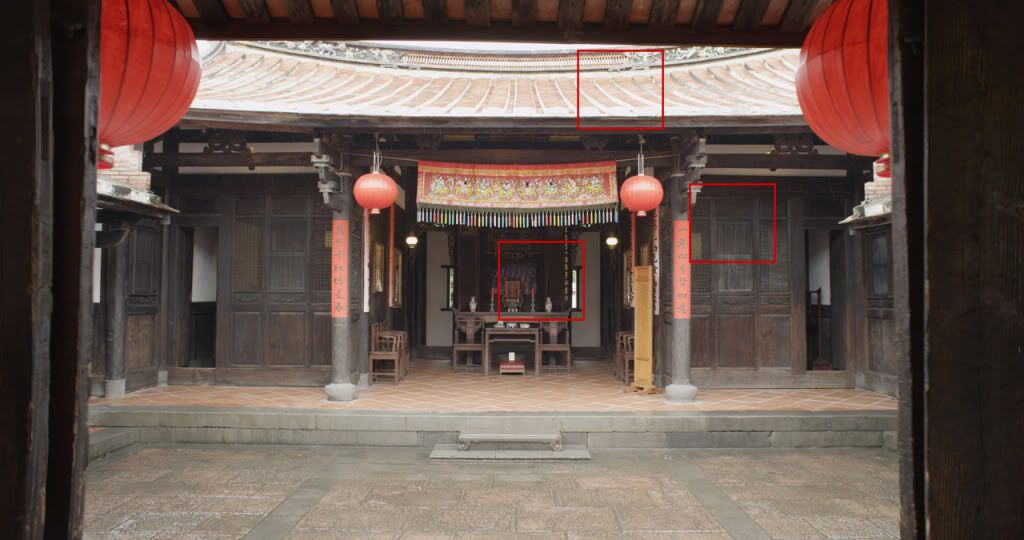
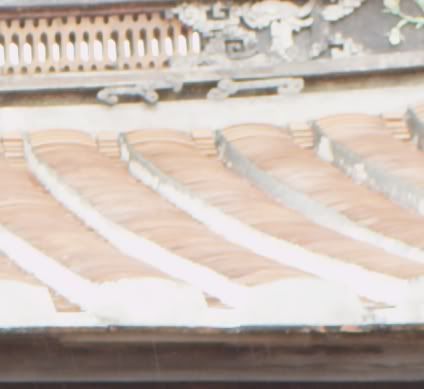
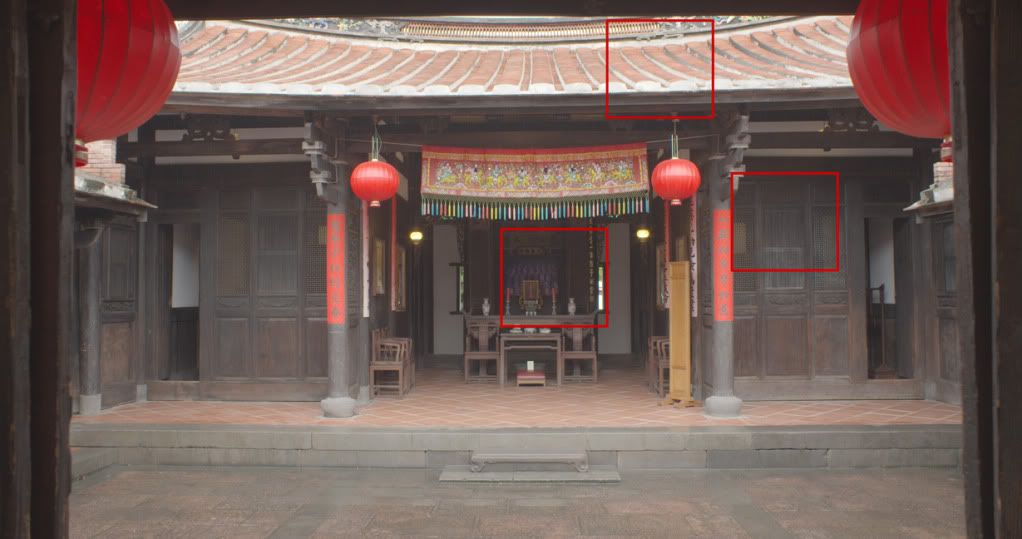
But, I still say that if anyone looks at those example stills and doesn't see that the F65 is sharper, has more DR and less noise than they need either a new monitor or a slightly less Red-tinted view of the world. Again though, maybe it was an unfair test, bad focus on the Epic or whatever, I'm only commenting on those stills.
Steve

I think this test is fair, Iris set on F8 and the focus was checked 3 times. No color grading.
I don`t say which one is better, that will depend on your needs.

Post those example pictures again:
EPIC
A001_C004_0314UG.jpg

E-3.jpg

E-2.jpg

E-1.jpg


3200K ISO3200
Eiso3200.jpg


F65
FILE0000003500000.jpg

F-3.jpg

F-2.jpg

F-1.jpg


3200K ISO3200
Fiso32002.jpg
 
The F65 has an 8K sensor.

8K would debayer down to 8 * .8 = 6.4K from which they output their 4K.

With the Epic, you've got only 4K (5k * .8) to output 4K.

An interesting read: http://magazine.creativecow.net/article/the-truth-about-2k-4k-the-future-of-pixels


Great article, but somewhat biased IMO. Now I better understand why some accuse the RED of being a "scaled image." Not true, but now I understand the confusion better. It's a Bayer pattern image - that is some of the red and blue pixels are sampled. I come from a CG background and RED's use of the words "resolution" and "4K" make perfect sense to me. It may differ from a traditional cinematographer's use of those terms, but it's not "wrong" or "deceptive" as the article implies.
 
I gave up on that "is it true 4K?" hang-up years ago (or to be more precise "4K raw isn't 4K RGB" -- and even that's misleading because 4K RGB files don't necessarily measure out to 4K in detail, just in size)... the only reason people made a big deal about it was the belief that 35mm film was a 4K RGB standard, which it really isn't. Dalsa got dumped on first before Red with the "4K raw isn't 4K" rap. But their reply should have been, "yeah, so what is?" Because short of scanning 65mm or VistaVision at 6K and downsampling it to 4K RGB, or shooting with a monochrome 4K sensor through successive red, green, and blue filters to create 4K RGB files, there wasn't really a 4K RGB reference, so to beat people up for failing to match a standard that no one else really matched either was a bit unfair, though the discussion did start the whole ball rolling in explaining resolutions after debayering algorithms, etc.

Now that Sony has built a camera capable, in theory, of creating 4K RGB files where the resolution in the image actually approaches 4K, suddenly they want to make it a big deal... well, who can blame them? Red uses their higher resolution as a point of comparison to the Alexa after all, so I guess a manufacturer uses whatever he has to work with as a marketing tool. When you have a hammer, everything looks like a nail. A sensor with more green photosites horizontally is one type of hammer.

I think of the whole Bayer filter process as transformative, one type of image into another type of image -- it's not really so much a simple matter of scaling up or down since algorithms are complex, not simple. But clearly the Sony sensor benefits from having more green photosites horizontally in terms of resolution, but that's only logical. Obviously the 6K Dragon sensor will show an increase in resolution too.
 
Last edited:
Yes, everyone wants bragging rights to their resolution or way of doing things.

But, bottom line is we've reached a phase where although the resolutions differ, video resolution is good enough to produce a great movie, whether it's ARRI and Hugo, or RED with Prometheus/SpiderMan/etc. etc.

Past a certain point, at least with today's technology, the file sizes become unreasonable with increased K, so once the cameras stabilize out at 6K or 8K or ??? (all will shoot great video), the battle will take place in other arenas.

Size, weight, reliability, ISO, ease of use, features, compression quality, price, rolling shutter, upgradeability, # of 3rd party vendors, etc. will become differentiating factors.

And as the companies compete for the prize, the consumers will keep getting better and better cameras from all vendors, but certainly from RED.
 
From the perspective of a renter, not a buyer, it all gets a bit hairsplitty... 35mm, Alexa, Epic, and F65 all produce comparable high-quality images. It gets a bit silly to say one is great and another isn't. Some have a bit more noise than the other, or a bit more resolution, or a bit more dynamic range (and film has grain) but at some point, when the image quality is not dramatically different even when everything is finished to 4K, the non-image factors start to compete for attention -- weight, size, sensitivity, workflow, rental cost, etc. I've seen Alexa footage shot raw at 2.88K and finished to 4K compared against 5K Epic and the Sony F65 all finished to 4K... and the resolution difference is exactly what you'd think but it doesn't particularly leap out at you either. From a visual standpoint, I would compare the difference between an Alexa image finished to 4K and an Epic image finished to 4K being similar to the difference between using a Zeiss Master Prime to an Angenieux zoom, i.e. you notice the extra clarity and detail of the Epic but on the other hand, you could intercut them if you had to.

Now from an owner-operator standpoint, my impression would be that there is more bang for your buck with an Epic but that also depends on how deep one's pockets are. If one had some big, long-term projects lined up in front of them, I'm sure they could make a more expensive camera pay-off for them, and after that, it doesn't matter.

Great post, David.
 
I gave up on that "is it true 4K?" hang-up years ago (or to be more precise "4K raw isn't 4K RGB" -- and even that's misleading because 4K RGB files don't necessarily measure out to 4K in detail, just in size)... the only reason people made a big deal about it was the belief that 35mm film was a 4K RGB standard, which it really isn't. Dalsa got dumped on first before Red with the "4K raw isn't 4K" rap. But their reply should have been, "yeah, so what is?" Because short of scanning 65mm or VistaVision at 6K and downsampling it to 4K RGB, or shooting with a monochrome 4K sensor through successive red, green, and blue filters to create 4K RGB files, there wasn't really a 4K RGB reference, so to beat people up for failing to match a standard that no one else really matched either was a bit unfair, though the discussion did start the whole ball rolling in explaining resolutions after debayering algorithms, etc.

Very well written and dead on correct.

Thanks David!
 
. A big one for me is data rates; in terms of manageability, 3GB/min of REDraw is a blessing compared to 16GB/min Sonyraw... Yeah, you can use better compression on Sony, but you can also do that with REDraw as well.

The new SQ Lite codec for the F65 is a little under 10GB per minute. That's roughly the same as uncompressed HD video, and also about the same as Epic 5:1.
 
The F65 has an 8K sensor.

Only in imaginary Sony 45-degree skewed math.

But that's neither here nor there since it only allows recording and output of 4K from the oversampled source. And the 4K image out of the F65 is actually pretty darn good. The bits of artifacting present in the image, at least in the little bit of footage I've had a chance to work with, all appear to be due to compression and not sensor anomalies. I will say that I've already seen more aliasing and ringing from F65 footage than I had ever expected to and I haven't worked with much of it at all.

8K would debayer down to 8 * .8 = 6.4K from which they output their 4K.

With the Epic, you've got only 4K (5k * .8) to output 4K.

One can't simply assume 80% efficiency on debayer / demosaic operations. It isn't so cut and dry like that. RED is showing above 80% efficiency in their latest builds, especially so with EPIC / Scarlet. It is an OK number to approximate from, but I would lean a bit higher in most situations. IMO, Graeme has worked some debayer magic in there that no one else has matched yet. ARRI seems to have done so, but it's difficult to say for the Alexa because of the additional softening filter in the optical path.

As for the tests shown by Allstar in this thread, it's somewhat difficult to quantify. Some aspects of the EPIC image look better, likewise with the F65 image. To me, his sample RED image looks improperly exposed for that environment, but no way to say without being there. Mid grey / ISO was either set higher or is intrinsically higher on the F65 as you can see from the shadow areas and its ability to better hold the highlights on the roof tiles. Either that or we are seeing more gamma compression on the EPIC due to gamma and color space selections, none of which was specified, or perhaps I missed it...

I have yet to see any real world examples where the F65 actually has superior DR to the EPIC or Alexa, which are both close enough to be indistinguishable. In lab tests, the Alexa seems to have about 1/3 stop more range, but in practice it almost seems the opposite when shooting the cameras. And of course, that's not taking HDRX into account either.
 
Status
Not open for further replies.
Back
Top