Welcome to our community

Be a part of something great, join today!

  • Hey all, just changed over the backend after 15 years I figured time to give it a bit of an update, its probably gonna be a bit weird for most of you and i am sure there is a few bugs to work out but it should kinda work the same as before... hopefully :)

EPIC and Alexa...

Status
Not open for further replies.
Some of watchdog's are always pissed when I say something real about...


hans,

sorry again but must correct you.

BTW, when you have a camera on tripod you would need a base plate (Arri, etc...) to slide it on (Arri, etc...) dovetail.

That means bas plates are mostly attached with minimum two screws on a camera.

Then you would need time to unscrew it.

With ET Mantis is working very easy bust because you can take your camera with base plate

from a tripod and simply slide it into ET Mantis base. That's it.

RED1 MX with BeBob+RED Drive on a back, RED body in a middle and for example Cooke 15-40mm T2.0 CXX Zoom Lens is perfectly balanced system for handheld.

For longer shoulder handling I recommend use of ET mantis together with EasyRig 3 Cine 700 and then you are able

and ready to shoot with additional wireless focus system (AC needed and included) for about an hour or more without any interruption.

With Alexa you can't starting with a time limited recording media, etc,...

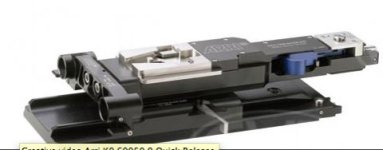
Sorry again, sanjin, but you are wrong. The alexa works with the arri quick release system, which means that if you are using a clip on matt box, you don't need any screwdrivers to take the camera off the tripod to go into hand held mode.

Strange how you say that Alexa is not a hand held camera then say that your Red 1 is.......
 

Attachments

  • Picture 6.jpg
    Picture 6.jpg
    9.7 KB · Views: 0
  • Picture 5.jpg
    Picture 5.jpg
    12.2 KB · Views: 0
Sorry again, sanjin, but you are wrong. The alexa works with the arri quick release system, which means that if you are using a clip on matt box, you don't need any screwdrivers to take the camera off the tripod to go into hand held mode.

Strange how you say that Alexa is not a hand held camera then say that your Red 1 is.......
Steve, you've been faster. Thanks.

EDIT: With 15mm light weight rods you can mount a mattebox and a FF. Same system I have on my SR. Would love to see Red to copy this.

Hans
 
Ha! That plate's straight off a Betacam.:lol:

Yes, I'm sorry Sanjin but, of the many things you could say about Red One, comfortable handheld ain't one of them. Especially when compared to Aaton or Arri. Hopefully they've learned their lesson and will put together something much improved for Epic. Certainly the weight, and the ability to put stuff (batteries, drives, EVF) wherever you want should make it easier.

So, lets put that on the Alexa list:

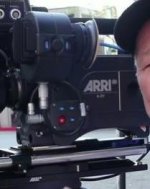
The camera on the left is well designed for handheld operation.

Any others? For left or right.
 
Steve, you've been faster. Thanks.

EDIT: With 15mm light weight rods you can mount a mattebox and a FF. Same system I have on my SR. Would love to see Red to copy this.

Hans

Indeed. Integral 15mm bars mounting on the alexa camera body itself means that you don't need anything attached to the base plate, making it very quick to go from tripod use to hand held use with follow focus and matt box.
 
Don't get me wrong Steve. Those are good plates - even with the wobble. So fast and positive. More points to Alexa.

The camera on the left has a great wedge plate.
 
Don't get me wrong Steve. Those are good plates - even with the wobble. So fast and positive. More points to Alexa.

The camera on the left has a great wedge plate.

Well considering all of it probably will most probably be adaptable to the DSMC system it's a kind of mute point as one cancels out the other! One can bet that RED have well and truly covered this! Regardless of the ARRI shoulder mount and it's speed, if it weighs that much and i'm slinging it on the shoulder i am not going to love it handheld, period.

I'm a big RED boy but the Red One is an absolute tank for handheld. I love my MX Red One but i'm looking forward to EPIC to give my back a few more years...
 
For Reference:

1279588358.jpg

great picture, Jarred...and exactly one of the big reasons why RED should sell a mountain of these....
 
Well considering all of it probably will most probably be adaptable to the DSMC system it's a kind of mute point as one cancels out the other! One can bet that RED have well and truly covered this! Regardless of the ARRI shoulder mount and it's speed, if it weighs that much and i'm slinging it on the shoulder i am not going to love it handheld, period.

I'm a big RED boy but the Red One is an absolute tank for handheld. I love my MX Red One but i'm looking forward to EPIC to give my back a few more years...

:tongue_smilie: Yeah, once we have our Epic I can't imagine anyone saying, "let's do the handheld shot" and reaching for the Red One - Allstar mount or no.

One of the great things about Epic's modularity is you can build the camera you want for whatever situation. You're not forced into a big camera or a small camera.
 
thanks, but my question is about estimate resolution mesurement like the alexa's 1.6K.. will scarlet mesure the same or it will pass that no.?

1.6k is realistically about as high as 1920x1080p can resolve if you want smooth film like alias free images. The closer you get to 1920 the more aliasing will show. I think Arri has done a pretty good job here considering they want a smooth film like image, not something that has that hard video look.
 
1.6k is realistically about as high as 1920x1080p can resolve if you want smooth film like alias free images. The closer you get to 1920 the more aliasing will show. I think Arri has done a pretty good job here considering they want a smooth film like image, not something that has that hard video look.

Ahhhhhhhh......The Alexa has more than 1920x1080 as its native
pixel count.
 
Sorry again, sanjin, but you are wrong. The alexa works with the arri quick release system, which means that if you are using a clip on matt box, you don't need any screwdrivers to take the camera off the tripod to go into hand held mode.

Strange how you say that Alexa is not a hand held camera then say that your Red 1 is.......

Steve, you've been faster. Thanks.

EDIT: With 15mm light weight rods you can mount a mattebox and a FF. Same system I have on my SR. Would love to see Red to copy this.

Hans


Guys,

I'm asking myself are you well informed about third party RED1 accessories offer at all?

mxvs7d-rig-02.jpg

Long Valley 15mm rods support directly on R1 body.

EL-ABPR-UL15.jpg

ET UltraLite15 - RED 15mm Lightweight Bracket.

Arri_Alexa_04.jpg

Alexa 15mm rods integrated in the body.

Also I wanted to get Arri's quick base before but turned by a rental market to the standard Arri base plate after.

Also I would like to see a lot of handheld shotings around my house to watch how after 5 minutes with pain in back all the guys are taking Alexa off shoulders...:laugh::cryin::laugh::cryin:
 
1.6k is realistically about as high as 1920x1080p can resolve if you want smooth film like alias free images. The closer you get to 1920 the more aliasing will show. I think Arri has done a pretty good job here considering they want a smooth film like image, not something that has that hard video look.

Unfortunately, the Alexa shows considerable aliasing compared to the RED.

Graeme
 
Steve, you've been faster. Thanks.

EDIT: With 15mm light weight rods you can mount a mattebox and a FF. Same system I have on my SR. Would love to see Red to copy this.

Hans

Ummm.... Er.... What is it exactly that you think you can't do with the RED One? As far as form factor goes, the only thing the Alexa has that the RED One doesn't is the two protrusions on the bottom of the camera, oh and and extra 6.4 lbs of dead weight.

I can slide my RED One rigs off the tripod and lock it onto the ET Mantis and swing it to my shoulder in just a few seconds. All by myself. Took a bit of practice to find the best way to accomplish this. Before the Mantis, I was using the Ugrip handheld system and a nice shoulder pad. Probably about the same thing I would use with the Alexa -- a decent handle system with a very supportive and soft shoulder pad.

Alexa is not comfortable on your shoulder without an additional shoulder pad or other gear. It's flat on the bottom. The two protrusions on the ends, which give the appearance of cradling your shoulder do nothing. It's a square block of metal everywhere else. I've had an Alexa on my shoulder a few times for several minutes at a time during a demo session. What you're saying about it compared to the RED One is just not right. It's no more shoulder-able than a RED One equipped with something like the RED shoulder dovetail or the toe-plate from SIM Video.

While I don't agree with Sanjin, who says you can't put Alexa on your shoulder at all, I really wouldn't want to do it for any extended time periods. I often have a RED One rig on my shoulder that is 35 lbs or more. A similarly configured Alexa will always have that extra 6 lbs or so difference in the body weight. Neither are fun for extended periods like all day I've done it. It sucks.

Not sure what your comment on lightweight rods is about either. There are several solutions for putting lightweight rods on a RED One. I have the ET lightweight rod piece for the front of my RED One. But I tend to stay mostly with 19mm carbon rods. They're just as light, or lighter, and most of my gear is 19mm anyway. Or I'll use a clip-on mattebox.

I'm not trying to bash the Alexa. While I have not used one on an actual job yet. I have taken an in-depth look at them on two occasions now. The Alexa is a very nice and very well thought out camera system. Arri should be proud of it. For me, it's nice, but it's not a 5K Epic-X. And I feel the MX RED One produces nicer images than what I encountered in my Alexa demos. To be fair, the first "demo" was the time I spent with the Alexa at NAB and I had a pretty good hands-on there as I was able to avoid most of the mob somehow. But I was unable to critically analyze any camera footage. I have not seen the RAW out of the Alexa, only ProRes. So I don't know if the pixel anomalies I have seen, aliasing, etc.. have been due to the ProRes recording or if they're inherent to their demosaic process or the RAW image itself.
 
Unfortunately, the Alexa shows considerable aliasing compared to the RED.

Graeme

Graeme,

Perhaps a bit of an off topic question,but if you`re able to shed some light..i just wondered how Scarlet(fixed) shapes up to the Alexa image?
 
Last edited:
Ummm.... Er.... What is it exactly that you think you can't do with the RED One? As far as form factor goes, the only thing the Alexa has that the RED One doesn't is the two protrusions on the bottom of the camera, oh and and extra 6.4 lbs of dead weight.

The protrusions prevents the camera to slip off your shoulder when you tilt it up or down. I don't have that with the RedOne but with a HDCAM.

I can slide my RED One rigs off the tripod and lock it onto the ET Mantis and swing it to my shoulder in just a few seconds. All by myself. Took a bit of practice to find the best way to accomplish this. Before the Mantis, I was using the Ugrip handheld system and a nice shoulder pad. Probably about the same thing I would use with the Alexa -- a decent handle system with a very supportive and soft shoulder pad.

Those handle systems are nice when you a) have an assistant who pulls the focus and b) you have the time to setup the system and c) the height of the lens is not an issue. Taking the camera from the tripod and instantly on the shoulder is a different thing. Some people like me want to do that. I can do that with any ENG camera. Why not with a digital cinema camera? Arri's approach is in the right direction, while not perfect. And I'm not saying you won't accomplish that with Epic. On the contrary. I have high hopes in this regard.

Alexa is not comfortable on your shoulder without an additional shoulder pad or other gear. It's flat on the bottom. The two protrusions on the ends, which give the appearance of cradling your shoulder do nothing. It's a square block of metal everywhere else. I've had an Alexa on my shoulder a few times for several minutes at a time during a demo session. What you're saying about it compared to the RED One is just not right. It's no more shoulder-able than a RED One equipped with something like the RED shoulder dovetail or the toe-plate from SIM Video.

I did not say it's as comfortable as a Sony ENG camera but much better than the RedOne with nothing added. Please bare in mind that I was referring to docco shoots where I need an instant switch from tripod to shoulder.

While I don't agree with Sanjin, who says you can't put Alexa on your shoulder at all, I really wouldn't want to do it for any extended time periods. I often have a RED One rig on my shoulder that is 35 lbs or more. A similarly configured Alexa will always have that extra 6 lbs or so difference in the body weight. Neither are fun for extended periods like all day I've done it. It sucks.

Yes, weight matters. Alexa will be heavier than Epic in a similar configuration. I compared Alexa to the RedOne not to Epic.

Not sure what your comment on lightweight rods is about either. There are several solutions for putting lightweight rods on a RED One. I have the ET lightweight rod piece for the front of my RED One. But I tend to stay mostly with 19mm carbon rods. They're just as light, or lighter, and most of my gear is 19mm anyway. Or I'll use a clip-on mattebox.

I have a third party 15mm lightweight rod system. We use it all the time. It's all but sturdy. Actually it pulled-out the RedOne's lower front holes badly. We had to fix that. It was a costly and delicate job. IMHO, things like that should be done by the manufacturer. Modularity is only great to a certain extend. Somewhere it starts, some where it ends. In my case it ended with the lightweight rod system.

Hans
 
Maybe I am missing something here but how could one camera be better in shadows and the other better in highlights? Can't we make them exactly equal by changing exposure?

Just look at the chart at the beginning of this thread. The Red low end is much less blocky and more smooth. The Alexa runs into the whites better. From what I see, they are pretty close in usable range, because the red shadows look better. It would be interesting to see the Red exposed a half stop down from there, but I assume both are set up to put grey right in the middle.

I see the same thing shooting time lapses on a Nikon D700 vs a Canon 5D. Nikon's bigger pixels give a little more DR, but the Canon resolution is noticeable better. After 30 years shooting Nikons, I've switched. (until Epic comes out!)

It's funny you should mention this, as I was just thinking along these lines. As Jim states, DR measurements are not a standard thing. In this case, clearly I can see that the noise characteristic of the EPIC is MUCH better than the Alexa. Even if they can detect more dynamic range, it clearly shows that some of that lower end isn't usable. Granted noise looks different in different cameras, but to really compare usable range, I'd think you'd need to bring the Alexa down till the noise characteristics were comparable THEN compare how much USABLE range you have. Which of course means you'd loose the shadow detail on the Alexa.

Don't get me wrong, I am still impressed by the Alexa, but we all know that noise is a HUGE part of what people fight a lot when filming.

I'd say to be even more scientific about it, I'd actually analyze the darkest distinguishable shade on both that is common (meaning one of them will limit the other) and then adjust the image down on the noisier till the average pixel differences are relative. (I'd imagine looking at the standard deviation will be important as well). At least it would bring things closer from a practical usability standpoint.


Edit: And I also think from a post procession standpoint, as Sanjin talked about, using something like Neat Video at full resolution and then reducing to the same size as the Alexa is and important consideration. This is one of the big advantages of a higher resolution, and I think even if you fed the Alexa through Neat as well, you are going to be able to push the EPIC footage further since any of the artifacting it creates as you push it harder will get pushed out once you downrez the video. Said more simply, usable dynamic range depends on A LOT of factors and not just the sensitivity range of any given photosite.
 
Status
Not open for further replies.
Back
Top