Welcome to our community

Be a part of something great, join today!

  • Hey all, just changed over the backend after 15 years I figured time to give it a bit of an update, its probably gonna be a bit weird for most of you and i am sure there is a few bugs to work out but it should kinda work the same as before... hopefully :)

Dragon color: Art Adams looks at tungsten vs. daylight

but any and all added lights will be always daylight.

How is this not limiting?

I'll ask you a question:
you find yourself in a situation where you are in this beautiful hall, all lit by tungsten practicals, and you are filming this beautiful model, flowy white drees, long curly blond hair and the director says: she looks stunning as is, I would just like some hair light on her, to increase her angel like appearance. Would you slap some daylight balanced light on her and shoot it at 5600 in camera?

Not limited by the technical aspect of the camera was my answer.

As far as if I congress myself limited, because I choose to only use Daylight balanced light sources, no I don't see it as limiting either, I see it as an Artistic choice of representing the light in your story for the good of the final image acquired.

Insnare to your question, asides the fact that it would never happen as I don't work for others, I do work for others which is very different, meaning that I will not DP a project I am not Directing.

Any ways, I would need to be there and see it in person and in camera with chosen Iris aperture, lenses on camera, and overall fill of the area and the subject, her position in respect to the Hall and the way the light is falling over her and her dress, what She is doing and how She is doing it, and what the light is doing to her whistle She is doing it, then I would go about adding light there were needed, as it is almost impossible and or extremely rare to walk in to a scenario were after you have chosen the Aperture, you find my miracle that the existing lighting matches perfectly what you wanted...

I would use daylight on her just the same and bring her to life in the way it would seem right to me.

And yes my cameras are always set at 5600k, always at capture, day or night inside or outside, any changes happen in Post, should I see them needed as regard to the temperature.


What if you are doing a period movie, a night interior that should only be lit by firelight and candles? A daylight lamp would not blend with those sorts of colors at all.

It would not bland as easily, but it would still bland by using dirty rugs as softening instead of pure white cloth as usually fond on Soft Boxes, and use of Filters will also aid such a situation aside form Post coloring.

But at the end I am not looking to really bland anything, I am only looking at creating an image that is pleasing to me, that once lit pleases my eyes, if I was to do a period piece, I would make creative choices by first experimenting with lights, filters, cloths etc. in order to achieve the most pleasing and also credible look, again, only to my vision, as at the end, I won't really wish to do a Credible piece per say as to exactly make reference to a specific color palette, or look created by time or some one else, I am only interested in creating what I see... And most immortally how I see it.

But nonetheless I understand and see the points broad up by you and Daniel but also by many others in the years, and I have surely been enjoying countless films thru the years, but not for this I see myself bound by such rules or practices dictated by the experience of others, I like to experiment, and so I have done and continue to do, and hope that what I will create will also please others.
 
And don´t forget, besides all cons tungsten is a beautiful full spectrum light source. I understand you don´t dial in another color temp in camera (like I don´t, always shoot at 5000K) but I filter accordingly… I´m with Daniel and David, don´t limit yourself use the full palette.

Cheers,

Ulf
 
I think that what Ketch is trying to explain is that he doesn't try to be realistic. He just wants a personal imagery, a style that he likes. Like in his short https://www.youtube.com/watch?v=h8ohVVY0TmY. Lights are not linked to any practical. They are just lighting the foreground almost horizontally. It's totally unrealistic but i guess this look pleases him. That's important. But I think it's also important to please the audience. And they can be easily lost and driven out of the story if there is not a logical reason behind a very specific look. It's okay for still images. For movies it's a different story. In Kubrick's party, https://www.youtube.com/watch?v=s_b-zpSnoHs ,there is this super powerfull light suddenly on Tom cruise. The beauty of it is that we were into a mysterious yellowish look before that sequence. Even if it looks weird suddenly to have this huge light in the room, it's totally realistic, we can feel where it's from, it's plausible. Non plausible lights will bring people out of your movie in a second.
 
I understand if realism or naturalism isn't a guiding principle, there's nothing wrong with theatricality. You might take a look at "Emma", the Jane Austen movie with Gwyneth Paltrow, shot by Ian Wilson -- he used daylight balanced film stock for night interiors lit by candlelight and a mix of tungsten (for orange) and daylight (for white). It's an interesting look, not strictly realistic in the way of "Barry Lyndon", with the candles going very orange-red but the faces close to neutral.

But there's a difference between that and simply refusing to use tungsten balanced lamps. I don't understand why one should limit oneself like that, if it's valid in your mind to mix in daylight then it would have to be valid to mix in tungsten.
 
Again, I understand completely were you guys are coming from, and respect that which you say, but as limiting as it might seem, to me it isn't so, I don't see it as limiting, as it is not the light source to give me a full palette in the light spectrum, but the color choices made by which surrounds the set, the locations, the cloth used to dress the cast and so on.

To me the representing colors of a given scene are brought to life by Daylight, pure, not by Tungsten, not pure, but dirty and not neutral in it's color.


As for the reference to the example of Venetian Night at Palazzo Stern, does not serve well my visions of lighting, as beside literally having done that as a ONE MAN band, it was more an experiment and a test to myself after the (Red Dress) experience which literally knocked me off the ground and into the hospital, as I could have never imagined in my wolves drams some one in a community I cam to love and respect would attack my work in such personal ways.

So what I did once I could stand up again, was organize that shoot in Venice, and I chose to do it all, as to force myself to do the impossible, and keep my mind busy doing what I love most in my life doing, creating imagery, and I did it again as son s I done that with the other piece in the mountains.

But I only had 3 Area 48 Soft LED lights, absolutely NOT near enough to do the job, but I created a piece, and at that time that really was what it mattered to me, and I made best do with what I had.

I also perfectly understand that I must not only create imagery that please me but also others, however I come first, meaning that what I do I do it in the way I like it not in thawed I think others might like it, or otherwise what kind of an Artist would I call myself?

Do I wish for others to like it? Of course I do, but I don't do it for them I do it for me.
 
But then how do you deal with adding light to a room lit with tungsten practicals? First replace every bulb in table lamps and chandeliers with daylight compact flos and LED's?

Here is my perspective: most daylight sources are far brighter than tungsten sources per watt (LED, Flourescent and HMI all generally are daylight). Therefore it's easy to gel a daylight lamp down to match exposure of tungsten practicals. It's way more difficult to have a tungsten source filtered for daylight that can match the intensity of real daylight. So if you were to only buy one light I would say buying a daylight lamp makes perfect sense. If I was to build out a kit of lights for my own personal collection I would only buy daylight balanced lights too (probably LEDs).

Conversely I would actually kind of prefer cameras all be tungsten balanced since light loss isn't a problem in daylight and tungsten interiors at night is when I am starved for exposure already.
 
That's a purely practical consideration, what I'm talking about is the artistic validity of using 3200k light in a scene, particularly if all of the available light is in that range. If I've got a real kerosene lamp on a table, I'm not going to be hiding a 5600K LED behind it to augment the flame, that would look odd.
 
The world I'm in you end up using everything. Tungsten through Daylight sources and beyond.

It's good to take notes and shoot in a variety of conditions. Every now and again I create a reference image like this:

LotsOfLights.jpg


Probably have a few dozen of these at this point, but it's nice to know how I've used light in the past for shoots and experiments.

Basically for about 10 years of my career it was Tungsten only with gels and filtration until HMI became more standard for me on shoots. Due to certain advancements I've grown rather fond of using Daylight balanced lighting and to gel/filter accordingly to carve out the palette I'm looking for. Balancing with Tungsten, adding some thin Straw into the mix, bouncing off color for more of a radiosity effect, shaping the light, shaping the shadows, etc....

However, the spectral response of a Tungsten source does produce some hidden magic especially to skin tones.

Lighting is a "forever" study for shooters in my mind. Much like Color Theory and Composition. I don't think I've learned all there is to learn and I'm still coming up with wacky ideas to make what I want happen. There's a whole palette of color at your disposal and it can be used any way you deem fit.

I'm more from the perspective of David of course as my focus is narrative and there are realistic creative problem solving opportunities when it comes to shooting on projects. Especially when trying to add variety to the palette of a given project or episode. It's not always about giving audiences what they expect, but it's also not always about using a single road either. The challenge becomes more real when there's key color layout or fully painted concept art that must be matched.

Post color also comes into the equation for me. My artistic background/side knows that there isn't "one answer" for skin tones for instance. We have such powerful tools these days that allow us to explore more color concepts than ever. Not to say you should all the time, but it can be used effectively.

phfx_TWA_stills_0030.jpg


That frame grab from my old short The World After is still one of my favorite lighting setups because I felt confident in using Daylight, Tungsten, and filtration to create an uncommon palette to produce something a bit different. This was a science fiction short and I was certainly pushing the color limits in general, especially on the opening daylight exteriors. But having that knowledge of all those shoots and test shoots is what leads to that deliberate direction in lighting.
 
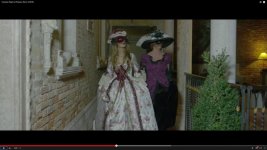
So, this frame, from your short in Venice, it's front lit by a daylight source. What I see here is a day scene on a location, that has a big window behind the camera, but somehow the light doesn't make it to the right of frame. Looks to be about 2 in the afternoon on an overcast day. That wasn't your intent, was it?
When someone like David gives you pointers like this, I would re-examine my convictions and make sure my points are still valid. Just saying this is what I do and that's it seems not as open minded as someone would expect from a world traveller like you.
 

Attachments

  • KR.jpg
    KR.jpg
    82.6 KB · Views: 0
Phil,

Nicely put and great set of imagery on your Reference page, I have also death with Tungsten only, then HMI, and of course a variety of Flashes and Strobes, and sequentially having moved away form Flash and only dealing with continuos lighting for the past 8 years, I have seen a big change.

The other came with the elimination of Tungsten, or I should say more correctly put, the use of Daylight only as my main sources, not by power but by definitive light source to give illumination to my important subject in Focus, despite any other presence of light.

I also agree of the incredible variety of situations in our world, and the NONE existing, one good for all, but I still see it how I see it, and I am now creating imagery this way.

Testing away at every chance, working till I drop, doing it all, learning as much as I can form every experience and every shoot, and every lighting situation, prepping for that day were I will have the capacity to finally make that project that will showcase from hat point on what I mean.

I would NOT dare to bring up any of the Short films done with Zero budget and one or two or even three lights on a set were 20 were needed, as an example of my work, in representation of what I see and why my choice for Daylight.

But my Film next year will... :)
 
So, this frame, from your short in Venice, it's front lit by a daylight source. What I see here is a day scene on a location, that has a big window behind the camera, but somehow the light doesn't make it to the right of frame. Looks to be about 2 in the afternoon on an overcast day. That wasn't your intent, was it?
When someone like David gives you pointers like this, I would re-examine my convictions and make sure my points are still valid. Just saying this is what I do and that's it seems not as open minded as someone would expect from a world traveller like you.

As I said,

I would not be able to say with a strait face that I could call to make justice of my work any of the Test shots and or short films done with zero budget as test to my self and to what and were I am trying to do, also while been the Producer, the Director, the Director of Photography and Camera operator and Gaffer and so on, this are all experiments and are not graded properly for other luck of time and or money and or both, yet they are done to learn form it as that is what I have been doing, and continue to do in awaiting for my first Film next year.

However, please don't mistake my arrogance in defense of my view, for luck of respect for some one like David, which I know in person, and respect greatly, as an individual and as a professional as a well esteemed fellow Reduser.

There is a big difference.

That look, in particle in that frame, was shot that way as the third LED went out and there was that wall on the right not properly lit.

It was 2am at night were we were only allowed to shoot till 11pm, so no time to reshoot, and while I agree in part with your assessment as how you see that frame, I personally don't see it as bad, but agree that it surely would not make for a nice frame in photo, but in a Motion sequence I would not worry too much about it, yet of course I intended not to be this way, and it wouldn't' have been if th light didn't went out.
 
I don't see how one can say that he does not believe in following restrictive rules and then follows a rule of only lighting with daylight, which is a far more restrictive rule than any cinematographer would want be stuck with.
If nothing else: listen to this, ponder and reexamine your convictions.
Part of your skill as a Cinematographer, is to chose the right tool for the right shot. IMHO even with 3 lights or 2, daylight is not the right choice. I don't want you to take this the wrong way, but that shot does not look good. Not for stills, not for motion. You know why? besides taste and style, it doesn't tell the right story. It's night. Not an overcast afternoon. If you had 20 lights it would exacerbate that fact.
We have all been there, no budget, limited lights, one man banding, and I have some material shot that way that I'm extremely proud of. It's not about the quantity, it's about how you use it.
I don't wan't you to take this personally, but please listen to others...
 
I don't see how one can say that he does not believe in following restrictive rules and then follows a rule of only lighting with daylight, which is a far more restrictive rule than any cinematographer would want be stuck with.

David,

I say that I won't be restricted to what the norm is, and I have been so far the Cinematographer on every project I have done, aside form the Director and Producer, so I am not forcing any one else either.

I never set out to be a Director or Cinematographer or anything int he Studio world of Hollywood, I always mean tour myself to learn the Art and teach myself as to one day make my own films and tell my own stories in my own way.

I hope you can understand this much and NEVER take anything I say as a sign of disrespect to you or to the Art itself, one which I love more then my own life, one which only exist because of my dreams for the Arts.


If nothing else: listen to this, ponder and reexamine your convictions.
Part of your skill as a Cinematographer, is to chose the right tool for the right shot. IMHO even with 3 lights or 2, daylight is not the right choice. I don't want you to take this the wrong way, but that shot does not look good. Not for stills, not for motion. You know why? besides taste and style, it doesn't tell the right story. It's night. Not an overcast afternoon. If you had 20 lights it would exacerbate that fact.
We have all been there, no budget, limited lights, one man banding, and I have some material shot that way that I'm extremely proud of. It's not about the quantity, it's about how you use it.
I don't wan't you to take this personally, but please listen to others...

Daniel,

I would never take offense form anything you say, as I know what you mena and were you coming form and paso have great respect for you and your work!!

This have been great experiences that always teach me something new for the next project, and I have been making progress thanks to them...

I'll always give a reason to examine and re-examin, this sis why I ma doing all this shoots.
 
So, this frame, from your short in Venice, it's front lit by a daylight source. What I see here is a day scene on a location, that has a big window behind the camera, but somehow the light doesn't make it to the right of frame. Looks to be about 2 in the afternoon on an overcast day. That wasn't your intent, was it?
When someone like David gives you pointers like this, I would re-examine my convictions and make sure my points are still valid. Just saying this is what I do and that's it seems not as open minded as someone would expect from a world traveller like you.

Agreed. Whenever David says something that goes against my current practice, I do a serious re-think of my current practice. I'm not saying I don't do wacky things that David might not choose to, but I don't ever feel what I'm doing is "better", or that I know better - not even for my own unique style.
 
Here's an example of a job I did for Disney just last week. Lots of stuff to do, hardly any time to light, and the location? I cringed when I saw this trailer/office I had to shoot in. On top of that, ½ of the ceiling lights where on all the time for safety. Talk about a mixed light situation. I used 3 lights for this: A kino 4x4 for key with some "schmuts" on, with 2 daylight and 2 tungsten bulbs, a 1200 HMI outside that window, blasting through as if it was a sunset. It has full straw on it, so it's more like a tungsten source, and outside the frame on the right side is a 1K baby tungsten for the hairlight, that's motivated by the ceiling lights, and of course you have daylight coming from the windows
I chose to hit the lens with flares from the 1200 to mask a little the fact that we were shooting in an ugly trailer. And the camera was set to 4400K.
I used the mixed lighting situation to my advantage. Used all the colors, correcting them or not, to make a frame that is not only pretty but tells a story. This in particular, is to entice more international students to come and work for Disney for a year. Who would 'not want to come work in a place that has a beautiful sunset?
Or I could just have hit her with daylight, let the tungsten in the ceiling go even warmer and let the daylight outside look like it's about to rain...
 

Attachments

  • KR2.jpg
    KR2.jpg
    72.6 KB · Views: 0
Looks great - Nice save, Daniel. :)
 
Back
Top