Welcome to our community

Be a part of something great, join today!

  • Hey all, just changed over the backend after 15 years I figured time to give it a bit of an update, its probably gonna be a bit weird for most of you and i am sure there is a few bugs to work out but it should kinda work the same as before... hopefully :)

Dragon 6k not eligible for UHD "Tier 1" camera?

Patrick Tresch

Well-known member
Joined
Aug 2, 2007
Messages
5,808
Reaction score
86
Points
48
Age
55
Location
Switzerland, Lausanne
Hello,

I was suprised to read in the AFC that Dragon 6k sensor would be arbitrary not selected for "Tier1" UHD by the DPP (Digital Production Partnership).

Their argument is that it should have 3840x2160 pixels for each channel R/G/B. Now I don't understand why they should qualify Alexa65 that doesn't have 3840-2160 pixels for each channel R/G/B with it's 6560x3102 pixels?

With these resolution criterias, the Alexa's lineup is in the same "Tier" as the Epic Dragon 6k. I bet there was some pressure on the table to put Arri in a good position.
I must laugh at some argument made in favor of 4k upscaled a year ago!

Time changes.

Pat

Page 11.
 
I wonder why someone who doesn't understand the basics of how sensors work write these specs?
 
I wonder why someone who doesn't understand the basics of how sensors work write these specs?

I bet they know but didn't evaluate and specify the loss of resolution with the Dragon sensor debayer. But reading their specs 2.1, I have also doubted if they know what a debayer is...

Now I would love to know what lens qualifies for a "Tier 1" UHD!

Pat
 
Aprils fools day is over :tongue_smilie:
 
I actually emailed Alan regarding this test a while ago as this was brought up in the past (his test was published Jan 2015), but my notes were mainly:

- They didn't shoot 6K FF (6144x3160), but rather 6K HD (5568x3132).
- They were critical that the specific zoom lens they used. Alan in email said to me they used "about 70mm prime IIRC".
- If they do consider the Alexa65 and F65 a Tier 1 camera, considering optics as well for that matter, any current RED 6K camera should also apply. Especially Weapon.

Alan did do a rather nice job on his lighting notes. Andy is referencing that specific test paper and honestly optics did come into play and the test should be redone.
 
I think what the "pixel count" specs says it has to have 3x3840x2160 for color picture. (Black and white Dragon isn't approoved as it has to have a 4:4:4...)

So the CMO sensor has to have 24'883'200 pixels.

Dragon 6k FF has 6144x3160 : 19'415'050 pixels
Alexa65 "open gate" has 6560x3100 : 20'336'000 pixels
Sony F65 has 8192×2160 : 17'694'720 pixels

None would qualify... (Weapon 8k would though)

There must be a lot of bad will IMHO to get to the statement that Dragon isn't a qualified "Tier 1" 4k camera but Sony F65 and Alexa65 do...

Pat

PS: and the minimum 1" sensor size is joke! What does the sensor size has to do with the quality of a camera?
 
I wonder why someone who doesn't understand the basics of how sensors work write these specs?

They write the specs based on what is desirable rather than what is available!
Whilst production have gone off on a tangent with single chip Bayer sensors the broadcast tech heads are not being distracted :)


Transmission standards have been associated with imagers that produce RGB.
A typical HDbroadcast camera has 6.3 million pixels. That's the same number as on your HD screen.
A UHD screen has 3x3840x2160 pixels or 24.8 million pixels.
There are a couple of new true UHD 3chip cameras from Sony and Grass Valley that have 28 million pixels. The Hitachi has 4 offset HD chips to create 4K so it isn't true RGB 4K.

If Red used a striped RGB filter on a single chip 24.8 mega pixel 16:9 sensor it should qualify.
Without needing to do a debayer it could be cheaper to make and easier to output a clean RGB UHD image?
Is there a patent on single chip (non Bayer) striped RGB?

Mike Brennan
 
Last edited:
[...]

If Red used a striped RGB filter on a single chip 28mega pixel 16:9 sensor it should qualify.
Without needing to do a debayer it could be cheaper to make and easier to output a clean RGB UHD image?
Is there a patent on single chip (non Bayer) striped RGB?

A Bayer array is the worst way to pull an image off a monolithic sensor...except for all the others. Do the math and you'll find that a striped array gives you more moiré, more aliasing, and less resolution than Bayer. The only reason to patent a single chip (non Bayer) striped RGB sensor is make it clear that not only is it inferior, but then it would be recognized as patently inferior as well.
 
I love the line at the bottom where they are OK with the H.264 codec @ 200mb/s (=25MBytes/s)...:mad2:

Perhaps the authors don't fully comprehend the way algorithms work, or compression, or...

Cheers - #19

Maybe they are just stup..... :tongue_smilie:
 
A Bayer array is the worst way to pull an image off a monolithic sensor...except for all the others. Do the math and you'll find that a striped array gives you more moiré, more aliasing, and less resolution than Bayer. The only reason to patent a single chip (non Bayer) striped RGB sensor is make it clear that not only is it inferior, but then it would be recognized as patently inferior as well.

I agree, Bayer himself said a prism was the best way to derive most accurate image.
Would smaller pixels in stripped array have similar moire to larger pixels in a Bayer?

Does the theory hold that 3x4k R, G,B will have same resolution of a 5k Bayer?

Genesis was striped and had total of 5760x2160 pixels to make HD RGB. They used pixel binning.
I don't recall reports of Genesis having moire issues
The f65 has an 8k grid but doesn't seem to suffer from moire or less resolution?

BTW, will be interesting to compare the new 3 chip UHDTV cameras to see what is possible.


Mike Brennan
 
There's better layered technology on the horizon than what's being discussed. Not available tomorrow, but tomorrow's tomorrow. Until then, there is today.
 
Asking for 4k in R,G and B to resolve a colour 4k image is still missing the point.

If you're going to argue for a conceptual (rather than available) tier 1 camera on this basis, you need to beat the Nyquist limit per channel.
Even then, being right on the edge of the sampling limit could raise issues. I can see someone making a logical argument for 8k per channel as a minimum for 4k RGB delivery.

The key to all this is the in the footnote: Cameras in this tier may need to be measured. I surely would hope so - measurement and pub talk theory like the above are worlds apart ;)
 
There's better layered technology on the horizon than what's being discussed. Not available tomorrow, but tomorrow's tomorrow. Until then, there is today.

It may turn out that the 8K Weapon is the pinnacle of Bayer CFA tech for motion content. It should "tide us over nicely" until next gen tech is production ready... ;-)

Cheers - #19
 
Whenever you measure resolution, you're measuring the specific circumstances at that very instance, which may or may not be optimum. Lens choice and f-stop are one factor, as is technique and carefully ensuring sharpest focus. I've measured Red resolution countless times, always getting superb results. The limits of resolution on a Bayer pattern CFA are mostly down to the OLPF, and quite frankly (as pointed out above) those limits are entirely similar to those which a well designed 3chip camera would have with its necessary OLPF.

Interesting to see the questions about striped sensors pop up again after so long....

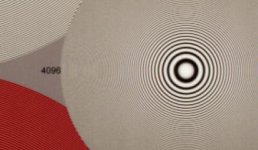
This is on an F35, section of a 2K zone plate. Notice the aliasing.
attachment.php


4k section of same zone plate. Notice the aliasing.
attachment.php


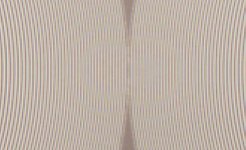
Another section of 2K zone plate. Notice the rainbow of colours, no doubt due to the mis-alignment of the 3 colours on the CFA.
attachment.php


There's a reason we don't use striped sensors. They're a woefully inefficient CFA.

Graeme
 

Attachments

  • Screen Shot 2016-04-04 at 6.22.54 PM.jpg
    Screen Shot 2016-04-04 at 6.22.54 PM.jpg
    19.3 KB · Views: 0
  • Screen Shot 2016-04-04 at 6.22.34 PM.jpg
    Screen Shot 2016-04-04 at 6.22.34 PM.jpg
    19.4 KB · Views: 0
  • Screen Shot 2016-04-04 at 6.30.59 PM.jpg
    Screen Shot 2016-04-04 at 6.30.59 PM.jpg
    19.6 KB · Views: 0
Maybe the best solution down the line will be something like the Foveon. The Bayer array is like democracy: it's the least worst system we have. Graeme, I remember you describing the Bayer array as a form of data compression (compare a RAW file with a TIFF from the same frame!). Best practical definition I have yet heard.

The problem is easily solved when shooting static subjects: use a monochrome sensor and take three shots, each with R, G and B filters. For moving subjects, let alone motion photography, that is obviously not going to work.

I love how the extract in the OP talks about "shallow depth of field". Idiocy.
 
Foveon is only an answer to an a problem that isn't. To decode data from a Foveon, you're into image processing that's actually slower and more complex than a demosaic, and you've got a 3x data rate penalty to go with it. As noted above, if a 3chip camera requires an OLPF to avoid the worst aliasing, as does a striped CFA, then so does a Foveon. Bayer CFA is still, after all these years the best for digital cinema because although performing poorly at low resolutions, it excels on larger higher resolution sensors.

Graeme
 
Back
Top