
Navigation
Install the app
How to install the app on iOS
Follow along with the video below to see how to install our site as a web app on your home screen.

Note: this_feature_currently_requires_accessing_site_using_safari
More options
Welcome to our community
Be a part of something great, join today!
You are using an out of date browser. It may not display this or other websites correctly.
You should upgrade or use an alternative browser.
You should upgrade or use an alternative browser.
Day for Night
- Thread starter Jack Shanahan
- Start date

David Mullen ASC
Moderator
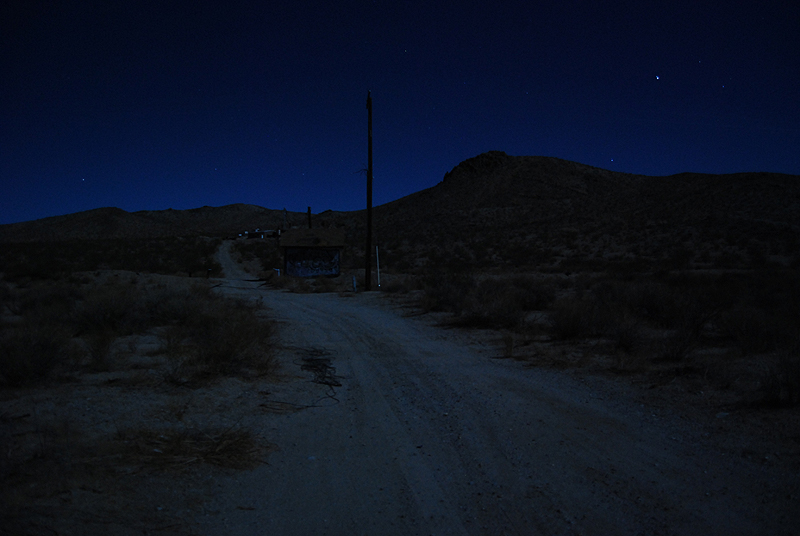
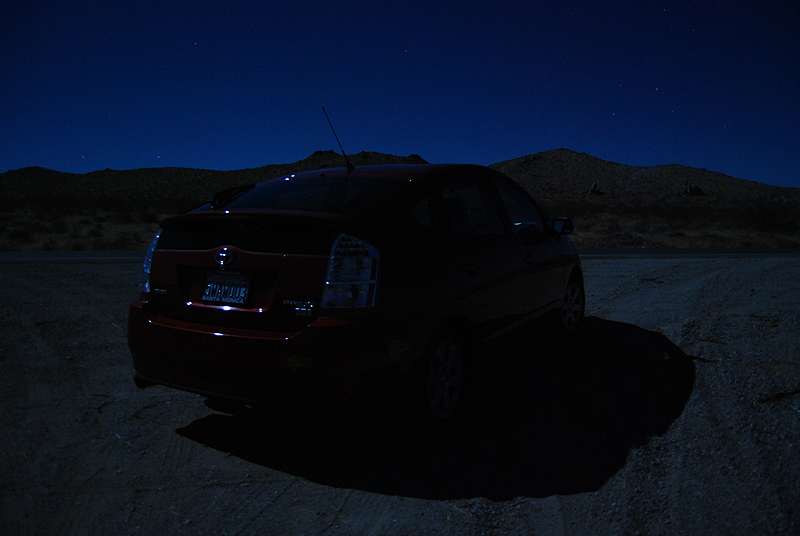
I posted these before, but as a frame of reference, these are still photos that I shot in actual moonlight, underexposed maybe almost 3-stops with the camera set to 3200K:
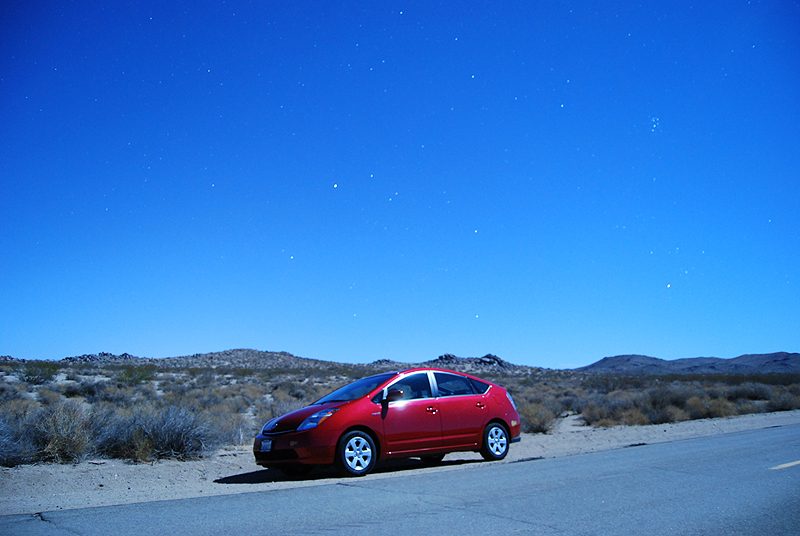
And this was shot without the underexposure, in real moonlight:
So basically the concept of day-for-night is that the sun becomes your hard source in the sky rather than the moon, and both sources are daylight-balance. Generally you play moonlight on the cool side, a tradition that dates back before cinema where even magic lantern slides were toned blue for night shots -- in a world back then where candlelight and firelight were the norm at night for artificial lighting, the moon would seem quite cool in color in comparison.
Traditionally, when shooting day-for-night on tungsten-balanced film, you'd (1) underexpose, how much depends on how dark you want things to feel, how much latitude you want to give in post for printing, how brave you were, etc.; (2) pull the 85 correction filter so that the daylight would look bluer; (3) avoid the sky, shoot against darker trees and hillsides, but if that wasn't possible, shoot at a right angle to the sun on a clear day and use a Pola, often combined with an ND grad, to darken the sky; (4) use ND filters to avoid stopping down the lens and having too much depth of field.
And this was shot without the underexposure, in real moonlight:
So basically the concept of day-for-night is that the sun becomes your hard source in the sky rather than the moon, and both sources are daylight-balance. Generally you play moonlight on the cool side, a tradition that dates back before cinema where even magic lantern slides were toned blue for night shots -- in a world back then where candlelight and firelight were the norm at night for artificial lighting, the moon would seem quite cool in color in comparison.
Traditionally, when shooting day-for-night on tungsten-balanced film, you'd (1) underexpose, how much depends on how dark you want things to feel, how much latitude you want to give in post for printing, how brave you were, etc.; (2) pull the 85 correction filter so that the daylight would look bluer; (3) avoid the sky, shoot against darker trees and hillsides, but if that wasn't possible, shoot at a right angle to the sun on a clear day and use a Pola, often combined with an ND grad, to darken the sky; (4) use ND filters to avoid stopping down the lens and having too much depth of field.

Elsie N
Well-known member
- Joined
- Oct 31, 2009
- Messages
- 6,658
- Reaction score
- 0
- Points
- 0
David, do you know of any tricks to put stars in a day-for-night shot?
Peter Borosh
Well-known member
- Joined
- Sep 9, 2009
- Messages
- 46
- Reaction score
- 0
- Points
- 0
- Location
- Los Angeles, California
- Website
- www.peterborosh.com
Jack,
Another pointer is that avoid any other light sources or possible light sources apart from the sun (which is acting as moonlight).
Another pointer is that avoid any other light sources or possible light sources apart from the sun (which is acting as moonlight).
David Mullen ASC
Moderator
Stars are usually added in post.
Yes, day-for-night works best when the moon would logically be the brightest (if not only) source of light, like out in the countryside at night or in a city during a black-out.
Yes, day-for-night works best when the moon would logically be the brightest (if not only) source of light, like out in the countryside at night or in a city during a black-out.
David Mullen ASC
Moderator
You might want to check out Russell Carpenter's footage of Yosemite shot in actual moonlight:
https://vimeo.com/63969783
https://vimeo.com/63969783

Daniel Reed
Well-known member
- Joined
- Nov 1, 2011
- Messages
- 802
- Reaction score
- 0
- Points
- 0
- Location
- SF Bay Area
- Website
- www.nextbooth.com
Thanks for sharing; a great refresher
-- in a world back then where candlelight and firelight were the norm at night for artificial lighting, the moon would seem quite cool in color in comparison.
- Moderator
- #8

- Joined
- Apr 19, 2007
- Messages
- 13,392
- Reaction score
- 796
- Points
- 113
- Location
- Los Angeles
- Website
- www.phfx.com
David's advice and notes are spot on.
Just to add something here. This was an early, early test of developing a DFN look in REDcine-X Pro with Dragon off of broad daylight material.

Just to add something here. This was an early, early test of developing a DFN look in REDcine-X Pro with Dragon off of broad daylight material.

Luke Neumann
Well-known member
- Joined
- Apr 16, 2012
- Messages
- 819
- Reaction score
- 0
- Points
- 16
- Location
- Oregon, USA
- Website
- www.neumannfilms.net
I think it's key to shoot in overcast conditions to be honest. I have never liked the results in sunny or even partly cloudy weather.
If it's overcast you don't even have to work that hard to make it look like night time in post. I prefer less "blue" and more of an overall desaturated look while letting my WB control the tones in RedCineX
If it's overcast you don't even have to work that hard to make it look like night time in post. I prefer less "blue" and more of an overall desaturated look while letting my WB control the tones in RedCineX
- Thread starter
- #10
Jack Shanahan
Well-known member
David: Thank you! Much appreciated.
Phil: This looks great. I guess the trick would be getting this kind of look on the wide shots too.
Phil: This looks great. I guess the trick would be getting this kind of look on the wide shots too.
Luke Neumann
Well-known member
- Joined
- Apr 16, 2012
- Messages
- 819
- Reaction score
- 0
- Points
- 16
- Location
- Oregon, USA
- Website
- www.neumannfilms.net
If it had been overcast I think it would look a lot more believable but I prefer this to an overly blue DFN.

Marc Wielage
Well-known member
No tricks, but you can just hire a great VFX guy and have them do full sky replacement. This is done a lot more frequently in modern films than you might think.David, do you know of any tricks to put stars in a day-for-night shot?
Elsie N
Well-known member
- Joined
- Oct 31, 2009
- Messages
- 6,658
- Reaction score
- 0
- Points
- 0
No tricks, but you can just hire a great VFX guy and have them do full sky replacement. This is done a lot more frequently in modern films than you might think.
Something like David's well-exposed third example? Then bring down the exposure?
David Mullen ASC
Moderator
I think an effects person would deliver a completed day-for-night shot with an added night sky that was closer to the final look rather than fully exposed for a daytime look. I only included that full exposure example to show that moonlight and daylight are rather similar and having been out in the desert under a full moon, at times, it feels like a bad day-for-night scene in a movie! You do find though that the color is very pale and it is hard to focus your eyes because your iris is wide-open and the rods in your eyes are working more than the cones, hence why a more desaturated silvery look with shallow depth of field would feel more natural.
As for soft overcast versus hard sun, that's just a creative choice, overcast light isn't necessarily more realistic than hard light, as my real moonlight photos show. The moon is a hard source on a clear night, but of course, in real life, it could be a hazy light overcast sky with the moonlight being softened. The difference compared to real sunlight is just that the moon isn't always full and it isn't always up at night.
As for soft overcast versus hard sun, that's just a creative choice, overcast light isn't necessarily more realistic than hard light, as my real moonlight photos show. The moon is a hard source on a clear night, but of course, in real life, it could be a hazy light overcast sky with the moonlight being softened. The difference compared to real sunlight is just that the moon isn't always full and it isn't always up at night.