Welcome to our community

Be a part of something great, join today!

  • Hey all, just changed over the backend after 15 years I figured time to give it a bit of an update, its probably gonna be a bit weird for most of you and i am sure there is a few bugs to work out but it should kinda work the same as before... hopefully :)

Cinematography of Cold War

Tom S

Well-known member
Joined
Dec 16, 2017
Messages
216
Reaction score
1
Points
18
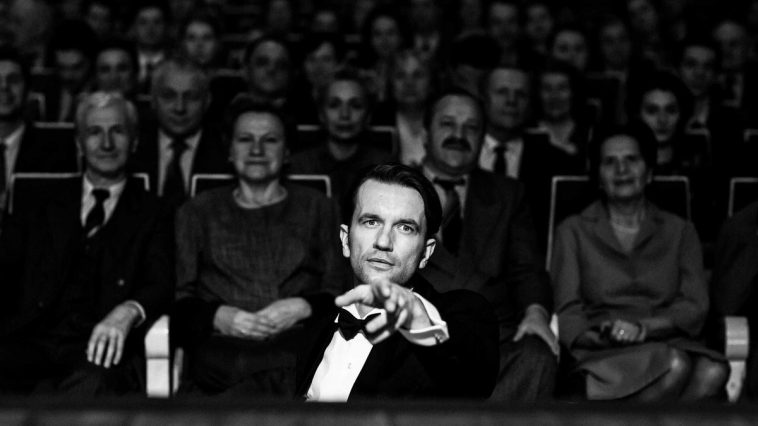
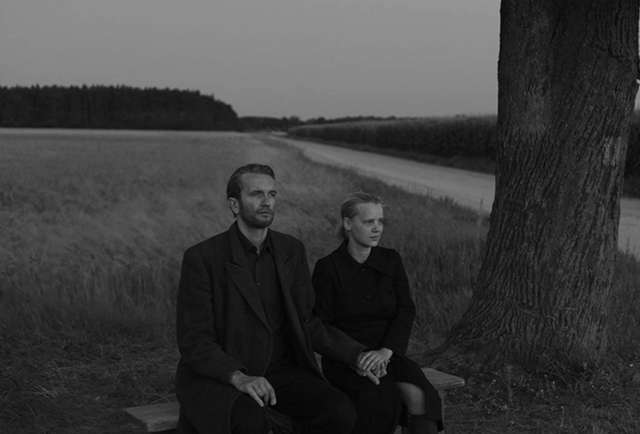
Cold War is nominated for Best Cinematography. It is a Polish film directed by Pawel Pawlikowski and DP'd by Lukasz Zal (same team from Polish film Ida). I went to the Cinema to see it. I've been streaming for years, so forgot how enjoyable the cinema can be.

I'm puzzled by the cinematography of Cold War. Fantastic lighting and dynamic range of the black and white images, however it seemed like well over half the movie was shot center-framed at the Academy ratio of 1.37:1, which is almost 4:3 (1.33:1).

I like the center-framed wide shots. For example, when the male lead is conducting and you can see the audience behind him. But I just couldn't embrace the center-framed close-ups. There was so much head-room in the whole film, I found it distracting. Are there other films that use center-framed close-ups?

From an interview regarding headroom:
ŁŻ : It was a way of giving equal importance to the set and the place, in which the story takes place, without having to include the whole character within the frame. It wasn’t something we did for every shot, but it happened in function of the locations and as Pawel and I constructed our search for the ideal frame… In any case, I find that the 4:3 format is extremely well-suited to that type of composition, exactly like a painting or a poster.


Trailer here.

Why all the head room?
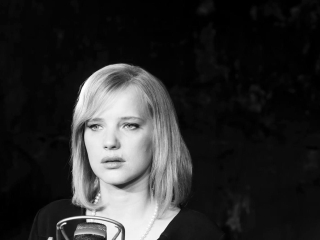
219219_007.jpg
.


Really don't like this.
Screen-Shot-2018-10-04-at-1.43.59-PM.png


This I get.
DjMRukYXgAA7eKI-758x426.jpg


I'm ok with this one too.
tl-horizontal_main.jpg
 
Abandoning traditional rules of balance and composition can suggest unease, discomfort, among other things. I haven't seen the film yet but does it feel like this type of framing fits the story?

I rather liked the unconventional framing in Mr. Robot and Luther as they helped you see the world through a sociopath's eyes. Broadchurch also does it. As far as other feature films, The King's Speech did it quite wonderfully as well. A few other films come to mind, Carol, Comet, Ida (as you mentioned), and The Favourite. Roma also had a few examples of extended headroom but not quite to the same extent.

I think it really comes down to the idea that rules are meant to be broken. For some viewers it works, for others it doesn't. But at the end of the day, there's really no rules in what we do as creators.
 
That's not abandoning the rules of composition at all as the example frames posted adheres to the rule of 3rds or general framing borders inspired by them and even a weighted central composition. First two are actually on 3rds for instance, though the 4:3 aspect ratio makes them appear a bit more center. The extra head room is certainly there to enhance the frame and story.

To the point of central composition, it's become moderately in fashion overall from about the last Mad Max film on, though it's a bit not-wonderfully deployed at times. Mad Max was a moderate exception due to the pacing of the action and getting the viewers eye to follow in the quickest place possible.

I find that the framing works for Cold War, at least from me. The DP, Lukasz Zal, is clearly well studied and compositions well executed from what I saw.
 
I find it very interesting to read these opinions. It is clearly, that OP hasn't lived in the Eastern Europe at the time of Iron Curtain when movie unfolds. Cinematography in this movie, as well as "Ida" is simply brilliant in recalling the oppressive stalinist world, where unfortunate many lived in. Gray, dark, muddy, desperate and hopeless is what those images hoping to convey. Eastern Europe of "Socialist paradise" weren't that much of a paradise and this movie perfectly retells the oppressive and hopeless atmosphere from those times. The lovers in the movie decided to kill themselves rather than try to put their lives back together after everything they had to endure- her marriage to a party apparatchik to free her lover and he, losing his precious fingers to be with her. Socialist "paradise" was a huge mistake and countless people paid for that failed experiment. This is the underlying story filmmakers wanted to convey. Braking, the so called, "rules" of composition (who made those rules and why do we have to follow them anyway?) is the most powerful statement against the establishment, warning present generations of the evils of socialism and communism. BTW, the original DP Ryszard Lenczewski became ill while working on Ida and Lukasz Zal, the camera operator bravely stepped in and beautifully followed the original direction of Ryszard Lenczewski. Even though Eastern European cinematography and photography was always incredibly vibrant and fiercely independent, it is still not that well known in the West. There are scores of Chech, Polish, Russian, Hungarian and many other photographers and cinematographers, that toiled in obscurity for many years behind the Iron Curtain. Many are still unknown, but the new generation of filmmakers stand of their shoulders proudly cheering and celebrating their lives and artistic achievements. I'm incredibly grateful seeing Academy recognizing and celebrating this precious movie...
 
I find it very interesting to read these opinions. It is clearly, that OP hasn't lived in the Eastern Europe at the time of Iron Curtain when movie unfolds. Cinematography in this movie, as well as "Ida" is simply brilliant in recalling the oppressive stalinist world, where unfortunate many lived in. Gray, dark, muddy, desperate and hopeless is what those images hoping to convey. Eastern Europe of "Socialist paradise" weren't that much of a paradise and this movie perfectly retells the oppressive and hopeless atmosphere from those times. The lovers in the movie decided to kill themselves rather than try to put their lives back together after everything they had to endure- her marriage to a party apparatchik to free her lover and he, losing his precious fingers to be with her. Socialist "paradise" was a huge mistake and countless people paid for that failed experiment. This is the underlying story filmmakers wanted to convey. Braking, the so called, "rules" of composition (who made those rules and why do we have to follow them anyway?) is the most powerful statement against the establishment, warning present generations of the evils of socialism and communism. BTW, the original DP Ryszard Lenczewski became ill while working on Ida and Lukasz Zal, the camera operator bravely stepped in and beautifully followed the original direction of Ryszard Lenczewski. Even though Eastern European cinematography and photography was always incredibly vibrant and fiercely independent, it is still not that well known in the West. There are scores of Chech, Polish, Russian, Hungarian and many other photographers and cinematographers, that toiled in obscurity for many years behind the Iron Curtain. Many are still unknown, but the new generation of filmmakers stand of their shoulders proudly cheering and celebrating their lives and artistic achievements. I'm incredibly grateful seeing Academy recognizing and celebrating this precious movie...

Jake, this is unbelievably powerful and well said. Thanks for sharing.
 
I find it very interesting to read these opinions. It is clearly, that OP hasn't lived in the Eastern Europe at the time of Iron Curtain when movie unfolds. Cinematography in this movie, as well as "Ida" is simply brilliant in recalling the oppressive stalinist world, where unfortunate many lived in. Gray, dark, muddy, desperate and hopeless is what those images hoping to convey. Eastern Europe of "Socialist paradise" weren't that much of a paradise and this movie perfectly retells the oppressive and hopeless atmosphere from those times. The lovers in the movie decided to kill themselves rather than try to put their lives back together after everything they had to endure- her marriage to a party apparatchik to free her lover and he, losing his precious fingers to be with her. Socialist "paradise" was a huge mistake and countless people paid for that failed experiment. This is the underlying story filmmakers wanted to convey. Braking, the so called, "rules" of composition (who made those rules and why do we have to follow them anyway?) is the most powerful statement against the establishment, warning present generations of the evils of socialism and communism. BTW, the original DP Ryszard Lenczewski became ill while working on Ida and Lukasz Zal, the camera operator bravely stepped in and beautifully followed the original direction of Ryszard Lenczewski. Even though Eastern European cinematography and photography was always incredibly vibrant and fiercely independent, it is still not that well known in the West. There are scores of Chech, Polish, Russian, Hungarian and many other photographers and cinematographers, that toiled in obscurity for many years behind the Iron Curtain. Many are still unknown, but the new generation of filmmakers stand of their shoulders proudly cheering and celebrating their lives and artistic achievements. I'm incredibly grateful seeing Academy recognizing and celebrating this precious movie...

Be aware of "ex-socialists/communists" - there are none! There's only mean, faceless, mediocre, bloodsucking opportunistic scum telling you what you wanna hear (which is what you're used to), what you're able to digest, in order to gain your sympathies, earn money and justify their miserable, parasitic, existences. They're effin' leaches...

Bold/underlined: oxymoron.
 
Sheesh, Jake! Was very much looking forward to seeing this and I'm always interested in your criticism, but you've just revealed the ending. Next time, how 'bout a Spoiler Alert?

I find it very interesting to read these opinions. It is clearly, that OP hasn't lived in the Eastern Europe at the time of Iron Curtain when movie unfolds. Cinematography in this movie, as well as "Ida" is simply brilliant in recalling the oppressive stalinist world, where unfortunate many lived in. Gray, dark, muddy, desperate and hopeless is what those images hoping to convey. Eastern Europe of "Socialist paradise" weren't that much of a paradise and this movie perfectly retells the oppressive and hopeless atmosphere from those times. The lovers in the movie decided to kill themselves rather than try to put their lives back together after everything they had to endure- her marriage to a party apparatchik to free her lover and he, losing his precious fingers to be with her. Socialist "paradise" was a huge mistake and countless people paid for that failed experiment. This is the underlying story filmmakers wanted to convey. Braking, the so called, "rules" of composition (who made those rules and why do we have to follow them anyway?) is the most powerful statement against the establishment, warning present generations of the evils of socialism and communism. BTW, the original DP Ryszard Lenczewski became ill while working on Ida and Lukasz Zal, the camera operator bravely stepped in and beautifully followed the original direction of Ryszard Lenczewski. Even though Eastern European cinematography and photography was always incredibly vibrant and fiercely independent, it is still not that well known in the West. There are scores of Chech, Polish, Russian, Hungarian and many other photographers and cinematographers, that toiled in obscurity for many years behind the Iron Curtain. Many are still unknown, but the new generation of filmmakers stand of their shoulders proudly cheering and celebrating their lives and artistic achievements. I'm incredibly grateful seeing Academy recognizing and celebrating this precious movie...
 
I find it very interesting to read these opinions. It is clearly, that OP hasn't lived in the Eastern Europe at the time of Iron Curtain when movie unfolds. Cinematography in this movie, as well as "Ida" is simply brilliant in recalling the oppressive stalinist world, where unfortunate many lived in. Gray, dark, muddy, desperate and hopeless is what those images hoping to convey. Eastern Europe of "Socialist paradise" weren't that much of a paradise and this movie perfectly retells the oppressive and hopeless atmosphere from those times. The lovers in the movie decided to kill themselves rather than try to put their lives back together after everything they had to endure- her marriage to a party apparatchik to free her lover and he, losing his precious fingers to be with her. Socialist "paradise" was a huge mistake and countless people paid for that failed experiment. This is the underlying story filmmakers wanted to convey. Braking, the so called, "rules" of composition (who made those rules and why do we have to follow them anyway?) is the most powerful statement against the establishment, warning present generations of the evils of socialism and communism. BTW, the original DP Ryszard Lenczewski became ill while working on Ida and Lukasz Zal, the camera operator bravely stepped in and beautifully followed the original direction of Ryszard Lenczewski. Even though Eastern European cinematography and photography was always incredibly vibrant and fiercely independent, it is still not that well known in the West. There are scores of Chech, Polish, Russian, Hungarian and many other photographers and cinematographers, that toiled in obscurity for many years behind the Iron Curtain. Many are still unknown, but the new generation of filmmakers stand of their shoulders proudly cheering and celebrating their lives and artistic achievements. I'm incredibly grateful seeing Academy recognizing and celebrating this precious movie...


Certainly taste is in the eye of the beholder. I didn't live in Eastern Europe during the time of the Iron Curtain, but I still feel my opinion is valid. If the cinematography is distracting from the story, then I'm not a fan. Admittedly, I prefer traditional linear narrative than art-house films. I thought the wide shots demonstrated the immersion into the scene, but for me, the tight shots failed to achieve this effect. For my taste, it was terribly distracting to the story.

For reference, I also didn't like the 6mm fisheye shots in The Favourite. I loved Libatique's A Star Is Born. I thought the cinematography of Roma and Never Look Away were strong.

I'm a big fan of Deakins and his opinion that if the cinematography is noticed, than he didn't do his job. I have mixed feelings about Christopher Doyle because I love Wong Kar Wai films.
 
Certainly taste is in the eye of the beholder. I didn't live in Eastern Europe during the time of the Iron Curtain, but I still feel my opinion is valid. If the cinematography is distracting from the story, then I'm not a fan. Admittedly, I prefer traditional linear narrative than art-house films. I thought the wide shots demonstrated the immersion into the scene, but for me, the tight shots failed to achieve this effect. For my taste, it was terribly distracting to the story.

For reference, I also didn't like the 6mm fisheye shots in The Favourite. I loved Libatique's A Star Is Born. I thought the cinematography of Roma and Never Look Away were strong.

I'm a big fan of Deakins and his opinion that if the cinematography is noticed, than he didn't do his job. I have mixed feelings about Christopher Doyle because I love Wong Kar Wai films.

I think Jake's point is just because you don't like it, doesn't mean it's not good.

Art is, after all, about taking risks: and when you do, not everyone's going to be a fan.

We only *recognize* the restraint of Spielberg and Deakins because we're able to compare them to more expressive filmmakers.

Every style has it's place.

There's generally no hard and fast rule to everything.

Because, again to Jake's point, if there was then we'd be living in a dictatorship.

Again, the freedom of expression inside Cold War is itself a celebration of art over autocracy.
 
Certainly taste is in the eye of the beholder. I didn't live in Eastern Europe during the time of the Iron Curtain, but I still feel my opinion is valid. If the cinematography is distracting from the story, then I'm not a fan. Admittedly, I prefer traditional linear narrative than art-house films. I thought the wide shots demonstrated the immersion into the scene, but for me, the tight shots failed to achieve this effect. For my taste, it was terribly distracting to the story.

For reference, I also didn't like the 6mm fisheye shots in The Favourite. I loved Libatique's A Star Is Born. I thought the cinematography of Roma and Never Look Away were strong.

I'm a big fan of Deakins and his opinion that if the cinematography is noticed, than he didn't do his job. I have mixed feelings about Christopher Doyle because I love Wong Kar Wai films.

I agree with you on The Favourite.Those wide angle shots was too much distracting from the story and it kept me bothering all the time.
On Roma nothing was special about cinematography.European arthouse movies doing that for last 50 years.Would rather watch any Bela Tarr movie (wrekmeister harmonies for example) for the 50th time instead of watching Roma again.
 
Cinematographer Lukasz Zal used "Centrifugal Framing" for this unusual and effective way in the composition of the shot, inspired by Jan Kalis.
This type of cinematography should be known by all filmmakers.
 
I just wanted to point out, that following the rules is not always the best prescription for artistic and immersive storytelling...
That's very true. The odd framing and cutting tempos of Mr. Robot and Mindhunters are good examples: brilliant storytelling done in an unconventional way.
 
Back
Top