Welcome to our community

Be a part of something great, join today!

  • Hey all, just changed over the backend after 15 years I figured time to give it a bit of an update, its probably gonna be a bit weird for most of you and i am sure there is a few bugs to work out but it should kinda work the same as before... hopefully :)

Base iso Epic-w

worth revisiting.

http://www.reduser.net/forum/archive/index.php/t-112540.html

In short there is no "one size fits all" for the ISO you choose to rate a scene. Middle grey is scene dependant and stops above and below will vary depending on what you want to bring out of the scene. This is obviously going to change depending on day, night, landscape, portrait, deep blacks, milky blacks, etc.

The camera ships at 80o ISO as the manufacturers suggestion for "most" uses, but that will and can vary.


David
 
Last edited:
Are there any disadvantages at shooting lower ISOs on the Epic-W vs using ND. i.e. Would I be better off shooting at 800 ISO with a .9 ND in vs setting ISO to 250?
 
ISO doesn't change anything for your r3ds. It's just metadata. By changing ISO you change the way the image is developed in post and by that losing 3 Stops on hghlights and gaining 3 in lowlights and reducing noise.
 
Last edited:
Are there any disadvantages at shooting lower ISOs on the Epic-W vs using ND. i.e. Would I be better off shooting at 800 ISO with a .9 ND in vs setting ISO to 250?

You would lose 1-2 stops in highlight protection shooting in ISO 250 vs 800 with .ND.

250 worked on Dragon with Skin Tone OLPF, but there seems to be slightly less highlight stops at lower ISOs than on Dragon, so I would avoid shooting ISO 250 if there are going to be bright highlights with the Epic-W.

This would be an example as to why:
http://www.reduser.net/forum/showthread.php?148722-DRAGON-or-HELIUM&p=1659114&viewfull=1#post1659114

Yeah, I noticed milky whites at 250 ISO. Is this just a Helium color issue? Doesn't seem to be a problem on the Dragon footage they show in that example.
 
Yeah, I noticed milky whites at 250 ISO. Is this just a Helium color issue? Doesn't seem to be a problem on the Dragon footage they show in that example.

Helium has less DR in the highlights at LOW ISOs. The base ISO is higher, and so the highlight protection starts at higher ISOs.

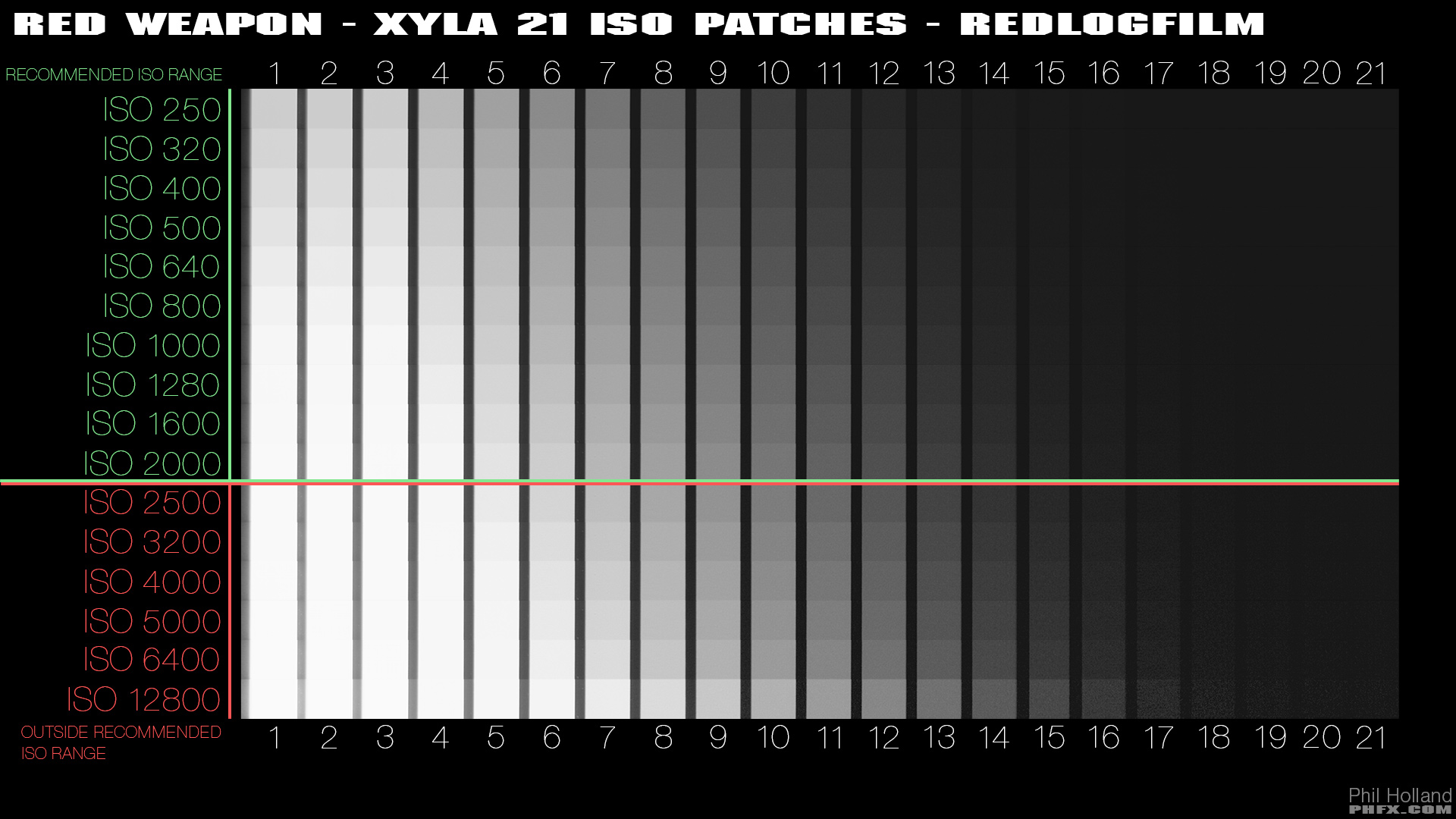
This is a Dragon chart (thanks Phil!), but imagine Helium, where the lower ISOs have even less highlight chips at low ISOs, and doesn't get coverage until you reach 800+. It has the same amount of "chips" (16.5+ stops), but they shifted them.


phfx_REDWeaponTest2015_xyla21_ISOPatches_RLF.jpg


This is one reason why Helium is better in low light, as they shifted the base ISO to be higher. This is why having good NDs for Helium will be a must, to stay at higher ISOs, outdoors. Then as you get less light, you remove ND, thus keeping the same ISO levels.
 
Back
Top