Welcome to our community

Be a part of something great, join today!

  • Hey all, just changed over the backend after 15 years I figured time to give it a bit of an update, its probably gonna be a bit weird for most of you and i am sure there is a few bugs to work out but it should kinda work the same as before... hopefully :)

Ask David Mullen ANYTHING

It depends on the coverage and the amount of time we'll be in that room.

If the natural window light looks right dramatically and emotionally (and correct for the time of day in the script) and my meter tells me that there is enough of it, and it's a short scene or one-shot scene that won't take several hours to shoot, I may not do any lighting, or I may decide I need a bit of fill or one end of the room needs a bit more light, etc.

So yes, I do check the natural light with my meter to see what sort of levels I'm dealing with, though usually it's obvious to my eye.

Other times, I'll recreate the natural effect with lighting through the window because I know the real light won't stay consistent -- maybe clouds are rolling in, or maybe the sun is bouncing off of the opposite building but soon will move off of that wall, etc. Maybe the sun is bouncing off of a red brick wall and then through the window... and the light is too warm for the look I want.

I hate dealing with ND gel on windows so sometimes I will light a room to a middle f-stop level or higher just so that the room is balanced better with the exterior view without needing to gel the windows.

Thanks so much.

Just an additional question. How many stops difference do you usually keep between the interior and the exterior? For e.g. If the light coming through the window is F11, would you light up the interior to F11 or F8 or 5.6?
 
Thanks so much.

Just an additional question. How many stops difference do you usually keep between the interior and the exterior? For e.g. If the light coming through the window is F11, would you light up the interior to F11 or F8 or 5.6?

Well, I basically I light to a level I can with the lights I have, using HMI's... I find it possible to get to an f/5.6 or f/8 at the 250 ASA range. Now with film, that's enough to keep detail out a window even though it's still four stops over, but with digital, I'd still probably have to do some selective ND gelling. However, sometimes I prefer to just stretch a Double Net on a frame outside of a window. It only cuts a stop down, but it also softens the view, and it doesn't ripple and reflect, and it's fast to set-up.
 
Well, I basically I light to a level I can with the lights I have, using HMI's... I find it possible to get to an f/5.6 or f/8 at the 250 ASA range. Now with film, that's enough to keep detail out a window even though it's still four stops over, but with digital, I'd still probably have to do some selective ND gelling. However, sometimes I prefer to just stretch a Double Net on a frame outside of a window. It only cuts a stop down, but it also softens the view, and it doesn't ripple and reflect, and it's fast to set-up.

Thanks. Much appreciated.
 
Hi David,

Good answers.

What about the CCD vs. CMOS question?

If the script has a lot of action, is that more suited to CCD? Also what if it has a lot of flashing strobes, like a police chase at night?

I saw a test on vimeo of a fast car ride shot on SI2K. The CMOS sensor gave some jello effects, and the guy who posted it called it "unusable", although it wasn't that bad.

What's your take on fast action and rolling shutter?
 
I don't have a strong opinion on CCD vs. CMOS. I didn't notice the skew effect on the two Red features I shot -- usually people have to point it out to me in Red footage, so I guess I don't find it very objectionable.

The split-frame strobe problem is a bit more annoying.
 
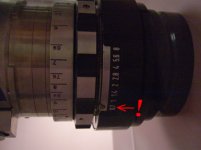
I got to hold that f/0.7 lens once in the U.K. -- it was bizarre, no f-stop ring and the rear end was almost as large as the front end, like a glass tube.

The one I saw at a Kubrick exhibition did have an f-stop ring.
 

Attachments

  • lens.jpg
    lens.jpg
    19 KB · Views: 0
No budget daytime car interior

No budget daytime car interior

Hi David

I had to grab some shots in a moving Jaguar car on one of my first two play around shoots with the Red when I first got it. One wide from the front passenger seat looking back at the crimeboss actor, and then a reverse wide and tight shot of crimeboss POV of the driver's eyes looking at him in the rearview mirror.

All the shots included large areas of window with bright noon sun outside. They were pretty much clipped out white as expected as this was just a test shoot, with no lights, ND gells, nets or anything!

Anyway, while I know the solution is to light the interior or darken the windows. If you were in this situation with a no budget (say student level!) shoot, what would be the fastest, cheapest solution you would pick? If darkening the windows would you use ND gels? What if the car windows are very curvy? If lights, which ones? I think I already know some of the answers, but curious as to yours!

Thanks
Eric
 
I think there is a article in American Cinematographer about that f0.7 lens, possibly written by John Jurgens, the engineer at Cinema Products that put the lens and Stanley's BNC together, with a lot of modification to the BNC, to get the lens close enough (no mirror shutter on that one). I would bet that NASA did not need a f-stop, but Stanley did. Not sure if that was 1978 or 79.
 
I think I was confused in the article because they said they removed the variable shutter (in the Mitchell) and left it at a fixed maximum opening (180 degrees I assume but it may have been 200 degrees or so) -- but because the article was about the lens, I thought that they meant that the lens iris was removed and left at its maximum stop, figuring they were only using that lens for f/0.7 shots anyway.

So I probably just missed seeing the f-stop ring on that lens. Looking at the back end I didn't notice the internal iris blades either.
 
Anyway, while I know the solution is to light the interior or darken the windows. If you were in this situation with a no budget (say student level!) shoot, what would be the fastest, cheapest solution you would pick? If darkening the windows would you used ND gels? What if the car windows are very curvy? If lights, which ones? I think I already know some of the answers, but curious as to yours!

Thanks
Eric

Trouble with ND gel on car windows is that they darken the interior as well, sort of defeating the purpose, unless you can just gel a small area that is on-camera... but then it's very hard to get the gel to be smooth and ripple-free, especially on a curved front windshield.

It's better if you can get a bit of light inside, whether from an HMI sungun, bounce card, LED's, whatever. I also try to find angles to shoot / directions to drive where the background is shaded so I can open up the lens a little for the interior.
 
Hi David...
I'm really bad at maths and I'm wondering about FRAMES PER SECOND an SHUTTER SPEED.
Kind of the movie standart in America is 24fps with 1/48 and here in Europe it's 25fps and 1/50, right?
So both frame rates are shot with a 180° shutter.
If now shooting with 30fps the 180° shutterspeed would be 1/60th.
But the 30 frames motion would look more smooth, more "videoesque".
But that is because more frames get shown in a second as in 24fps (for example) and not because of motion blur right?
Would it help to decrease shutterspeed at 30fps to get the "filmic" 24fps stutter back?
Also I always felt the things I shoot over here with 25fps look a little bit (it's more a feeling) smoother than things shot with 24fps. according to the 30fps that would also be because of one image more per second?
You see I'm a bit confused about 180° shutter at different frame rates and I hope you can give me a simple logic explanation?
 
I don't think you are confused, you understand that a 180 degree shutter means that the frame is exposed for half the frame rate time, which gives you a certain shutter speed with a certain amount of blur per frame.

I'm not sure that the difference between 24 and 25 fps is enough to make much difference in perception of smoothness, however, note that in PAL countries, 25P is shown at 50i with no pulldown, whereas in NTSC countries, 24P is show at 60i with a 3:2 pulldown, you may be noticing the lack of a 3:2 pulldown cadence when watching 25P footage in Europe.

Higher frames are smoother because of more motion samples per second -- 30P is slightly smoother than 24 and 25P, plus in 60i countries, it's shown without a 3:2 pulldown, so again, there is the lack of that cadence.

Sure, you can make it strobier by using a shorter shutter speed, but what's the point of shooting 30 fps to get a smoother image and then making it choppier with a shorter shutter speed?
 
In still photography 1/48 or 1/50th of a second is quite a long exposure for anything moving. That's why you'll see more motion blur than with 1/60th, 1/125th, or even 1/500th of a second which is not unusual at all on a normal sunny day outside!

@Dave M.: Is it possible with RED to expose at something less than 1/250th per second while remaining at 24 or 25fps? After all there is no real shutter in the cam.
 
lighting approach for a film like RUSSIAN ARK

lighting approach for a film like RUSSIAN ARK

dear mr. mullen,
i would like to know your suggestion and tips about how to approching as cinematographer(making your light's plan)to a film that must be shoot in only one long sequence like russian ark.
in my case we have to shoot in september in a house with big windows,but i think that we cannot control the light from the windows becouse the production cannot have the budget to give us the light that we need for this shortfilm).
the long sequence will be of about 20 minutes.
best regards
ivan

p.s.:sorry for my bad english
 
In still photography 1/48 or 1/50th of a second is quite a long exposure for anything moving. That's why you'll see more motion blur than with 1/60th, 1/125th, or even 1/500th of a second which is not unusual at all on a normal sunny day outside!

@Dave M.: Is it possible with RED to expose at something less than 1/250th per second while remaining at 24 or 25fps? After all there is no real shutter in the cam.

The trouble with short shutter speeds is that you need a certain amount of motion blur per frame to hide the fact that motion is being created by a succession of still frames. If you had a really high shooting and projection rate, let's say 100 fps, then there are so many motion samples that you don't need as much blur to reduce strobing. But 24 fps is barely a high enough frame rate to achieve the illusion of continuous motion, hence why strobing is a problem and why you need per-frame blurring to smooth out the effect -- which is why normal stop motion animation looks "pixellated" or steppy in its motion, due to the lack of blur.

You can shoot the Red at very short shutter speeds, but I assume you are really asking why you can't shoot at longer shutter speeds like going below 1/24th at 24 fps... basically you can expose the frame for longer than the time the frame is being exposed, if that makes sense, i.e. 1/24th if there is a frame being captured 24 times a second -- which is essentially shutterless.

I don't know what the shortest shutter speed possible is with the Red, but I would assume something in the 1/500 or 1/1000 range at 24 fps.
 
Thank you for your kind response! I was asking about 30fps because I'm going to shoot with the Canon 5d Mark II that only is able of this one frame rate. I'm wondering if you could tell me about the flickering problem with normal household lamps (like in my new Chinese lantern I constructet like Phillip Rousselots gaffer does - and it works great!) with some shutter speeds. I was told I couldn't use 1/60th but 1/50th (here in Germany) - but why? Regarding to motion blur with 30fps what would be the next shorter shutterspeed I could use?
 
Thanks Dave, I wasn't aware that cinema needs motion blur to look smooth and when I think of it it makes sense. So one has to use Pol and ND filters to get a well balanced picture in full daylight while mainting 1/48th shutter speed.

I don't like to shoot photos below 1/60th of a second but that's mainly because I shoot free hand and often at gatherings where people move all the time.
 
Back
Top