Welcome to our community

Be a part of something great, join today!

  • Hey all, just changed over the backend after 15 years I figured time to give it a bit of an update, its probably gonna be a bit weird for most of you and i am sure there is a few bugs to work out but it should kinda work the same as before... hopefully :)

Ask David Mullen ANYTHING

I was thinking maybe to use orange or blue bags, pull the key against green, and have post desaturate them and bring them to a whitish look
 
Again, you should talk to your compositor to see what they prefer. I've seen vfx supervisors ask for an underexposed green screen when they are trying to pull reflections off of a glass window on a set and don't want the green to overpower the reflections, but they don't want to shoot against a black screen either.

I'm not sure a desaturated blue bag is going to look like a white bag. Maybe if it were pale blue...
 
I once asked Allen Daviau a similar question when I had a 5th floor room to deal on my first feature with a lot of scenes that were day and night and his response was "insist on getting an easier location to shoot it" -- which I did, and it worked, I got a better location.

Now in your case, since you just need one orange light coming through the window, perhaps something could be armed out of a window one floor higher, as long as the ground below is roped off from the public and kept clear of passerbys.
 
Shooting Miniatures

Shooting Miniatures

Hello David,

I love your work and really appreciate the time you take to answer questions! I have a job coming up and I need to shoot a Model Semi truck outside and make it feel like it's actually life size. I think the model is 1/14 to scale. ( I think it's about 10'' tall and 2' long). We have a shot where we have it pull up to a Gas Station and we pull out to reveal that it's actually a toy. I've never done any forced perspective and I was wondering if you have any tips to help me get started? I'm thinking of using an Innovision Probe 2 lens and stopping down a lot. Wondering if I should look into tilt shift lenses as well? I plan to use an Alexa Mini but wondering if the sensor is too big and my depth of field might be too shallow? Also wondering if art department will need to build any small sets to actually make this work. It does sound like the director wants to shoot outside in real locations. Here's a link to the type of model we'll be using.


https://www.youtube.com/watch?v=o_Du5YYvnMA


Thanks!
 
Hey David,
Wondering about frame rate when working with miniatures? Should I use a slower frame rate for the remote control miniature truck or do you think it might seem to slow when it rolls? I do plan to test but wondering if you had to guess what frame rate might work the best? Thanks!!!
 
You shoot slow motion to give a sense of greater mass to anything that moves, but it has to be an interactive movement like bouncing along a dusty road. A spaceship gliding through space doesn't need to be shot at a high frame rate (unless it explodes) -- in fact, they are often shot at a low frame rate in order to stop down the lens more. So if your toy truck is gliding on a perfectly smooth road, maybe the high frame rate won't help much if it's not bouncing on the road, but maybe it would be nice to put some fine effect dust on the ground to create a little cloud as it passes, it which case a high frame rate would help. And any braking, wheel bouncing, axel chain swaying, etc. will be helped by a high frame rate to impart a greater sense of mass -- and yes, you'd compensate by driving the miniature faster.
 
Hey David, someone brought up a good question elsewhere that I'm not 100% certain how to answer.

If the softness is determined by the size of the source in relation to the subject, then:

1. why would people use two pieces of diffusion Gel over the same light to make it "softer" when it's keeping the "size" of the source exactly the same.

2. why are there different "types" of diffusions to begin with like Opal, Frost, etc, do they actually affect softness when they are keeping the source the same exact size (all things being equal)?

3. why would something like a book light make the light "softer" when it is technically keeping the source the same size in the instances where the bounce part of the book light is the same size as the diffusion part. The way I understand it is, the only reason this is making the light softer is due to distance because with the book light set up you're able to place the diffusion much closer to the talent whereas if you used only a large bounce alone, it would presumably have to be further back to accomodate the fact that a light has to be placed somewhere within danger of being in the frame in order to aim at the bounce.
 
The reasons for different strengths of diffusion are (1) the goal is not always to make the light as soft as it can possibly be -- for creative reasons, you may want different degrees of softness, and (2) you may not have enough light output when you use the heaviest diffusion -- some people, let's say, have put a Full Grid Cloth frame in front of a light and found that the stop loss was too much and then switched to Light Grid Cloth.

I've also been in a situation where in the wide shot, I could not get the light coming through a window to be soft enough but when we punched in tighter, I put some Opal or 250 on a frame near the actor's face to soften the incoming light just slightly so that it was not radically different from the wide shot but smoothed things out a bit, plus did not create a big change in exposure.

Most techniques of using multiple frames of diffusion or book lighting are about increasing the evenness of filling the diffusion frame, sometimes just shining a light through a large diffusion frame does not spread the light to every corner of the frame evenly to maximize softness.
 
Thanks David. I will keep this going since everyone else seems to have crapped out for the past few months, can't let this legendary thread die.

So with that said....my next question lol:

-Do you think it is sacrilege that Roger Deakins chose to shoot Blade Runner 2049 with spherical lenses? How can what is arguably the most iconic and beloved "look" of the original Blade Runner be changed in such an important way, I'm not criticizing the Godly Roger Deakins but I'm just trying to bring up a discussion because everyone knows that he hates anamorphic and prefers to shoot Spherical so it brings up the question of whether he sort of owes it to the series to continue the "look" or is he free to do as he pleases?
 
Roger Deakins is an artist who is true to himself and follows his instincts rather than copying people or chasing trends, plus he doesn't do many projects with obvious stylistizations other than things like the Deakinizers in "Assassination of Jesse James" or the color treatment of "O Brother Where Art Thou?", otherwise he wants to put the story in the forefront and keep his work in support of that, so things like lens distortions, flares, etc. are kept to a minimum to avoid distraction. I suspect that it was his and the director's plan to capture the spirit of the original without copying it so much that it looked like it was shot in 1982 on Kodak 5247 using C-series Panavision lenses. I'm not sure any of the director's other movies have used anamorphic either, even "Arrival" was shot spherical even though Bradford Young had just done two anamorphic features before that.

Ridley Scott was at the height of his commercial style when he made "Duelists", "Alien", "Blade Runner", and "Legend" at a time when Hollywood crews were just getting used to those techniques being used in narrative features, and so much of "Blade Runner" has that commercial-style shooting approach, even inserts are lovingly photographed. I'm guessing that the new filmmakers of the sequel just figured it was pointless to copy 1982 Ridley Scott and had to follow their own instincts.
 
Last edited:
Dear David,
I've just watched this ad trying to figure out how you light skin to give it that western movie look.
https://vimeo.com/205010239

here are two of stills

1.jpg

2.jpg


Apart from raising midtone detail a ton in post, how do you create that look? I really like those shiny reflected highlights on their cheeck and forhead.
Thanks and please forgive me if this question is too basic!
 
The sheen requires that the make-up isn't too matte, sometimes even skin oils might be used for a glossier surface. Then the light should come from a reflective angle, not head on. In this case, the lighting isn't too hard nor too soft, but it is soft enough to create a white reflection in the skin, so maybe just 4x4 frames on HMI's or Skypanels up close, I don't know, it is hard to tell without knowing the distance the lights had to be. Even using some larger reflectors like silver lame on frames would get you that look (they often used banks of shiny boards for westerns in the 1960's). But you have to start with semi-shiny skin.
 
The sheen requires that the make-up isn't too matte, sometimes even skin oils might be used for a glossier surface. Then the light should come from a reflective angle, not head on. In this case, the lighting isn't too hard nor too soft, but it is soft enough to create a white reflection in the skin, so maybe just 4x4 frames on HMI's or Skypanels up close, I don't know, it is hard to tell without knowing the distance the lights had to be. Even using some larger reflectors like silver lame on frames would get you that look (they often used banks of shiny boards for westerns in the 1960's). But you have to start with semi-shiny skin.


Thanks a lot, I was really wondering if make up was the reason, I guess oil and sweat played an important role back in the 60's :)
 
Hey David, I actually just posted a thread for discussion on this, but I would love your input on picking out a light meter as Sekonic has the new L-858D. The L-758Cine seems to be the standard? Have you played with the L-858D?
I have never owned a light meter before but want to start learning to use one instead of relying on the camera built in meters, especially when shooting with a wide range of different camera's and sensors.
 
I just have a basic Spectra Pro meter and a Minolta spot meter. My Spectra has been acting up lately so I need to either get it repaired or buy a new one, but otherwise haven't looked into any new meters in awhile. I think sometimes people overthink this, you just need a meter that is easy to use and gets you accurate readings.
 
Hi David,
Would you elaborate on commercial style, as you referenced here:

"Ridley Scott was at the height of his commercial style when he made "Duelists", "Alien", "Blade Runner", and "Legend" at a time when Hollywood crews were just getting used to those techniques being used in narrative features, and so much of "Blade Runner" has that commercial-style shooting approach, even inserts are lovingly photographed. "

thanks
 
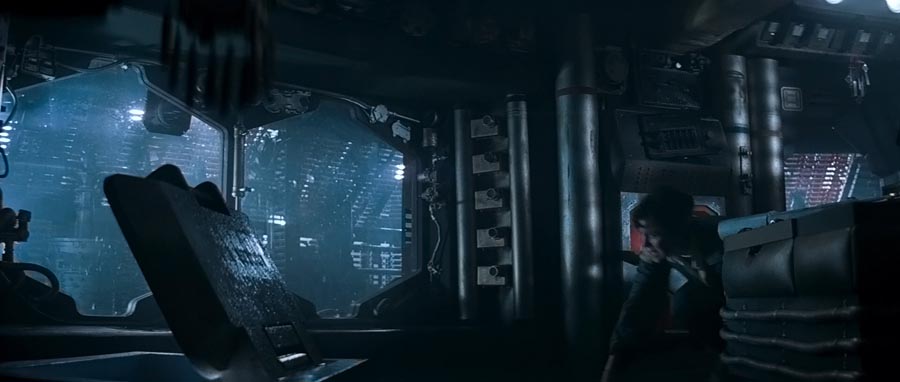
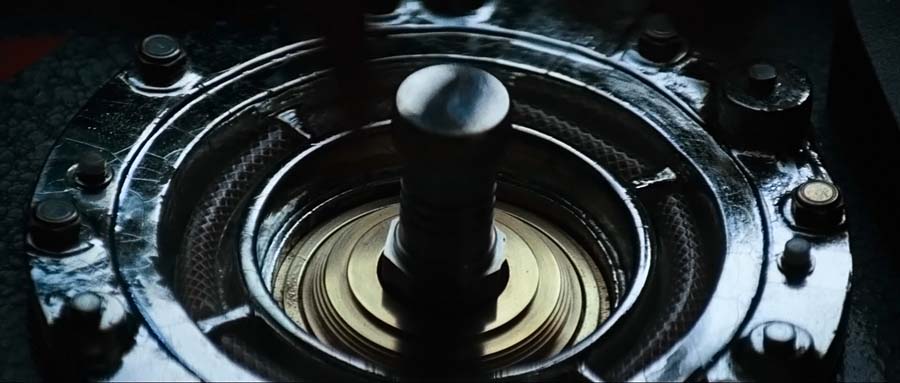
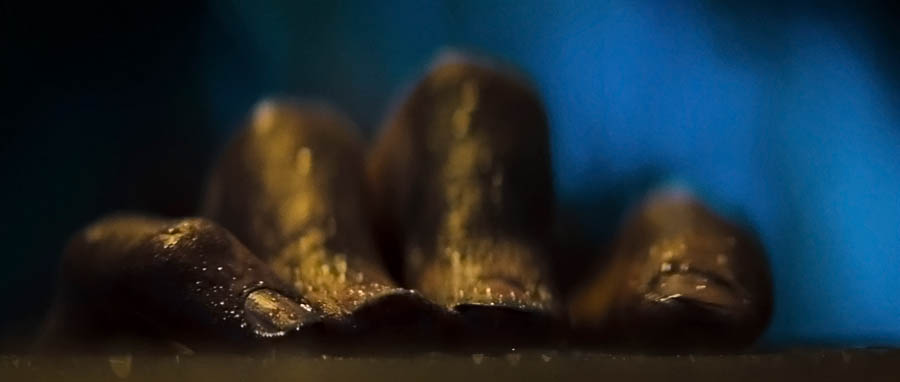
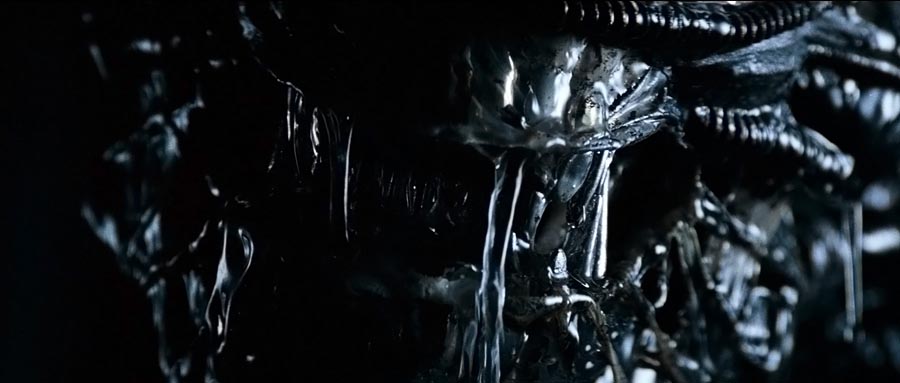
That's 70s commercial style created very strong graphics often involving smoked sets, large single source lighting, and longer lenses (or mixing very long lenses with very wide-angle lenses but little in between). And often the point was to sell a product, which was photographed with great care. And then there was the attention to detail with costumes, color choices, the emphasis on texture, etc.

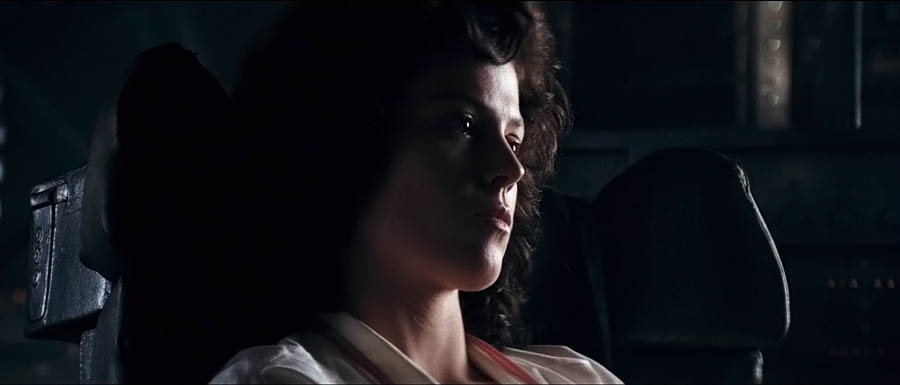
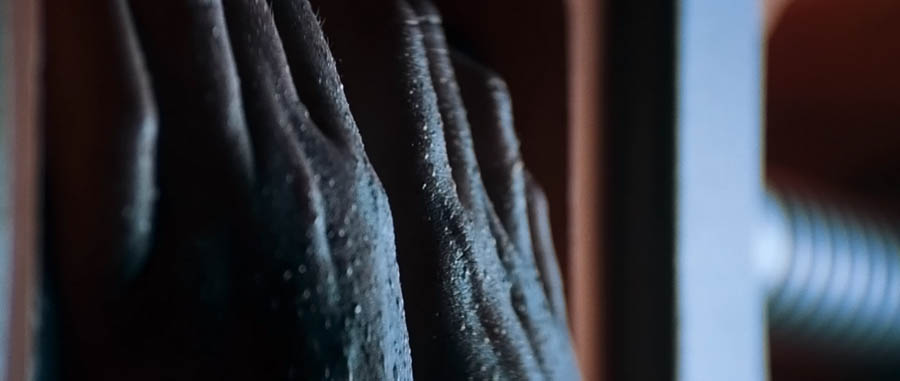
These frames show some of that style, particularly the way objects are photographed to bring out their surface texture, whether metal or skin, and the single source lighting on faces:

365_alien1.jpg


365_alien2.jpg


365_alien3.jpg


365_alien4.jpg


365_alien5.jpg


365_alien6.jpg


The 70s British commercial style, with the directors who created it, became such a part of cinema in the 80s and 90s that today most people don't remember where it came from.

See Ridley Scott's Hovis bread commercial from 1973:
https://www.youtube.com/watch?v=uMdy5szUXaQ

http://www.telegraph.co.uk/films/20...scott-britains-ad-men-reinvented-blockbuster/
 
Back
Top