Welcome to our community

Be a part of something great, join today!

  • Hey all, just changed over the backend after 15 years I figured time to give it a bit of an update, its probably gonna be a bit weird for most of you and i am sure there is a few bugs to work out but it should kinda work the same as before... hopefully :)

Ask David Mullen ANYTHING

Hello David,

I've got a bit of a challenging scene for a film I'm shooting in the next few weeks. The climax of the script is a 5 page scene that takes place at dawn in a junkyard behind a remote general store. To make matters more difficult, we only have one of the principal actors for two days. We've got about 1 hour of dawn and 1 hour of dusk to work with each day. So really only a total of 4 hours to cover this 5 page scene with three actors.

My approach was that I would shoot the wides and any direction where we'd see the relative brightness of the lights around the general store actually at dusk, then cheat the close-ups by praying for overcast clouds then bringing it down in the grade. I'm really disappointed to have to take this approach as I was really hoping to use the headlights from one of the character's cars mixing with the light of dawn. I don't see how I could do this if I need to cheat and shoot the close-ups during the daytime. We don't have the budget for any fixture larger than an M18.

There are some simple stunts as well with the characters rolling around in a fist-fight. And we do have to worry about snow continuity...

So my thinking is that much of this will have to be shot day-for-dawn. In which case, I'll be limiting the amount of light sources in frame and hitting the actors as my 1 hour window is too tight and I won't be able to match the intensity the headlights should be providing when we're in the mid-day light. I'd be relying on mostly overcast skylight as a key, with 12x negative fills to bring down the blacks to help sell the effect. I'd be curious for your input and guidance as to how you'd approach this scene. I've attached a still of the latest test grade of footage shot under overcast sky on Epic with a 50mm UP at 1.9. Is there anything else I can do to help sell the effect?

dusk_1.1.3.jpg
 
My other thought was that I really need to bring something in to bring up the detail in the face a bit. Otherwise it may start getting too heavy with tracking power windows in the grade. Do you think an M18 through Lt. Grid would just about do it? No budget for genny on this one.
 
Don't see the attachment...

I think you understand all of the issues. My main concern is this "praying for overcast" thing, I find that it rarely works to have a plan based on luck. You may at least want to get a 20x20 and 12x12 silk standing by. If you also get an UltraBounce for the same frames, you can extend dusk after it gets too dark by bouncing your 1.8K into it.
 
Hm, weird. It was showing up in my browser. Trying again:

dusk_1_1_3.jpg


Putting a couple silks in my back pocket just in case. Was mainly worried that if the sun were to rear its head I don't have the resources to silk anything in the background really. I suppose I could get creative with the placement of the shade from the general store itself. Do you find the difference between a sunlit background and say 1/4 silk covering an actor to be quite large? I'm worried about relying too much on the grade to fix these kind of issues.
 
If the sun is hitting your background, it's not going to look like dusk, the shots you silk would have to have your actor close enough to a wall or something that can get under the same silk, and I'd go for a Full Silk.

What you are attempting -- a five-page dusk exterior scene -- would be hard to do even on a film with a big budget. Even a major TV series would rewrite or restage the scene so that it was shootable in one day. The best solutions are ALL expensive: construction crane with a truss with a 60x60 or 100x100 silk, shoot over multiple dusks, shoot coverage at night under big soft boxes, shoot coverage on stage that can be lit for dusk, do a lot of greenscreen work and dusk plates, schedule the shoot around weather reports when you are sure of overcast, etc.

So my suggestion is a rewrite, move some of the scene inside. It's what I would have to suggest to the director or producer.

I once did a low-budget 3-week feature years ago, all set in one location and we had a huge dusk scene. I told the AD that we'd have to shoot parts of it every day after sunset for at least a week, which was possible but the AD thought I was crazy for suggesting it. In his mind, we'd just have to live with shooting it in sunlight, screw the script and the logic, we were a low-budget movie after all. He gave me three dusks, which wasn't enough but we got lucky on the third day with overcast weather and I finished the sequence.
 
You may also get away with a silked close-up where the background in sun doesn't have heavy shadows and specular highlights and is really, really out-of-focus. Maybe.

If you can beef up your lighting package a little, you may be able to do more coverage at night, lit softly for dusk.
 
Scope DCP specs are 2048×858 or 4096×1716, which comes out to a 1 : 2.3869... aspect ratio. 35mm scope projection specs are 20.96mm x 17.53mm, which unsqueezed by 2X creates a 1 : 2.3913... aspect ratio.

"2.40" is just a way of rounding off the numbers. "2.35" has technically been obsolete since the early 1970's but is still a common term. No, it makes no real difference.

A true "multi-camera" TV show like a sitcom generality plays the whole act in front of the cameras and live audience, from commercial break to commercial break.

There are no rules for when two cameras are run on a "single-camera" show nor for what length of the scene or shot, it just depends. If you light a master that runs the length of a scene, you may run two camera on that master, but perhaps you then move on to the coverage of one person as they are at one spot in the room for lighting reasons (maybe you don't want to compromise their lighting by having to cover all their positions in the room in one moving shot, not if you know that there will be cuts to a reverse angle back and forth anyway, so there's no reason to run it all as one shot other than if the actor prefers to.)

Some sets are also lit in such a way that running two cameras more often is easier. Sometimes the lighting in the scene requires a more piecemeal approach to the set-ups. Just depends.

Yes, crews on TV shows are very fast, you can generally figure that they are getting, with two cameras off and on, maybe 30 to 50 set-ups a day, sometimes more than that. I had a dance number on "Smash" with a lot of reverse angles on audience reactions where we shot about 90 set-ups for one scene running three cameras off and on, but not on every set-up.

2K is still the most common finishing format for features, particularly 3D features. Some studios are starting to want 4K masters though.

Thanks David. Great stuff!
 
Hi again David. :)

I have a question about lighting or rather about light metering. Many use a rule of thumb of keeping their shadows at 20 IRE or above to produce cleaner shadows and bring it down as needed in grading. But I must confess I'm not a on set waveform monitor user. I still like the light meter. Just too used to it I guess. Is there a way to translate IRE to stops as to use this rule of thumb of keeping the shadows always at or above 20 IRE when using a light meter? I know the camera ISO will make a difference here. So I guess what I'm asking is, is there a formula or something that if I'm using a ISO 800 camera I would know that I have to keep my shadows at a certain stop reading to be equivalent to 20 IRE or so?

Or is it just a matter of knowing the dynamic range of the camera and how many stops under mid grey the camera can read and keeping the shadows 1 stop above that bottom end? Like if the camera has 5 stops under make sure the shadows are no lower than 4 stops under?


Thanks again David.
 
I would hate to light scenes in such a restrictive technical matter. What if you had a scene in a large pitch black space with a single spotlight on the character? Or he was against a black curtain? Or what if he were in a large field at night in the country under a single streetlamp? He might be at full exposure but it would be pointless to meter the shadows. What's wrong with pure black shadows?

It would simpler to just pick an ISO rating that overall gave you a noise floor that you were OK with, and just plan on color-correcting the shadows a bit darker, keep the blacks down. The image sent to the monitor can be set-up to show you that contrast so you can light for it.

Yes, you can test with a spot meter and a waveform in prep to figure out how to use just the spot meter on set without the waveform.

But I'd rather live with noisy shadows and blacks that be forced to meter everything and light to the same key-to-fill ratio, that turns lighting into a drudge rather than a joy.

The only reason why such testing to figure out how to use your meter instead of waveform would make sense to me is if you planned on doing a lot of shooting without a properly set-up monitor, and had to approach things more like shooting on film. But even when shooting film, I sort of got away from metering fill levels except for things like efx shots against green screen.
 
Hey David, just a quick note to wish you happy holidays and thanks once again for all the wisdom on this thread. Jennifer's Body just screened on TV tonight here in Finland, awesome work!
 
My guess would be that the warmth in the day scenes was done in color-correction, not to mention with production design, but night interiors were probably lit warmer, so that was more in the original.


Wow... I thought for sure that you were going to say they most likely used Coral Filters or Warming filters on the day exteriors.

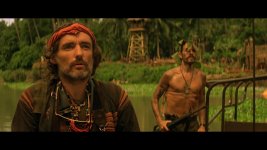
Do you feel the same way about the warm day exterior shots in "Apocalypse Now"?
 
Unless I read specifically that the cinematographer used warming filters, or has a history of using warming filters, then I'm going to assume the warmth was done in timing first, filtering second. Certainly you can find articles about movies shot with warming filters, mainly outdoors in daylight -- for interiors, you can just warm up the lights.

I once saw a photo of Storaro behind the camera on "Sheltering Sky" and the camera was labeled as having 50D stock and an 81EF filter on the camera, so he was warming up the image with a filter. But he didn't generally use warming filters, especially not in the dark jungles of "Apocalypse Now".

The thing is, I used to use Coral filters in my early days but I found that half the time, the dailies colorist would time it out. And then when I got into answer printing, the colorist first made a neutral print and I found myself trying to find the right combinations of printer lights to add some warmth back in. So I basically realized that if it were so easy to add or remove warmth in timing, then why was I messing with an extra piece of glass on the camera that could create reflection problems and lose some light exposure? I started shooting my grey scales at the head of the roll with a pale blue filter and then pulling it for the scene, so once the timer corrected the blue out of the grey scale, all my dailies came back warm.

So after that, the only time I used warming filters is when I wanted to really cancel out blues in the image with a heavy Chocolate or Sepia or Antique Suede for an effect, otherwise for run-of-the-mill warmth, it was simpler to just time the image that way.

For interiors though, I would still use dimmed down lights or warming gels on lights, etc.

I did recently use warming filters for a flashback scene where I wanted a heavy golden tone, so I set the camera to 5600K outside but used 85ND's instead of regular ND's. Again, this was because I wanted a heavy warmth and I felt that doing it optically would save having to push the image too far in timing, plus I didn't have timed dailies and I think 10,000K or 12,000K was the most I could alter the color temp on the camera. For interiors, it was easier, I just lit with tungsten and set the camera to 5600K.

Cooling off shots was easier in the days of film because you could just use tungsten film outdoors and use no 85 correction, or the partial 81EF correction.
 
Thanks David,

So in this "Apocalypse Now" photo do you think it was shot with a warming filter or graded in post?
 

Attachments

  • apocalypse-now-19349-hd-wallpapers.jpg
    apocalypse-now-19349-hd-wallpapers.jpg
    88.2 KB · Views: 0
My guess is that it was done in timing. Shooting anamorphic on 100T stock with an 85 filter in overcast weather surrounded by jungle seems challenging enough, exposure-wise. Could be wrong. I also don't remember the original release prints being timed that warm for that scene but who knows, I'm just going by memory.
 
Thanks David.
 
Hi Mr.David,
I am a little confused regarding the Shutter angle being changed automatically when changing the frame rates while shooting on RED. It does not happen on Film Cameras like ARRI 435 or even on Alexa.
Please enlighten me.
Thank you.
 
Back
Top