Welcome to our community

Be a part of something great, join today!

  • Hey all, just changed over the backend after 15 years I figured time to give it a bit of an update, its probably gonna be a bit weird for most of you and i am sure there is a few bugs to work out but it should kinda work the same as before... hopefully :)

Ask David Mullen ANYTHING

Yeah I did too Ted, but for someone of those the space was so tight I am not even sure it was a space wide enough to fit a lens through. I was wondering if it might be more like a boroscope rather than a periscope, but I couldn't find any sort of PL mounted boroscope.
 
Peter I agree.. it was interestingly tight and macro. Judging from the DOF it is possible that they have mixed some footage from another camera set up. Perhaps someone can chime in with another thought.
cheers
 
Are the Innovision Optics Probe lenses optically sound? I know I should expect the sharpness of an Ultra Prime but do they look reasonably sharp at 1080p resolution?
 
David,

I have a question about shooting for a 2K deliverable. Is there a real visible difference between shooting 2K vs 1080p? I'm thinking of 1.85 aspect ratio, so
1998x1080 (2k) vs 1920x1038 (HD).
 
No, I don't think it matters much for a 1.85 film, especially if you shoot 1080 pixels vertically -- but 2K would be a little bit better for a 2.40 film since the 2K DCP uses the full 2048 across.

Probably the best thing would be to record 2048 but compose to crop to 1998 x 1080 so there is no scaling involved in making the DCP.
 
Thanks for the reply, David! Is there a concern with scaling down from 2k to 1080p for HD delivery?
 
Hi David,


I have a couple of questions that haven bouncing around inside my head lately which I would love to her your take on.


I'm in a TV show spree as of lately and have been going through the blu ray of a few shows and I was wondering how they are covered?

I'm talking about high end shows like The Mentalist, Hawaii Five O, Navy CIS LA etc. Watching the shows and the several angles they cover and knowing the time pressure and that most of these shows have like a 7 day schedule per episode, made me wonder how the cover it. Because I think they are all single camera shows?

But if they are single camera and shoot all those angles they would sure not be done in 7 days? So do they shoot the whole scene in a master and the rest they shoot only what they know they will use? Because I can't see how they could shoot the whole scene from all those angles with such little time.

Also regarding TV shows, I see a lot of blown out highlights specially on skin. Like a day external where half the talent's face is blown out during the whole scene. If it's film I guess it's not too bad. But in the digital shows it looks ugly. I wonder if this is creative or time pressure related? Also in you opinion, when is it ok to let the highlights on skin blow?

And somewhat related, but are most theatrical films still finished in 2K these days? I know Netflix finishes in 4K but for TV basically every show is finished in 2K right?

Thanks in advance for your input David. It's great to be able to chat about these things with a professional of your caliber and experience.

By the way, I'm looking forward to watching Extant but it has not started showing here yet so I'm looking forward to the blu ray.
 
I'm in a TV show spree as of lately and have been going through the blu ray of a few shows and I was wondering how they are covered?

I'm talking about high end shows like The Mentalist, Hawaii Five O, Navy CIS LA etc. Watching the shows and the several angles they cover and knowing the time pressure and that most of these shows have like a 7 day schedule per episode, made me wonder how the cover it. Because I think they are all single camera shows?

But if they are single camera and shoot all those angles they would sure not be done in 7 days? So do they shoot the whole scene in a master and the rest they shoot only what they know they will use? Because I can't see how they could shoot the whole scene from all those angles with such little time.

"Single camera" is a misleading term, meant to distinguish the show from a live multi-camera show like many sitcoms, soap operas, or game shows. You can think of it as "narrative cinema style" versus "live television event style" perhaps. Anyway, most single-camera shows carry two cameras and crews as standard operating procedure -- how often both cameras roll is a matter of style and practicality, some shows it is only half the set-ups, on others, it's more like 90% of the set-ups. Due to the compromises in lighting and sound mic placement, I generally only run one camera on a wide master and then bring in both cameras on the medium to tighter sizes, but it just depends. If you are doing a big scene with a lot of actors, you would probably run both cameras right from the start. Also depends on the camera movement, some masters might be a complex Steadicam move where there is no place to stick a second camera that would not be seen.

For even bigger scenes, often a third camera and crew are brought in, and some action shows will run even a stripped-down fourth or fifth camera, often unmanned during the take.

On "Smash" we usually had three cameras for the big musical numbers but we often did one take that was mostly just the Steadicam running all around the stage, and sometimes a take that was just the camera on a crane flying around the stage, and then do a pass with all three cameras running. The takes with just one camera usually involved a wide-angle lens and a lot of movement, whereas the takes with all three cameras running usually meant two of the cameras were on the long end of zooms.

That's the thing, shooting multiple cameras on dialogue scenes usually forces you into a longer focal-length style just so the cameras can be moved physically back and out of each other's way. If you are a director who prefers to be close and wide-angle on the actors, it is hard to squeeze in a second camera unless it is way off axis and very zoomed in just to get the A-camera out of its shot.

Some DP's squeeze in multiple cameras on everything as a matter of principle, even if the second camera is only getting usable shots 1/3 of the time. I try to avoid that, partly because I don't like sending problematic footage to editorial with a lot of framing and focus problems (and generally the editor prefers not to have to look through hours of messy, partially usable footage...) But it is also depends on the style of the show, the genre, etc. A police action show can get away with faster cuts using more documentary-looking footage compared to a melodrama about some beautiful woman in a mansion. Of course, this means the toughest thing to shoot is a police action show that is also a melodrama involving a beautiful middle-aged female detective running around, since you somehow have to both shoot a lot of multiple camera action bits and yet keep the leading lady looking her best. But that's what they pay us for...
 
Also regarding TV shows, I see a lot of blown out highlights specially on skin. Like a day external where half the talent's face is blown out during the whole scene. If it's film I guess it's not too bad. But in the digital shows it looks ugly. I wonder if this is creative or time pressure related? Also in you opinion, when is it ok to let the highlights on skin blow?

And somewhat related, but are most theatrical films still finished in 2K these days? I know Netflix finishes in 4K but for TV basically every show is finished in 2K right?


Odds are high that the blown-out skin tone look is intentional most of the time, it's not that hard to expose faces correctly if that's what you want. Overexposed skin can also help hide some unwanted facial textures, which is why it is so common in commercials for make-up products. Of course, occasionally you get caught in a situation where the actor gets overexposed while walking or driving around on location and it's hard to fix sometimes.

You generally overexpose a face for two reasons -- one, because it is logically motivated (person caught in a spotlight, a flashlight, a headlamp beam, a helicopter searchlight, or even just when stepping into a patch of sun in a dark room) and two, because it is psychologically motived (you want to create the feeling of a deer caught in a headlight, or exaggerate the sunniness of a room or the heat of the day, etc.) You might also do it to stylize the scene, like for a flashback or dream sequence.

It might happen outdoors, besides when going for a heatwave effect, when shooting in a high contrast environment where if you had just exposed for the highlights, the shadows would be too blocked up (like in a forest with patchy sunlight.) If you can't use grip techniques to knock down the actor in the patch of sun, you may be forced to just split the exposure between the highlights and shadows. How well the skin holds up overexposed, how "film-like" it looks, depends on the camera and the color-correction.

Most TV shows are finished in 1920 x 1080 (1080P), not 2K.
 
Hi David, when you start a project and need to decide to shoot 16:9 or 2.35:1 which factors play the key role in the final decision? Thanks

I haven't done anything for television that wasn't 16x9 so far.

For features, in the days of film, and particularly the days of photochemical post, there were a number of factors to take into account when choosing between 1.85 and 2.40. But with digital intermediates, it became less of an issue, you could shoot spherical 35mm, scan it, and output it for either 1.85 or 2.40 release depending on your framing.

I used to avoid 2.40 for movies I thought would not get a theatrical release just because a small 2.40 letterboxed image was less impressive on a 4x3 TV monitor compared to a cinema screen. But now with so many people owning large flat screens and the possibility of an HD release, I'm less hesitant to suggest 2.40.

I think 2.40 opens up all sorts of interesting composition possibilities, particularly the use of negative space. Being a somewhat awkwardly wide frame, I think of it as more "modernist" than 1.85, which is more classical. So that's one consideration. But it is also nice to work against expectations, i.e. shoot an intimate "small" interior movie in 2.40, for example. I also think 2.40 allows you to retain more of the sense of location around the actors, unless you shoot in such a shallow-focus / long-lens style that everything is soft anyway. 2.40 also stands out as "not being television", though that difference is less dramatic now that television is 16x9 instead of 4x3.
 
Some thoughts on 2.40 composition:

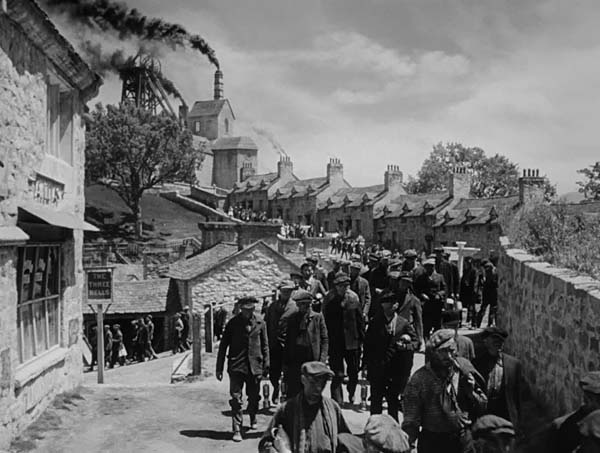
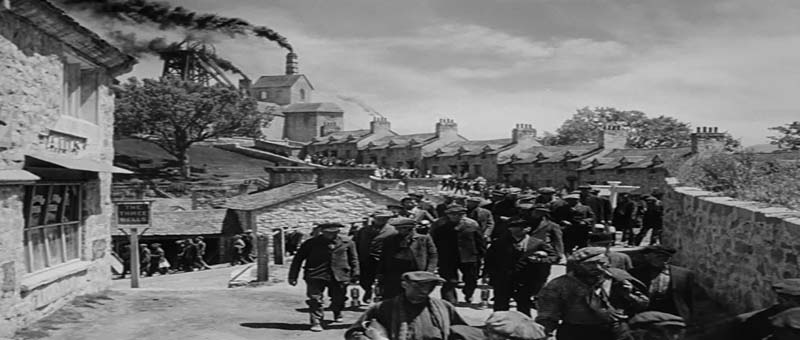
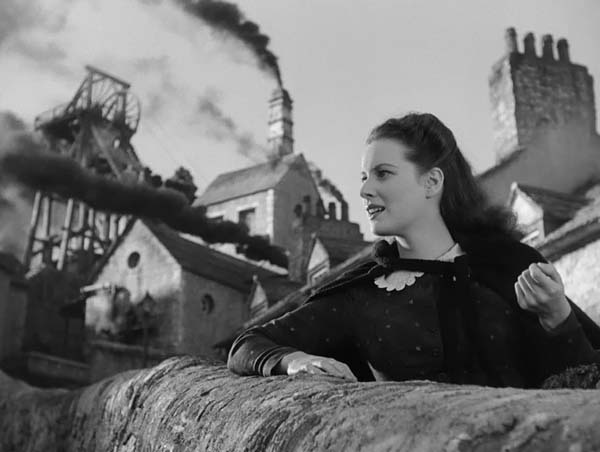
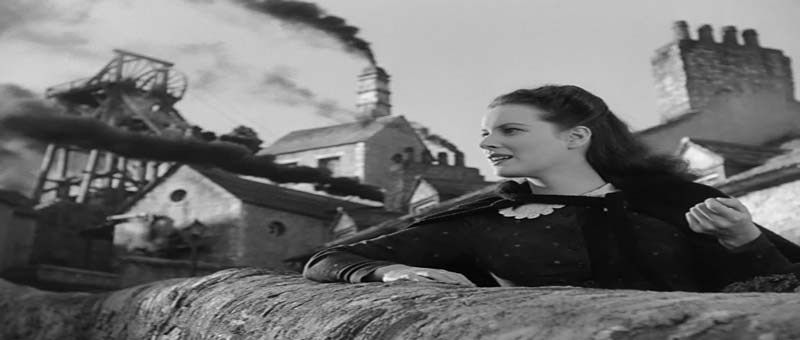
If you look at some really well-composed 1.37 Academy movies and stretch them to 2.40, you find that the compositions still "work" because the frame follows classic rules of balance, harmony, etc. The only thing lost is the sense of verticality that the Academy frame could accomplish. For examples, John Ford movies are some of the best examples of composition and if you look at "How Green Was My Valley", you can see that the framing still works when stretched to 2.40 (just ignore the fat faces):

composition1.jpg


composition2.jpg


composition3.jpg


composition4.jpg
 
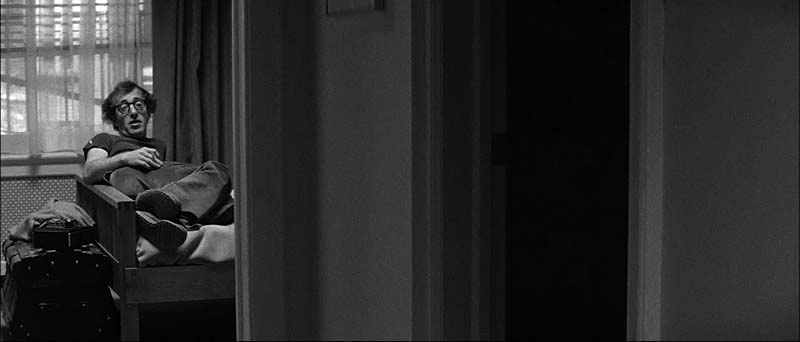
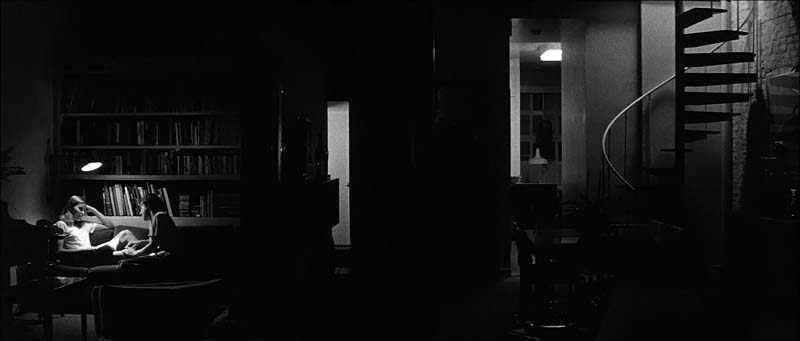
Now look at some 2.40 movies shot by Gordon Willis -- while the compositions still work when squeezed to 1.37 Academy, what is lost is the exaggerated negative space that creates that modernist sense of isolation, imbalance, loneliness:

composition5.jpg


composition8.jpg


composition7.jpg


composition6.jpg


composition9.jpg


composition10.jpg


With a 2.40 frame, you can call attention to the emptiness of a space, at least laterally (and it also follows that with 1.37 Academy, you can call attention to the emptiness of space above and below.)

Whereas the 1.85 frame or the 16x9 (1.78) frame, so close to the Golden Rectangle of art (1.618 : 1) is neither too horizontal or too square, and this makes it easier to compose in a more classical sense, like a painting (though paintings run the gamut of shapes too, including vertically.) A good example is "Barry Lyndon", one of the best composed 1.66 : 1 movies.
 
Last edited:
Thanks for the reply David. So they are indeed multi cam. That explains how they can get so much coverage in so little time. Most cop shows or single cam shows have a 7 day schedule per episode right?

But even with multi cam, do they use the shoot the whole scene from that angle approach or will they shoot just what they need apart from the wide angles? I ask because even with two cameras, some small talking scenes between 4 characters have so many different angles, and sometimes an angle is even used just once in the scene, that it's hard to image how they can cover so much, even with 2 cameras.

Back to finishing resolutions, what about theatrical? Do you feel 2K is still the normal? My impression is although you hear more and more about movies being finished in 4K, 2K is still the standard and will be for a few more years.

Although not my question, thanks for the great and detailed explanation about 2.40 framing. Very insightful. Do you feel there is or makes any difference choosing 2.35, 2.39 or 2.40?

Thanks David.
 
Scope DCP specs are 2048×858 or 4096×1716, which comes out to a 1 : 2.3869... aspect ratio. 35mm scope projection specs are 20.96mm x 17.53mm, which unsqueezed by 2X creates a 1 : 2.3913... aspect ratio.

"2.40" is just a way of rounding off the numbers. "2.35" has technically been obsolete since the early 1970's but is still a common term. No, it makes no real difference.
 
Thanks for the reply David. So they are indeed multi cam. That explains how they can get so much coverage in so little time. Most cop shows or single cam shows have a 7 day schedule per episode right?

But even with multi cam, do they use the shoot the whole scene from that angle approach or will they shoot just what they need apart from the wide angles? I ask because even with two cameras, some small talking scenes between 4 characters have so many different angles, and sometimes an angle is even used just once in the scene, that it's hard to image how they can cover so much, even with 2 cameras.

Back to finishing resolutions, what about theatrical? Do you feel 2K is still the normal? My impression is although you hear more and more about movies being finished in 4K, 2K is still the standard and will be for a few more years.

A true "multi-camera" TV show like a sitcom generality plays the whole act in front of the cameras and live audience, from commercial break to commercial break.

There are no rules for when two cameras are run on a "single-camera" show nor for what length of the scene or shot, it just depends. If you light a master that runs the length of a scene, you may run two camera on that master, but perhaps you then move on to the coverage of one person as they are at one spot in the room for lighting reasons (maybe you don't want to compromise their lighting by having to cover all their positions in the room in one moving shot, not if you know that there will be cuts to a reverse angle back and forth anyway, so there's no reason to run it all as one shot other than if the actor prefers to.)

Some sets are also lit in such a way that running two cameras more often is easier. Sometimes the lighting in the scene requires a more piecemeal approach to the set-ups. Just depends.

Yes, crews on TV shows are very fast, you can generally figure that they are getting, with two cameras off and on, maybe 30 to 50 set-ups a day, sometimes more than that. I had a dance number on "Smash" with a lot of reverse angles on audience reactions where we shot about 90 set-ups for one scene running three cameras off and on, but not on every set-up.

2K is still the most common finishing format for features, particularly 3D features. Some studios are starting to want 4K masters though.
 
Back
Top