Welcome to our community

Be a part of something great, join today!

  • Hey all, just changed over the backend after 15 years I figured time to give it a bit of an update, its probably gonna be a bit weird for most of you and i am sure there is a few bugs to work out but it should kinda work the same as before... hopefully :)

Ask David Mullen ANYTHING

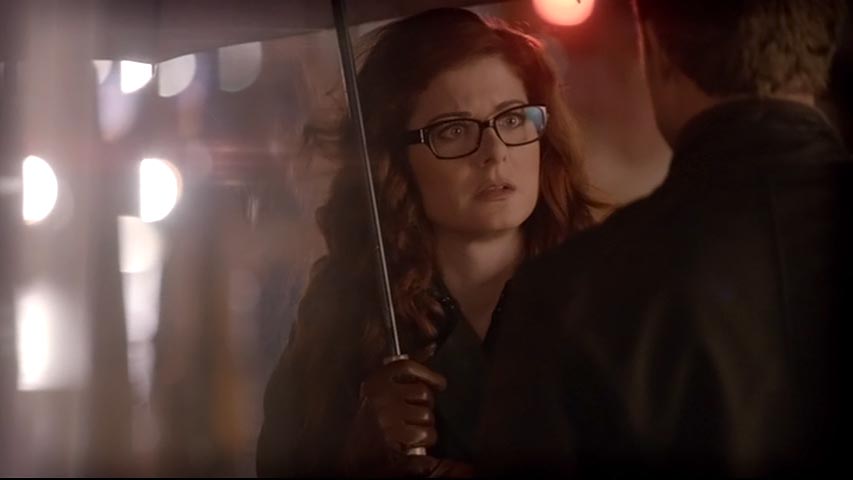
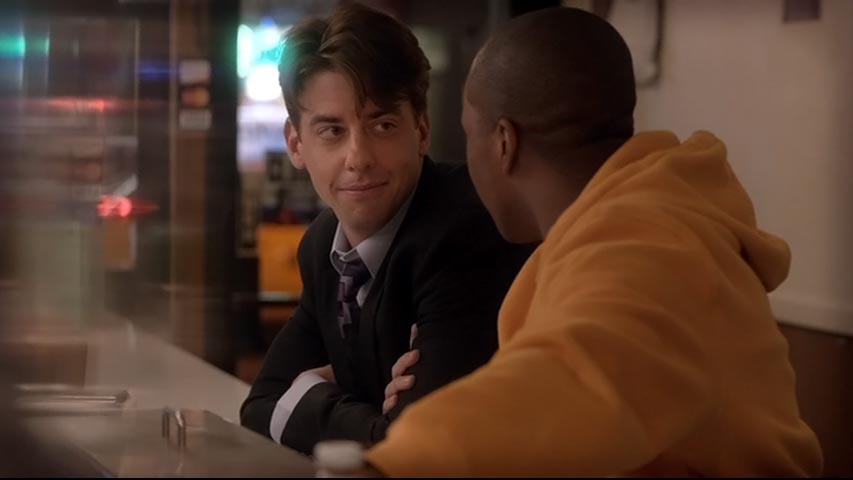
I think somewhere online someone has already discussed the tricks used for this spot, but I've gotten similar effects by putting a piece of glass or acrylic in front of the lens, usually it's a polished edge piece of clear acrylic (like a 1'x1' panel) that is something 1" thick and angled so that you slightly reflect off of the polished edge of the block.

That's what I did for these shots from "Smash":
smash9.jpg


smash10.jpg
 
I think somewhere online someone has already discussed the tricks used for this spot, but I've gotten similar effects by putting a piece of glass or acrylic in front of the lens, usually it's a polished edge piece of clear acrylic (like a 1'x1' panel) that is something 1" thick and angled so that you slightly reflect off of the polished edge of the block.

That's what I did for these shots from "Smash":
*Snip*
*Snip*
I didn't ask the original question but thanks I was thinking about this type of look on this show as well as others...Did you shoot "Smash" with Primo's or Angenieux Optimo's more? How do you think they match up together? I see Angenieux Optimo's with a variety of different glass...
 
There is no right or wrong exposure for flames, just realize that the more you stop down / underexpose it, the more orange it gets. Look at "Gone with the Wind" and the burning of Atlanta, those flames are deep red-orange and were shot on the equivalent of 10 ASA film, probably at f/2.8. So if you were at 640 ASA instead of 10 ASA, you'd have to shoot at f/22 to get the same exposure as "Gone with the Wind" had for their fire.

It comes down to practicality then --if you could light your night exterior to f/8, for example, you'd know that at the peak of the explosion you'd probably be able to hold some color... but how many people can light a night exterior to f/8? So you do what you can, you light to the highest stop you can get away with and to what doesn't look ridiculous, maybe you underexpose a bit before the explosion happens, maybe you even ride the iris a bit during the explosion so that as the flames die down, you can open up slowly. And you try to shoot on a camera with the highest overexposure latitude you can find in log or raw mode.

As a frame of reference, I think the big building explosion in "Terminator 2" was lit and shot at f/5.6 at 500 ASA.
 
White balancing with an 18% grey. Ive read about it several times but looking to understand when its practical and the benefits of balancing to grey vs white cards. I tend to mostly shoot based on the kelvin slider, but using the calc white balance function with a grey card is something i would like to do more if it has major benefits. Any quick info would be great. Reading in a text book isnt always the most easy to understand.
 
Hi David,

I have a question that has really got me confused. I want to invest in a set of Pl lens. What would be your opinion in regards to this. I am shooting Red Epic 5k and my images seem to be too sharp. Currently using Canons 4k zoom cine lens and Zeiss Compact Primes. Is investing in a set of Cooke Minis worth it or should i spend my money on HMI lights instead and use what i have and soften image using filters on camera and post. I am a small production company shooting music videos, docs, and low budget features.
 
It's better to have lenses that are too sharp than too soft because there are numerous ways to soften an image, in camera or in post. I would invest in some diffusion filters.

I'd only get some "soft" lenses if they were really soft and distorted, like for a dream sequence. But I would hope not to spend much money on those.

Also, if you ever upgrade to the 6K Dragon, you'd have to consider if lenses like Cooke Mini's would cover 6K.
 
Hi David. I stumbled on a little thriller called The Quiet yesterday, on Hulu. I thought "this is a good looking movie." Low budget, very professional. I'm watching the end credits, and... of course your name came up. Checking budget $900k, Panavision lenses and cameras, can you tell any more on shooting a modest film and getting big budget production values?
 
Hi David,

I was wondering, what factors do you take consider when deciding whether or not to use a Polariser on exterior shoots as I see many DPs automatically reach for one as soon as they step outside.

Thanks for this thread by the way. It's fantastic to see how open you are with your advice in information about techniques and approaches.
 
You use a polarizer to darken a blue sky compared to white clouds when you are at a right angle to the sun, you use it to control reflections and glare off of shiny surfaces, you use it to increase color saturation since glare off of surfaces like foliage can reduce the color. Some people use them all the time when shooting digitally because dulling the shiny highlights might bring down a bit from being too clippy.

Reasons to not use a Pola include having double reflection problems because of the round pola rear stage being too far from the filter trays in front holding ND filters and diffusion, etc., also sometimes skin looks a bit dull and flat with all the sheen is filtered out, and sometimes you see the sky changing brightness as you pan.
 
David, I've seen a newish tool on sets, the 4x4 ultrabounce floppy. I've seen it used paired with a second to make an 8x8 bounce (that can be bent at an angle) or as a single to drop next to someone to create fill. Do you find yourself using this? Or do you leave such decisions of kit to your gaffer & grip?
 
Reasons to not use a Pola include having double reflection problems because of the round pola rear stage being too far from the filter trays in front holding ND filters and diffusion, etc., also sometimes skin looks a bit dull and flat with all the sheen is filtered out, and sometimes you see the sky changing brightness as you pan.

Thanks David. Much appreciated.
 
David, I've seen a newish tool on sets, the 4x4 ultrabounce floppy. I've seen it used paired with a second to make an 8x8 bounce (that can be bent at an angle) or as a single to drop next to someone to create fill. Do you find yourself using this? Or do you leave such decisions of kit to your gaffer & grip?

I just saw that last month on a shoot where I was filling in for the DP -- thought it was a cool idea.
 
Hi David,


Quick question on calibrating lenses in T-stops: I shoot primarily with a semi-mixed bag of vintage stills lenses marked in f-stops, mostly primes but a couple of zooms as well. However, on some jobs I also need to mix in cine lenses calibrated in T-stops, either on the same camera or on B/C cams. So I was thinking that for exposure consistency, it might be useful to have my lenses also marked with T-stops. To accomplish this, I'm thinking of the following process:


1. Mount T-stop calibrated cine lens on camera
2. Point camera at consistently lit target (e.g. gray card) and engage the spot meter assist mode
3. Incrementally stop down lens and write down IRE values for each T-stop (or half-stop, 1/3 stop, whatever)
4. Mount to-be-calibrated still lens on camera
5. Stop down lens to match the IRE values from step 3; mark iris ring positions on lens barrel to obtain aperture marks calibrated in actual T-stops.


Shouldn't that be it, or am I missing something in the equation?


Thanks as always!
Thomas
 
Back
Top