Welcome to our community

Be a part of something great, join today!

  • Hey all, just changed over the backend after 15 years I figured time to give it a bit of an update, its probably gonna be a bit weird for most of you and i am sure there is a few bugs to work out but it should kinda work the same as before... hopefully :)

Ask David Mullen ANYTHING

The Attenuator doesn't have a transition line to a clear area, it just has a gradual change from darker to lighter throughout. You'd use it when you don't have any place to hide or blend the transition in a regular grad.

For example, in "The Astronaut Farmer" I used an ND.60 Attentuator here for a overcast day-for-night shot because I wanted to darken the sky but didn't want to see the grad line go through the peak of the house:
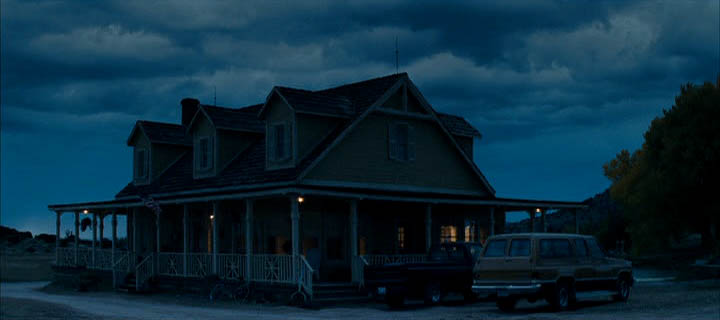
af28.jpg


Here I used a regular soft-edge ND.60 grad:
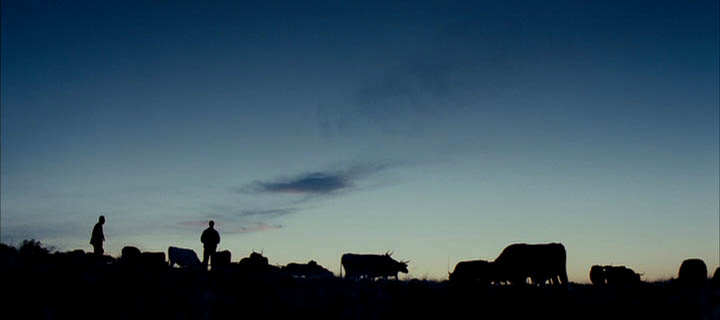
af29.jpg
 
David,
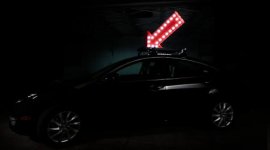
Thanks again for the helpful information. Due to a tight budget, I was only able to secure a 12x with two 1k open faces, and borrowed an Arri kit. The client really wanted the lighting to look like it was coming from the arrow, so this is what I was able to come up with. Thanks again! ~Dean
 

Attachments

  • Screen Shot 2012-05-30 at 2.28.54 PM.jpg
    Screen Shot 2012-05-30 at 2.28.54 PM.jpg
    8.3 KB · Views: 0
Still Lenses vs. Cine Lenses - FOV

Still Lenses vs. Cine Lenses - FOV

Would you mind clearing up a question I have concerning field of view with various lenses.

For instance if you have two cameras with equivalent sensors and you placed a 35mm still lens on one and a 35mm cine lens on the other, would there be any difference in field of view? Or is it simply whether the lens could cover a certain sensor? What about a 16mm camera with a 16mm cine lens that has a focal length of 35mm stacked alongside a 35mm film camera with a 35mm lens?

Thanks!
 
Two different 35mm lenses should give the same field of view on different cameras with the same sized sensor and recorded areas. A 35mm is a 35mm. What may be different is the lens coverage -- a 35mm designed for a APS-C camera may vignette on a FF35 camera. A 35mm lens designed for a 16mm camera may vignette on a 35mm film camera. Though with longer focal lengths, often there is a larger image circle projected so sometimes you can get away with it.
 
In general, I don't see much use for warming filters like Corals. I started using them in film but found that when it came time to do the answer print, the timer would start out with a neutral image (taking out the Coral effect) and I'd just end up trying to find a combination of printer lights anyway to get back that warmth. So since it was so easy to time a shot warmer, I started carrying pale blue filters instead and shot just the grey scale with the blue filter so once timed to neutral for dailies, the following scene (with the blue filter removed) would have a warm tint. Then I didn't have to shoot the scenes themselves with an extra piece of glass on the camera.

And particularly with digital cameras, which are less noisy in bluer light, I just dial in a color temp that is a little higher than the scene itself if I want a warmer cast (like selecting 3700K or 4000K on the camera when in 3200K light.) So the only reason to carry Corals would be if you were outside in daylight and even setting the camera to 7000 Kelvin didn't produce the level of warmth you wanted. If this were for a western or other period movie, I'm more likely to try Chocolate filters in that situation since it is a color cast that is harder to achieve just by changing the color temp. But even then, sepia-brown is really mostly just orange minus color saturation plus a little magenta maybe.
 
Last edited:
Hi David,

I enjoy reading your replies both here and at Roger's site. I was curious what your answer would be to this lighting question. If you had to produce what essentially appears to be a black and white or very muted / desaturated scene with selected areas in full color, and you were restricted to doing it with lighting and gels alone, how would you proceed ? I know this can be done easily with digital manipulation but I'm interested in an in camera effect.

I was thinking that some sort of gelled monochromatic light for the overall illumination and then spotted full spectrum for the color areas but I'm not sure what color would appear most colorless. Your thoughts would be greatly appreciated.
 
I don't think it can be done well in-camera other than through art direction, actually making the monochromatic areas actually monochromatic in design. The trouble with using a partial spectrum light source for the desaturated areas is that you'd record less color information, true, but you'd have a strong color cast to time out in post and that would cause the areas lit with full spectrum light to be shifted as well, unless you start playing around with color keys and separate windows in post... and then you're back to doing it in post.

The best approach would be:

1) art direct for the effect

combined with:

2) light the area to be desaturated in a strong color like blue or green so that it can be color keyed in post and corrected separately from the normal color area (which hopefully doesn't have blue or green in it unless you want to isolate it with a window.) Yes, a partial spectrum source for the colored area may help because it would not record as many colors -- the most extreme example would be to use green screen or blue screen Kino tubes, because they put out such a narrow spectrum of color. In fact, almost to what you are talking about, I once lit a red-painted room with blue screen Kino tubes for a blue neon effect on the faces, and the red walls went grey under the blue screen tube light.

Now if you can do it all with art direction then I wouldn't bother with the colored light idea for the desaturated area, just use white light for everything.
 
Thank you for your answer David,

While not the exact effect I'm after, I was just wondering if you know any of the details on the transition sequence in the Wizard of Oz, when they went from B/W to color. I know the transition shot was not a pure B/W but rather a sepia. There was also a door to help isolate the transition boundaries . Was that a lighting effect or did Technicolor do some sort of optical isolation to aid the effect in post.
 
From Wikipedia:
...the inside of the farm house was painted sepia, and when Dorothy opens the door, it is not Garland but her stand-in, Bobbie Koshay, wearing a sepia gingham dress, who then backs out of frame; once the camera moves through the door, Garland steps back into frame in her bright blue gingham dress (as noted in DVD extras), and the sepia-painted door briefly tints her with the same color before she emerges from the house's shadow, into the bright glare of the Technicolor lighting.

Look at the end of the clip:
http://m.youtube.com/watch?v=WhQySxqSANU

So it's basically art direction, a sepia set and a stand-in all in sepia opens a sepia door to reveal the color set and then Judy Garland in her color dress steps into the frame.
 
Hey David, nice meeting you briefly at the expo, really appreciate all you do here, hope to see you again.

Best.
 
Hey David,

Again thank you for your answers. As you say , in camera, it is primarily a matter of art direction . I suspect digital intervention would probably be the easiest route these days.
 
It's always best to do as much with art direction, costume, make-up, etc. as you can to create the color effect you want, plus lighting of course, because then the end product will look less digitally manipulated. But sometimes if a specific digital effect is needed, you have to design the shot around making that possible. Depends on how stylized the effect is supposed to be, versus how natural.
 
Hi David
I know an 80-series filter such as 80C is useful for balancing color temp closer to Red's native temp. For that reason, I use these indoors.
My question is, does the 80C also help reduce the Blue-channel noise inherent in Red's sensor, or does it make it worse - (assuming all else equal and there is available light to compensate for the lost stop of light)?

Thanks.
 
Apologies for the lengthy post.

I'm lighting a set with an ancient middle eastern aesthetic. I'm hoping to create strong shafts of evening sunlight pouring through grated windows. The camera will pass through these beams. Given the lack of space outside the latticework, I was planning on using number of smaller units to individually punch through each window. Furthermore, I'm hoping to light the main talent using oil lamps of the time period (with supplemental lights if necessary) and don't want to overwhelm the firelight.

That said, are there units you would strongly advise using for the beams. (Was considering ganging 2k molebeam projectors or if possible, I'd love to save the money and use Mighty Moles. Would lekos work in this case, as I own a number of those?) If I have to use mirrors for the "sunlight" I imagine lekos or fresnels would be my best bet?

Will be shooting with the Epic for its dynamic range.

As always, your posts are a wellspring of knowledge. Wish we had some way of giving back. Thanks!

Stage set or location? If location, shot at night or during the day? If during the day how much real daylight do you have to deal with?
 
Hi David
I know an 80-series filter such as 80C is useful for balancing color temp closer to Red's native temp. For that reason, I use these indoors.
My question is, does the 80C also help reduce the Blue-channel noise inherent in Red's sensor, or does it make it worse - (assuming all else equal and there is available light to compensate for the lost stop of light)?

Thanks.

Yes, a blue filter like the 80C will reduce the noise in the blue channel if you can compensate for the light loss from the filter, which is actually cutting back on the opposite color wavelengths so that the blue channel is more equal or balanced, but the noise is improved only if you then compensate for the exposure loss from the filter.

However I don't think the blue channel is that noisy any more on the MX sensor, I'd only bother with the 80C for chroma key work or whenever you need a cleaner blue channel.
 
Back
Top