Welcome to our community

Be a part of something great, join today!

  • Hey all, just changed over the backend after 15 years I figured time to give it a bit of an update, its probably gonna be a bit weird for most of you and i am sure there is a few bugs to work out but it should kinda work the same as before... hopefully :)

3D / INDIE ?

Jeffrey T. Morgan

Well-known member
Joined
Oct 30, 2007
Messages
750
Reaction score
0
Points
0
Location
Michigan
Alright, I am not sure how to preface this post, so I am going to jump to the questions first. Please chime in with any help you have to offer! This isn't the place for hating or loving 3D, this is some nuts and bolts kind of thought... I think.


PULLING FOCUS - As a 3D outsider, my understanding of focusing a 3D rig is that, not only would both lenses have to have perfectly identical motors and response, but they would have to change at least convergence on the fly, if not interocular distance. Is that right? It really seems that with 3D, having a subject walk from far to near is more problematic. Better to dolly with a moving subject or just cut from wide to close. What is right and wrong about that bunch of guesswork?

I love the use of focus to guide an audiences eye without cutting, but I guess I can let it go... if I have to?

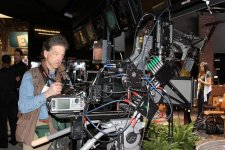
REDICULOUSLY EXPENSIVE AND HEAVY RIGS - Who I am and how I live in the indie world is moving between shots fast, finding moments intuitively, and moving the camera. Its seems that rigs like the Element Technica rigs are freaking ginormous, cost way more than one would think, and add 30+ lbs to a 2 camera rig.

I think what I am looking for in the end is input on simple, affordable, manageable rigs that can be handled by one person (at least in theory) and are not impossible or inconceivable to go handheld with.

To go further, side by side gets a lot less heavy, a lot more affordable, but how far does the subject need to be away lest the interocular become a problem with a side by side? I can easily wrap my head around a 2 epic rig on a side by side system. When you move into those other rigs, it feels you are either stuck to static tripod shots or super expensive and powerful cranes / etc.

SO in short, while I love ACs and rental houses, what have people found or thought about super simple and manageable rigs? Imagine a scenario where its just a cinematographer and a subject who need some b-roll of walking in the woods... can 3D reasonably allow this?


After wading through my thoughts, I think I can say I am half into this world, but in all my research, I don't hear many people talking about the translation of certain cinematic languages to the 3D world. Especially when framed in a modestly budgeted world.

On the other hand, I think if 3D wants to really survive, it needs to be much more accessible. And maybe it is, but if anyone understands this rambling email and wants to help illuminate this awkward middle ground, I would love to hear about it! Thanks.
 

Attachments

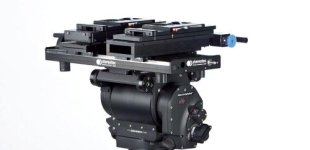
  • STEREOTEC.jpg
    STEREOTEC.jpg
    30.7 KB · Views: 0
  • ET.jpg
    ET.jpg
    86.4 KB · Views: 0
Quick reply, pulling focus, yes both lenses have to be in sync, no you don't necessarily have to pull convergence and IO with focus, it can be really bad to do so, it can also be useful!!

As for size/weight, well you've got 2 cameras to start with so that doubles it, then you have to have some way to combine them.

The rig has to be stable, that means heavy or expensive, you can have one or the other!

Or you can go for a very limited rig as I did with Dark Country and then on numerous commercials/TV station promos.

The simplest rig is probably the DC rig with SI's, I'd love to have similar rig with Scarlets!!

Download my survival gudei, there's a link on my website :-)
 
Hi,

I'll try to answer your questions.

Focusing in S3d:
- You don't need to change interaxial or convergence when focusing on s3d.
- You need 2 lenses that are matched pairs for S3D (lenses that were built for use in S3d). If you want to be 'fast' on set, it will be best to use a Zoom lens that are matched for s3d.
- For focusing you will need a motor that will focus both lenses at the same time. (you probably know this already)

Indie S3D:
- Stereo is slower than a 'normal' 2d movie. You have to take into account a lot of things when shooting.
- It takes time to align the cameras on the Rig. (there are a few rigs that can do this for you and only take up a few minutes but they are more expensive).
- There are 'cheap' rigs (but not motorized) and light enough to be handheld.
- Now days there's a lot of rigs that are really light (Atom, Neutron, TS-5, PS Technik Freestyle etc).

When using a side-by-side rig, as you mentioned, the nearest object will have to be farther away than if it was on a beam splitter rig. This is because the interaxial distance is bigger. But there's no way to tell how much the object has to be far from camera because you need to take into account: interaxial distance, convergence, what lens you're using, distance from nearest object, distance from farthest object, where do you want the screen plane to be (if its converged), what size is the maximum screen size that it will be showed.

Stereo movies need to have more time to prepare the rig, the scene, the blocking etc. If you have moving camera, with moving IA and Convergence than you need even more time to take all of it into account.
The only way to have a faster s3d set, is to work with people that have already worked with s3d before. This is the only way you can be fast/flexible, IMO.

And the biggest problem with s3d is that if you make your s3d wrong, besides that it cost so much money on post-production to try to correct (and some shots cannot be corrected, then need to do 2d-3d conversion), you will make your audience feel 'sick' (all the problems that people say about s3d). And that's the main reason why s3d should be really well planned.

My best bet is if you want to make some indie film, and want the s3d too be good and not fail, don't be cheap in the s3d part and hire some good stereographer and some cinematographer that have worked with s3d before, and a plus is to hire at least the a camera crew that already know s3d.
 
Last edited:
My question is, why S3D? Will you be able to show it in 3D in many theaters? It seems to me that the majors have a lock on the 3D screens in the US (except for the occasional 3D indie like Cave of Forgotten Dreams), and Blu-Ray 3D is a niche market.
 
ok Jeff;

Before I respond specifically, let me quickly say this; PREP IS EVERYTHING. PREP IS EVERYTHING. If you want to be fast and mobile in production, it's all dependent on your crew knowing the gear like the back of their hands. Experience is everything to be able to do this. A year ago, when I'd have a focus issue, both the trouble shooting as well as the soulutions took time to figure out, which costed production time. But now having been through a dozen variables of the same problem, me and my team can quickly resolve any issue, if not keep it hidden altogether. And without knowing these problems, it's hard to foresee them in prep. So, again, an experienced crew and prep is what will make your production run.

Pulling focus looks like it's been covered already. Again, backfocus being checked, and checked again will save your life. Zooms can make your production run quicker, but if your crew doesn't know how to perfectly track zooms, then zooms will quickly slow you down. If you have the budget to pick and choose lens sets (have multiple primes to go through and pick the best match), then hooray, but if you rent two sets of primes and HAVE to make them work, chances are you crew can. There could be very subtle FOV differences that would have to be fixed in post, but again, it's knowing this before hand, and you know which shots will have to be fixed.

The lighter the rig, the more flex and torsion you could encounter. Non rig manufactureer wants to announce their rigs have short comings, so hopefully whoever you get the rig(s) from will be honest in announcing what the rig is good, and not so good for.

Affordable? The cheaper rigs are cheaper for a reason, so if you want more problems in post to conserve money in production, then research research. You can definitely shoot 3D on a budget, but by doing this you risk shooting bad 3D. So, I'd honestly say an experienced crew can help give a better project with shitty 3D gear, than spending the money on the most expensive gear being handled by inexperienced technicians. I'm not advocating that by any means, but if you want to shoot an Indie in 3D, expect to run slower, move a bit slower, but to focus on your crew because you'd be amazing what experience means in 3D. This goes for the stereographer, Rig Techs, DIT, and AC's.

And shooting S/S isn't realistic for a feature. The larger screen you're shooting for (theatre screens) means smaller IO's, chances are too small for any S/S rig. Obviously certain situations there could be a use for a S/S rig, but very very rare.

We shot an Indie 3D Feature back in March-April, entitled "Hellbenders". There's threads and articles all over the web on the production and post workflow for an Indie 3D feature.
 
Hey Guys!

Thanks for jumping in with such thorough responses. Here is where I am at so far:

My team is a mix of really talented and smart and professional filmmakers who I know and trust - they are going to be mixed in with some real 3D pros (maybe from here!) to help me along.

Notably I am teamed up with IE Effects ( www.ieeffects.com ) who have done 3D post on Green Lantern, Harry Potter 8 and more. They have an office here in Traverse City. They will be helping me shoot a TON of tests, create 3D storyboards for the whole movie, and will likely provide a Stereographer and VFX supervisor on set. We have been having a lot of great talks, and the sentiments expressed here echo what we have been saying.

We are keeping things conservative / comfy 3d. Not shooting s/s, unless for a real wide shot.

There actually is a reasonable chance of going theatrical with this, from the research I have been doing. I don't need every 3D screen in america, just one major cites. And the distributors who I have been talking to say, if the 3D is good, its a worthwhile investment for them to go theatrical. That said, our finances are not dependent on theatrical to make money.

3D bluray is far from a niche market. You have to think a little bigger picture. The projections of the number of homes with 3D televisions / iPad 3/ 3D Computer screens are pretty impressive, not to mention Youtube, iTunes, Cable and Satellite channels, many that are starving for 3D content. A few years from now the gap will be filled, but not yet.

It really is quite the cold-hard business decision, and I am looking at it like any new tool. SO again, I am very grateful for the help thus far!

The fully motorized ET and 3ality rigs are probably out of my range, but i have come across a few interesting ones that I would love feedback on?:

3d film factory: http://tinyurl.com/3mxy9s6

Gens Hurricane: http://tinyurl.com/3vocoep

of course the P+S Freestyle, Atom and TS-5... but i will have to most likely forgo the fully motorized / hooked to a truck for automation approach.

I plan to take a road trip checking out the rigs I narrow it down to, to try my best to ensure the best quality on a non-motorized rig.

Last thing: LENSES. I have currently narrowed my choices down to a few options. At the moment I am leaning most heavily toward the Illumina Lenses. Buying 2 sets off the same production run, that I go and pick up and test myself for matching, etc. I am still looking at RPP, but I have pretty much given up on the ZEISS CP2's, because of the comparatively slow speeds, inconsistant speed, etc. The RPP are heavy and not as fast as Illuminas. And given the 1 stop loss of shooting through the mirror, in that "around 30k" range, I am looking at those. I hope to rent a b rig for 2 weeks for action scenes, and just use whatever the a cam isn;t using, meaning if A cam is on 50mm's, then B is on 35mm's or 85mm's from the same set.


Please feel free to poke holes at my plan, I appreciate all the help I can get!


Where can I see Hellbenders??
 
Plates

Plates

I would intentionally shoot "plate" shots from each camera setup in case something goes wrong with the convergence or IO so you can green screen the actors back in with a quick re-shoot without the need to return or rebuild the original set or location. It only takes a few seconds to tell everyone to move out of the camera's view and roll a minute of background plate in 3D. You can then adjust the plate to some degree, or if needed or do 2D to 3D conversion only on one eye of the plate, and the matte the green screen re-shoot of the S3D actors over the fixed up "plate" L and R.

If you avoid showing shadows of the actors on the backgrounds, then its easier to matte the actors in later.
 
Dan,

that is very interesting advice! Definitely good if you are unsure about the shot at the moment. thanks
 
Please feel free to contact us at Daufenbach Camera for a quote on our indie 3D camera equipment package. We are the only rental house in the Midwest offering s3d camera solutions, and we have a satellite office in Kalamazoo that qualifies for the Michigan tax incentives. We have Red Epics, Scarlets, and Red Ones, matched 3D lens, Element Technica 3D rigs, Cmotion lens control systems, and passive 3D monitors for rental at great rates. Our office line is (312) 226-0042, or find out more at http://www.daufenbachcamera.com/3d_productionpackage.php

- John Waterman
 
Personally I think the Lytro solution will be the next step for 3D / stereo footage. Then it's back to one camera and post processing to get the 3D out of one sensor. It is very possible with todays high pixel count of the epic and the 3ality rigs are very good today. But we will soon look at them as we now look at pictures of the first computers and such... What now is a big hardly possible to put on the shoulder will tomorrow be a something that is fitted between lens and sensor. This development is just in it's start and will go very fast when hollywood is no longer satisfied with the big 3D rigs as they are today.
 
that and 3D productions are now running smoother than 24 months ago, and even 12 months ago. Now the crews are on their 2nd, 3rd (some of us well beyond that) features, and the inexperience that were slowing productions down, are seriously diminishing.

That and the crew positions are constantly morphing and adapting. Large productions will continue to crew up every 3D position, but the smaller budget productions/indies can double-up and get by.
 
I would intentionally shoot "plate" shots from each camera setup in case something goes wrong with the convergence or IO so you can green screen the actors back in with a quick re-shoot without the need to return or rebuild the original set or location. It only takes a few seconds to tell everyone to move out of the camera's view and roll a minute of background plate in 3D. You can then adjust the plate to some degree, or if needed or do 2D to 3D conversion only on one eye of the plate, and the matte the green screen re-shoot of the S3D actors over the fixed up "plate" L and R.

If you avoid showing shadows of the actors on the backgrounds, then its easier to matte the actors in later.

Dan,

that is very interesting advice! Definitely good if you are unsure about the shot at the moment. thanks

+1.
 
Back
Top