Welcome to our community

Be a part of something great, join today!

  • Hey all, just changed over the backend after 15 years I figured time to give it a bit of an update, its probably gonna be a bit weird for most of you and i am sure there is a few bugs to work out but it should kinda work the same as before... hopefully :)

Canon R5C Lens Flare reflecting sensor onto image

Joe Walker

Well-known member
Joined
Dec 28, 2006
Messages
218
Reaction score
1
Points
18
Age
46
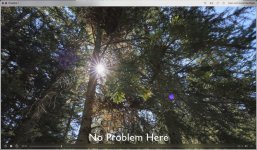
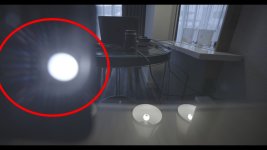
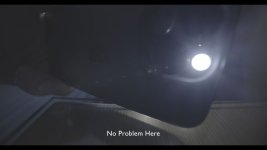
I just purchased a Canon R5C and I've noticed that at certain particular angles with hard lens flare, it appears that the sensor is reflected into the image. It does it whether shooting video in 8k, 4k, 2k, 1080p. All of this on Canon 14-35mm RF and 35mm RF lenses. This does NOT show up when shooting stills however. Is this normal or something that I should have looked at? Just let me know. Pics are attached.
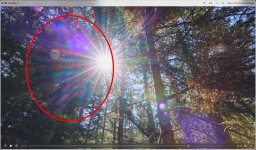
 

Attachments

  • Screenshot 2024-09-18 at 6.23.26 PM.jpg
    Screenshot 2024-09-18 at 6.23.26 PM.jpg
    172 KB · Views: 26
  • Screenshot 2024-09-18 at 6.23.10 PM.jpg
    Screenshot 2024-09-18 at 6.23.10 PM.jpg
    182.9 KB · Views: 23
  • Still 2024-09-18 182146_1.90.jpg
    Still 2024-09-18 182146_1.90.jpg
    55.8 KB · Views: 19
  • Still 2024-09-18 182217_1.90.1.jpg
    Still 2024-09-18 182217_1.90.1.jpg
    37.9 KB · Views: 20
Yikes! I would definitely get that looked at or just simply return it and try another one. If the right side doesn't show anything then that must mean something has shifted internally or maybe the sensor filtration was applied just slightly off? Not sure but, yeah, send it in or return it and if the next one has it then the R5C clearly has a flaw or there is a bad batch of cameras floating around.
 
Yikes! I would definitely get that looked at or just simply return it and try another one. If the right side doesn't show anything then that must mean something has shifted internally or maybe the sensor filtration was applied just slightly off? Not sure but, yeah, send it in or return it and if the next one has it then the R5C clearly has a flaw or there is a bad batch of cameras floating around.
The response I got from a canon representative was the following, “
Hello,

Some lens flare is normal at particular angles as you mentioned with bright light like the sun in your examples. Adjusting the aperture of your lens can help reduce the amount of light that enters the lens, which can help reduce or eliminate light flares.”

Sigh. Ugh.
 
Wait until you test all the mirrorless cameras and various lenses out there. Very exciting.
 
There is currently no sensor I’m aware of that absorbs all light hitting it and doesn’t mirror any light back. It’s just more or less light and at different angles with different scattering/diffusion factors, more likely to occur with certain lens types, flange distance etc. If the lens rear element is close to the sensor and has a large diameter, it’s more likely that the sensor reflected light partially meets the rear lens element and from there back to the sensor again, than with a deep rear tube and small rear lens elements as in some teles. Canon lens examples are the 50 or 85mm 1.2 lenses where I found it easy to provoke such an effect.

I can’t come up with a good explanation though why this effect would be different for stills shots if everything else is set the same.
 
I can't think of an optical reason for a difference either.

I think they might just mean the effect is more likely to be noticed when an image is in motion than when it's a static still shot, and perhaps could be conssidered less of a problem if it can be more easily dealt with by changing the camera angle, or painted out or corrected with post-processing, if it's a still frame rather than a moving image.

Sorry to the OP for their experience with the R5C, but it reminds me again how glad I am there are dedicated motion-image capturing cameras like RED's, where they do have to prioritize dealing with issues like this. Like they did with their own red orb issue in the past.
 
Last edited:
The optical reasons for the variance comes down to aperture and focus distance as well as focal length/lens design. Smaller aperture with a point source like the sun, particularly focused further away and likely also enhanced by a wider angle optic will create the most chaos. Wider open, with a longer focal length, less issues.

There are also interesting happenings at various focal distances and dependent on the proximity and intensity of the light source itself.

This is extremely common on mirrorless cameras and has been for a long time.

Fun things to test, and by fun I mean frustrating, rack focus with a point source in frame positioned at various distances and apertures.

For those in the RED world, DSCM3 cameras have a fairly aggressive filter stack, the CSF (Color Science Filter), that combats against a lot of this now. For long time shooters, those magenta orbs when stopped down on say DSMC and DSMC2 bodies is along the same lines as this, particularly when the Low Light Optimized OLPF was used.

The general optical phenomenon comes down to light intensity, the path of the light rays (relevant to the design of the lens, focal length, aperture, focus distance), and the reflectivity of the photosites against the optical stack and even the sensor coverglass.
This has been the most informative and thoughtful reply yet. Thank you!
 
Yeah, thanks Phil for describing the different factors involved in the causing of the sensor-reflection effect.

I misuderstood the reply from Canon to be confirming the effect can be avoided by shooting in stills instead of video mode, like was stated in the first post. But they're just talking about the same kinds of causes and preventions as Phil has mentioned.

I'm still left wondering though if there is in fact some kind of internal processing or mechanical or optical factor that could make a difference to the appearance of the effect, just by switching between shooting in stills and video mode, if all other variables and settings remain the same (same camera body, lens, light source, image-size etc.).
 
Back
Top