Welcome to our community

Be a part of something great, join today!

  • Hey all, just changed over the backend after 15 years I figured time to give it a bit of an update, its probably gonna be a bit weird for most of you and i am sure there is a few bugs to work out but it should kinda work the same as before... hopefully :)

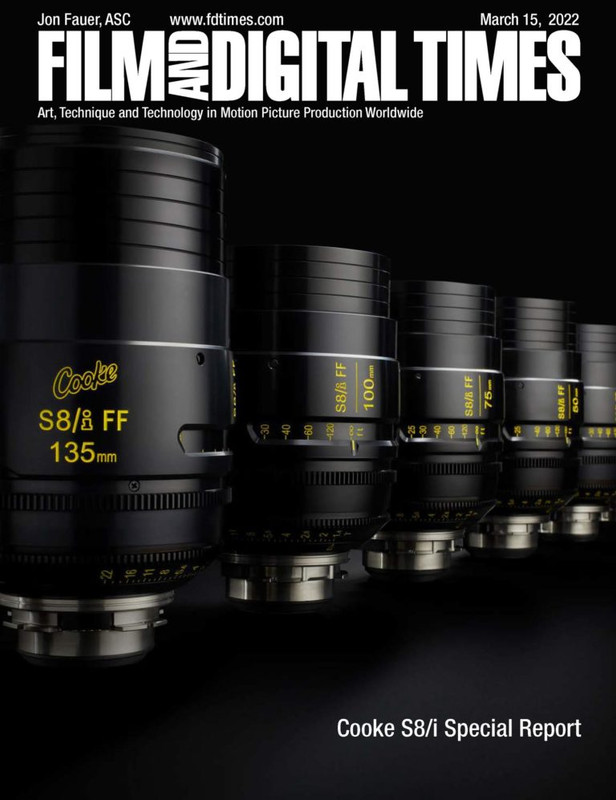
Cooke S8/i T1.4 Full Frame Primes

.. fascinating announcement! (I had heard the odd rumour)

I really admire a lens company starting a Cine FF spherical lens project with

much lower line pair target than the usual 200 lp/mm nonsense..

No Aspherical elements

T1.4

Ian Neil

Well done Cooke!

I feel the world doesn't need any more crisp photographic lenses as we def have enough... I hope these work out!

PS and the weight doesn't look bad either... I think they are lighter than Panaspeeds?
 
Love the design philosophy of the S8/i lenses. Props to Kees, Iain, and their team at Cooke for their willingness to pursue a fundamentally different optical formula.

FWIW, I think their focus on digital sensors is spot on, particularly better telecentricity. Excited to take them for a spin!

Cheers - #19
 
Love the design philosophy of the S8/i lenses. Props to Kees, Iain, and their team at Cooke for their willingness to pursue a fundamentally different optical formula.

FWIW, I think their focus on digital sensors is spot on, particularly better telecentricity. Excited to take them for a spin!

Cheers - #19

Where did you read about telecentricity?

Which cine lenses are least telecentric? Assuming (vintage) wide angle non-retrofocus designs so 28mm Kinoptic, 32mm Cooke, 32mm standard speed, 28mm Cine-Xenon, etc?

What impact does this have on the image? Is it mitigated by larger photo sites (Alexa, FX6, etc.)?
 
Where did you read about telecentricity?

Which cine lenses are least telecentric? Assuming (vintage) wide angle non-retrofocus designs so 28mm Kinoptic, 32mm Cooke, 32mm standard speed, 28mm Cine-Xenon, etc?

What impact does this have on the image? Is it mitigated by larger photo sites (Alexa, FX6, etc.)?


From the attached FDTimes interview with Ian: Furthermore, in designing spherical lenses, you can produce a near telecentric output of the light rays that is nice for the sensor. It makes the sensor efficient. Remember that Cooke has a long history of making lenses for film, and then film plus digital. But now, we’re talking about the new S8/i lenses where the emphasis is on digital, but you can still use them for film and on PL mount Super 35 reflex film cameras. So, we want to minimize lateral color or color fringing, (not on-axis, but around the picture) and reduce it almost to the point where there’s none. You can do all this with spherical lenses."

The lion share of digital cinema camera sensors are designed with photo sites that enjoy the taste of telecentric light rays. I'd dare say even film to a degree, but I'll leave that opinion blowing in the wind for a bit.

The other side benefits of telecentric designs are typically a lens that exhibits less breathing. Or more on the nose, they are typically better at keeping a constant magnification when focusing. This particular feature is something some look for or don't. I tend to lean on more telecentric glass because I'm a composition nut and don't want things to move or grow if I can avoid them during a focus rack. Especially on setups with numerous marks.

Ian's note regarding fringing is pretty relevant to not just the chromatic aberration but things that might muddy up the bokeh/out of focus image with fringing as well.

Won't put words into Cooke's mouth, but I would expect these to have really lovely bokeh due to polishing the spherical elements nicely. I would hope so at this particular price point. If I had to bet, lens flares will be nice too. Excited for Cooke to come back into the party with a high speed set too. T1.4 is an accomplishment here. The catseye bokeh will be both something of a fingerprint when using these optics.

Big, big fan of the s4 primes from way back, enjoyed the more recent s7 and anamorphics, but I suspect this will be much more of a statement set for Cooke much like the s4 primes were/are.
 
From the attached FDTimes interview with Ian: Furthermore, in designing spherical lenses, you can produce a near telecentric output of the light rays that is nice for the sensor. It makes the sensor efficient. Remember that Cooke has a long history of making lenses for film, and then film plus digital. But now, we’re talking about the new S8/i lenses where the emphasis is on digital, but you can still use them for film and on PL mount Super 35 reflex film cameras. So, we want to minimize lateral color or color fringing, (not on-axis, but around the picture) and reduce it almost to the point where there’s none. You can do all this with spherical lenses."

The lion share of digital cinema camera sensors are designed with photo sites that enjoy the taste of telecentric light rays. I'd dare say even film to a degree, but I'll leave that opinion blowing in the wind for a bit.

The other side benefits of telecentric designs are typically a lens that exhibits less breathing. Or more on the nose, they are typically better at keeping a constant magnification when focusing. This particular feature is something some look for or don't. I tend to lean on more telecentric glass because I'm a composition nut and don't want things to move or grow if I can avoid them during a focus rack. Especially on setups with numerous marks.

Ian's note regarding fringing is pretty relevant to not just the chromatic aberration but things that might muddy up the bokeh/out of focus image with fringing as well.

Won't put words into Cooke's mouth, but I would expect these to have really lovely bokeh due to polishing the spherical elements nicely. I would hope so at this particular price point. If I had to bet, lens flares will be nice too. Excited for Cooke to come back into the party with a high speed set too. T1.4 is an accomplishment here. The catseye bokeh will be both something of a fingerprint when using these optics.

Big, big fan of the s4 primes from way back, enjoyed the more recent s7 and anamorphics, but I suspect this will be much more of a statement set for Cooke much like the s4 primes were/are.

Hey Phil how do the Sigmas stack up for spherical glass that's telecentric, and designed for sensors? I'm sure not at the level of these Cookes, but are they still above average, and on trend?

Just curious. I think they are remarkable glass for the price, and always like to hear opinions on them.
 
Hey Phil how do the Sigmas stack up for spherical glass that's telecentric, and designed for sensors? I'm sure not at the level of these Cookes, but are they still above average, and on trend?

Just curious. I think they are remarkable glass for the price, and always like to hear opinions on them.

Sigma Cine feature Aspherical Elements and depending on the focal length range from semi-telecentric to fairly telecentric, their breathing performance isn't too consistent across the set, but it's also not the worst culprit for breathing. Somewhat similar to the Zeiss Supremes in that way. The hardware Sigma invented to create the aspherical elements in the 14mm for instance is a technical accomplishment.

I agree, the Sigma Cine line punches well above it's weight when it comes to performance and character really. I own a full set myself.

Tokinas are designed from the ground up to be telecentric cinema primes and are pretty much industry leaders when it comes to minimal to nearly no breathing when racking focus. Arri Signatures are in that conversation too. Until I test the Cooke s8i primes I won't know exactly where they land in this conversation, but it sounds like this was a consideration.

I'm hoping this doesn't become some sort of spherical versus aspherical moment in people's minds because aspherical designs done well are absolute masterpieces. A very good example is the Leica Summilux-C Primes which do feature aspherical designs and are some of the best S35 lenses ever created. Optical designs as a whole can lead to different results. But as Cooke has mentioned, aspherical glass is very difficult to make or "have made". Because of the unique shapes of aspherical elements they don't polish down well, so to get nice bokeh off them you better build them right otherwise you get some funky bokeh.

What I will say about the s8i just given the sample imagery shown thus far is they will have a standout unique look compared to other glass available in this space. This has always been somewhat the Cooke way to a degree. They showed a lot of wide open grabs, which look nice and the optics are performing well, but I want to see what that iris shape yields stopped down because it will certainly look different. Likely fairly different around T2.8.
 
What is the effect of a telecentric design other than a lack of breathing?

Less vignetting? Less curvature of field? No off-color images in the periphery?

http://aboutphotography-tomgrill.blogspot.com/2014/01/sony-a7r-with-leica-m-lenses-hands-on.html

There's extensive knowledge, notes, and more spanning many years here on REDuser and this is one aspect of things I should have worked on organizing more properly perhaps over the years. But between extensive collaboration between manufacturers, optical designers, lens service providers, and many lens tests it's revealed and even uncovered much.

But the cliff notes are you are shooting light rays into photo sites with micro-lenses. Ideally you want those going as straight as possible for a variety of reasons whether a Low Pass/Anti-Aliasing Filter or whatever other Optical Filters are involved in the stack is involved or not.

If you look back to my Leica-M notes, particularly issues on the wides, there's lots of information about color fringing, discolored vignette, enhanced artifacts across field, and the awful impact of bucket skipping ruining potential captured detail and at worse smearing color. And it's important to understand we're discussing image quality across the entire frame in regards to all of this. Most quality cinema glass is somewhere between semi-telecentric and very telecentric minus some retro/vintage stuff that gets explored here and there. Reputable manufacturers all know about this and how it can impact the image quality, character, and artifacts. But optics are a balancing act between cost, size, weight, and other practical considerations. Even expensive glass. Interestingly this is where we find a lot of the charm in some of the designs as well when it comes to character sometimes.

The fringing referenced in the article is likely referring to lateral and axial chromatic aberrations and spending extra time in optimizing the design of the spherical elements to keep that at a minimum in highlights, high contrast edges, and also in the bokeh itself as the separation manifests there as well.

Aspherical glass is rather complicated to make, but one thing that manufacturers have done recently is creating rather corrective and interestingly shaped aspherical designs to wrangle those light rays and help keep the designs a bit more compact. I need to double check my notes, but Supremes for instance feature aspherical glass in every focal length except for one if I recall correctly. Tokinas, every lens has aspherical. I believe Sigma too. Leica/Leitz as well depending on the set. But there's also plenty of spherical glass as well.

To keep things from getting confusing, you can have a telecentric lens that uses spherical or aspherical designs. Heck you can even have telecentric anamorphic, which is fairly rare.
 
Sigma Cine feature Aspherical Elements and depending on the focal length range from semi-telecentric to fairly telecentric, their breathing performance isn't too consistent across the set, but it's also not the worst culprit for breathing. Somewhat similar to the Zeiss Supremes in that way. The hardware Sigma invented to create the aspherical elements in the 14mm for instance is a technical accomplishment.

I agree, the Sigma Cine line punches well above it's weight when it comes to performance and character really. I own a full set myself.

Tokinas are designed from the ground up to be telecentric cinema primes and are pretty much industry leaders when it comes to minimal to nearly no breathing when racking focus. Arri Signatures are in that conversation too. Until I test the Cooke s8i primes I won't know exactly where they land in this conversation, but it sounds like this was a consideration.

I'm hoping this doesn't become some sort of spherical versus aspherical moment in people's minds because aspherical designs done well are absolute masterpieces. A very good example is the Leica Summilux-C Primes which do feature aspherical designs and are some of the best S35 lenses ever created. Optical designs as a whole can lead to different results. But as Cooke has mentioned, aspherical glass is very difficult to make or "have made". Because of the unique shapes of aspherical elements they don't polish down well, so to get nice bokeh off them you better build them right otherwise you get some funky bokeh.

What I will say about the s8i just given the sample imagery shown thus far is they will have a standout unique look compared to other glass available in this space. This has always been somewhat the Cooke way to a degree. They showed a lot of wide open grabs, which look nice and the optics are performing well, but I want to see what that iris shape yields stopped down because it will certainly look different. Likely fairly different around T2.8.

Thanks for this Phil.
 
I you want to check out how rear plane telicentric a lens is look in from the back to where the 'image' of the aperture is... if it is far away it is pretty teli-centric if it is close it is not! Often with Sumilux-C or Signature lenses the pupil is further away then the length of the lens...

PS the new Leitz FF primes are not as Teli-centric as the Signatures BUT are super clean and high performing so I think there are many ways to skin a cat and sensors are often more flexible than we give credit..
 
Digital sensors use micro lenses, which means that a less telecentric lens will not equally feed each photo site. To be clear, eliminating aspheric elements in the optical formula is not the only way to produce a telecentric lens. As Phil notes, using strictly spherical elements does make that goal easier to achieve when done correctly.

BTW, the last lens set that blew my mind was the Summilux-Cs, could the Cooke S8/is be the next jump?

Cheers - #19
 
I think they might be from the same designer but with a different look? (Different manufacturers, I know.)

Not trying to troll but do larger photo sites mean less issues with non-tele centric lenses? Like would a very dense sensor struggle more than a lower res one? I've never seen issues with Cooke S2s or whatever with an Alexa but I know there should be issues.
 
I think they might be from the same designer but with a different look? (Different manufacturers, I know.)

From my understanding a very different design brief...

Not trying to troll but do larger photo sites mean less issues with non-tele centric lenses? Like would a very dense sensor struggle more than a lower res one? I've never seen issues with Cooke S2s or whatever with an Alexa but I know there should be issues.

We bought Signature primes (which are very teli-centric... more than all the other FF primes I have tested!) and even though I can see some direct advantages I am less convinced than I was... There is even negatives in terms for certain types of reflections...

With the very non-telicentric lens I think it is a matter of degree... Super acute angles can def be difficult but actually most Red chips are pretty robust.

If you are looking for character lenses lots of the good stuff (in the spherical world) is not very tele-centric.. For example the Cooke Speed Panchros you mention look great on a Monstro or Dragon! I have just put together a set of Canon Range finder lenses in LPL from TLS and they look great! .. and again not teli-centric
 
From my understanding a very different design brief...


We bought Signature primes (which are very teli-centric... more than all the other FF primes I have tested!) and even though I can see some direct advantages I am less convinced than I was... There is even negatives in terms for certain types of reflections...

With the very non-telicentric lens I think it is a matter of degree... Super acute angles can def be difficult but actually most Red chips are pretty robust.

If you are looking for character lenses lots of the good stuff (in the spherical world) is not very tele-centric.. For example the Cooke Speed Panchros you mention look great on a Monstro or Dragon! I have just put together a set of Canon Range finder lenses in LPL from TLS and they look great! .. and again not teli-centric

Wish I could afford Canon rangefinder glass! How do you find the Alexa and S1H's sensor (if you have used them) for non-tele centric vintage lenses?

What are the advantages and disadvantages of a very telecentric design vs a very non-telecentric design? Not trying to politicize this – just curious.
 
advantages and disadvantages

Lots of deep discussion to dive into here. Light rays hitting the image plane in a fairly straight line can often achieve a more consistent draw across center frame, through field, and out to the edges. But not always. Truly depends on the design itself. Often telecentric lenses exhibit less breathing when adjusting focus, i.e. they don't "zoom much".

When lenses shoot out light rays at extreme angles photosite skipping, smearing, and interesting image artifacts can show up. Namely the dreaded colored, often magenta-ish cast, in the vignette. Looking closer at the image quality you'll often see some weird drawing out to the edges with low acutance. Of course stopping down can assist with improving this, but sometimes it's a bit crazy.

A good spherical design has some nice points. Namely grinding down and polishing the elements isn't too detrimental to the image quality and may result in a very smooth bokeh, that's not discussing the actual shape itself.

High quality aspherical lenses are costly to make and sometimes require literally inventing hardware to either cold press or mold the elements. Sometimes this relates to a low yield on the glass itself, which I have seen with my own eyes. Optical engineers will inspect the glass closely to ensure it's up to shape before placing it within a lens, but a tricky shaped aspherical certainly can warp or crack for instance.

Bringing up the Leica Summilux-C Primes, now Leitz Summilux-C Primes is a good conversation starter. At the time they featured some of the most bleeding edge aspherical designs which help kept their size way down. But that came at a cost. Interesting there were lots of interesting new aspherical lenses developed after that that perform great and equally hold their own place in the limelight. Tokina Cinema Vistas, Zeiss Otus, and Sigma Art/Cine.

Lower grade aspherical glass can lead to some interesting artifacts. Extreme onion skinning in the bokeh being one of them because you can't simply polish down a weird shaped lens without impacting it's optical performance. Simple concave/convex, i.e. spherical, you can to a degree before things get weird.

Lots of lenses and even lens sets may have an aspherical element involved to make a single focal length even happen. Some are completely designed around that concept. Spherical same deal.

They interesting thing is actually the quality leap over the decades in aspherical designs due to improved manufacturing methods, improved glass quality, and other factors. Take a look at say a 70's Canon FD aspherical lens versus something like what's found in a Sigma Art/Cine lens and that's a real big leap in quality.

Interestingly one of the more interesting factors today is the actual glass used in the lenses themselves. I haven't chatted too might about light dispersion and it's impact on image quality and micro-contrast, but boy is it relevant on higher resolution sensors. Using the best base glass for a lens comes at a fairly high cost however and that truly is a visible thing. I'm not talking windowed viewing in a browser window, I'm talking larger full screen display in home or at the theater. At the same time people are doing all sorts of things to soften up an image these days too. Just sort of depends on what you're after.
 
DCS @ NAB 2022 covers the Cooke Optics - S8/i and Varotal Zoom

by

Digital Cinema Society


Back
Top