Welcome to our community

Be a part of something great, join today!

  • Hey all, just changed over the backend after 15 years I figured time to give it a bit of an update, its probably gonna be a bit weird for most of you and i am sure there is a few bugs to work out but it should kinda work the same as before... hopefully :)

A look at anamorphics on the mx and the possibilities

ok we can agrue the pros and cons of anamorphic vs spheric all day and night. But what's more important is RED epic having monitoring features to handle 1.33 and 1.5 anamorphics
 
It's quite difficult to make a good 1.3 or 1.5 squeeze compared to x2 as the x2 is only to skip every second line.
 
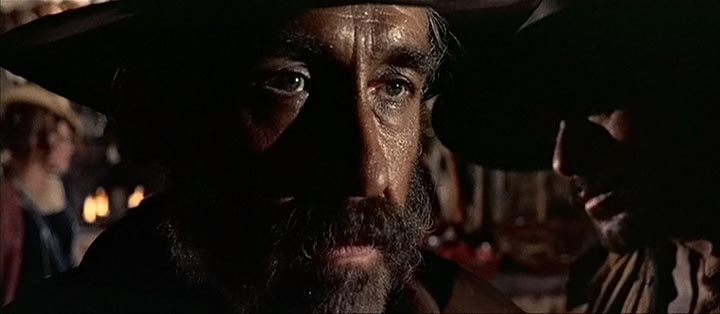
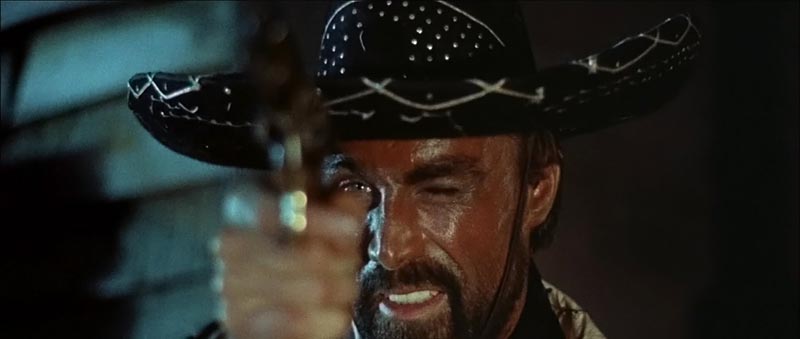
Thank you so much for all of this info, guys. What I don't understand though is why Leone's films have all the distinct characteristics of anamorphic qualities other than the shallower depth of field? It has the oval bokeh in what little shots are shallow and there's definitely anamorphic artifacts seemingly everywhere (as well as the distortion. They certainly don't look like the bottom shot in this comparison above, but is that really all just due to the film stock? It wasn't shot with any specialized lenses for this effect?

I mean I've seen Place Beyond the Pines and The Fighter as well as Suspiria and The Godfather and none of them seemed to have these characteristics to me. Leone's films were the first that really stood out to me visually and inspired me to produce my own look cinematagraphically.

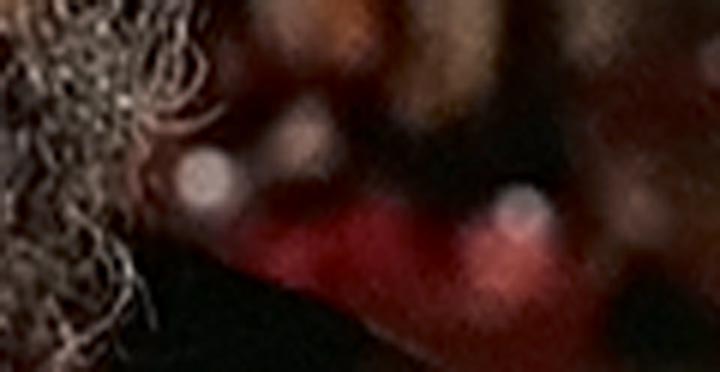
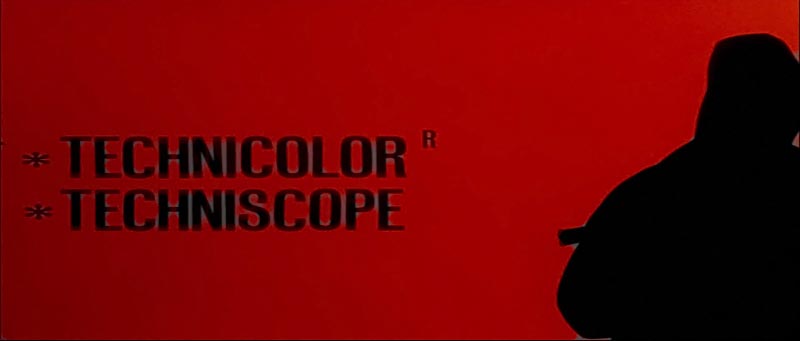
You'd have to post an example because I've never seen anamorphic lens artifacts in Leone's westerns -- they are quite famously shot in Techniscope and Techniscope used normal spherical lenses. I have a frame from "Once Upon a Time in the West" and you can see normal round bokeh in the out of focus lights:

oncetimewest1.jpg


oncetimewest2.jpg


Leone's early movies "Colossus of Rhodes" and "The Last Days of Pompeii" were shot in 35mm anamorphic ("Totalscope") but after that he did his famous westerns in 2-perf Techniscope, which was spherical.

I suspect the zoom lens was an Angenieux f/3.2 25mm-to-250mm, which was introduced in 1963.
 
Last edited:
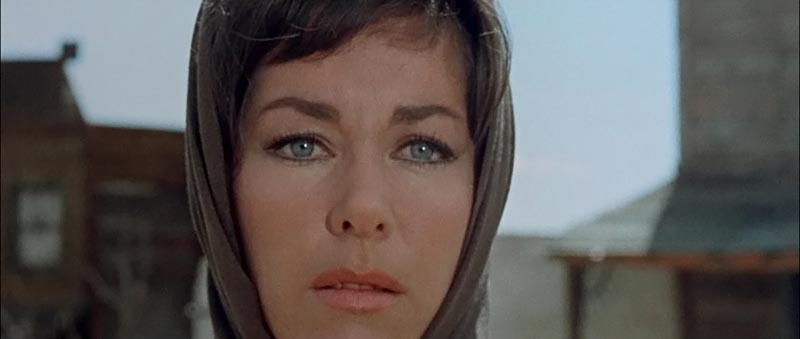
I just scrolled through my blu-ray of "Fistful of Dollars" and what was noticeable was the lack of anamorphic distortion -- almost no barrel distortion in particular bending verticals, no stretched bokeh, etc.

fistfull1.jpg


The bokeh is round outside in daytime:
fistfull2.jpg


Even in this low-light shot done wide-open, the bokeh is round:
fistfull3.jpg
 
My mind is blown. I honestly must have just been convincing myself this whole time that it was anamorphic when really it was simply Leone's own personal style that made it so different from everything else.

Thanks a bunch, David.
 
Thanks for pointing that out David.

Sergio Leone, couldn't afford anamorphic process. :undecided: He simply cropped the image. But like I said, it's all subjective. anamorphic vs spherical.
X2 vs 1.33 vs 1.5 - I am would love it if those options were available to me. Ok I own up, I would love to have my REd epic, have monitoring options for Iscorama anamorphic adaptors(1.33 and 1.5 versions).
Hey Phil Holland, help me out here. Iscoramas are OK.

I am sure RED can have this feature in the next built .. EASY
 
Last edited:
iscorama 1.5 anamorphic with lecia summilux 1.4 asph --- aperture at 1.4 - variable ND - with RED epic lecia M mount - full frame unsqueezed
8899089502_f3e88cd20a_o.jpg
8899085402_e21f6664ec_b.jpg
8899086830_ce4de846fc_b.jpg
8898472385_ec614447c3_b.jpg
 
Hello everyone, I had to opportunity to try the new slr magic 1.33x lens on my red one this week-end.
Thanks to Jorge De Silva.

28.jpg


To my surprise it actually covered 28mm in 4k 16:9 mode.
We will shoot more footage and give a complete review asap, but for what we have tested so far the lens is well made and the footage is sharp.

Until the complete test here is a good example of the field of view gain you will have using this 1.33 lens.
Some say 1.33 is not significant enough but I beg to differ:

1.33.jpg
 
Hey Karim, if you can supply some .r3ds frames that would be excellent.

Did you try 24mm by chance?

Only had the 28mm, for the proper testing I want to pair the lens with the sigma 18-35 1.8.
The nikkor we had is old and not super sharp.
Hopefully will shoot this week-end.

Added a close up test with a diopter to the red snapshots for you, get them here:

http://www.postprod.ch/clients/captures/sample.zip

close.jpg
 
Looks pretty sharp in those last two images (were they the 28mm as well?). That's for the samples... Awesome stuff.

The 24 with 1.33, would be equivalent to an ~18mm FOV that's why it'd be sweet if it worked. But, yeah, attaching it to an 18-35 would be pretty awesome for a.) finding out its widest FOV, and b.) how it work with a zoom and c.) because the lens is wicked fast.

yep also 28mm for the last shot, I'd be surprised if it goes much wider.

Here is what I plan to test so far for the review (will provide red snapshots as well), if you have anything to add I am all ears:

1. lens coverage at 4k 16:9
2. sharpness at fast apertures around 2.8 range
3. closest focus distance
4. compression factor shift depending on focus distance
5. flare
6. bokeh
 
This notion that anamorphics are for the extra field of view isn't really accurate -- if you want more field of view, you pick a shorter focal length, and there are shorter focal lengths in spherical than there are in anamorphic if you really want to go crazy. You can put a near fish-eye spherical lens on the camera, crop it to 2.40, and get a wider field of view than the widest-angle anamorphic on the market.

I think the OP is using an anamorphic adaptor which makes it seem like you can just increase the field of view of whatever spherical lenses you are using. Of course in practice I expect you will get vingetting on the wider lenses which offsets this.

I guess it depends on what kind of bits of old glass you can cobble together!

In the world of high end cinema you have proper anamorphic primes and zooms of course! :)

Freya
 
I ate some toast which seemed to mysteriously aid my thinking!

Heres an article I wrote about an adaptor for the GoPro!

http://www.redsharknews.com/production/item/1374-a-gopro-anamorphic-lens-adaptor-for-$199

Obviously the GoPro has a very wide angle lens to start with so heres an example of an anamorphic adaptor taking things much wider.

It's been a long time since I've used anamorphic lenses. I used to use a little 1.5x Pentax made one on a canon mini-dv camera many, many years ago which was a lot of fun. It did vignette heavily on the wider end of the zoom but then the focal lengths were probably very small on that zoom on account of the tiny sensor. The go-pro example would seem to suggest that it could be possible to go very wide with the right combination of lens and anamorphic adaptor. My suspicion is that it won't be easy however! I suspect a big factor will be the size of the anamorphic element in relation to the front element of the prime lens.

The easy answer to go really wide in anamorphic would be to use a go-pro with the anamorphic attachment above of course! :)

Freya
 
Back
Top