Welcome to our community

Be a part of something great, join today!

  • Hey all, just changed over the backend after 15 years I figured time to give it a bit of an update, its probably gonna be a bit weird for most of you and i am sure there is a few bugs to work out but it should kinda work the same as before... hopefully :)

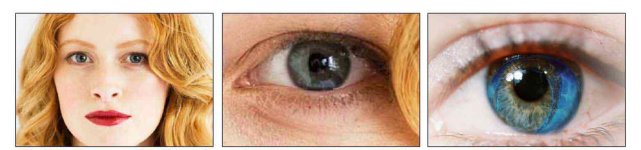
Zoom in shot from portrait to eye iris : How to?

Timothy Jones

Well-known member
Joined
Nov 2, 2011
Messages
404
Reaction score
3
Points
18
Location
Portland,OR
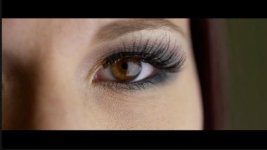
I have been asked by a client to do a shot going from a medium tight portrait, to a tight shot of an eye iris. Could anyone give me some ideas on how best to about this? I'm finding it challenging . The budget is small, but the client is huge.
Thanks,
Tim

www.tjphoto.net
 

Attachments

  • LACP_INT_smartphone_video_2_22_12_notes_sm-1.jpg
    LACP_INT_smartphone_video_2_22_12_notes_sm-1.jpg
    31.3 KB · Views: 0
If it were me... and the client is as big as you suggest...

test... test... test...

Then shoot it perfectly.

There are two really important moments in the shot: the portrait it begins with, and the iris of the eye that it ends with. It will be nearly impossible for one shot to give you both. Two reasons: attitude and lighting. The attitude of the portrait will almost surely require something that will be wrong for the technical eyeball shot that finishes it. The eyeball macro shot is very technical, and will almost surely require lighting that does not really give you the portrait shot that you want.

So think of the shot as a composite of the portrait shot and the eyeball shot. Shoot the portrait with a move in toward the eyeball, and shoot the eyeball macro shot in reverse, with a move out toward the portrait framing. Comp the two shots in the middle.

Test to be sure that the technique you choose for each will work with the comping you use to make the shot believable.


And one more thing: choose a single focal length that will work for both parts of the shot.
 
I have done a shot like this with the Scorpio remote focus system. It works with dolly track and a gear that is linked to the focus on the lens, so focus is tracked and in synch with where you are on the track. Aside from Moco ($$$) - this is a very good way to technically accomplish this. With a a zoom incorporated- lighting shouldn't be a problem.
 
If the budget is low, you have no choice but to do it in two shots, you pull in form the Portrait shot and your lighting will need to be changed and so will your lens, of in reverse, same thing.

I have done this many times, and also what you need to do for the Eye shot is to use Diopters, I have used Master Diopters with my Master Primes, and Shneiders Diopters, the +3 with large lenses such as the RPZ 18-85mm and the RPP 300mm, fantastic results, sorry I can't share them here now, but here are few shots, one of half Portrait, and the other half of tight Portrait to the one Eye, from the Epic 700 reel.

Best one light you need is a ring light on your lens.

attachment.php


attachment.php
 

Attachments

  • Screen Shot 2012-03-17 at 1.49.57 AM.jpg
    Screen Shot 2012-03-17 at 1.49.57 AM.jpg
    12.1 KB · Views: 0
Thanks Ketch. So what do you do to comp the shots together ? - You cross dissolve between them or you just cut? I think its pretty impossible to cut seamlessly between shots . With a dolly perhaps but that might still prove pretty difficult.
 
By thway Ketch - Pls inform us when you will be giving the Red seminars in Rome. I would very much like to fly there from Malta. Only one hour away. I would like to welcome you here but unfortunately I dont think there would be enough attendance. You can come here any time though. Would very much like to take you around and around the film studios.
 
Thanks everybody for the response. What i have been trying to do is roll the camera in on a Kessler subtle pod.
I'm using a Leica R 60 mm macro . I have set marks on the frame of the track and am trying to be on those marks on the follow focus when the camera goes over the spot.
I not sure why doing it in reverse would help ? Could someone please explain? Also, do you think auto focus could work in this situation?
Thanks for the help.
Tim
www.tjphoto.net
 
There is one fix it in post solution that works quite well.
That is shoot one wide shot and then one closeup of the eye. Then you let somebody that knows composting stick the closup onto the wide and zoom into the tight shot in post. Then you have what is called hyper resolution around the eye.
 
Most welcome Kirk,

exactly what Björn said, this double shot can be done by over imposing the Full Portrait on to the Eye shot, then as the portrait disappears the eye takes the place of the full frame, this is not a continuos shot per say of course, as in fact it is not, however it gives you a full control over the lighting which in Macro shots are absolutely a necessity.

But most precisely, is actually a Zoom in to the Eye from the full Portrait, then Zoom out from the center of the Eye to fill the screen with the second shot of the full eye.

When I do the Work Shop in Rome I'll let every one know, especially here on the forum.
 
Does it have to be in motion? That is to say, will people be able to tell? Consider doing just the close-up in motion (the eye blinking) and then the "wide" a full resolution still (from a DSLR -- 21mp+?). Unless you have a 12x+ zoom, you'll have to do it in post via compositing.
 
Last edited:
Thanks everybody for the response. What i have been trying to do is roll the camera in on a Kessler subtle pod.
I'm using a Leica R 60 mm macro . I have set marks on the frame of the track and am trying to be on those marks on the follow focus when the camera goes over the spot.
I not sure why doing it in reverse would help ? Could someone please explain? Also, do you think auto focus could work in this situation?
Thanks for the help.
Tim
www.tjphoto.net

We suggest reverse because it is very difficult to hit perfect framing/focus/action in a macro shot. There is no margin for error. Bu shooting in reverse, you capture the perfect end frame and then make the move. In the move out, you have a bit of motion blur, which will help you match to the other shot. It provides a small margin for error.

Auto focus is not likely to work as well as a practiced focus puller.
 
Back
Top