Welcome to our community

Be a part of something great, join today!

  • Hey all, just changed over the backend after 15 years I figured time to give it a bit of an update, its probably gonna be a bit weird for most of you and i am sure there is a few bugs to work out but it should kinda work the same as before... hopefully :)

What am I doing wrong? Komodo 6K not full resolution?

charlieparis

Member
Joined
Apr 29, 2026
Messages
6
Reaction score
1
Points
3
Location
London, UK
Website
charlieparis.co.uk
Komodo 6K - 6K 16:9 R3D ELQ - 500%‎ ‎ ‎ ‎ ‎ ‎ ‎ ‎ ‎ ‎ ‎ ‎ ‎ ‎ ‎ ‎ ‎ ‎ ‎ ‎ ‎ ‎ ‎ ‎ ‎ ‎ ‎ ‎ ‎ ‎ ‎ ‎ ‎ ‎ ‎ ‎ ‎ ‎ ‎ ‎ ‎ ‎ ‎ ‎ ‎ ‎ ‎ ‎ ‎ ‎ ‎ ‎ ‎ ‎ ‎ ‎ Atomos Blade - 1080p ProRes HQ - 500%
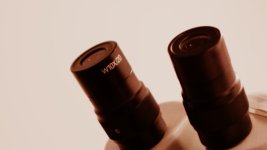
R3D 6K ELQ.jpgAtomos Blade 1080p PRORESS HQ.jpg

I found an old Atomos Blade in some of my old equipment, I thought I'd just give it a quick test as I couldn't remember what resolutions it recorded. Turns out it only records 1080p which is fine, but I was curious, so I recorded a short 5 second file to both in camera and the blade to see how "bad" the 1080p would be, but they look pretty close bear in mind this is a 500% zoom in on both images. For the record, yes the background is over exposed and the white balance is wrong, I didn't really care too much about that at the time, I was only looking for resolution differences.
So as you can see the images look almost the same, that means I'm clearly doing something wrong with the Komodo because this doesn't look like 6K to me.
This also comes off the back of testing the Komodo against a friends FX6 where I recorded in 6K in the Komodo and 4K in the FX6 and they looked like they had almost the same detail if not more on the FX6.
All I have done to these two images is a CST node in DaVinci to convert to Rec 709.
 
The R3D picture has clearly more detail when I look at it closely but with the project setting set to ELQ, you basically asked for the lowest possible quality. And this makes a difference even when downsampled to 1080 - in that there isn't much difference anymore between the extra low R3D quality and recording ProRes 1080 right away. What do you get with HQ quality instead?
 
The R3D picture has clearly more detail when I look at it closely but with the project setting set to ELQ, you basically asked for the lowest possible quality. And this makes a difference even when downsampled to 1080 - in that there isn't much difference anymore between the extra low R3D quality and recording ProRes 1080 right away. What do you get with HQ quality instead?
I know that ELQ is obviously not going to get the best results possible, but I have been shooting in ELQ and LQ for many projects mainly because of the file size, I only really tend to stretch it to HQ when working on a nice project. In HQ I do get a slightly nicer image but not hugely.

Though I have just wondered if it's my speedbooster making the image look softer than it is. There have been a few times where I look at the image I've got and thought "Oh that's weird it looks like I've missed focus" but I wonder now if the speedbooster actually just makes the image soft. I'm using the official Canon 0.71x Speedbooster for RF to EF
 
Hey Charlie,

Do you know what the Debayering (Decode) quality is set to in Resolve?
If the debayering quality is set too low you will definitely see a softer less detail image even in 6K.
Full Res. Premium is the best quality setting.

Brian Timmons
BRITIM/MEDIA
 
Last edited:
Hey Charlie,

Do you know what the Debayering (Decode) quality is set to in Resolve?
If the debayering quality is set too low you will definitely see a softer less detail image even in 6K.
Full Res. Premium is the best quality setting.

Brian Timmons
BRITIM/MEDIA
Mine seems to have been set to "Half res. Good" by default, though I have just changed it to "Full res. Premium" and there is no noticeable difference in the image in the viewer but I do see some extra detail in the waveforms so I can tell it's making some changes, even if not visual.
 
In the jpgs you posted (which albeit are compressed) there is a bit of detail difference particularly in the higher contrast parts of the image like the letters on the microscope.
There is also a difference in the"grain structure" where the pixels and noise are smoother in the R3D image compared to the ProRes.
I think if you tried this same comparison on a more detailed subject (trees in a forest, a cityscape, or a well textured face) you would likely see a greater difference.

Also worth noting that there is inherently a certain amount of built in image sharpening within the ProRes codec that might help create the perception of a sharper image.

RED cameras and R3D supposedly have no image sharpening at all.
The point of Raw images is to leave those types of image enhancements to post production where it can be dialed to taste.

One quality I like with RED cameras in general is that they can be high detailed while still maintaining an organic quality to them.
I've seen cameras by a few other manufacturers that seem to still rely on a certain amount of image sharpening and it shows in the "digital" feel in resulting footage.

Brian Timmons
BRITIM/MEDIA
 
In the jpgs you posted (which albeit are compressed) there is a bit of detail difference particularly in the higher contrast parts of the image like the letters on the microscope.
There is also a difference in the"grain structure" where the pixels and noise are smoother in the R3D image compared to the ProRes.
I think if you tried this same comparison on a more detailed subject (trees in a forest, a cityscape, or a well textured face) you would likely see a greater difference.

Also worth noting that there is inherently a certain amount of built in image sharpening within the ProRes codec that might help create the perception of a sharper image.

RED cameras and R3D supposedly have no image sharpening at all.
The point of Raw images is to leave those types of image enhancements to post production where it can be dialed to taste.

One quality I like with RED cameras in general is that they can be high detailed while still maintaining an organic quality to them.
I've seen cameras by a few other manufacturers that seem to still rely on a certain amount of image sharpening and it shows in the "digital" feel in resulting footage.

Brian Timmons
BRITIM/MEDIA
I can definitely see the difference between the 2 images I've posted, I agree the R3D does look better, but considering its 500% zoomed in I was asking, is anyone going to notice this? I bought the Komodo during the huge price drop last year, I paid £1850 for it, and admittedly I was stepping into a world I knew would be challenging.

Right now my main problem is the file size which is why I've been using ELQ for a lot of things, I made excuses for this but now I'm in a position where honestly I need a solution, which is why I was looking at recording ProRes externally, there seems to be very little difference in file size between ProRes and R3D when recording directly in camera, we are literally talking 10 or 12 extra minutes. If I drop R3D down to 4K I get more time than if I were to use ProRes 4K in camera so that wasn't working.

I love the RED Komodo, I quite literally said "there's nothing that could get me to sell this camera" but this is big issue I'm running into now. I'm considering selling it and buying the ZR so that I can drop down the H.265 when I need to (once the new update for it finally releases). I do love the RED image, it's something I honestly don't think I could give up now I've had it. I just think this issue with detail is honestly not that big of a deal. It's just the file size... Seeing this 6K vs the 1080p from the Atomos makes me think that maybe I should rethink it, and look at a camera that offers all the same things but with the additional option for H.265, which is the ZR...

May I ask what your thoughts are on this and also the ZR if you have looked into it at all?
 
With the current 3-4x and counting increase in prices for hard drives and SSDs I definitely feel your quest for smaller file sizes.

I always start with 5K LQ as my base setting and only go to 6K if I need the wider field of view. I have started using 6K a little more with ELQ and it works fine. 5K ELQ can also work well.
I would not use 4K LQ or ELQ as I do think the image is at risk of getting fairly "crunchy" with the compression and you might be battling that a bit on troublesome shots in post.

I'm generally satisfied with the data rates from Komodo at those setting guidelines and use this on projects that at times include an additional Komodo 6K and a Komodo X for 3 or more cameras total.

The quality of a lot of these high end features like, resolution, codec, lower noise, global shutter, color depth, etc may not be as obvious between high/low end when observing with basic image capture and inspection.

You usually see and experience the differences in the more troublesome shooting scenarios (i.e high contrast subject matter, low light) and in post production when working with LUTs , color grading, reframing, pulling keys, tracking, FX, finishing and mastering among others.
Things generally go smoother and are more satisfying with most higher end cameras when dealing with those parts of the workflow. Even the naming convention of the files really makes life much easier for conforming a project when finishing.

There is a bit of difference when pushing around a h.264 or 10 bit h.265 file in post compared to a 12 bit or 16 bit R3D and the like file.
The pixels are just more robust and withstand extremes a bit better.
ProRes is obviously a strong codec but to shoot that at 1080 over a 6k-4K R3D is definitely a form of digital seppuku unless you have a client that essentially demands that you use it.

Productions I work on tend to get compromised in so many areas like light and grip arsenal, crew count, time, budget, etc so Raw has always been my way to help compensate for some of those areas I can't control.


Regarding the ZR, my honest feeling is If file size and quality is an issue for you now with Komodo you would be in a bag of hurt with the ZR in it's current state. The h.265 file size might be smaller but the image encoding for that codec in the ZR is noted to be kind of weak.

While you do have R3D NE there is only one quality setting for that codec and the data rate is somewhere between HQ and MQ which is quite high.

For all the features ZR users are pushing to have they are already in the Komodo 6K and they work as expected.

If I was in school or just starting out with shooting Raw I could understand getting a ZR. For a career and paid shoots though Komodo is head and shoulders a stronger camera.

Yes ZR is a little smaller and lighter weight but part of that compactness comes at the cost of a much larger data footprint compared to Komodo and in terms of physical size Komodo is quite small enough.

Mirrorless cameras generally made more sense to me if one is using the camera in a way that does not require much extra rigging and keeps the camera close to it's base physical state. Shooting scenarios like basic b-roll, additional angles, perhaps rigging in odd places or dedicated gimbal can work with those cameras.

Once you start adding a mic, cage, monitor, larger battery, etc things stop making sense for those mirrorless cameras real quick.

TBH, I feel somewhat similar with the above statement with even the Komodo when comparing it to larger cameras that are a bit more geared to adding GAK.

I will note though that some software related issues might get fixed with the ZR in future firmware but again Komodo does all of this now quite well.

Brian Timmons
BRITIM/MEDIA
 
Last edited:
Great overview of it all Brian, thank you.

Yes the ZR in it's current state for h.265 videos is not so good, though I've heard they are not too far off releasing a firmware update that fixes the issue, it's the same issue that Nikon had in their Z6III when that released. But they are also adding Log3G10 to h.265 footage which I think will be great for what I would want for it.

It is slightly annoying that the R3D NE is such a high data rate, I hope they add another firmware update to add compression options. Personally I prefer the compression system of the RED DSMC2 cameras to the DSMC3 cameras, I wonder if they'll ever bring that back...

I completely agree with the statement on rigging mirrorless cameras, I was using an FX3 on a project recently where it was fully rigged out to a size that was bigger than my Komodo rig plus the whole rig was just super rickety, constant little plastic creaks.

I have said to myself that I'll wait until that new firmware update for the ZR comes out before considering the switch, just in case.

Admittedly RED cameras were always an overshot of the work I currently do, I figured since the price came down a lot last year that I would buy the Komodo with the plan to grow into it, and slowly get the work that justifies it, but for what I do right now, it's massively overkill. Which is the main reason I was considering taking a step back to that Nikon ZR while not completely stepping away from RED. You mentioned that the benefits to REDs come from the difficult scenarios, and I completely agree, however I'm not in a stage in my career where I'm in those difficult scenarios, like I said, I overshot, but that choice to overshoot my current needs is slightly holding me back for what I need now. I only ever solo operate my camera at the moment, and I know these cameras are meant to be used with a team.

I have a load of work coming up soon where I'll be using my own Komodo again, I think I'll consider these shoots as a test to see if I should start to consider backtracking to the ZR or not.
 
That seems like a prudent approach.
REDs are can be overkill for some situations and even I have some clients that just want a basic ProRes with zero grading which might seem like a waste of tech as far as a RED is concerned.
I work in teams but I also do a bit of solo shoots even with my REDs. TBH I've done a bit of solo (or damn near solo) shoots even on my RED One MX. Granted I can definitely feel it on some days but it can definitely be done.

At the end of the day one assessing the camera options compared to their (and the project's) needs usually leads to a better decision in the end.

The fact that you are taking that step in seems like a strong step in the right direction.

One great thing about the ZR is it does expand the RED tech use case in an area
that it was previously not a strong presence in before.

Good luck. Please follow up on your observations.


Brian Timmons
BRITIM/MEDIA
 
Last edited:
Back
Top