Welcome to our community

Be a part of something great, join today!

  • Hey all, just changed over the backend after 15 years I figured time to give it a bit of an update, its probably gonna be a bit weird for most of you and i am sure there is a few bugs to work out but it should kinda work the same as before... hopefully :)

Using two Polas as variable ND

Nick Gardner

Well-known member
Joined
Oct 21, 2007
Messages
3,620
Reaction score
10
Points
38
Location
Baltimore
I tried this as an experiment the other day, and it seemed to work fine. It just feels wrong. Is there a technical reason why you shouldn't use two polarizers as ND? I couldn't find any problems with the image - color shifts etc. Saturation was good, looked great.


Thanks,

Nick
 
i thought that's what a variable nd was, or at least something very similar. if it's working for you go for it. if it gives you trouble, you'll know how to fix it.
 
If you use two high-quality, very neutral-coloured polas you should be fine.

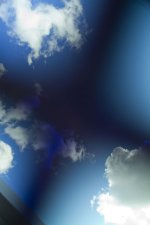
Stacking cheap polas gives you colour shifts or weird interactions that make a dark cross appear in your images. I have a great example of that somewhere around here...
 
I've done a little experimenting and find a linear polarizer over the top of a circular polarizer can give good results but it depends on your angle of light to lens, just keep trying different angles and filter rotation for desired results
 
The one closest to the sensor needs to be a CIRCULAR type not LINER, and it needs to be turned the correct way around.

Because the OLPF filter works by splitting the right and left hand polarized light, you need to only have CIRCULAR polarized light going through the OLPF, or you will block one of the blur axis and make aliasing and chroma moire worse.

You may not notice the increase in aliasing and chroma moire on a high resolution sensor as much becaues the lens is not sharp enough to resolve single pixels with high contrast, but for OLPF that work that way it is an issue you should understand and work around.

You can also get desaturation and color shifts when the liner part of the pola filters is crossed since IR light may pass even though the visable light is mostly blocked, so adding a IR cut filter may help reduce some of the color shifts when the filters are mostly crossed and look dark.

Beacuse you have TWO pola filters, each with its own axis, you may not get as good control over reflections, or you may need to rotate BOTH filters together to null reflections.
 
Here it is. This is a clear shot of the sky with nothing between the sky and the camera but a cheap Chinese filter.

attachment.php


Shot with this
 

Attachments

  • CheapPolas.jpg
    CheapPolas.jpg
    26.3 KB · Views: 0
Question was: can stacked polarizers be used as a variable ND...
Well, it can "kind of" work for a static shot, but it is not the same as an ND. A ND filter reduces all light passing thru it equally while a polarizer blocks light selectively.
You would normally use the polarizer to remove reflections - or to accentuate the blue in the sky - punching up the clouds in the process.

A difference with polarizers in motion work versus still, is that as you move the camera, the "effect" can change.
Try it out: Use an ND and pan across a reflective surface such as a store window - the light level passing through the filter is reduced with no shift in color or changes in the reflection.

Now repeat the shot but replace the ND with polarizers.
You will see some shifts in the color as the angle of unpolarized light interacts with the rotated angle of the polarizer - and reflections in the window will be reduced in certain planes during the move.
That could be disconcerting to a viewer.

So the two types of filters do treat light passing through them differently.
You need both.
 
That Singh-ray filter is just two polas and I am sure it is not as high quality as two Schneiders. I am taking away from this conversation that since digital is what you see is what you get, then if it seams to be working out ok, it's ok.

Nick
 
Sure. Computer screens use polarization too, try any of them.

My experiences with the Heliopan Vario ND are very good – it's the best, but also the most expensive and back-ordered in some sizes.

But it's based on polarizers too, so you may get strange results with car windows or the like.
 
Pola's give strange results on skintones....water...some kinds of glass...panning shots of the clear sky.... I would never consider them an alternative to traditional ND's.

Matt Uhry
www.mattuhry.com
 
Firstly, as it was demonstrated, Palariser is not a uniform ND filter depending on where the Sun is coming from. It is more effective at certain angles, so your results will be uneven. Add two polas together and it will be impossible to track the irregular shading.

Secondly, colour rendering is not as accurate as most high quality NDs. You can make a test on a very heavy variable ND and without. Specially reds (and infrareds) are usually way off and not possible to colour correct.
 
Back
Top