Welcome to our community

Be a part of something great, join today!

  • Hey all, just changed over the backend after 15 years I figured time to give it a bit of an update, its probably gonna be a bit weird for most of you and i am sure there is a few bugs to work out but it should kinda work the same as before... hopefully :)

Underwater Bubble Blowers User Group Thread NEW

Status
Not open for further replies.
Don't forget your red filter. :)

As far as I understand the theory here, putting a subtractor on the lens will result in an overall reduction in sensor data, degrading not only dynamic range, but overall image detail as well.

Additionally, in forcing the iris open at depth to compensate for already low light levels, the associated DOF becomes thin. Fine for tripod macro perhaps, but a difficult prospect when capturing moving critters.

Would be nice if Graeme Nattress could chime in here, explain the whole thing in detail.
 
thats why ive always disliked red filters. you're just turning a low light situation into a lower light situation. my hope with red would be for it to enable adequate color correction in post without resorting to red filters.
 
Here's the message I received from Graeme;

So underwater the colour balance is very blue, right? If it's so blue that you can't get a good white balance then a red filter is something that I can see helping. However, I can only see it being useful if you need to avoid differential highlight clipping. If not, better to balance electronically and save all the light hitting the sensor you can.

Graeme
 
my hope with red would be for it to enable adequate color correction in post without resorting to red filters.

Alex: We're already there...you have full control of images in post as RAW data.....unless i misunderstand you? But what more could RED do to allow us more control of images? It's raw and you can manipulate anyway you like with tweaking to WB & Tint settings first, then go deeper into RGB coloring.....noting more i think RED could give us. And then go into COLOR and mask off and work even further if you like. But i find a good WB & Tint tweak is first and foremost.

.....yes, you will cut light to the already starved sensor by adding a filter. ONLY filter I EVER use underwater is something to CUT light when in bright situations in shallow water. But usually i'll manipulate ISO & shutter first....unless it's a shoot demanding filters to cut light.
 
Further to my last post;

well if there's a lot of light your highlights will clip. Unless they clip evenly across RGB, which is unlikely, you'll get a funky colour in the highlights. DRX control corrects for this, but best if it's not needed.

Graeme
 
Well, if I may...

Not to disagree with people like Johnny and others whose work I highly respect, but here's what I've found regrading filters and RED. First off, regarding color and light underwater theory, theoretically, a filter should never hurt. Even sensors that capture RAW data like RED's are capturing light that is highly unbalanced towards blue and highly deficient in red. What the RED "sees" underwater is not "normal" light, but highly tinted towards blue, or green, or anything in between depending on location. But there's always very little red. Now, with RED, we can certainly manipulate the color balance in the best possible way thanks to RAW, and no, I don't think RED can give us any more tools than they already have, short of changing the spectral characteristics of water. But, what I've noticed repeatedly is that when boosting reds in post, you run into trouble eventually, much later than you would with any other camera, but you do it just the same. When you start stretching that red waveform, it can only take so much before it starts breaking. A filter can help balance this situation, BUT, many things must be kept in mind not to actually worsen the situation. First, you'd want a really high quality glass filter, NEVER an acrylic one. Then, it should be ideally be positioned at the base of the lens, NOT in front of it. I've been grading several hours of MX footage for the past couple of months, which was all shot in tropical waters, and I will tell you that the footage with a filter does look NOTICEABLY better than what does not have it. The filters used were custom made, and are actually a different tint than your regular URPRO ones, and more tellingly, way lighter, nowhere near as dark. I cannot comment much except that to say they are somewhere between golden yellow and a pinkish orange, and they do balance the RGB spectrum of the footage quite nicely. Alas, this footage was shot in very clear water, with visibility in excess of 100 ft most of the time and virtually zero particulate matter in the water. After the first 2 weeks of testing, I ran some tests and gave the team the following suggestions:
- From zero to 30 ft, no filters at all were used (the camera really is capable of correcting the color imbalance without it and a weird color cast appears everytime the surface is in the shot), and no lights ( we were not shooting macro)
- From 30 to 50 ft, between 10:00 AM and 2:00 PM, and from 20 ft anytime before or after those times, filters were always used, again, no lights. Camera was rated at 800 ISO, and no clipping to either end was ever incurred.
- From 50 ft down, filters were removed and lights were used.

I assure you all that the shots with the filters were really, really much better than the counterparts we shot without it, and this held under a plethora of situations, including a team of divers that was always in the frame wearing yellow wetsuits. The lenses used were both Tokina 10-17 and Nikon 14-24, both of them with screw-on filters at the mount, with a minor correction done for back focus. Unfortunately, I cannot post examples of this footage, but what I can do is shoot some of my own with the same filters whenever I get a chance. I should specify, lastly, that the quality of the water, the inherent color tone of the water (Caribbean turquoise) and the glass optics used on everything from domes to filters played a significant part, I cannot say that in different waters or with different filters or optics, the same would hold. But in this case, I can assure I was getting really fat histograms, full waveforms with the
filters on, not the degraded images that some justifiably fear.
 
good input all around. when i said "my hopes for RED" what i meant was that i have not yet used a RED camera personally. i've long thought RAW files would go a long way towards helping with underwater color issues but havent yet had the chance to experience it first hand (in motion format at least). i've found underwater filters to be frustrating and inelegant (for lack of a better term). i imagine that the combination of a UW filter paired with the post flexibility of RAW files would give better results.
 
The plot thickens.

That is some very astonishing information Rudi, thanks so much for posting.

All of that has gone into my planning journal, this learning curve is getting steeper by the day.
 
Rudi, this is indeed insightful stuff. Thanks. I speak for everyone that would like more details on the filter. Mfr, glass type, tint....whatever.
 
- From zero to 30 ft, no filters at all were used (the camera really is capable of correcting the color imbalance without it and a weird color cast appears everytime the surface is in the shot), and no lights ( we were not shooting macro)
- From 30 to 50 ft, between 10:00 AM and 2:00 PM, and from 20 ft anytime before or after those times, filters were always used, again, no lights. Camera was rated at 800 ISO, and no clipping to either end was ever incurred.
- From 50 ft down, filters were removed and lights were used.

So, does this mean we're going back to a flip-filter housing set-up?
 
John,

I am under NDA regarding most of this stuff, but ironically, the filter part is not something this client cares much about in terms of keeping its secrecy, he just had them made because he wasn't happy with the existing options, all of them being too dark and "on the wrong end of the color wheel" for his taste, where he wanted something more towards yellow rather than the traditional orange or magenta approach. The filters were made in Germany by a very well known optics manufacturer, and because of this, they are very, very expensive, but I would bet the same formulation could be built in China or elsewhere for a logical amount, like in the URPRO territory. Once this test trial is over I will talk with him and see if we can come up with a way to make the formulations available, although again, all it would take is for someone to ditch the traditional magenta approach and move towards yellow and you'd be in the ballpark of what I'm talking about. I will talk to him and see if he will permit me to post at least some color wheel placements/ RGB value approximations for those interested, but I will say that he wasn't looking for the best counterpart color to the light absorption spectrum underwater, but rather for a more gentle approach that would keep the sensor less red-starved by counteracting blue directly (hence yellow) instead of replenishing reds. I hope this makes sense, and it may or may not sound good to many opticians out there, but I myself will say that the colors rendered by this filter are quite subtle, beautiful and satisfying, much more so than the somewhat jarring quality of magenta or dark orange filters.

As for a flip filter, I would love this option, though I don't know how it could be implemented with a RED or EPIC. I reckon certain lenses could be modified so that the filter can dropped in and out right at the base where it mounts, this being the best option since it would imply a filter of a very small size, smaller than a penny come to think of it, thus making for a flip mechanism of a very small size, but the precision needed to interact with a lens in such small space would also mean really top notch construction, which I known someone like
Gates could tackle, but then you also need to physically modify the lens and cut a slot for the filter to come in and out, and this, although doable, can only be done right by few people. Duclos maybe? What we did right now was attach the filter to the end of the lens permanently, which is not so bad given how little light it cuts, but the best solution would be of course a flip or sliding filter.
 
Rudi,
Glad you have had success and i'll certainly respect your opinion. Where i (personally) decent from the red filter philosophy with the R1, Epic and Scarlet is that you MUST choose to either use the filter or NOT use it....once you screw on the filter, that's it....you are married to it. So when shooting in shallower waters where you don't need a red filter or such a strong red filter, you then have to compensate in post by removing RED from the image. Secondly when shooting at depth without lights, adding the filter then affects light transmission to the sensor....then of course we need to change ISO setting; iris; shutter or a combination of all of those. Now...a third issue that i have found is shooting with lights and using a red filter AND shooting with Tungsten (red hue) lights....Since the RED sensors are daylight sensors, they really like daylight adjusted light. I used Tungsten lights and found that every image was blow out to a magenta color and did not like what i saw. Same found when using a screw on red filter in that i had to then compensate so much for the extra diffusion of light.

**Now, this of course is quite subjective for each of us and directly related to our water conditions. RARELY will i shoot in beautiful blue; crystal clear waters where light penetration is not as much an issue as say Pacific Coast waters or non-Caribbean conditions. But i think we can leave it at this is completely USER discretion territory. Personally i don't want to be married to the red filter but nor do i want to be locked in with an ND filter, but am forced to make the ND screw on choice under the right circumstances.

Certainly if you have some newer or better technology with this red filter, i'd be completely open to change. AND more importantly when i go work for you and you are my boss and tell me to use the filter, I'll do just that.
 
Johnny,

It's all a matter of preference to be sure, but I agree with you mostly. I never liked tungsten lighting underwater, and even with tungsten balanced sensors, I've always used daylight lights, greatly preferring the cooler, more natural cast they yield, as well as how less prone to "burn holes" in your image they are as opposed to tungsten. This filter I'm talking about looks a bit like those yellow sunglasses you wear in the snow and it is light enough that it reduces less than one stop from your light. With the RED rated at 800 ISO and the filter on, we were still shooting at f5.6 with both the 10-17 and the 14-24 at 50-60 ft of depth and getting a nice exposure, histogram right at the middle with a fat peak pushing past 85 IRE. At that aperture, you can still keep deep focus from 4 ft onwards, which made for really easy shooting. I would not, nor have I ever, combine the filter with lights, although one of my guys got some very nice shots with the filter and the lights dimmed way down during the tests, but it is something I would not do. Now, if there was a way to modify a lens, and I think that both the 11-16 and 10-17 Tokinas as well as the 14-24 Nikon have enough space for this between the rear element and the mount (all you need is about 1-1.5 mm, to cut away a section of the casing and build a filter than can drop in and out of there, then we'd have a very viable and valid option for use of a filter when conditions allow it. Maybe this could be something I could invest my baby daughter's education fund on? :-)
 
Hey Rudi,
Don't invest your dough in that.....all 37 underwater shooters regularly working for a living will not yield enough return. This said.....you recall Pawel's new glass he's talked about for a few years? Maybe we'll see something even more mind blowing soon? i think he was going to debut something rather soon or possibly his new housing line is coming out. I can't recall what he had said, but seemed like new year or shortly after???
 
This said.....you recall Pawel's new glass he's talked about for a few years? Maybe we'll see something even more mind blowing soon? i think he was going to debut something rather soon or possibly his new housing line is coming out. I can't recall what he had said, but seemed like new year or shortly after???

he, he he...you will be blown away. Two housings: single camera (aluminium alloy/titanium) and all-titanium dual. I just came back from Adelaide where production line has just started. Still on target for December :)
 
Thanks Tom :) Speaking of filters. The new housings and optical system will allow for specially developed colour filters - my special formula :)
 

Attachments

  • seadragon stills 2 © 2005.jpg
    seadragon stills 2 © 2005.jpg
    96.7 KB · Views: 0
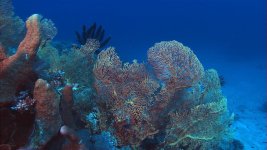
  • HD103 - Gorgonia 01.jpg
    HD103 - Gorgonia 01.jpg
    100.8 KB · Views: 0
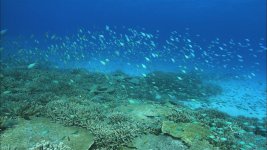
  • HDCAM 074 - reef.jpg
    HDCAM 074 - reef.jpg
    87.5 KB · Views: 0
Johnny,

Now, if there was a way to modify a lens, and I think that both the 11-16 and 10-17 Tokinas as well as the 14-24 Nikon have enough space for this between the rear element and the mount (all you need is about 1-1.5 mm, to cut away a section of the casing and build a filter than can drop in and out of there, then we'd have a very viable and valid option for use of a filter when conditions allow it. Maybe this could be something I could invest my baby daughter's education fund on? :-)

Many superwides have rear filter holdersq. My old 14mm sigma nikon mount does, as well as the 8-15mm canon L fisheye (can actually take 3 rear filters according to canon) and I am pretty sure the 14mm 2.8L canon does as well.

You are probably going to want to consider these lenses as they can completely cover 5k as well as future 6K. The 11-16 does slightly crop the corners on Epic 5k.
 
Status
Not open for further replies.
Back
Top