Welcome to our community

Be a part of something great, join today!

  • Hey all, just changed over the backend after 15 years I figured time to give it a bit of an update, its probably gonna be a bit weird for most of you and i am sure there is a few bugs to work out but it should kinda work the same as before... hopefully :)

The Ultimate 10-Shot DoP Graduation Test

Manfred Lopez

Well-known member
Joined
Feb 14, 2007
Messages
992
Reaction score
0
Points
0
Location
Mexico
Website
www.registrodeactores.com
I'd like to ask my fellow redusers for some help. What would you say is the best test to see if an emerging DoP is ready for his/her first independent feature? We have a long-time collaborator who will step up into this role. So for fun and to get him ready and pumped for the shoot, we decided to give him an ultimate "test". The idea is to come up with 10 difficult lighting scenarios and see how he handles them. He gets to use a Red Epic and a basic grip and lighting package that includes tungsten, kino and HMI sources. Bonus points if you can include example screenshots of the intended results for your ten suggestions.
 
I believe it is more important to know what you would like to have. (I guess you are the director for this production), so, go with him through the script and discuss. Take a long weekend for that.

I think to have the ability to communicate effectively with the director about any aesthetically aspect of the production is more important that ten artificial scenes.

The ability to deliver over the period of the shooting a constant quality, continuity, rhythm and an easy mind to translate a script-change (during production-stress) would be another key for me.

I guess everyone can grow into the frame you give someone. I feel you are willing to take a risk with him, so be a mentor if time allows, it certainly will pay of -- with your support.

If the points mentioned above are positively cleared, then set up some stuff together and find a way to get efficient. You have certainly some ideas what you can do and what is not supportive for your work.

My best wishes for the production.
 
Some difficult lighting scenarios that I can think of are the following:

Make a WS of a character in a boring white-walled apartment look interesting without getting too moody.
Make a bedroom look like night or day, dawn or dusk all while shooting at high noon.
Tell him to decide on efficient but interesting coverage and lighting for a scene of 5 or more people.
Tell him to light a scene that is very difficult to get lights into or one where there is a 360 degree Steadicam move that will see "everything."
Tell him to light a night time exterior that has its main motivating source as "moonlight."
Tell him to light something that usually would need a lot of light and take away that light (sometimes the big HMI breaks or the power situation is sketchy and you don't have a choice).
Lighting in a bathroom or any other situation with a lot of mirrors is also difficult as well.
Also, it's good to see how he performs under pressure if you give him a scenario and then change the whole direction of the shot or tell him he has half the time to do it that he thought he did. It's never fun to light and get everything set up in one direction and then have the director decide that the scene plays better the exact opposite way. It's not that common, but it definitely does happen.

Overall, I find that the hardest things to light and make look good are wide shots in places with bland colors, boring architecture and subpar production design. If you can make these shots look great then you are a pro!
 
I do not believe that such a test could be created as there are so many variables involved in DoP's work. Furthermore there are aspects of a great DoP that no test footage could ever reveal - such as the ability to lead his team (camera department), to communicate well with key crew members to work in efficient manner (basically the speed at which he/she can work), the ability to "translate" director's vision into imagery, knowledge and experience to supervise the entire imaging process from pre-production, through principal photography and all the way through postproduction to final mastering...

Putting all that aside - it would be still hard to pick 10 shots to cover the wide variety of scenarios that a DoP must be able to handle well.
But lets for the moment entertain this idea as a "game" or an entertaining way to check what he/she can handle and more importantly - how he handles it...
I would focus on these aspects:

- composition
- scene contrast
- exposure
- appropriate DoF (shooting wide open all the time for the shallowest DoF doesn't make you a DP...)
- ability to do one's best with limited resources and time

My 10 shot list would be something like this (will dig out some examples later when I have a time):

1. Interview against a window with bright daylight scene outside - to test the ability to handle scene contrast
2. High-key shot (person dressed in white in white surrounding) - to test the ability to properly expose and control DR
3. Low-key shot (person dressed in black in dark surrounding) - same as above on the other side of the spectrum
4. Macro-CU (a facial detail, such as lips, eyes, etc...) - skin tones and proper DoF choice
5. Extra wide shot of a very busy dark(isn) interior with larger widows and bright busy scene outside - composition and DR
6. Beauty hair shot - ability to control light and its reflections
7. Larger (reflective) product wide moving shot, such as dolly of a side of a car - lighting, composition and reflections management as they change during a camera motion
8. Mixed lighting and high-speed (Ms of a flowing water over fruits in mixed lighting scenario with a TV screen in the background) - the ability to handle mixed lighting and flicker issues
9. CU of a face with strong light source (sun, or artificial) behind the subject, but in the view of the camera - lens flare and skin tones in some of the harshest conditions
10. Two facing person interview (or scene - like playing cards) covered from multiple angles - ability to light and frame simultaneously for 2 or more cameras for speed and variety (he can shoot each position separately but without moving anything on the set)

This is a quick pick of the top of my hat... ;o)

:sifone: Peter

PS: With a feature in mind you should design the test to cover the challenging shots you are likely to encounter in your project...
 
I think you'd be shooting yourself in the foot if you didn't turn it into camera/setup tests for the actual feature you're shooting.

+1

Refine your communication abilities (you think you agree when you are agreeing at the moment but ???)
Develop the language of the film
Become faster as a team
Align ideas and taste for the project

The other stuff sounds like a waste of an opportunity (sorry for being harsh)....

M
 
I think you'd be shooting yourself in the foot if you didn't turn it into camera/setup tests for the actual feature you're shooting.
+1

Unless every 'test' you give is directly linked to a scene in your 'opus' then you are wasting your time, and the D.P.'s. Who gives a sh*t if he can film giraffes underwater, if there are no underwater giraffe shots in your film? His reel is his ongoing graduation test; if you like it and his style fits with your story - then hire him. If his reel is thin and his interpersonal skills don't match the rest of your team - then don't.

Since you say he's a long time collaborator; then you must know him and his skill level pretty well? Since you are asking how to test him, you probably already know that you don't want to hire him.

But having him light a Macro shot of melting butter - just because it's hard to do - while your script is about an outlaw biker gang...
 
Thank you all for your responses. While I completely agree that testing, communication and developing a common language are essential for working together on a feature, the objective here was to have fun and learn. We love challenges and that's why we wanted to come up with ten advanced lighting scenarios. I wanted to especially thank Justin McAleece and Peter Majtan for your suggestions. I am adding some of my own suggestions.


1. THE PUNG-LEUNG KWAN / WONG KAR WAY CHALLENGE…
Light a scene using strong contrasting or complementary colors.

076.jpg


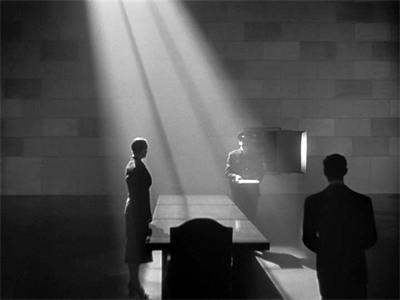
2. THE CITIZEN KANE CHALLENGE…
Sculpt light into visible beams while maintaining the subjects dark.

citize8.gif


3. THE MIRROR ON THE WALL CHALLENGE…
light a scene in a dark place using only external sunlight, mirrors and diffusion.

mythbusters-spring-2011-pictures6.jpg


4. THE THRILLER CHALLENGE…
Light a classic high-contrast, moody thriller scene using haze or smoke.

Lighting-.jpg


5. THE BARRY LYNDON CHALLENGE…
Light a scene using only candlelight.

Picture-20.jpg
 
Using a camera with lower performance for the test.

If he can make it look good without relying on post work, he can make Epic sing.
 
Thanks Glen! I really like your ideas as well. Those are some fun exercises to be able to test any DP against. I had thought about the candlelight idea. Not so much from a sensitivity perspective but more of a color and flicker and moodiness perspective. Those shots sometimes feel orange and ugly or the flicker is too much. Candles are essentially hard light and in those situations we often feel like the light should be soft and so they inherently clash a bit - our expectation and the reality. Good luck with your experiments/tests!
 
+1
Since you are asking how to test him, you probably already know that you don't want to hire him.

Maybe my original post was not clear enough. He is already hired. The "test" (notice the quotations) is designed to get him pumped up and be a fun learning experience. It's not like his job depends on how he does. It's an opportunity to test out ideas before principal photography (but not script-specific shots because it's too premature for that). Plus, he loves the idea… Free use of equipment to do advanced lighting to hone your craft… what's not to like?

By the way, I also love the underwater giraffe idea. The yellow engulfed by blue would be an awesome combination.

Thanks Glen! I really like your ideas as well. Those are some fun exercises to be able to test any DP against. I had thought about the candlelight idea. Not so much from a sensitivity perspective but more of a color and flicker and moodiness perspective. Those shots sometimes feel orange and ugly or the flicker is too much. Candles are essentially hard light and in those situations we often feel like the light should be soft and so they inherently clash a bit - our expectation and the reality. Good luck with your experiments/tests!

I also think the candles are challenging because the general public usually assumes they are very flattering light when the opposite is true. One interesting thing we once had to do was simulate the flickering movement of a lighter being held by a distraught hand from someone in a coffin who had been buried alive. The "flicker" had to be recreated by a gelled hand-held 15" kino stick. It turns out that quite a bit of "acting" had to go into how that light was moved since it had to both give the impression of a flickering lighter and also that the person holding it was distraught. And they said DoP's didn't have to act :)
 
My opinion is if you have to put him through an elaborate test you create then he's not ready (or he's not the DP for you).
Hiring a DP should not be a question of IF he knows how to be a DP, but if he's the RIGHT DP for the job.
You should be able to look at his work and speak to people he's worked with and know if he is the right person for the job.
If he doesn't have a body of work that shows he's proficient at his job and have enough references to show that he can communicate well then wait until he does have enough before handing over the reigns. Just my two cents.
 
Last edited:
Audition for a DP?

If he is a sensitive soul, he may get hurt. If I were the director, I would sit with the DP with the script and bounce off ideas. Listen intently to the DP first. If he is excited by the script, then he would be able to visualise and explain how he wants certain scenes atleast the key scenes. If he is able to visualise the scenes, then he/she can keep on manipulating the lights and achieve the results.

Recently a director was narrating the script to me, and I was immediately excited and started drawing it in a napkin about the scene. I would rather hire a creative guy and allow him to find out about the lights but won't suffer a guy who has previous work experience but devoid of vision.
 
If you guys want a team building and learning exercise, and already want to work with together, then why not do test shots of scenes in your script?
This would be productive for both of you. It also may shape your plans for the film.

On a sidebar, I note that a couple of your examples are not really lit the way you suggest (the sunlight into a dark room was xenon instruments, if I recall correctly, Citizen Kane probably used Arc Lights through oil based smoke).
 
If you guys want a team building and learning exercise, and already want to work with together, then why not do test shots of scenes in your script?
This would be productive for both of you. It also may shape your plans for the film.

On a sidebar, I note that a couple of your examples are not really lit the way you suggest (the sunlight into a dark room was xenon instruments, if I recall correctly, Citizen Kane probably used arc lghts through oil based smoke).

We are already planning on doing that. We are just looking for additional difficult-lighting setup ideas. Oh, and you are right about the examples. They were just quick google searches meant for illustration purposes. As they say, contents may differ from package :blush5:


Audition for a DP?

No, that's not what is happening here. I already mentioned he has the job and that we both came up with this idea. This is meant as a learning experience and to get him 'more' ready. Nothing more. I have to confess that it has been fun reading some of the reactions here for something so benign. Oh, and Sabyasachi, I completely agree with you on how you approach working with a director. The script and the ideas that it invokes in both persons is very important.
 
I suggest you have a camera operator with DP experience who can act as a mentor and take over if it goes pear shaped.

if you want to do a test, make it realistic in respect to time pressures.

Mike Brennan
 
Back
Top