Welcome to our community

Be a part of something great, join today!

  • Hey all, just changed over the backend after 15 years I figured time to give it a bit of an update, its probably gonna be a bit weird for most of you and i am sure there is a few bugs to work out but it should kinda work the same as before... hopefully :)

The Master Lighting Question

Stewart Read

Well-known member
Joined
Jan 26, 2011
Messages
164
Reaction score
0
Points
0
Hi All

I have a lighting question.

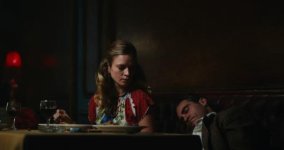
In this incredibly painterly shot from The Master, how were they able to have the actress lit so well without casting a shadow on the wall behind her ? I initially thought it was a very toppy light and the shadow was cast on to the seat behind her but looking more closely the key light seems to be much more side on ?

Really keen to understand how the wall has been isolated so well from the key light on her hair/skin. Surely it's more than just a flag ?!!

Thanks !
 

Attachments
  • The Master.jpg
    The Master.jpg
    10.3 KB · Views: 0
Last edited:
Hey Stewart,
Im no expert but Im willing to bet it was a top light of some sort (chinaball/kino, etc with some flags used to keep the light from spilling all over the places. The biggest thig I have learned from watching some of the great dp's work is that they don't overthink things. I use to always light from above the more and more I shoot I try to utilize light in depth or paint strokes. a real 3d look comes from many places. Overall dont over think it. The shot is gorgeous never the less. But shit what do I know lol
 
If you look at the image you can actually see the source on the wood panelling behind her. the edges are incredible soft so the light had to have been very diffused and controlled to shape right around her head and shoulders. that obviously would control shadows and it may have been a larger source farther away. I'm sure smarter people than me will chime in.
 
I am now thinking it might be two lights - the one who's dull reflection that Jason says you can make out on the background and another one slightly less side angled (a bit more towards the front) and topy to continue the wrap around and create that butterfly effect under the nose ?
 
The simple use of flags and frames to shape the soft source and a dark wall makes it easier to hide.
 
The closer the light is to the subject, the more the inverse square applies. So if the light is 1 foot from the subject and 4 feet from the background, it's four stops less bright on the background than the subject. In this case, the light is close, high, side-y, and soft. Working on a really dark background probably helps hide the shadow, too.

I love how the reflection of the light in the wood eliminates the need for backlight.
 
I don't recall the action of that shot, but it looks like you can see her shadow on the wall behind her. It's just really soft. That's the real trick - shadows are okay, they happen in real life, and in this instance they are realistically soft for a dark interior. Keeping it simple is important.

The closer the light is to the subject, the more the inverse square applies. So if the light is 1 foot from the subject and 4 feet from the background, it's four stops less bright on the background than the subject. In this case, the light is close, high, side-y, and soft. Working on a really dark background probably helps hide the shadow, too.

I love how the reflection of the light in the wood eliminates the need for backlight.
Love that too!
 
Basic grip skills would get you there. Now adays there are fabric eggcrates wtf are they called .... here is a company that makes them http://www.lighttools.com/subgrouping.htm?cat=25805 - for 4x4 frames all the way up to huge frames. That just looks like a big soft source well controlled.

Keep in mind when you have a grip truck and all the guys in the world something like this is really fast. They used eggcrates on frames a ton on house of cards. You fly in your frame, say it's a 6x6, bang a light through it, eggcrates already on, probably on a roller stand if you are on a stage, topper, two siders and a bottomer if needed, you are done.

In something like this a big soft source close always wins. For hard light, the biggest light you can get as far away as you can get it always wins. The whole inverse square law thing.

Nick
 
I am surprised there are so many options of these egg crates. I would like to test them out


Basic grip skills would get you there. Now adays there are fabric eggcrates wtf are they called .... here is a company that makes them http://www.lighttools.com/subgrouping.htm?cat=25805 - for 4x4 frames all the way up to huge frames. That just looks like a big soft source well controlled.

Keep in mind when you have a grip truck and all the guys in the world something like this is really fast. They used eggcrates on frames a ton on house of cards. You fly in your frame, say it's a 6x6, bang a light through it, eggcrates already on, probably on a roller stand if you are on a stage, topper, two siders and a bottomer if needed, you are done.

In something like this a big soft source close always wins. For hard light, the biggest light you can get as far away as you can get it always wins. The whole inverse square law thing.

Nick
 
made you up a nice diagram haha


EDIT.. looking more at it.. it might just be one soft source splitting the difference from where my two lights are placed...a 45 degree
 

Attachments

  • master.jpg
    master.jpg
    92.9 KB · Views: 0
This could be all "natural", fairly large source with flags to cut off spill above their heads, but I guess theres's also a power-window to further pull done exposure of the right wall.
 
Back
Top