Philip Jarmain
Member
I am an advertising photographer working primarily in Toronto and Vancouver. I have spent the last few years trying to refine the stills and motion workflow. It's a challenge but I believe it's worth while. Even two years ago no one could have fathomed the changes in advertising as people now use their phones as their primary device to view content. Most large campaigns I have worked on in the last year have been stills and motion combined that need to provide many assets both stills and motion for broadcast, social media, web and print. So I am a believer in the RED stills and motion workflow but it has a long way to go. I would love to hear some some solid advice for getting sharp stills and also for general workflow and tethering.
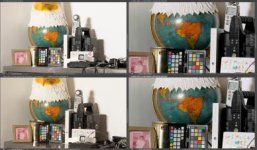
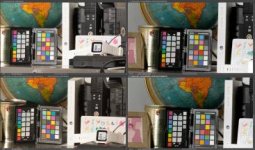
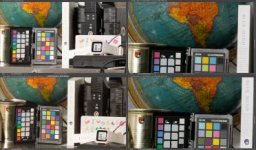
I have been shooting phase one for years so I like the Raw workflow but compared to a phase the dragon stills are so rediculously soft it hurts. Sharpening in post doesn't help - the dragon images at 6k at 4:1 compression at 1/200 of a second shutter of a static model in studio lit with a broncolor parabolic ft1600 him are soft compared to say a 5D.
I'm using Zeiss Otus 85, 55, and 28mm lenses and shooting 6k at 4:1 compression. The Otus are the sharpest lenses I have ever used and outperform Summicron C's for sharpness. On my Canon 5DSR at 50 megapixels they are rediculous. So lenses aren't the issue.
I'm thinking the Olpf might be the issue - I'm using the Skin tone Highlight Olpf. Phase one Digital backs and the Canon 5DSR don't have high pass filters. I just received the low light Olpf and I'm about to do a test for sharpness with that. Has anyone compared them for sharpness.
I'm upgrading to the weapon helium shortly. I fear it might not be any sharper because it's a small sensor and still needs an Olpf. Has anyone done some actual printed tests? I have been doing test prints at the dragon native resolution which is about 10"x20" at 300 dpi on an Epson printer. They are decent when the subject is close but at any distance they are brutally soft. And yes I have had my back focus checked by technicians.
I just started doing tethered tests but the problem is that it's Ethernet so data rates are poor and compression settings are higher. The art directors need my camera tethered when shooting stills.
I shoot seperate takes for stills so I can shoot 4:1 compression at high shutter speeds. It slows me down a bit but it's fine.
How do I get sharper stills and will I eventually be able to tether for stills.
The ad industry needs this technology since budgets are leaner and instead of a few assets for a campaign now we need hundreds of various assets.
Is anyone seriously working on this workflow for advertising to produce good quality assets for OUT OF HOME/billboards and transit shelter ads and posters? I'm trying and have done a number of billboard campaigns on my dragon but they kind of suck technically compared to even a low end low resolution dslr. The dynamic range is awesome but again they are soft.
Please help - Red's digital stills and motion concept has to come to fruition whether red users want it or not. Either Arri or Red are going to get it sorted because in advertising economics are driving this issue. Can't afford two full crews on set - one stills and one motion. How can we put our heads together and get this workflow properly resolved? Hdrx, high frame rates are all fine for web but for print we need alsmost zero compression and top level sharpness. There is no serious information on the red site or anywhere that I have searched.
I'm loving this Red Camera it's well thought out I guess I'm looking for advice from someone using this dragon for stills and motion ad campaigns.
Thanks
Philip Jarmain
http://www.jarmainproductions.com