Welcome to our community

Be a part of something great, join today!

  • Hey all, just changed over the backend after 15 years I figured time to give it a bit of an update, its probably gonna be a bit weird for most of you and i am sure there is a few bugs to work out but it should kinda work the same as before... hopefully :)

Star Trek 2

Gary Stone

Well-known member
Joined
Feb 22, 2007
Messages
266
Reaction score
0
Points
0
So Star Trek 2 is set for 05.17.13 and is being shot in 3D. Can't wait for this film! Speaking of film, anyone got any skinny on whether it's being shot on RED or not? Hee Hee!!
 
They shoot Fringe on Alexa. You can't shoot anamorphic on RED and get the flares?
 
You most certainly can shoot Anamorphic on RED with as much or little flare as you so desire. We have a set of Hawk Anamorphic primes available in NYC that go out with our REDs often.
 
It's not about the flares, you don't get the full field of view out of an anamorphic lens because it doesn't have a 4:3 sensor like the studio does.

Er... The ALEXA Studio still uses the same sensor as the other ALEXA models, which is a 1.54:1 aspect ratio sensor. It crops the 4:3 out of the center of that, but it is still a bit larger than 4:3 cropped out of the EPIC's 1.89:1 sensor area. ALEXA Studio actually maintains the 2880 pixel width for the 4:3 mode, and increases the active recordable area vertically to allow for 2880x2160.

With the EPIC, you get ~3600x2700 at 4:3 and a frame size of 19.44mm x 14.58mm. This is a 1.22X crop from the ALEXA Studio's frame, yet higher resolution... Horses for courses....

Jeff... thank you for the eleven thousand three hundred and ninety seventh time. :)

[off topic] This will of course change once EPIC gets Dragon. There is no question that Dragon will let you squeeze all there is to be had out of the best anamorphic glass out there. There is no doubt in my mind that it will be larger than the biggest anamorphic film lenses' image circles (with great 4:3 crops). [/off topic]
 
Jeff... thank you for the eleven thousand three hundred and ninety seventh time. :)

Hehe.. ;) This is what happens when I'm avoiding the work I need to do. I should be debugging a million lines of code right now, but I don't feel like it.

[off topic] This will of course change once EPIC gets Dragon. There is no question that Dragon will let you squeeze all there is to be had out of the best anamorphic glass out there. It will definitely still have RED's characteristic insane resolution. It will most likely be larger than the biggest anamorphic film lenses' image circles (with great 4:3 crops).

Actually RED has not said any of this. We do not know that Dragon will be larger or, even if it is, if the larger area will be usable inside the current EPIC and Scarlet-X brains. Lots of assumptions flying around out there, mostly based on the Dragon being the first of the "Monstro" sensors to be released, as per Ted at NAB '11. Since the '08 brain announcement, where the "Monstro" sensors were to be FF35 and larger, it seems people are making the assumption that it will be so with Dragon. A lot has changed since then and we won't know until RED is ready to tell us.

That being said, I'm sure we'll get FF35 and 645 sensors (or similar) at some point and this will of course allow for full use of these anamorphic lenses and beyond.

I personally hope that the upcoming Dragon sensor is a bit larger. There is enough processing power and bandwidth in the EPIC to use some more pixels. We can currently shoot 5KFF @ 96fps. I definitely wouldn't be opposed to having 6K 2:1 or 5K 4:3 at 48fps (24fps with HDRx). ...Just sayin' :)

As for the DR, I'm betting Dragon will pull better than 15 stops without HDRx. If it can push to 16+, then it will have better DR than most any film stock out there, I'm hoping for 18+ myself, but trying not to be too greedy. I'm already feeling spoiled by the EPIC at 13+ with an easy 3 stops usable with HDRx and also by the ALEXA at close to 14. Yes, I've been shooting ALEXA here and there lately. I've said it before... It's a nice camera. Not really my cup of tea or in line with my vision or philosophy of where cameras are headed, but it is a very nice and well though out camera system. I'm in the minority and don't like the onboard ProRes, but I think that's because once you get hooked on R3D and have a few good workflows in place, it's hard to go back to that ProRes stuff...
 
Last I heard, they were shooting the next "Star Trek" film in 35mm anamorphic again, so it sounded like it would be a 3D post conversion job.

Nothing wrong with that. Sometimes I just want to, you know, see a movie..

Mike
 
Nothing wrong with that.
Lots and lots wrong with a post-conversion, but I suppose you were referring to it being shot on film.. which is fine, certainly. I'll see this one in 2D since it was shot flat.
 
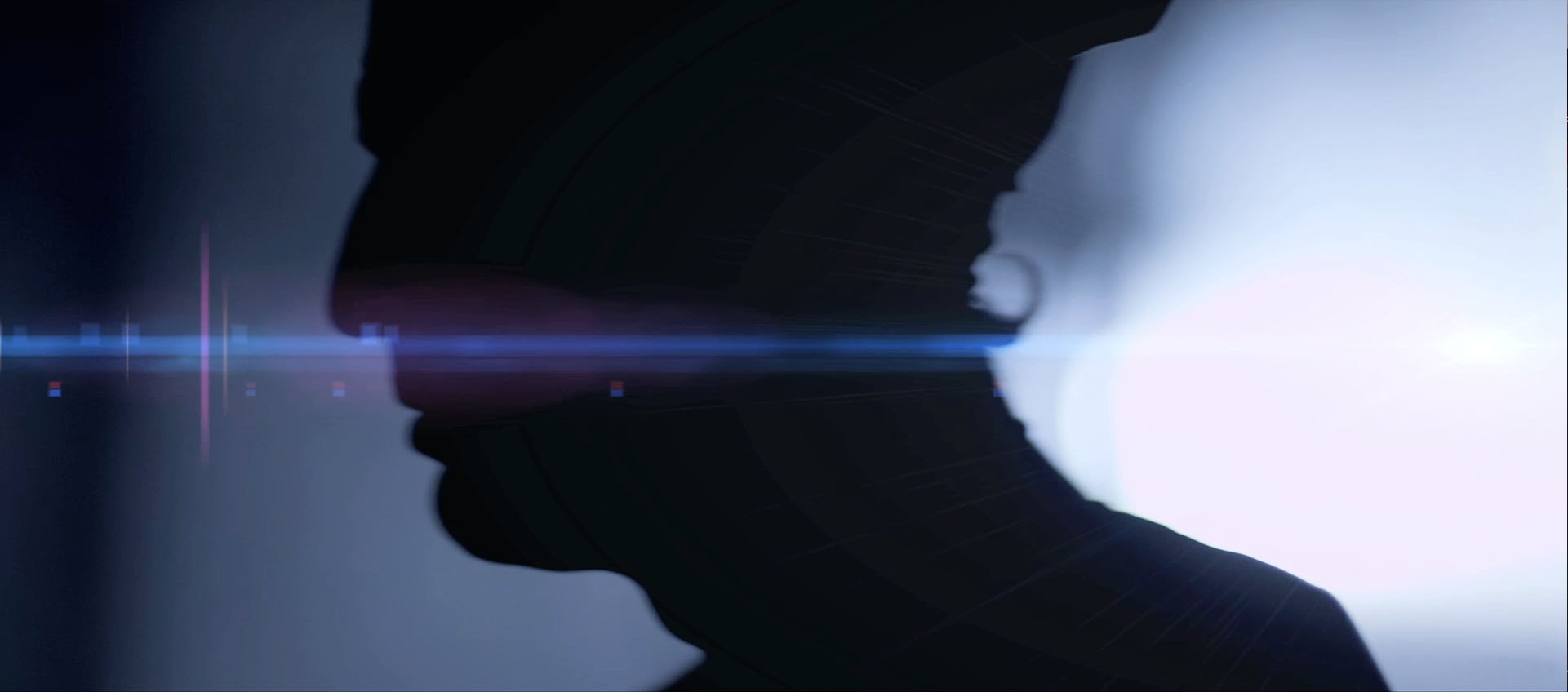
Hate to burst peoples balloons... but 98% of those anamorphic lens flares within that film were created in post. I met the guy that developed the plugin for that film to create realistic flares..
And now we all have animorphic flares to be had in minutes with ease... with 1000's of amazing combinations. You can match the real ones perfectly and create even better ones... and put them exactly were you want them.

Other problem when shooting anamorphic on big special effect films.. is the flares... Post guys will hit you over the back of the head if they have to start painting out flares to put in there effects plates.
That just becomes irresponsible & Dumb cinematography... If there is know post effects to be done at all, then shoot madly anamorphic and flares... beautiful. I love it myself.

But when you have effects with the shot, It's hard to 3d track anamorphic lenses... lens distortion makes it near imposuible to 2 track and comp... lens flares kill you everytime... So shooting a normal square pixel camera (like EPIC) with flare-less crisp images, you can quite easily match those shots later into anamorphic content quite easily... if you know what your doing.
And this is how the last STAR TREK was done.

https://www.videocopilot.net/products/opticalflares/

animorphic_flare.jpg
 
Other problem when shooting anamorphic on big special effect films.. is the flares... Post guys will hit you over the back of the head if they have to start painting out flares to put in there effects plates.
That just becomes irresponsible & Dumb cinematography...


Well, I guess that means you consider Dan Mindel, J.J. Abrams, and Roger Guyett to be "irresponsible" and "dumb." I don't.

Anamorphic cinematography has a lot more to distinguish it than simply flares. There are specific qualities to the distortion, particularly on backgrounds, that are unique and uniquely attractive to particular types of storytelling. On huge tentpole features like "Star Trek," the cost of the visual effects is not the issue that it is on smaller projects. They are expected to be expensive and worth it. When ILM is your primary contractor, things like tracking anamorphic plates are much less of a concern. The picture was shot on film because of the desires of the creators. And it was shot anamorphic for the same reason. That doesn't make it a "smart" or a "dumb" choice. It makes it a proper creative one.

I respect what your saying... Creative is king.
And No... They are not dumb, they are both genuius and awesome at what they do. And myself being a huge animorhic lens fan love the way they use the anamorphics to get the coolest looks. I applaud the both.
I'm talking about what you can an cant do especially if you don't have the same coin. But in there case they have millions upon millions of dollars to waste in post by painting out unwanted flares and spending 10 x longer trying track a shot. All the power to them.
But again. 98% of the flares were put in afterwards. And alot of the full CG shots were pushed around to make look like animorhic footage.
For example. I'm doing a Job at the moment were I have to insert my footage into someone elses ad. The original spot was shot anamorphic 35mm. So now I'm smearing my RED images and adding flares etc, graining it up and mimicking the animorphic imagery perfectly. No one can tell the difference. How do you think ILM match there square pixel (full CG)and animorphic imagery so well.
The same way.
 
There was a lot of in-camera anamorphic flares in "Star Trek", there are plenty of photos of crew members shining xenon flashlights from off-camera to get them! Of course there were also some added for efx composite work to make it match the general photography, but my point is that most of the flares in non-efx shots were real, not done in post (it's hard to NOT get them when shooting Panavision anamorphic with bright lights on set pointed into the lenses)... I don't know where you got this "98% of the flares were done in post" figure.
 
Back
Top