Welcome to our community

Be a part of something great, join today!

  • Hey all, just changed over the backend after 15 years I figured time to give it a bit of an update, its probably gonna be a bit weird for most of you and i am sure there is a few bugs to work out but it should kinda work the same as before... hopefully :)

Sensor size + Cinema

David has a good list started but he's right. The list of big features shot on 2/3" cameras is a very large list. Not to mention all the features we never heard of that were shot on 2/3" cameras. No one can deny that 2/3" cameras are good enough for the big screen.

There's a ton of lists out there that list these movies. Here's one:

http://www.pointzeropictures.com/films-tv-hd-and-s16.htm

You'll notice lots of F900, F23, F950, Viper, SI-2K, even Varicams. All 2/3" cameras. Lot's of 2/3" cameras are good enough for the big league. The RED 2/3" cameras will be good enough too.
 
Ok, if 2/3 sensor has looked great on the big screen then what is the reason to get the cameras with the extra large sensors? Also I have heard that film is equevilant to 4k and all films end up being a 2k film out. If that is true (feel free to correct me if im wrong) I can't understand why Scarlet 2/3 or Red one 4k isn't good enough.

Michael Cory
 
Ok, if 2/3 sensor has looked great on the big screen then what is the reason to get the cameras with the extra large sensors? Also I have heard that film is equevilant to 4k and all films end up being a 2k film out. If that is true (feel free to correct me if im wrong) I can't understand why Scarlet 2/3 or Red one 4k isn't good enough.

Michael Cory

You have the option for a smaller depth of field, lower noise, greater resolution for cropping, more pixels to oversample, and it is much much easier to get a wide field of view.
 
There's the Bayer/OLPF limitation, that brings down resoluton to around 70~80%

5K should make pristine 4K images. R1 is great for 2K and Scarlet 2/3" should be awesome for HD.

And of course, printed to film or projected at 2K all of these should look great even though not technically ideal.
 
You have the option for a smaller depth of field, lower noise, greater resolution for cropping.

As in shaving off the top and bottom to meet an aspect ratio, but I'd love it if in general the idea of reframing images through cropping stopped being as enthusiastically received as it seems to be. Pushing in 10% or so is kind of acceptable and gets done a lot, but this idea of shooting a master shot and cutting coverage out of it needs to be discouraged, IMO. The closeup you crop out of a 2-shot is not going to be something you want to use, IMO.

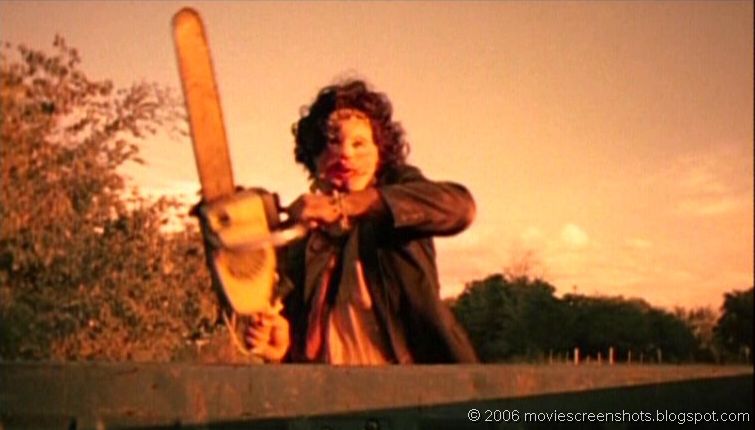
BTW, on the subject of small formats, a lot of cheapie genre pictures were shot on 16mm in the past and some of us loved 'em. I'm not sure this would have even worked the same way in anamorphic widescreen 35mm:

texas-chainsaw-massacre_28.jpg
 
5K should make pristine 4K images. R1 is great for 2K and Scarlet 2/3" should be awesome for HD.

I don't get the last part about Scarlet being awesome for HD - it will also be awesome for 2K. 3K is 2.25 times more resolution than 2K, so you could probably reframe and crop in a lot, downrez and still get a pretty pristine image.

I mean, even if the bayer pattern and OLPF and so on only mean that the image only measured 70% resolution, you'd still have one and a half times more resolution than 2K.
 
I don't get the last part about Scarlet being awesome for HD - it will also be awesome for 2K. 3K is 2.25 times more resolution than 2K, so you could probably reframe and crop in a lot, downrez and still get a pretty pristine image.

I mean, even if the bayer pattern and OLPF and so on only mean that the image only measured 70% resolution, you'd still have one and a half times more resolution than 2K.

One can speculate that for having lower resolution Scarlet 2/3" loses on these two points whe compared to S35 Epic and Scarlet:

- Resolution from OLPF/Bayer filter
- Less oversampling and more apparent noise

Scarlet should be great for 2K as well, not saying otherwise. Pristine in HD, but not as clean as 5K downsampled like its S35 elder brothers. :)

And I'm sure most films finishing in 2K will either be shot on Epic or Scarlet S35. Just a guess based on budget.
 
I wouldn't even think twice about using 2/3" 3k Scarlet for cinema. It's appeal will be in small size, easy setup and light weight: a dream camera for action and POV shots irrespective of the budget. I can't wait.
 
Robert, I loved that episode of the Goodies as a kid. And Graeme Garden spells his name correctly too!

Commenting on OLPFs - yes, they limit absolute resolution, but they also limit nasty aliasing too. Never forget their primary application.

Graeme
 
Robert, I loved that episode of the Goodies as a kid. And Graeme Garden spells his name correctly too!

That was one of my favorites, too! Every time I see your name I think of The Goodies. I don't think I've ever known anyone else who spelled it "correctly." :w00t:
 
Star Wars Episode I : HDcam recording device

Star Wars Episode I : HDcam recording device

The modern Star Wars movies that were shot digitally were 2/3" as was Benjamin Button. I don't think 2/3" will stop you getting a superb image, nor will 3k resolution. There's no reason why it won't look utterly superb.

Graeme

Ok, sorry for chiming in, not only in an old thread, but responding to a post on the first page of a 4 page thread; however, from my understanding, Star Wars episode One was shot with an HDcam camera which had been modified with some kind of cabling, allowing to output the sensor's data to an external recording device allowing to NOT record on HDcam (3:1:1 1440x1080), but on a superior format. It might have been a hard drive RAID system. I read this ages ago, and cannot find a reference to this. If anyone has a link to an article with more details, or that proves me wrong, please post the link.

Cheers,
Damien
(a.k.a.earthling)
 
Ok, sorry for chiming in, not only in an old thread, but responding to a post on the first page of a 4 page thread; however, from my understanding, Star Wars episode One was shot with an HDcam camera which had been modified with some kind of cabling, allowing to output the sensor's data to an external recording device allowing to NOT record on HDcam (3:1:1 1440x1080), but on a superior format. It might have been a hard drive RAID system. I read this ages ago, and cannot find a reference to this. If anyone has a link to an article with more details, or that proves me wrong, please post the link.

Cheers,
Damien
(a.k.a.earthling)

Hi Damien,

You are correct about the recording uncompressed. Some early F900's were adapted for dual stream 4:4:4 output perhaps Michael Bravin will comment. I think HDCAM was recorded as well so there is some truth in that they recorded to HDCAM.

Best,

Stephen
 
"Star Wars: The Phantom Menace" (Ep. 1) was shot in 35mm anamorphic. One scene was shot on an HDW-750 (or 700) HDCAM at 60i I believe, as a test.

"Attack of the Clones" (Ep. 2) was shot on the 24P HDW-F900. They used the onboard HDCAM deck for most of the shoot but later, ILM recorded HD-SDI out (10-bit 4:2:2) to a data recorder for additional efx shots, chroma key work, miniatures, etc. I believe they also had a HDC-1500 in post but I'm not sure. But often people erroneously claim that "Attack of the Clones" was not recorded to HDCAM. I think it was the 1500 that Sony delivered with a 4:4:4 dual-link capability first to ILM. Mike Bravin would know more than me. It may have not been until Ep.3 "Revenge of the Sith" that any 4:4:4 dual-link recording was done using F950's and 1500's.
 
Last edited:
So ask yourself if there is inherently anything un-cinematic about 35mm shot at an f/4-5.6 split. The only time the 2/3" look is a bit unique compared to 35mm is in night exterior work and other extremely low-light situations, where people aren't used to seeing more depth of field.

I agree that f/5.6+ isn't "un-cinematic," but then I don't subscribe to the "shallow DoF is just a stylistic affectation akin to bleach bypass, it's only useful to indie posers trying to make their film look professional, you don't need it" school of thought. I don't want to emulate 35mm. Control of DoF is just an intrinsic part of photography to me and f/5.6 and up just doesn't give it to me. If it did my Nikon would be mounted with $120 lenses instead of $2000 lenses and I'd have a nicer car.
 
Back
Top