


Ilya O.
Well-known member
I've being reading RU since maybe 2007 and simply love it. I learned a lot from you guys and very thankful for that.
Now I join RU to share my experience and knowledge of Russian photo- and cine glass.
I start with M39 (reflex mirror) and M42 Zenit SLR photo lenses.
Full frame 35mm film, 36x24mm (covers VistaVision).
These optics were designed at 50-s and 60-s, produced all the way till the fall of Soviet Empire at 1991 (some of them till 2000-s; others are now being revived at production).
I do documentaries, and this set is ideal for personal own and use being cost-effective, small, portable and yet very capable, fully usable wide open, with nice colors and in a way of a posh appearance.
All this one should take only to the lenses fully refurbished and serviced. Do not expect bought-for-nothing 50 years old Helios will be a joy to work&play Though, guys, many of Mirs and Helioses, having shitty rusty backlash barrels and even scratched optics, give extremely well performance. Any lens, Zeiss, Cooke or Angie of that age, needs a service after so many years of dusty shelf living, and do not forget the life was the harshest of all here in Russia.
The set includes:
20mm f3.5 Mir-20m
28mm f3.5 Mir-10A
37mm f2.8 Mir-1
58mm f2 Helios-44
85mm f2 Jupiter-9
133 f2.8 Tair-11
135 f3.5 Jupiter-11
180mm f2.8 Jupiter-6
300mm f4.5 Tair-3
Enough of words, let's get some pics and video.
My set looks like this, handpolished barrels, all new tiny screws, black matted internals, super smooth lube inside which does not evaporates and works till at least myself tested minus 18 Celsius (-0.4°F).
All have Canon EF mount:

Now going linear route from 20mm to 300mm
strarting with
MIR-20M 20mm f3.5
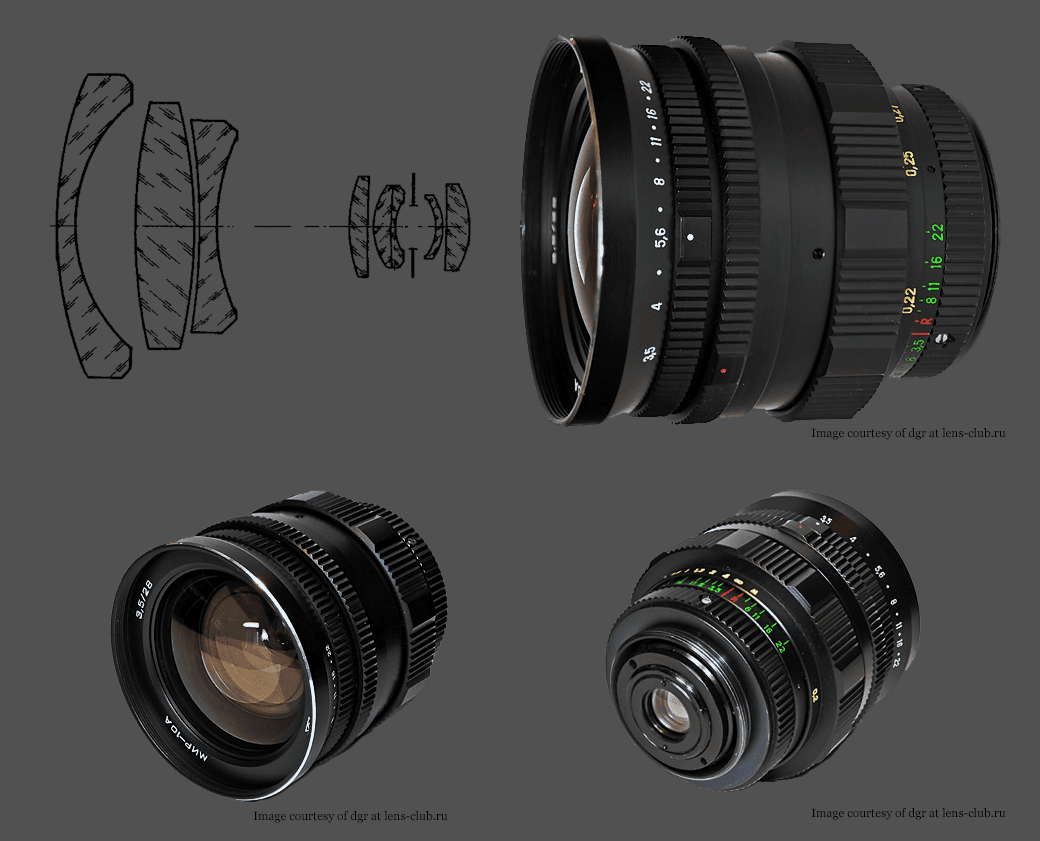
Mir-20M lens diagram and appearance:

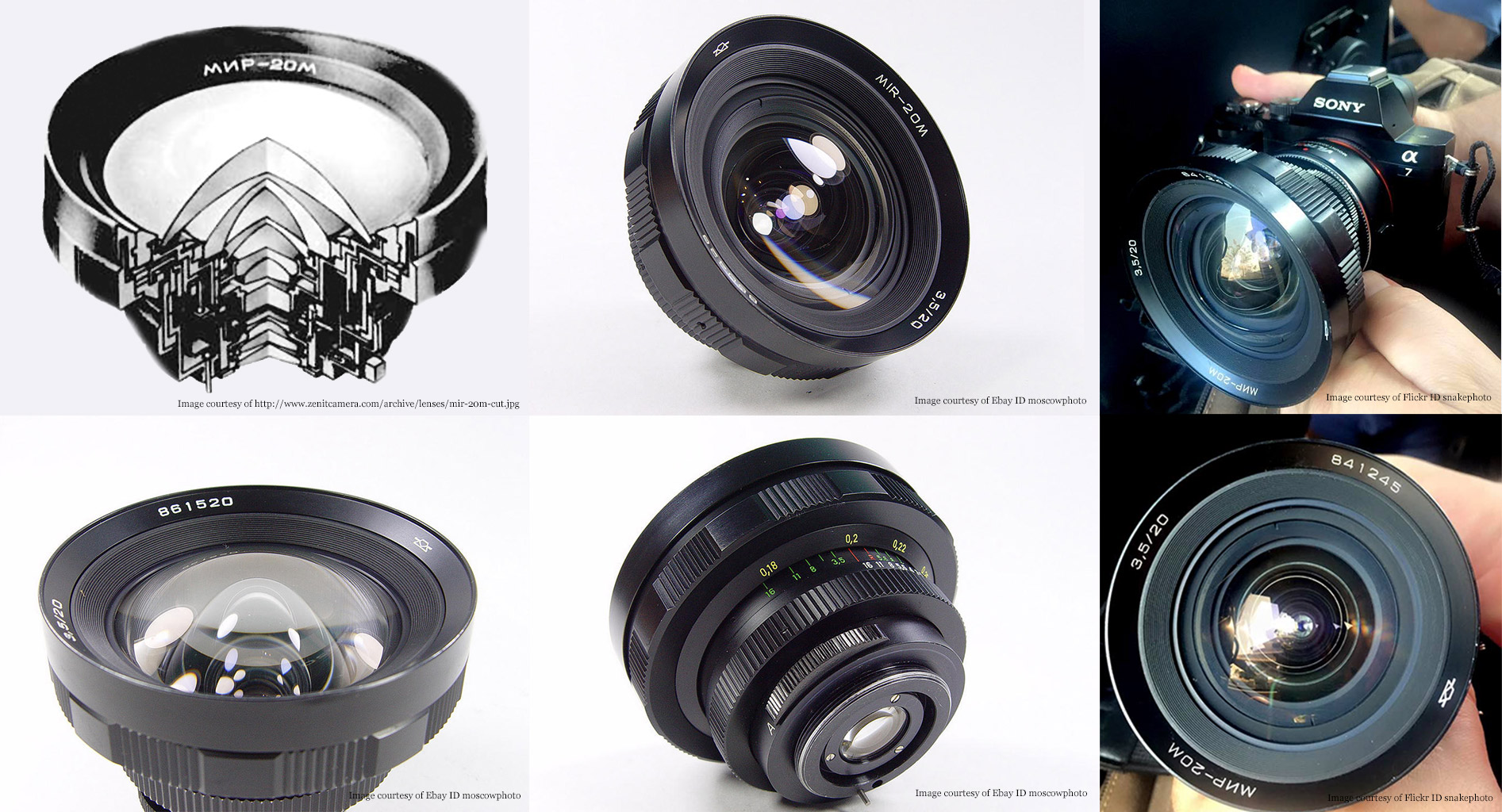
Mir-20M is quite big, the huge front element screams out 'look at me!' and attracts attention like UFO
Front max diameter is 92mm (3.62''), 470g weigh (1 lbs.). It is made out of black anodized light aluminum alloy, no paint or plastic parts.
Internals are of the same, all metal. So it will work and last very long if the grease at the helicoid is okay.
We all like moving pictures more that text (sorry RU forum, so I start with it.
Mir-20m wide open handheld rough conditions (pls turn on 4k playback):
Mir-20M is my base lens which always sits on cropped (1.5x, s35) sensor, ready for tripod work and handheld.
It is wide enough for most of my work and still it does not smash the edges with that perspective distortion which makes people oval ugly and gives a viewer that distant feeling.
20mm on crop is a good lens for participation, in-action-being — all the things we documentary filmmakers like.
Besides, I can shoot 20mm for quite a looong time handheld (or moving) without shaking (actually there is some, but it is okay and as we say it is just 'natural picture breathing'; if you do not like it, use a couple percent of Warp filter in Adobe apps).
Mir-20M being single coated has 75% Transmission Coefficient.
That means that the actual T-Stop of Mir-20M is ~T4.
Back to the video.
The previous one was in dark light, handheld and has aggressive feeling.
Mir-20 can be very subtle though.
It has God's rays type of flares which I used as a metaphor of poetic creativity and inspiration from on high (pls turn on 4k playback):
Mir is fully usable wide open, no blooming or softy halo whatsoever. It has good definition in the central part of the image, and when you close the iris down you just add resolution across the frame and the contrast arises. When you compare central spot at f3.5 and f8 the actual definition is the same, while contrast differs. So I can not say Mir-20 has flat field and sharpness everywhere (but what lens has it?) at f3.5, but this optical imperfection actually focuses viewers to the central guidelines of the frame where action takes place in 90% of scenes. Besides, central spot sharpness adds dimension, and does not overload viewers eye with tons of insignificant details on modern ultrasharp sensors.
40% edge vignetting on full frame helps that too, but I frankly did not ever seen it on crop.
An interview, wide-medium shot, wide open with some grain added in post:

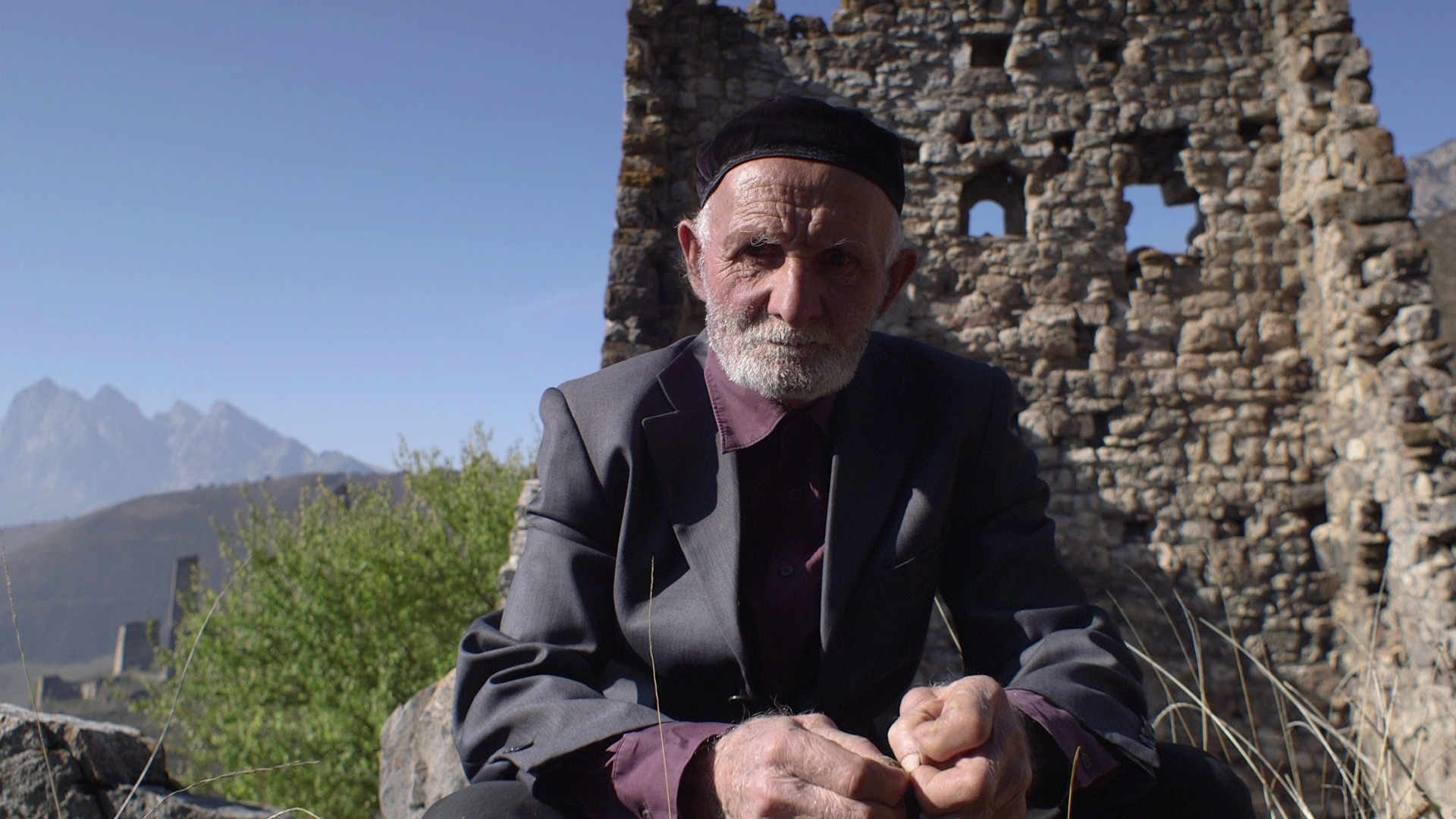
Closed to f5.6 or f8, who said that 20mm is not a portrait length?
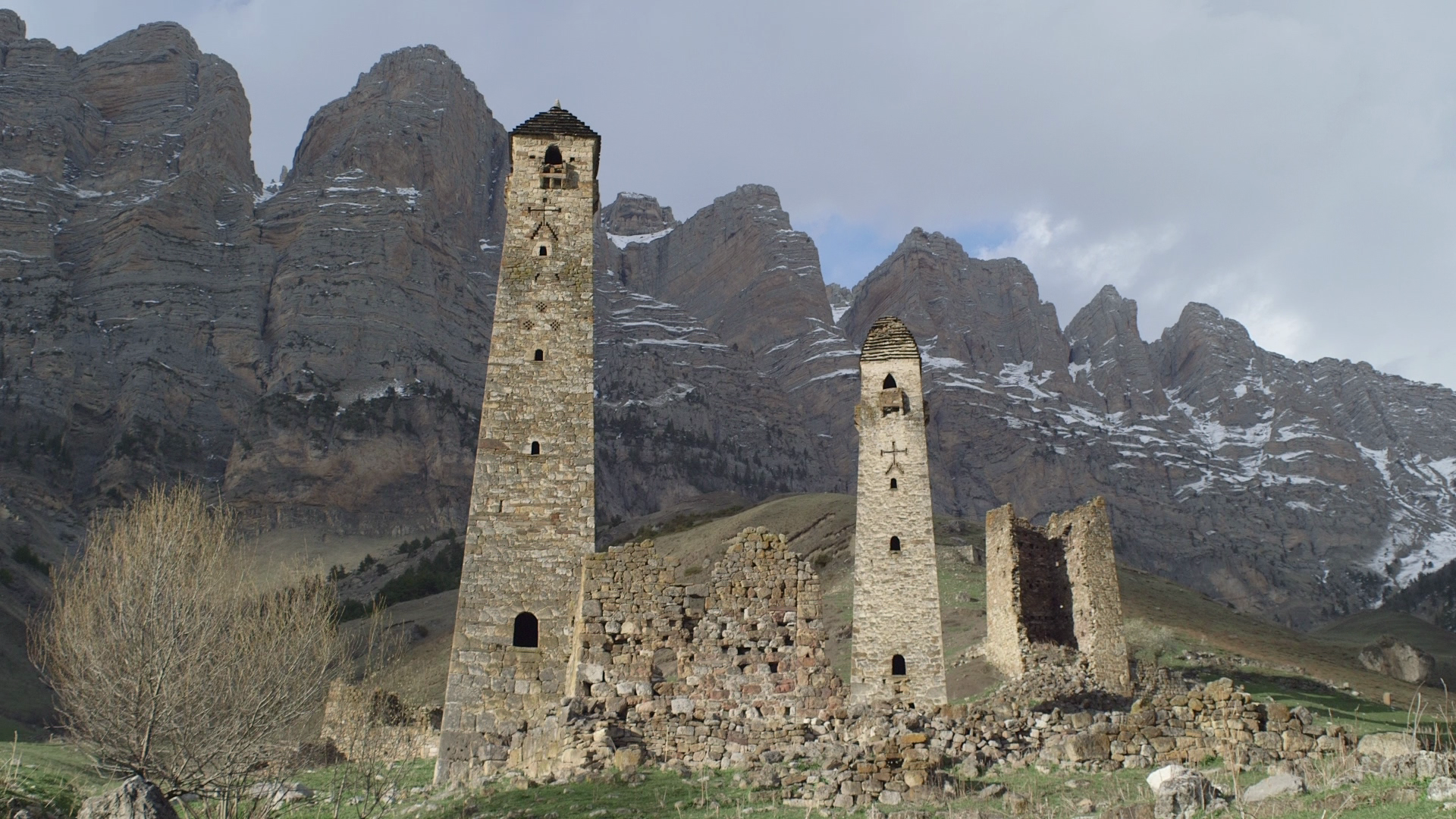
An old man waiting for the authorities to throw him away from his native 300-years old history home place:
***
Every time I look through the Mir-20, I feel happy. It has a kind, cheerful feeling picture.
The shot below was taken the lens that had 1/4 inch deep scratch on the back glass, that lead to no other defects than high light scattering.
But what I see now is that thing helps you feel the light, see it like substance.
Grain added in post.
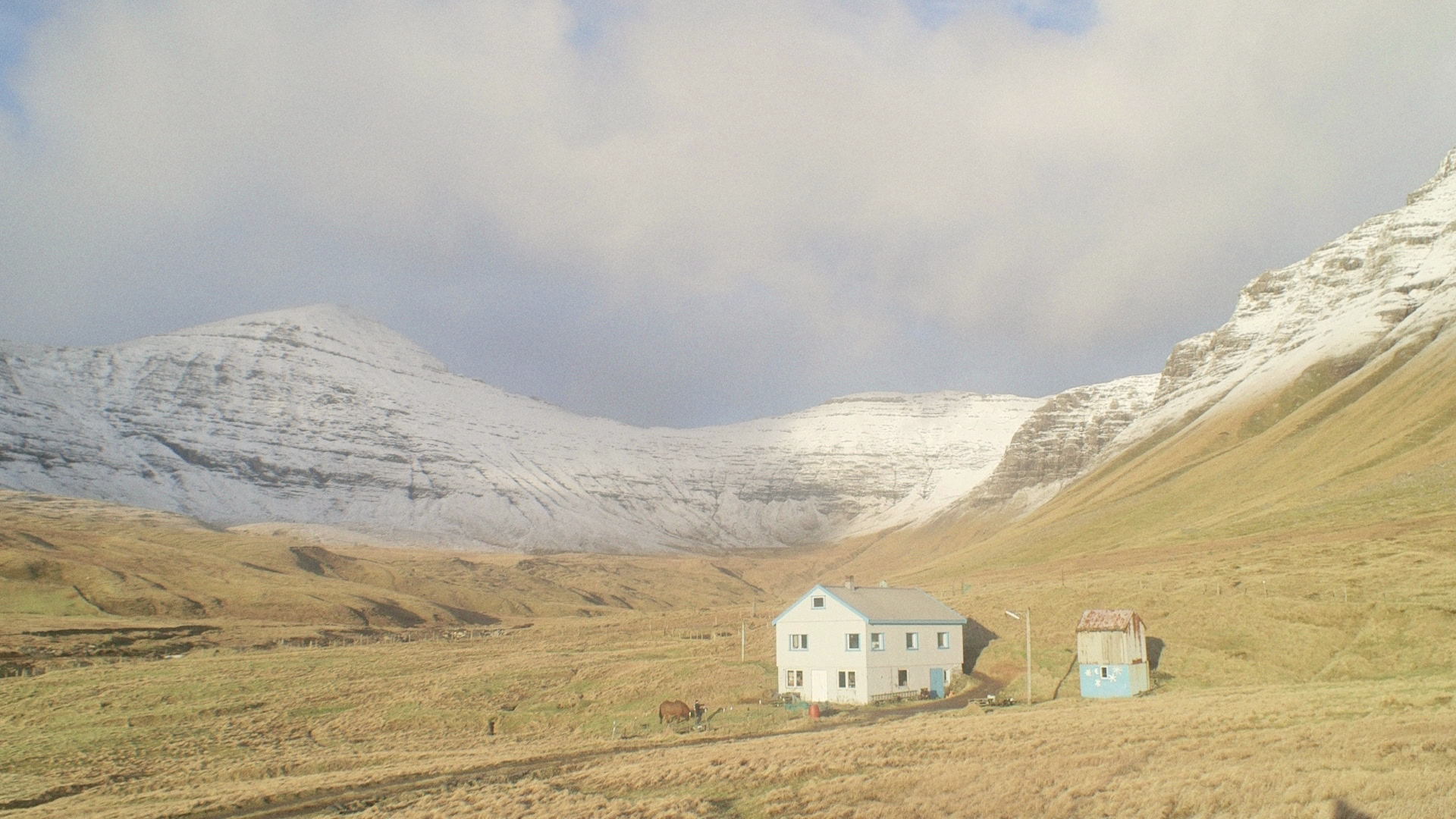
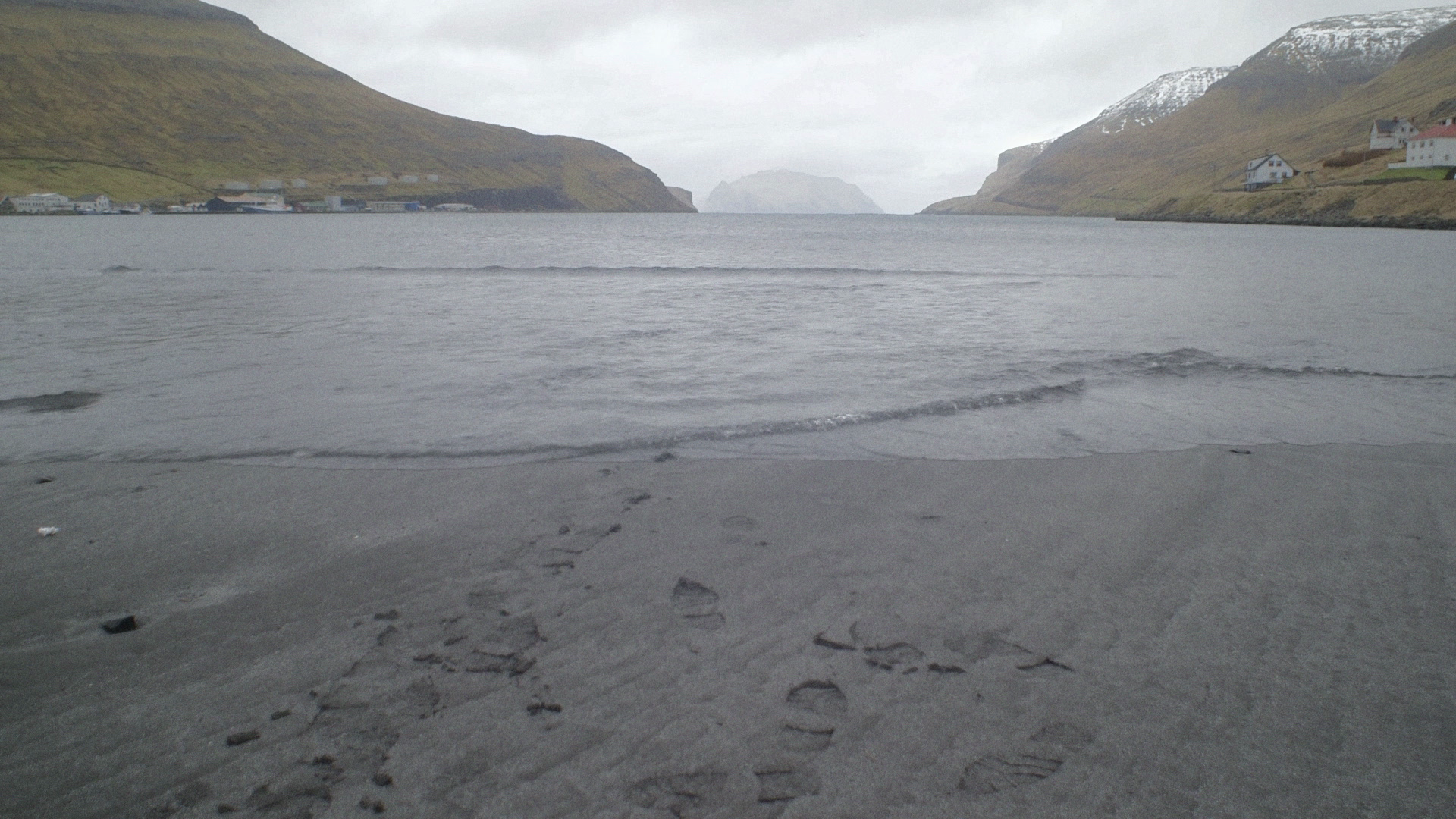
Mir-20m has rather warm color. The contrast is not high. Which is good cause it seems it gives me more of dynamic range, especially in the darks which are lifted and never crushed. It is like using DigiCon N1 filter of Schneider.
Again, this leads to good handling of extreme contrast scenes and to the subjective feeling of the light as a material substance you can touch.
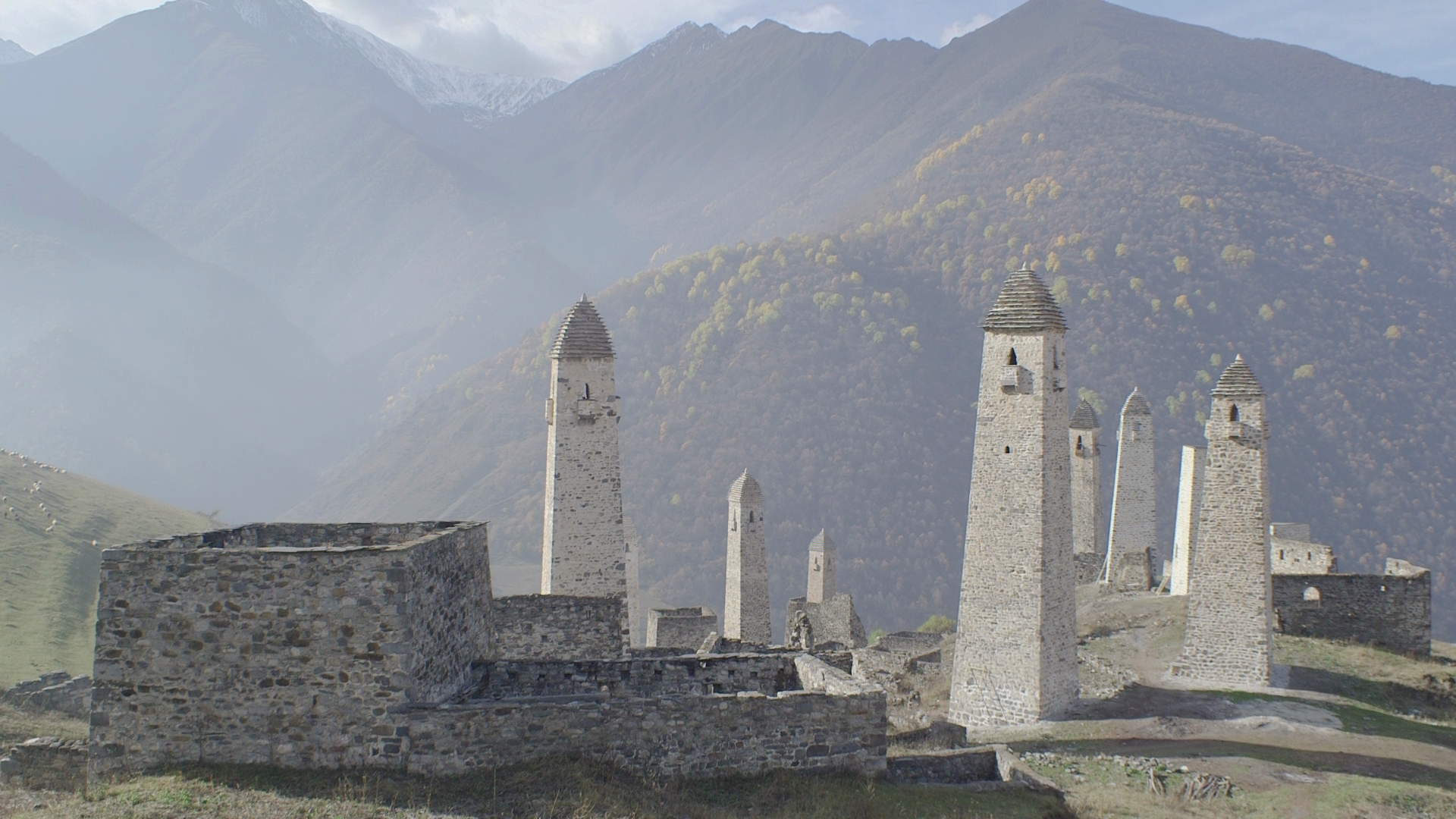
Do I need to say that if you just shoot with Mir-20 having the camera all standard gamma sharpness etc settings, you instantly get the interesting look and color?
What is more, if you wish, the picture can be pushed to extremes with ease, it has the latitude, it wont fall apart.
What I am trying to say here is you can save time and money and do no color correction at all and still you have the different look, a stylish organic subtle look
MIR-10A 28mm f3.5
Mir-10A lens review here: http://www.reduser.net/forum/showth...rvival-Guide&p=1705033&viewfull=1#post1705033
MIR-1 37mm f2.8
Update! Mir-1 lens here http://www.reduser.net/forum/showth...rvival-Guide&p=1705466&viewfull=1#post1705466

HELIOS-44 58mm f2
Update! Helios-44 lens review here http://www.reduser.net/forum/showth...rvival-Guide&p=1705828&viewfull=1#post1705828
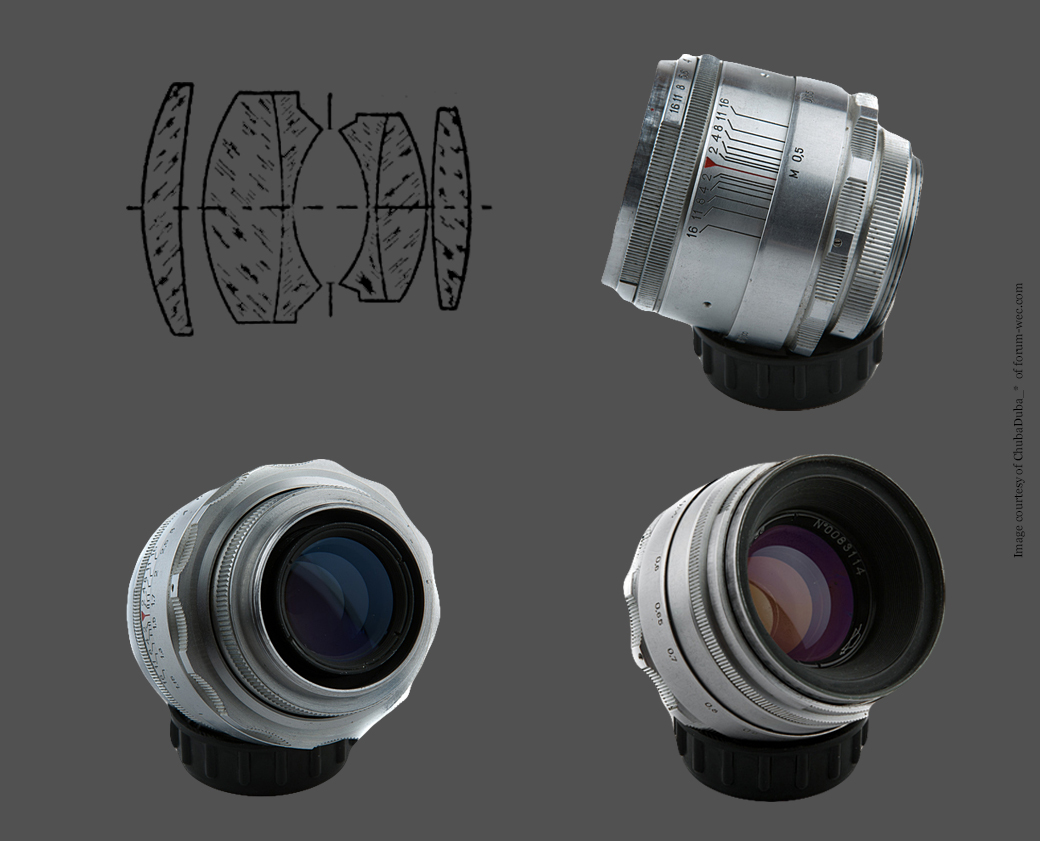
JUPITER-9 85mm f2
Here is Jupiter-9 short review http://www.reduser.net/forum/showth...rvival-Guide&p=1712433&viewfull=1#post1712433

Tair-11 lens review here http://www.reduser.net/forum/showth...rvival-Guide&p=1728060&viewfull=1#post1728060

I publish my documentary about Faroe Islands, all shot on Canon C100 (wide DR gamma) and KMZ lenses reviewed here.
So you guys may look for overall picture character of USSR lenses, x264 HD master for downloading here: http://goo.gl/f5FLGx
And here is YouTube version, heavy compression. I've added a grain, but that was a huge mistake since Youtube then compresses it to mud...
This 30-minutes doc is about social and political history of Faroe Islands from 50-s till 2000-s.
I was happy to work with a person behind this film, Petr Silaev, the author and producer, — he is known for "Exodus", a book of contemporary Russian classic literature I would say. It was nominated for numerous prizes, translated into English, German, Finnish, Swedish, Italian, Greek, Spanish etc... The best review I could find is here.
Krisitain Blak is a main storyteller in the first lyric part. First he is very kind and friendly person, and after that he is very prolific talented Nordic composer. His (and traditional local folk) music was used as a soundtrack here in the first part. Wiki page here.
The second part of the doc has more fun featuring 200 (Tveyhundrað), Faroese punk band (frontman Niels Arge Galán, drummer Uni Arting and the bass Mikael Blak). Wiki here.
Now I join RU to share my experience and knowledge of Russian photo- and cine glass.
I start with M39 (reflex mirror) and M42 Zenit SLR photo lenses.
Full frame 35mm film, 36x24mm (covers VistaVision).
These optics were designed at 50-s and 60-s, produced all the way till the fall of Soviet Empire at 1991 (some of them till 2000-s; others are now being revived at production).
I do documentaries, and this set is ideal for personal own and use being cost-effective, small, portable and yet very capable, fully usable wide open, with nice colors and in a way of a posh appearance.
All this one should take only to the lenses fully refurbished and serviced. Do not expect bought-for-nothing 50 years old Helios will be a joy to work&play
Though, guys, many of Mirs and Helioses, having shitty rusty backlash barrels and even scratched optics, give extremely well performance. Any lens, Zeiss, Cooke or Angie of that age, needs a service after so many years of dusty shelf living, and do not forget the life was the harshest of all here in Russia.The set includes:
20mm f3.5 Mir-20m
28mm f3.5 Mir-10A
37mm f2.8 Mir-1
58mm f2 Helios-44
85mm f2 Jupiter-9
133 f2.8 Tair-11
135 f3.5 Jupiter-11
180mm f2.8 Jupiter-6
300mm f4.5 Tair-3
Enough of words, let's get some pics and video.
My set looks like this, handpolished barrels, all new tiny screws, black matted internals, super smooth lube inside which does not evaporates and works till at least myself tested minus 18 Celsius (-0.4°F).
All have Canon EF mount:
Now going linear route from 20mm to 300mm
strarting with
MIR-20M 20mm f3.5
Mir-20M lens diagram and appearance:
Mir-20M is quite big, the huge front element screams out 'look at me!' and attracts attention like UFO
Front max diameter is 92mm (3.62''), 470g weigh (1 lbs.). It is made out of black anodized light aluminum alloy, no paint or plastic parts.
Internals are of the same, all metal. So it will work and last very long if the grease at the helicoid is okay.
We all like moving pictures more that text (sorry RU forum
, so I start with it.Mir-20m wide open handheld rough conditions (pls turn on 4k playback):
Mir-20M is my base lens which always sits on cropped (1.5x, s35) sensor, ready for tripod work and handheld.
It is wide enough for most of my work and still it does not smash the edges with that perspective distortion which makes people oval ugly and gives a viewer that distant feeling.
20mm on crop is a good lens for participation, in-action-being — all the things we documentary filmmakers like.
Besides, I can shoot 20mm for quite a looong time handheld (or moving) without shaking (actually there is some, but it is okay and as we say it is just 'natural picture breathing'; if you do not like it, use a couple percent of Warp filter in Adobe apps).
Mir-20M being single coated has 75% Transmission Coefficient.
That means that the actual T-Stop of Mir-20M is ~T4.
Back to the video.
The previous one was in dark light, handheld and has aggressive feeling.
Mir-20 can be very subtle though.
It has God's rays type of flares which I used as a metaphor of poetic creativity and inspiration from on high (pls turn on 4k playback):
Mir is fully usable wide open, no blooming or softy halo whatsoever. It has good definition in the central part of the image, and when you close the iris down you just add resolution across the frame and the contrast arises. When you compare central spot at f3.5 and f8 the actual definition is the same, while contrast differs. So I can not say Mir-20 has flat field and sharpness everywhere (but what lens has it?) at f3.5, but this optical imperfection actually focuses viewers to the central guidelines of the frame where action takes place in 90% of scenes. Besides, central spot sharpness adds dimension, and does not overload viewers eye with tons of insignificant details on modern ultrasharp sensors.
40% edge vignetting on full frame helps that too, but I frankly did not ever seen it on crop.
An interview, wide-medium shot, wide open with some grain added in post:
Closed to f5.6 or f8, who said that 20mm is not a portrait length?
An old man waiting for the authorities to throw him away from his native 300-years old history home place:
***
Every time I look through the Mir-20, I feel happy. It has a kind, cheerful feeling picture.
The shot below was taken the lens that had 1/4 inch deep scratch on the back glass, that lead to no other defects than high light scattering.
But what I see now is that thing helps you feel the light, see it like substance.
Grain added in post.
Mir-20m has rather warm color. The contrast is not high. Which is good cause it seems it gives me more of dynamic range, especially in the darks which are lifted and never crushed. It is like using DigiCon N1 filter of Schneider.
Again, this leads to good handling of extreme contrast scenes and to the subjective feeling of the light as a material substance you can touch.
Do I need to say that if you just shoot with Mir-20 having the camera all standard gamma sharpness etc settings, you instantly get the interesting look and color?
What is more, if you wish, the picture can be pushed to extremes with ease, it has the latitude, it wont fall apart.
What I am trying to say here is you can save time and money and do no color correction at all and still you have the different look, a stylish organic subtle look
MIR-10A 28mm f3.5
Mir-10A lens review here: http://www.reduser.net/forum/showth...rvival-Guide&p=1705033&viewfull=1#post1705033
MIR-1 37mm f2.8
Update! Mir-1 lens here http://www.reduser.net/forum/showth...rvival-Guide&p=1705466&viewfull=1#post1705466
HELIOS-44 58mm f2
Update! Helios-44 lens review here http://www.reduser.net/forum/showth...rvival-Guide&p=1705828&viewfull=1#post1705828
JUPITER-9 85mm f2
Here is Jupiter-9 short review http://www.reduser.net/forum/showth...rvival-Guide&p=1712433&viewfull=1#post1712433
Tair-11 135mm f/2.8
Tair-11 lens review here http://www.reduser.net/forum/showth...rvival-Guide&p=1728060&viewfull=1#post1728060
I publish my documentary about Faroe Islands, all shot on Canon C100 (wide DR gamma) and KMZ lenses reviewed here.
So you guys may look for overall picture character of USSR lenses, x264 HD master for downloading here: http://goo.gl/f5FLGx
And here is YouTube version, heavy compression. I've added a grain, but that was a huge mistake since Youtube then compresses it to mud...
Faroe Islands. Democracy in the Ocean (Documentary)
This 30-minutes doc is about social and political history of Faroe Islands from 50-s till 2000-s.
I was happy to work with a person behind this film, Petr Silaev, the author and producer, — he is known for "Exodus", a book of contemporary Russian classic literature I would say. It was nominated for numerous prizes, translated into English, German, Finnish, Swedish, Italian, Greek, Spanish etc... The best review I could find is here.
Krisitain Blak is a main storyteller in the first lyric part. First he is very kind and friendly person, and after that he is very prolific talented Nordic composer. His (and traditional local folk) music was used as a soundtrack here in the first part. Wiki page here.
The second part of the doc has more fun featuring 200 (Tveyhundrað), Faroese punk band (frontman Niels Arge Galán, drummer Uni Arting and the bass Mikael Blak). Wiki here.
Last edited:


