Welcome to our community

Be a part of something great, join today!

  • Hey all, just changed over the backend after 15 years I figured time to give it a bit of an update, its probably gonna be a bit weird for most of you and i am sure there is a few bugs to work out but it should kinda work the same as before... hopefully :)

Reasons for using a DIT

Um, of course they are. They are two entirely different pay scales. As recognized by 600.

DIT and Digital Loader.
 
I've tried this recently, Make 1/8th Res .mov's from all the footage just to be sure it will all encode through RedRushes ON THE SET, After each Mag is Downloaded and before the Mag is cleaned and returned to Camera. If a clip wont encode thats a Huge RED Flag for Corruption.

That's a great idea, Alex, I'm adding that to the checklist....could be even faster with a mobile Rocket card and well worth the time and effort...
 
Am I wrong or is there really no need for a D.I.T (or whatever abbreviation you prefer) on a job with a HDSLR? I would have thought it was a bit or a lot less necessary than on a camera like the R1.

Oh well, if they really want me on it, money's money.

I'd say you're very wrong. On a job with a camera that shoots in a RAW codec, having a bad DIT, or just a data wrangler, doesnt really affect the color of the final product. If dailies are rendered into the wrong colorspace, its just a matter of time to fix it later.

On a HDSLR job, where color settings are baked in, and the possibilities of color correcting h264 footage are severally limited, you have one chance to get the color right on the day of, and if you don't you're boned.
 
If there is a serious amount of money on the line -- or even a serious amount of psychic investment and labor, you want a person dedicated to data protection in any tapeless workflow. Period...it doesn't matter if you're shooting an HVX, DSLR, RED, EX-1, etc.

Bomb-proofing should mean more than simply copying - if copying files to a couple of hard drives and handing back the media to the shooter is all that you're doing, then yes, you're an overpaid clerk in a convenience store, babysitting the register.

But if you are providing the maximum degree of data protection, with multiple layers of checking, testing, securing, and review...then you're the security systems administrator in the bank vault.
 
What's interesting to me is how it works if you look at the 35mm or 16mm film production world. First of all, everyone in camera department understands the technology being used and can do the other department members jobs. A 1st AC can load a magazine as well or better than a loader. On a well budgeted 1 camera shoot with a reasonably demanding schedule there is a 1st AC, 2nd AC and loader. However on a more tightly budgeted project you only have a 1st and a 2nd/loader.

The truth is on most commercial sets there is no need for a DIT in a blackout tent when you are shooting a RAW codec. I've worked as a DMT, Digi Loader, DIT, Wrangler, Red Tech, whatever you want to call it on commercials in Los Angeles for the last two years, and most DP's do not want to set a look in camera. They want to shoot it clean. A feature or TV show may be different. I'm not saying it's not better to have a DIT staring at a vectorscope in a black tent, I'm just saying it's not necessary.

Digi Loader is a crucial position, but there are definitely productions where there is no need for 3 people in camera department. A 4 day stage shoot on a white cyc-with 1 talent hitting the same three marks on an Optimo 12x that doesn't change does not require a 1st, 2nd and Digi Loader. A digi loader also needs to know how to be a competent 2nd AC who is capable of laying marks and helping the 1st.

One thing that is important is that when the Digi Loader is not actively copying or verifying files, he/she needs to get back to set and help the 1st or 2nd as much as possible. There is no need to stare at a 45 minute copy for 45 minutes. Start it, time it, report back to set, check it, verify it, and clean the drive and bring it back.

The Red Tech position has changed a lot in the last two years. More and more 1st AC's, especially the smart ones, know all the menus on the RED Camera perfectly. Several of them, own RED Ones. They know them as well as they know an Arri 435. As this continues to evolve the camera department will return to the way that it exists in film, where everyone knows everyone else's job very well, and the size of the camera crew can scale with the size of the production.
 
I'd say you're very wrong. On a job with a camera that shoots in a RAW codec, having a bad DIT, or just a data wrangler, doesnt really affect the color of the final product. If dailies are rendered into the wrong colorspace, its just a matter of time to fix it later.

On a HDSLR job, where color settings are baked in, and the possibilities of color correcting h264 footage are severally limited, you have one chance to get the color right on the day of, and if you don't you're boned.

I'm not at all sure that the lack of baked-in color settings means a Red Tech doesn't need to worry just as much about the image as a traditional video DIT. In some respects, shooting with a raw camera is actually more complicated, because you can't see exactly what you're getting. It's sort of halfway like shooting film, where to some extent you need to understand what will be captured based on abstract technical information (light meter readings with film, histograms, false color, etc. with Red) -- except with film you can assume the DP has this skill, whereas digital raw cameras are still new enough that you can't. When I'm out as a tech, I'm quite frequently asked questions that, if I don't get right, will negatively impact the captured image. On a few shoots -- and we're not talking about student films here -- I've even ended up being the guy dialing in exposure on most shots.

Eventually it will be routine for ACs to know all the menus for popular cameras, and interpreting a histogram will be as common a skill for DPs as reading a light meter currently is. Until that day, a Red Tech should be much more than just a Digital Loader.
 
From my experience, the look and technical settings for the cinematography is the cinematographers job and as a DMT or DIT (the terms are loose in some situations) I had to be flexible instead of bound to a certain area of work. Some jobs I had to do all the settings on the camera, test it, give the cinematographer what he wants (then what job does the second assistant photographer do when shooting red?). Other times I don't even touch the camera, just backup the data and review it. Some of the times I even render it into MXF files for editorial work in Avid.

As I see it, a DIT do alot of the work that the cinematographer, second unit photographer and clapper/loader is really hired to do. Why does the Red One become more special then knowing how to handle an Arri 35mm or other HDCAMs? Do those cameras require a special loader and a special guy for the setup of the camera? No it's the cinematographer, second assistant and clapper/loader who does all that.

Then alot of times I've been working in situations where there isn't any time to do all this, where I have to just offload and give back the cards. I've transfered through the fastest way possible and there isn't much time to do reviews of the material. In those cases I have to be flexible and be creative and plan in realtime how to handle it without the production getting schedule setbacks.
 
From my experience, the look and technical settings for the cinematography is the cinematographers job and as a DMT or DIT (the terms are loose in some situations) I had to be flexible instead of bound to a certain area of work. Some jobs I had to do all the settings on the camera, test it, give the cinematographer what he wants (then what job does the second assistant photographer do when shooting red?). Other times I don't even touch the camera, just backup the data and review it. Some of the times I even render it into MXF files for editorial work in Avid.

Yeah, there's always a sort of interesting process right now as a Red Tech of figuring out, at the beginning of each different shoot "OK, so what's my job going to actually be on this set?" Some DPs seem annoyed if you hang out around the camera too much, others want you to check their exposure on every shot. As a tech you need to be ready for either of those situations, or anything in between.

As a producer, unless you've worked with a particular DP with the Red before and discussed these issues with him in detail, you probably want to hire a tech who's ready for either of those situations, even if it costs a little more than getting a guy who only knows how to copy footage around.

As I see it, a DIT do alot of the work that the cinematographer, second unit photographer and clapper/loader is really hired to do. Why does the Red One become more special then knowing how to handle an Arri 35mm or other HDCAMs? Do those cameras require a special loader and a special guy for the setup of the camera? No it's the cinematographer, second assistant and clapper/loader who does all that.

That's how it probably should work, and eventually it probably will. But there's a lot of new information to learn, and most of it is pretty esoteric for people who don't have backgrounds with computers and/or digital imaging. It's going to take some time for these skills to become commonplace in the industry -- until then it makes some sense to have a guy on set who makes it his job to understand everything related to the camera system really well.
 
That's how it probably should work, and eventually it probably will. But there's a lot of new information to learn, and most of it is pretty esoteric for people who don't have backgrounds with computers and/or digital imaging. It's going to take some time for these skills to become commonplace in the industry -- until then it makes some sense to have a guy on set who makes it his job to understand everything related to the camera system really well.

Then, imagine a second assistant photographer or a cinematographer who's badass on Red One or the kind of workflow it requires, then a clapper/loader who's very experienced with handling digital material and who knows the importance of backups and safety. A producer will probably feel more safe with those people or that kind of a team, then having a DIT on set and the camera team not knowing how to handle Red properly.

So why don't producers search for those people instead of hiring DIT's, DMT's or an entire DIT company with alot of people doing backups, handling data and telling people how to do things?

If I were a producer the smart choice would be an experienced camera team. If I were a cinematographer I better start learning how to use these digital tools or else I'm not gonna have a job when everyone's using them (we will get there eventually).

So, for me as a DMT or DIT, is it very clever to invest in the equipment needed for that kind of work if it's probably not going to be needed in a couple of years (or months, we don't really know)?

I remember a company who started out with outrageous prices for their services and then people like me came along doing their job at a much lower price. They had monopoly then and now they have to fight to get producers to hire them for those prices. Yes, they offer a very safe system, but in most cases it's more safe then needed. I've done work with far less and inexpensive equipment and still hold an error-free record with a bullet-proof workflow (knock in wood)
 
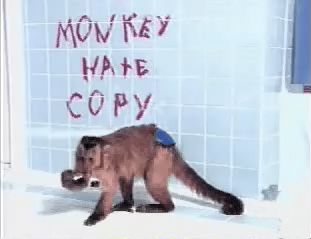
CopyMonkey.jpg
 
Back
Top