Welcome to our community

Be a part of something great, join today!

  • Hey all, just changed over the backend after 15 years I figured time to give it a bit of an update, its probably gonna be a bit weird for most of you and i am sure there is a few bugs to work out but it should kinda work the same as before... hopefully :)

RAW .. it's a format.

Sarah C.

Well-known member
Joined
Aug 15, 2008
Messages
463
Reaction score
0
Points
0
Location
Joined REDUser while sitting at a desk for Fast an
Dean Merrill just posted this great link http://www.siliconimaging.com/DigitalCinema/Files/CameraRawWorkflows.pdf in the 1.2.3.. exposure thread and I am reposting here along with this question.. or maybe rhetorical question to cine and still photographers here.. maybe it's semantics or too quick answers...

When I discuss lighting and exposure with someone who also "shoots RAW", before I can even finish even just banter on an artistic technique I get "oh, you shot RAW.. that means nothing is baked in."

Why does this happen? I know what RAW is.. in a simple statement: it is a FORMAT of saving data.

When I light, or use lighting and make exposure choices I am doing it for the FILM or SENSOR and the associated dynamic range of the capture device - be it CCD or CMOS, or film neg or pos.. Knowing that what is shot is going to be recorded in a format that allows a wide-latitude of changes is great, but it shouldn't preclude me from owning to what the chip or film can capture in a given moment. If I have 11 stops of DN, I should be creating the best lighting and exposure to optimize that DN, keeping signal-to-noise level high-as-possible. I am "one of those people" who love to push the limits of DN, so I very much care where my extremes might land on a histogram or waveform and what kind of tonal curves(in the vein of lighting balance) I have before it is recorded.

"..not baked in."

Well, my lighting will [mostly] be... and my exposure will dictate how much room I'll have to manipulate the RAW formated files later. RAW is a great format, but it will not make me lazy with lighting and exposure.

So what's up guys? Why when I speak about what happens before the capture you are already on the post-processing tangent? Why should I [or anyone] want to discuss the tech of "fixing" something that may not be broken..yet?

thx,
~s
 
The only RAW format i have shot has been stills on my Nikon DSLR, but I am very excited to use it in video. I miss working with film negs, since there was just so much info to work with, and you can tweak the processing to your desired look.

I have been extremely disappointed with the HVX200, since i really like to push the image in post. The HVX just falls apart, the the noise is just no good. I have thought about the HPX300, but the Scarlet is going to change the market when it is released, making the HPX300 obsolete.

BRING ON THE RAW!
 
Hi Sarah

Not sure if this addresses your query "exactly", but even when shooting film you are shooting RAW (neg) but exposing based on your processed output. For example, television versus film. You may be more bold with underexposure if you know that your film will go to print and be projected.

In the same way - as I am sure you are aware - shooting RAW (or REDCODE RAW) allows you to apply a look in the form of metadata which allows you to light for your desired output. REC709 for broadcast as an example. By having your desired "processed" look on hand while you are lighting allows you to exploit the dynamic range based on how your end product is going to be viewed. By "checking your RAW" you have the flexiblity of knowing that if you need more information you have it.

Have you ever looked at your negative flat and unaffected by a curve in a telecine? Not so pretty. In the same way - lighting for "RAW only" is unrealistic. I guess you could do that - but then you are lighting to get a solid "negative" - not lighting with an end look in mind. By toggling RAW and your look (in RED's case) you have the best of both worlds.

RAW is a capture format - not a display format.
 
I think the problem with having it baked in is that you are eliminating most of the leeway you would otherwise have in post (if I'm interpreting the term baked in correctly). If you're trying to capture your final image while you're shooting you're really putting the cart before the horse. The process of capturing images hasn't changed, it's just the tools we use to do the job have gotten better.
 
@Dylan, and Leaf

Right! What gets me surprised is when it is inferred that the RAW format, because of its uncompressed linear nature is the fix-all, do-all. It can't give you more than what was captured in the first place. It just gives you more numbers (read: data) to massage in post. If your scene exceeds what the sensor can record, you are still only going to get in your RAW data what the sensor can see.

So if you starve your blue channel and record noisy shadows...
Or if you overexpose your scene 4 stops...

--the RAW format won't save you. Just shoot better in the first place!

Which is all my point/thought here. Own up to the sensor and its dynamic range first. Great if you record to a digital format, better if you have the latitude of RAW. You still gotta capture great picture to make great picture even from this "digital negative". Same with film shooting... right? All latitude gives you is the ability to improve bad to good(maybe), good to great, but never bad to great. ..imho..

Should RAW post-processing be specific to fixing imagery or improving it? I'd hope for the latter myself... again, imho...

~s
 
Last edited:
My thoughts on this are pretty simplistic. I see RAW as being putty. The task at hand with the RED one is to get the highest quality putty available (most data you can squeeze out of the sensor for the scene being shot), take it into the putty room (post) and sculpt something. I think people from film background are used to "sculpting the putty" to some degree with the camera, then polishing it in the putty room.

Like I said... pretty simplistic view.
 
The task at hand with the RED one is to get the highest quality putty available (most data you can squeeze out of the sensor for the scene being shot), take it into the putty room (post) and sculpt something.

Yes... Any format is putty... some are more easily manipulated than others. I would go so far to say that the whole camera dept.(well, everyone involved from PAs to the investors) are after the highest quality they can make/manipulate, whatever the gear. ..imho...

I personally get a kick out of squeezing wine from rock(when the situation comes up)... but working with/around elite gear such as Red One I'm not shy about high expectations. My comments above are not about what Red One can reproduce, but what we should be giving it to work with.

~s
 
RAW is a philosophy. It has a number of elements:

1) delay as many decisions as possible to as late as possible in the chain
2) use metadata rather than render-in
3) metadata is a chain of links back to the decisions made in camera
4) ability to reference back to the sensor and what it saw

and probably more.

Graeme

This includes not sharpening at any point until you get to the output stage where you sharpen specifically for the resolution and format you're targeting.

The goal is to preserve the resolution from the capture through the images but not bake in the perceptual sharpness.

Other cameras bake this in at the camera stage but it's also why they also tend have some amplifed sharpening artifacts when delivered to different formats.
 
Shot to Shot

Shot to Shot

I would add that when you shoot a "baked" format like H.264 on a Canon 7D you have little range to adjust the images in post without bringing up the compression artifacts,

So when you want to do shot-to-shot color correction you cannot get the same freedom that you can shooting with a true RAW Digital Cinema camera to match the Color Correction from shot to shot.

Say you are shooting in weather where the time of day and clouds and sun shift alot over the days shooting and you are in and out of the sun and shade.

When you want to do the CC on the edit, with H.264 you need to live with what the camera "baked" into the look of each shot. But if you shoot true RAW sensor data and under-exposed enough you have more data to adjust to match the shots to look more like a well graded film answer print, than ENG footage.
 
This includes not sharpening at any point until you get to the output stage where you sharpen specifically for the resolution and format you're targeting.

The goal is to preserve the resolution from the capture through the images but not bake in the perceptual sharpness.

Other cameras bake this in at the camera stage but it's also why they also tend have some amplifed sharpening artifacts when delivered to different formats.

Yes, sharpening philosophy is a good one to add in. I liked to do creative and output sharpening right at the end. Creative sharpening is what you use sharpening for a visible effect, and output sharpening is where you account for the losses / characteristics in the output device, and in the case of RED footage, it's basic un-sharpened nature.

It should also be noted that you must be doing output sharpening in the gamma space of the final output too. Try sharpening in linear light, then grading to a nicely graded scene and your sharpening will now be everywhere and not look anywhere near the same.

Similarly downsampling / scaling looks very different in linear light to that which it looks in a gamma space. Although linear light is great for some things (compositing / adding images together, colour space transformations) it's not any more universally applicable than any particular gamma space is.

Graeme
 
Hi Guys,

Agreed! A lot of what you speak of is "tried and true" methodology used in still photography too. --I don't mean just since the use of DSLRs and variations of a RAW format. Maybe what I've bumped into are folks who are so "wow'd" by the implications of the RAW format that it's the first thing on their mind. Clearly.. there are people here (like yourselves who have posted on this thread) who know exactly what the abundant formats of codecs do and the ramifications of using them at various stages in any given still or motion photography pipeline.

Baking it in...

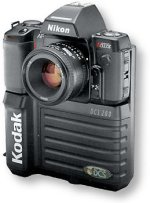
Oh of course I know what that means, maybe more than some here. Some of the first "interesting" bake-it-in cameras/formats I've ever used: Bolex R5(16mm), Sony Betacam SP for EFP(electronic field production for those unfamiliar with this older terminology), Kodak DCS-200 (a portable Nikon SLR, with a digital back and a full size hard drive beneath it!). I can't think of a time when I approached lighting or camera work and decided to "limit my options in post". Whatever the still or motion format, my goal has always been to maximize the medium. Shoot first, tweak later... I want perfect Zone System negatives to play with in the darkroom for prints.. I want chromes with as much color and tonal range as possible for various forms of output.. video.. give me a healthy/strong signal: don't crush my blacks or blow out my whites. Traditionally taking video to post, or beautiful negatives to print was lossy... idea was to build in the best imagery possible when making the camera original.. be it analog or digital.

Which brings me back to a format that actually has been around for what 20+ years now(in various ways, various functions)? RAW image format. I believe there are shooters on this forum of two ilks: those who know exactly what they are doing when they light and shoot and have very specific goals in mind for creating the digital negative(most here), and those who have little knowledge or experience who think that the RAW format in itself will save them or otherwise produce visually stunning imagery out of average photography(scant few).

Either way, I am still a little surprised when someone would appear to even hint that lighting and camera is of lesser significance to the RAW format or any format's post-processing. One would hope that a cinematographer's art would be race ready for any format, with only minor nuances to accommodate the chosen medium of the day.

~s
 

Attachments

  • DCS-2001993.jpg
    DCS-2001993.jpg
    20 KB · Views: 0
Last edited:
Either way, I am still a little surprised when someone would appear to even hint that lighting and camera is of lesser importance to the RAW format or any format's post-processing. One would hope that a cinematographer's art would be race ready for any format, with only minor nuances to accommodate the chosen medium of the day.

~s
Kinda know how you feel Sarah C. Personally I haven't adopted texting and would prefer we go back to the telegraph where you paid by the word when you sent a message. Fewer and more relevant messages. :001_smile:

But things change and shooting the RED way makes it possible to create without using the old tried and true workflows. Even the most novice users out there who have no formal training, could with a little reading (here on Reduser) and some hands on with the camera, plus the hopeful emergence of RedCine as at least, an intermediate quality post workflow tailored to Redcode RAW and not bothering to accommodate every other codec in the world, those novice users could affordably get their creativity seen. There are a lot of "Paranormal Activity" types out there waiting for this.

Of course there will be need for hardcore cinematography for some time to come. But that novice I spoke of can do "Cinematography Lite" on his or her project and deliver something that's passable for his or her story. Besides, there will be holdouts that will refuse to shoot the new system because of nostalgia for the good old days or working rote. And they will have the backing to do this.
 
Last edited:
@Elsie..
no no dear... I'm not old at all. Just highlighting the fact "RAW" is a format, that the real goods need to be in front of the camera first. As you illustrate in your note. ;)

This thread is going on concurrently...
http://reduser.net/forum/showthread.php?t=39008&page=2

..Illustrates very specifically what I've noted.

~s
 
Sorry, didn't mean to suggest you are old. It's just that in the digital world things change so quickly that "old" can refer to something that happened last year... or when RED springs a surprise on us... yesterday.

Just was trying to address your lament that good cinematography is not getting its proper respect. It still is... but there are some who will pass on the oscar nomination just to get the job done. That's no reflection on your craft, just the new normal.
 
I don't even shoot Red myself(have worked around it and people who do know how to use it), but end up defending it REGULARLY because of those folks who shoot but don't respect the camera. They(shooters/filmmakers) proudly advertise "shot on Red" but didn't get the goods in front of the camera in the first place, or maybe didn't handle the post well. The fancy sensor and broad-latitude RAW recoding format can't "make a silk purse from a sow's ear" kinda thing... "Nothing is baked in" except maybe bad handling... per Murphy's Law.

I shouldn't care, but I do. This is a great camera with great minds behind it.

~Well.. on to the holidays! Dreams of RED cameras and EPIC productions to all. *<{:oD
 
I had an interesting recent experience related to this thread.
I shot a severely underfunded short film recently with my RED.
I loaded up some basic looks for different scenes (day exterior/night interior, etc), so that we had something decent to look at on set.
I just got word from the producer that we are color correcting next week.
She has an hour booked. Yes, one WHOLE hour! Then I find out we are color correcting from a prores file! Youch!
After discussions with the director, we have decided to output the prores file with my look and only do minor tweaking/shot matching during our limited color correction session.

He is very happy with the look - as am I. Going back to the RAW files and "starting from scratch" would take more than an hour!

In this case - with hindsight being 20/20 - baked in was our friend. And in a way offered me the best opportunity to really author the look.
Dylan, just wondering if baked in is the proper terminology here? Maybe pre-referenced would be more descriptive?

At any rate, your experience provides food for thought.
 
Dylan, just wondering if baked in is the proper terminology here? Maybe pre-referenced would be more descriptive?

At any rate, your experience provides food for thought.

Or perhaps "half baked". ;-)

By outputting to Prores and having only this file available at the final color correct certainly limits you in the same way as having a look "baked in" to a tape format and doing a "tape to tape" color correction.

The raw material (unbaked) is available, but the budget won't allow for us to access it.

So it is really "just" money that is determining the post flexibility.
 
Back
Top