Welcome to our community

Be a part of something great, join today!

  • Hey all, just changed over the backend after 15 years I figured time to give it a bit of an update, its probably gonna be a bit weird for most of you and i am sure there is a few bugs to work out but it should kinda work the same as before... hopefully :)

Pilot shoot in Chicago

Perhaps the second lamp is slightly purple
because the bulb inside is slightly dimmer than the others.

High pressure discharge lamps (sodium, mercuray vapor, etc...) can indeed change their output spectra sinigificantly as they are starting to fail. Purple tinging is not uncommon.

The other possiblity is a bad ballast in that fixture: either not ionizing the gases completely, ir if it is overheating and "blinking out" then this frame may have been caught shortly after the lamp reignited, and it's not fully warmed up yet.

-sc
 
Rating a sensor faster is defacto underexposing it more, thus there is more highlight information being recorded, but less shadow information.

Basically higher ratings give you less clipping but more noise, and lower ratings give you more clipping but less noise.

Let's say you have "x" amount of light and your meter at 250 ASA says to shoot it at f/2.8. Well, if you changed your meter's rating to 500 ASA, it would tell you that the same amount of light should be shot at f/4.0. But if the actual sensitivity of the sensor or film stock hasn't changed, using f/4.0 instead of f/2.8 is robbing the sensor/film of one-stop of exposure. So your bright areas won't clip as quickly but you'll be recording less shadow information. And once you lift everything in post back to look normal in brightness, you are increasing the noise level. But if the sensor has a really low noise floor, as the M-X does, you can get away with that.

A remarkably eloquent description of the 'virtual' increase in ISO the new MX cameras will deliver.
 
Hey David

Have you tried bracketing shots like this and comparing the results?

I bet a shot like this would look really nice at 1600 ISO and stopped down to get a little more out of the clipped whites. Not that you necessarily want to see detail in a streetlamp - but I suspect the overall image might look better given how well the new sensor handles underexposure and noise.

That's a possibility, but as the old saying goes "Know Thyself", I get into more trouble in post with underexposed images than overexposed images, because I like mood... and 80% of the directors and producers I work with have a brighter sensibility and end up pushing me to lighten a lot of shots in post. So I have to be a bit more generous or conservative with my exposures or else my 1600 ASA shot will be a defacto 3200 ASA shot once I'm asked to brighten it by one-stop in timing.

I've found in the past that when I start getting cocky and over-confident and rating stocks or digital cameras too fast, it bites me later in post.

Also in the case of the street shot, it was the end of a pan off of a darker area of the city and I didn't do a stop pull to adjust for the brighter street.
 
David
Are you going to take advantage of the new line of Lee filters?

Maybe... Rosco showed me something similar last year. They make two new gels -- one is called "Urban Vapor" and is sort of what you think sodium vapor looks like (apricot-ish), and the other is called "Industrial Vapor" and truly matches sodium vapor (the gel looks like an ugly brown + green).

http://www.rosco.com/us/filters/cinegel.asp
 
David... it is really incredible that you take the time to help us all learn from you and see your work "realtime". Most big dogs don't take/have the time to do this. You have been ultra generous with your knowledge and expertise and posted in a very thoughtful, balanced and patient way. I know I speak for everyone when I say that we all appreciate having you here.

Jim

"Exactly! Well said."
 
I just did some rough tests, nothing scientific, comparing the Red (downconverted from 4K HD to 1080P) to the EX3 and the Canon 550D T2i. The Red had a Zeiss Super Speed on it, the EX3 had the stock lens, and the Canon had to the stock 18-55mm zoom, which I acknowledge is not a good lens, but I did shoot it at f/5.6.

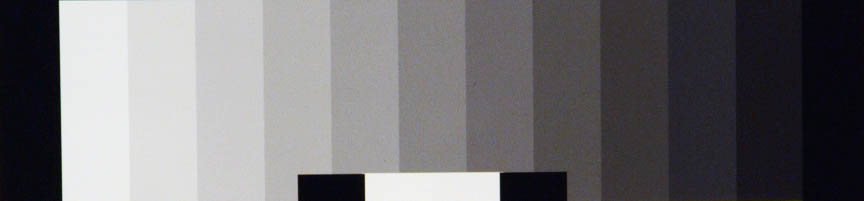
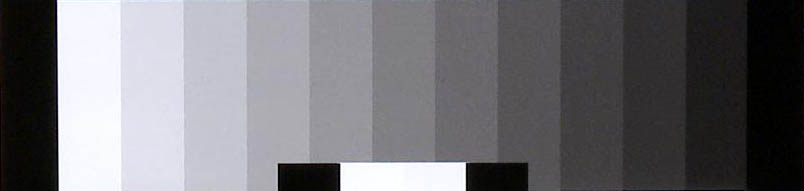
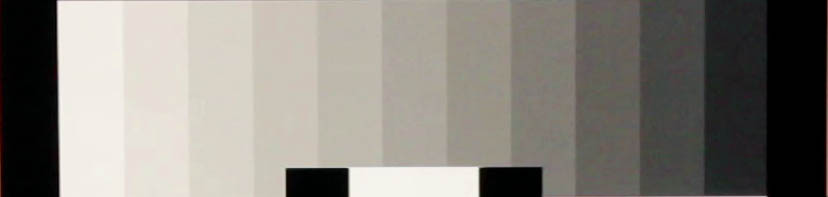
Here are some cropped portions of a chart I shot at 1600 ASA to test for noise in low-light. The EX3 was shot with a +6db gain boost to match the Red and Canon set to 1600 ASA. I didn't shoot the charts exactly the same size hence the mismath in the cropped size. But I didn't resize the 1920 x 1080 frames, I just cropped them down. They are compressed JPEGS though.

Cropped 1600 ASA Red frame
Cropped%20Red%201600%20ASA%20Noise.jpg


Cropped +6db EX3 frame
Cropped%20EX3%20Noise.jpg


Cropped 1600 ASA Canon frame
Cropped%20Canon%201600%20ASA%20Noise.jpg
 
Here is a focus chart. Again this is not properly done in terms of distance from chart to lens, so don't try counting lines or anything, it's just to give me a rough impression of the sharpness difference for a 1080P project.

The Red was converted from 4K HD to 1080P with no sharpening. The EX3 was shot with Detail OFF. The Canon had the Sharpness set one notch above O.

I removed the color from the JPEG just because I found the differences in the color tone of the white backgrounds distracting, but there is a faint amount of color aliasing in the Canon test if you see it in color.

Cropped Red frame
Cropped%20Red%20Focus.jpg


Cropped EX3 frame
Cropped%20Sony%20EX3%20Focus.jpg


Cropped Canon frame
Cropped%20Canon%20Focus.jpg


What all of this tells me is that the EX3 is more intercuttable with the Red for an HD show than the Canon 550D T2i is. The only difference is that the Canon would have the same DoF as the Red. But sharpness-wise, not to mention having all the controls of a pro HD camera, the EX3 is a better overall camera than the Canon in video mode. Size & weight & cost, of course, the Canon is the best. I did these tests to tell me what I can get away with when shooting an action scene in terms of slipping in some shots made with these other smaller cameras.
 
I guess you get what you pay for?

Graeme
 
Yes..the little HDSLR by themselves give an impression of sharpness
because of their shallow depth of field.

But it's just an impression as all the tests have shown they are in reality quite low resolution. But what did people expect they were
designed for newspaper still shooters to be able to post web video.
 
How's the show going David? Anything interesting you could share with us about how you are using M-X?

Also, are you shooting 4.5k or just 4k (for an easier workflow till the plug-in for FCP)?
 
Like most TV shows shooting on the Red, we are shooting 4K HD mode, aka "quad HD" (3840 x 2160) for a simpler, cleaner conversion to 1920 x 1080.

We were shutdown for two weeks in the middle of prep due to it taking longer to fill out the cast than they thought, so I went home during that time and only arrived back in Chicago a week ago to continue prep. We have one more week before shooting starts, though last night we drove around the city, rich & poor neighborhoods, with the Red M-X on the nose of a camera car so I could shoot straight forward and sideways for car POV shots.

We also had an EX3 in another car shooting handheld through a car window to get more abstracted shots, the Red was used for the wider beauty shots since it has the best resolution. Conversely it was also used to grab tight bits from the camera car as we moved because I had a bigger zoom lens on it.

Then at night, we added my Canon 550D to the mix, sticking onto the sides of the picture car with a suction cup mount to get bits of car surface reflecting passing city lights. So three cameras rolling, I think we shot over 5 hours of footage.

The sensitivity of the Red camera helped when it became night. I've never done available light shooting with a T/3.1 zoom before.
 
Like most TV shows shooting on the Red, we are shooting 4K HD mode, aka "quad HD" (3840 x 2160) for a simpler, cleaner conversion to 1920 x 1080.

If I am planning to finish my film at 1920x1080 and shooting mostly at 3K 50fps 16:9, are there any issues with "conversion" of aspect ratio?

It's just 16:9 = 16:9 right?
 
You can convert any of the Red formats to 1080P. 16:9 is 16:9, it's just the aspect ratio. We will be shooting some 16:9 3K slo-mo stuff eventually as well. I believe the 4K HD mode just converts a bit faster with slightly sharper results to 1080P because of the simpler scaling. But certainly 3K, 4K, 4.5K all convert to 1080P nicely too.
 
Back
Top