Welcome to our community

Be a part of something great, join today!

  • Hey all, just changed over the backend after 15 years I figured time to give it a bit of an update, its probably gonna be a bit weird for most of you and i am sure there is a few bugs to work out but it should kinda work the same as before... hopefully :)

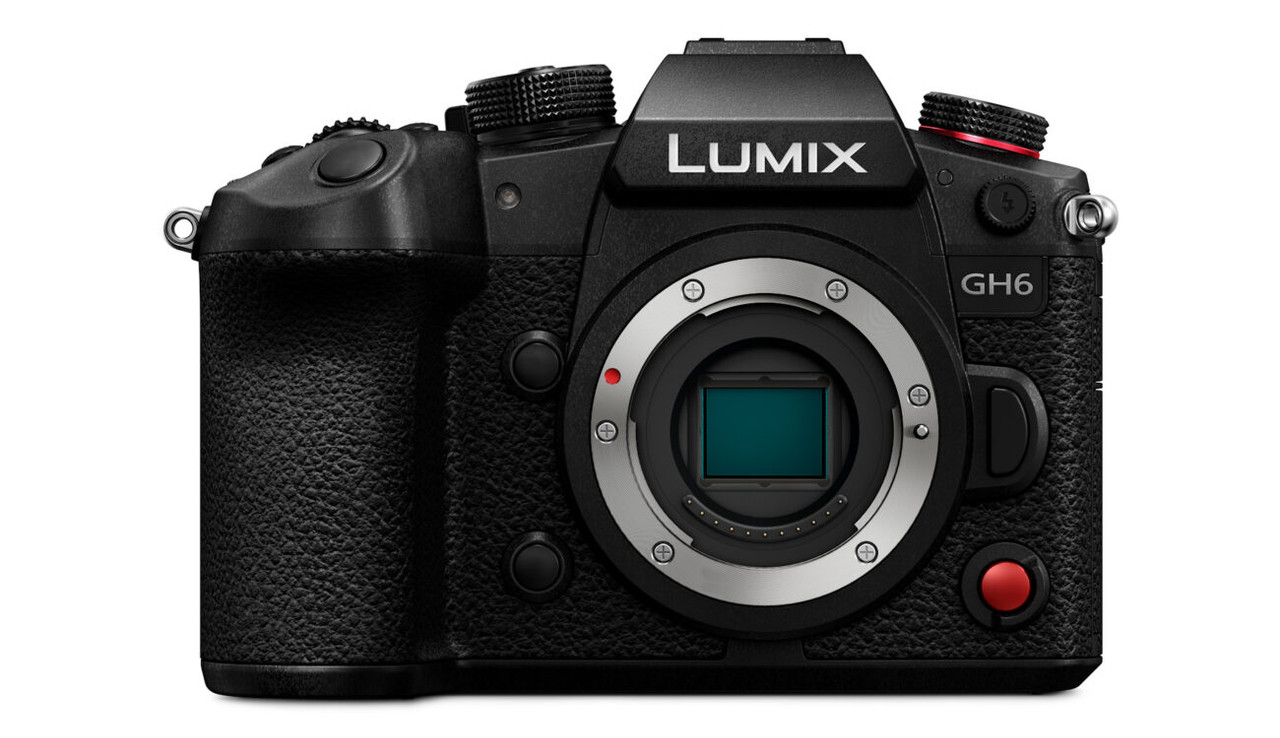
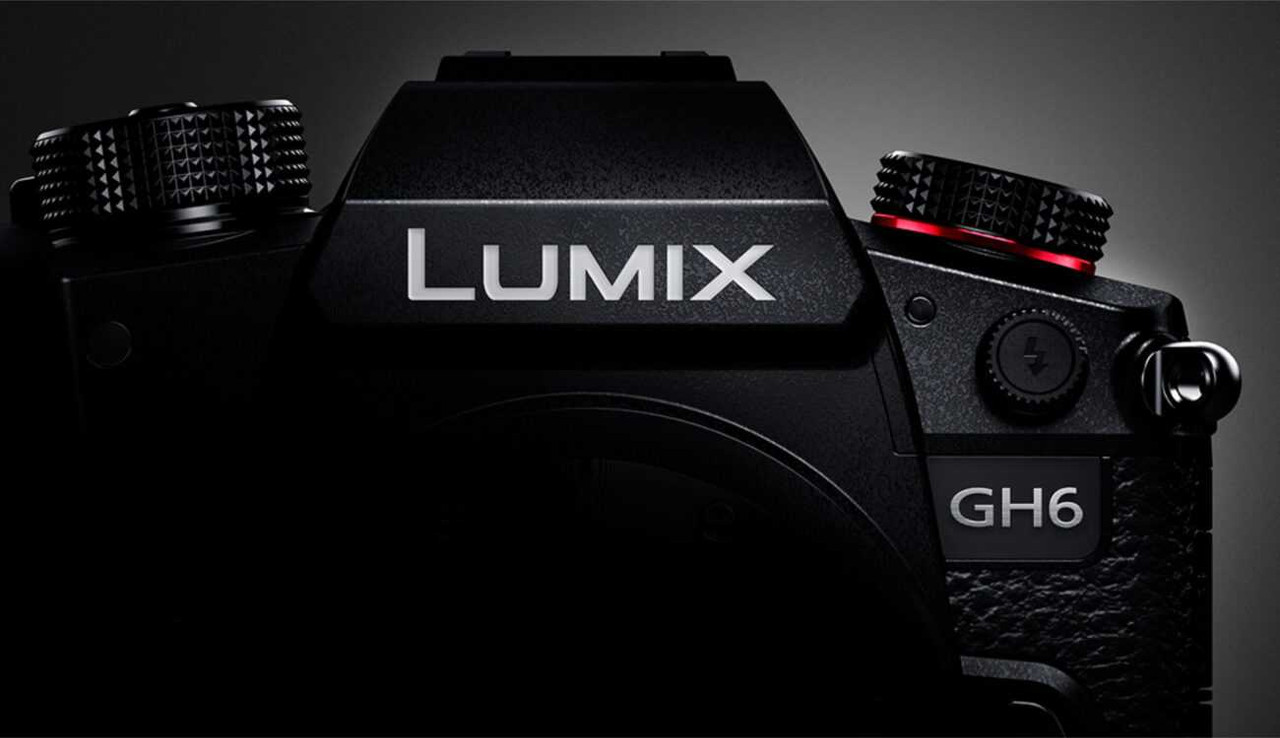
Panasonic LUMIX GH6 will be Officially Introduced on February 22nd

rand thompson

Well-known member
Joined
Aug 9, 2011
Messages
18,878
Reaction score
608
Points
113
By CineD

Article
https://www.cined.com/panasonic-lumi...february-22nd/
1644427575271.jpg


What we know

So what’s next? Well, what we know so far from Panasonic about the upcoming LUMIX GH6 is the following:
  • New high-speed Micro Four Thirds sensor and Venus Engine image processor
  • A variety of recording modes and shooting assist functions
  • Designed for photo/video hybrid-use
  • DCI 4K (4096×2160) 60p 10-bit 4:2:2 without time limitation when used under certified operating temperature (not yet further specified by Panasonic)
  • 4K 120p 10-bit High Frame Rate (HFR) and Variable Frame Rate (VFR)
  • 5.7K 60p 10-bit


Panasonic LUMIX Discussed – An Interview About The GH5 II, GH6, and More

by CineD


Full Panasonic GH6 specs and new images leaked!


by 43 Rumors

Article
https://www.43rumors.com/full-panaso...images-leaked/


Specs

25 million pixel PLF-less sensor

High resolution shooting of 100 million pixels

5.7K video

Sensor readout up to 300fps

High-speed readout of 120 fps at 4K resolution

Rolling shutter suppression

Computational processing capacity is about double

New intelligent details New 2D noise reduction High-performance 3D-NR (video) Improved AF performance Processing speed is 3 times faster than before DFD performance has evolved

New recording mode 4K120p 4: 2: 0 10bit 300Mbps 4K 60p 4: 2: 2 10bit 800Mbps / 600Mbps 5.7K 60p 4: 2: 0 10bit 300Mbps C4K 120p 4: 2: 0 10bit 300Mbps C4K 60p 4: 2: 2 10bit 800Mbps / 600Mbps Recording file method supports Apple ProRes in addition to MP4 and MOV 5.7K 30p Apple ProRes 422 HQ 1.9Gbps

Card slot: CFexpress TypeB slot, UHSII compatible SD card slot Weight: 739g

Dynamic range boost function: It is possible to shoot a wide dynamic range image at a maximum of 60 fps by synthesizing an overexposed image and an underexposed image in real time. Achieves a dynamic range of up to 13+ stops approaching the full size. The minimum ISO sensitivity is 800, and when using V-log it is 2000, so an ND filter is essential. Image stabilization:

Adopts an ultra-high performance gyro sensor and a new algorithm, and has a correction effect equivalent to 7.5 steps.

Smooth image stabilization that is ideal for movies. Dark place performance: High-sensitivity noise is much suppressed compared to GH5II while increasing the number of pixels. It can be used normally up to ISO3200.

Built-in microphone evolved from 16bit to 24bit. 4 channels can be recorded when using an XLR adapter.

Phase-difference AF is not installed, but AF is much better. The AF calculation speed has tripled, the background omission and tracking performance have been greatly improved, and the AF speed has also become considerably faster. There are 315 AF points in the full area. Human, face / pupil, animal + human subject recognition can be used in all AF modes. The focus range can be set with the focus limiter.
 
Perhaps a controversial statement, but Micro 4/3 cameras are in many ways superior to cameras with larger sensors. Image quality included. I can prove some of that claim, and I'm waiting for further data to prove the rest of it.
 
Perhaps a controversial statement, but Micro 4/3 cameras are in many ways superior to cameras with larger sensors. Image quality included. I can prove some of that claim, and I'm waiting for further data to prove the rest of it.


I always thought as well that my panasonic GH-1, GH-4 and GH-5 "seemed" to have a sharper image than my Canon 7D, Sony A-6000, Nikon D7000 and D7100. However I didn't have the technical reason why. I thought it was either due to the design of Micro 4/3rd lens or maybe the flange distant from the rear of the lenses to the focal plane. I don't really know.
 
It's like stepping back to 1" sensors, there's simply more in focus, that's why I love my Sony AX100 for home, travel, and Youtube videos (in development) as I don't have to worry about DOF so much and whether focus is 100% spot on, there's that coverage the smaller format gives you. Micro 4/3 has always had the advantage in clarity as it is a step down from S35 and rides that line between everything being in focus and selective DOF but it gives it more of a "Video-Look" which has plagued the format but when combined with speed boosters and the right lenses, it looks very nice and even slightly above S35 and FF options in some situations. I know we were shocked to see how good the Pocket 4K with S35 speed booster looked compared to our RED One MX footage, just overall brighter and sharper and could have easily been an A-camera option if it were available at the time we started filming. While I appreciate the GH6 advancing over the GH5 and a little over the Pocket 4K in some features, I would have much rather seen an 8K video Micro 4/3 camera like the Sharp prototype at NAB which was quite breathtaking on the screen and shows that there is a way increased resolution can really blur the line between sensor sizes. Personally, I just hope that Sony continues with video cameras and makes a 10-bit 8K version of a Sony AX100-type camcorder, that would be quite an amazing video tool and tick many boxes for creative use, especially if it still keeps the night vision mode.
 
It's like stepping back to 1" sensors, there's simply more in focus, that's why I love my Sony AX100 for home, travel, and Youtube videos (in development) as I don't have to worry about DOF so much and whether focus is 100% spot on, there's that coverage the smaller format gives you. Micro 4/3 has always had the advantage in clarity as it is a step down from S35 and rides that line between everything being in focus and selective DOF but it gives it more of a "Video-Look" which has plagued the format but when combined with speed boosters and the right lenses, it looks very nice and even slightly above S35 and FF options in some situations. I know we were shocked to see how good the Pocket 4K with S35 speed booster looked compared to our RED One MX footage, just overall brighter and sharper and could have easily been an A-camera option if it were available at the time we started filming. While I appreciate the GH6 advancing over the GH5 and a little over the Pocket 4K in some features, I would have much rather seen an 8K video Micro 4/3 camera like the Sharp prototype at NAB which was quite breathtaking on the screen and shows that there is a way increased resolution can really blur the line between sensor sizes. Personally, I just hope that Sony continues with video cameras and makes a 10-bit 8K version of a Sony AX100-type camcorder, that would be quite an amazing video tool and tick many boxes for creative use, especially if it still keeps the night vision mode.

Zack,

I always used the fastest micro4/3rd lenses to help try to get atleast a reasonable shallow depth of field . I used the Voigtlander 17.5mm, 25mm and 42.5mm f0.95 and the Panasonic 42.5 f1.2 with autofocus capabilities to get larger sensor depth of field look. The Olympus 17mm, 25mm and 75mm f1.8 lenses also helped.

However, I felt it was just time to move on from Micro 4/3rds and go to atleast S35 if not Full Frame.
 
Yeah, that was one thing, the fast lenses were the nicest but also most expensive part of Micro 4/3 but when you're looking at spending the same amount for a Micro 4/3 lens as a higher end S35 or FF lens then the entire format loses a bit of its luster. Even the nicer C-mount lenses saw a major spike with Micro 4/3 so there was no help there to stay on point with the physically smaller format but size and performance with a speed booster evened things out to a point and, again, I didn't see too much interest until the GH5 and then the Pocket 4K just because of the higher end internal codecs and overall quality. That's why the Olympus OM-1 and GH6 are kind of "meh" releases, nice for action cam alternatives but otherwise not very competitive with what's available now and coming soon, especially if Blackmagic ends up surprising with releasing an 8K Micro 4/3 Pocket or Micro update.
 
Yeah, I think Micro 4/3rds was a great alternative to the DSLR cameras back in the day, I don't think S35 is going anywhere soon, but everything just appears to be headed toward Full Frame.
 
Panasonic LUMIX GH6 Announced – 5.7K60, Internal ProRes, Up to 300FPS Slow Motion

By CINED


ARTICLE
Panasonic LUMIX GH6 Announced - 5.7K60, Internal ProRes, Up to 300FPS Slow Motion | CineD


Panasonic LUMIX GH6 is now available for pre-order as body-only or in combination with either the LUMIX 12-60mm f/3.5-5.6 or the LEICA DG VARIO-ELMARIT 12-60mm f/2.8-4. Starting from $2,199 for camera body only, expect the camera to be delivered around the middle of March.
 
The Panasonic GH6 Is Here and It’s Fantastic!

by DSLR Video Shooter

 
Panasonic GH6 Initial Review

By

DPReview TV


PANASONIC LUMIX GH6 | The Ultimate Mirrorless Camera For Pro FilmMakers??

By

Potato Jet

 
Panasonic LUMIX GH6 | In-Depth Review & Test Footage

By CVP

 
Panasonic GH6 – The King of Micro Four Third – Overview, test, features, and review for filmmakers

By

Media Division


NEW Lumix GH6 - Hands On Review & Testing!

By

Josh Cameron

 
Back
Top