

AJ Young
Active member
- Joined
- Aug 8, 2019
- Messages
- 33
- Reaction score
- 0
- Points
- 0
- Location
- Los Angeles, CA
- Website
- www.ajyoungdp.com
I've used this technique before on three projects and loved the results. Essentially, I underexpose the image by a certain number of stops intentionally and then recover it in post for a desired look. This was partially inspired by Martha Marcy May Marlene and Birth, but also inspired by how film responds to light (poor shadow detail in comparison to how much highlight detail film, particularly Vision 3, can handle)
The idea behind this method is to control how the camera's dynamic range is distributed. The general theory with ISO and digital cameras, particularly in RAW, is that changing the ISO doesn't make the sensor more or less sensitive, it just reads the RAW data differently (there are a few exceptions, of course). When a cinematographer deviates from the native ISO, they are under/overexposing the image and the new image has the dynamic range re-mapped by the debayering process. However, I wanted to control how that dynamic range was redistributed. Is this something we can do? Something we can test?
I recently finished an experiment and would love for everyone to check my work, to make sure what I'm experimenting with is actually correct. You can find the detailed (and very nerdy) experiment here: http://www.ajyoungdp.com/articles/blog/OverUnder01/
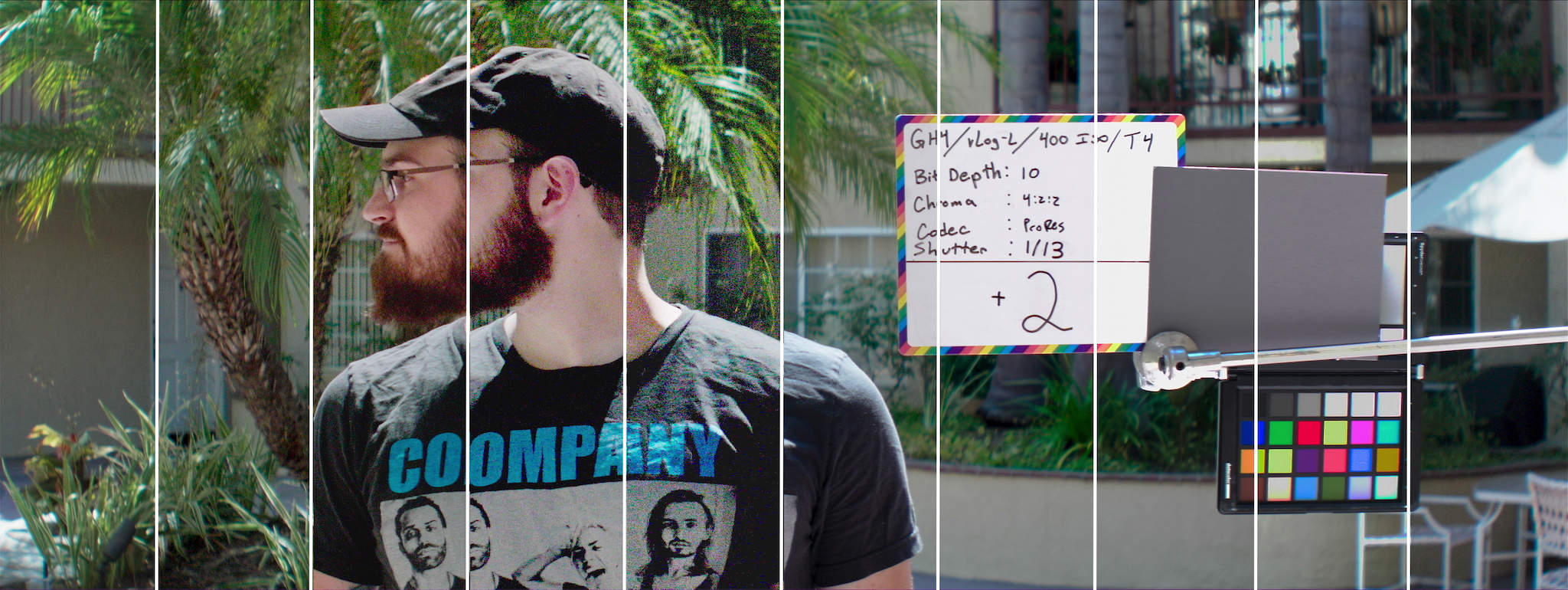
Here's a tease with all of the over/underexposures from the experiment in one image:
What do you think? What are your thoughts? Am I off base here?
The idea behind this method is to control how the camera's dynamic range is distributed. The general theory with ISO and digital cameras, particularly in RAW, is that changing the ISO doesn't make the sensor more or less sensitive, it just reads the RAW data differently (there are a few exceptions, of course). When a cinematographer deviates from the native ISO, they are under/overexposing the image and the new image has the dynamic range re-mapped by the debayering process. However, I wanted to control how that dynamic range was redistributed. Is this something we can do? Something we can test?
I recently finished an experiment and would love for everyone to check my work, to make sure what I'm experimenting with is actually correct. You can find the detailed (and very nerdy) experiment here: http://www.ajyoungdp.com/articles/blog/OverUnder01/
Here's a tease with all of the over/underexposures from the experiment in one image:
What do you think? What are your thoughts? Am I off base here?
